

Sculptra is a poly-L-lactic acid (PLLA) injectable collagen biostimulator designed to create gradual, progressive improvement in facial support and volume rather than an instant “filled” appearance. For suitable patients in Abu Dhabi, it can be used as part of a full-face rejuvenation plan when the goal is subtle structural restoration, better tissue quality and a natural-looking result.
Sculptra does not behave like a traditional hyaluronic-acid filler. PLLA stimulates fibroblast activity and new collagen formation, so the visible result develops over weeks and can remain noticeable for more than two years in some patients. Treatment is individualized according to facial anatomy, degree of volume loss, skin quality and the desired level of correction.
What Is Sculptra?
Sculptra is an injectable treatment based on poly-L-lactic acid (PLLA), a biocompatible and biodegradable synthetic polymer. In aesthetic medicine, PLLA is used as a biostimulatory material: instead of relying mainly on a gel to occupy space, it encourages the tissue to build new collagen over time.
This makes Sculptra especially relevant for patients who want progressive facial rejuvenation rather than a sudden change in facial shape. The supplied reference chapter describes PLLA as capable of producing gradual, subtle and natural results with durability beyond two years in appropriate cases.
How Does Sculptra Work?
After injection into the appropriate anatomical plane, PLLA microparticles trigger a controlled subclinical tissue response. This is followed by fibroblast activity and collagen formation. The material itself is gradually degraded and metabolized, while the newly formed collagen contributes to the developing aesthetic effect.
One tissue-response study cited in the chapter reported a statistically significant increase in type I collagen six months after PLLA injection. This mechanism is why Sculptra is commonly described as a collagen biostimulator rather than simply a volumizing filler.
When do results start?
The fluid used to prepare PLLA can create temporary fullness immediately after treatment, but that effect fades over the first few days. The more meaningful change develops progressively as fibroplasia and collagen remodeling occur, commonly becoming noticeable after several weeks.
Why Sculptra Is Different from Traditional Dermal Filler
Hyaluronic-acid fillers and PLLA can both be useful, but they solve different aesthetic problems. Hyaluronic acid is often selected when precise, immediate contouring or projection is the priority. Sculptra is more often considered when the goal is broader collagen stimulation, progressive restoration of support and improvement in the way the face ages as a three-dimensional structure.
| Feature | Sculptra / PLLA | Hyaluronic Acid Filler |
|---|---|---|
| Primary action | Collagen biostimulation with gradual structural change | Immediate gel-based volume and contour |
| Onset | Progressive over weeks | Immediate, with settling afterward |
| Best suited to | Global support, volume depletion, tissue quality | Precise contouring, projection and focal correction |
| Treatment planning | Often staged and reassessed | May be single-session or staged depending on area |
| Reversibility | Not dissolved with hyaluronidase | Most HA fillers can be dissolved with hyaluronidase |
Facial Aging Is More Than Wrinkles
Aging involves coordinated changes in the skin, superficial and deep fat compartments, retaining ligaments and facial skeleton. Loss or redistribution of volume can reduce projection, change facial proportions and make folds or shadows more visible. For that reason, a sophisticated Sculptra plan should begin with facial analysis rather than a fixed injection map.
A 3D Approach to Sculptra Facial Rejuvenation
Treating a single fold without understanding why it developed can lead to an unnatural result. A better approach is to assess the face in three dimensions: projection, width, transition zones, skeletal support, fat compartments, skin quality and the relationship between the upper, middle and lower thirds of the face.
For example, a deeper nasolabial fold may partly reflect changes in midfacial support. A less-defined jawline may be influenced by volume loss, ligament visibility, skin laxity or fat distribution. Not every problem is a “filler problem,” and not every patient is a Sculptra candidate.
Which Areas Can Be Considered for Sculptra?
1. Temples
Temporal hollowing can create a more skeletal appearance and alter the transition between the forehead, lateral brow and cheek. In selected patients, strategic PLLA placement can contribute to smoother upper-face contours and improved global balance.
2. Lateral Cheek and Zygomatic Region
Changes in the lateral cheek and zygomatic region can affect overall facial width, cheek support and the appearance of the lower face. Treating the correct structural zone may help restore a more youthful facial architecture without simply adding volume to the front of the cheek.
3. Midface
Patients with true midfacial volume depletion may benefit from a biostimulatory approach when the objective is progressive restoration rather than a sharply projected filler result. The treatment plane and product distribution should be chosen according to anatomy.
4. Mandibular Region and Chin
PLLA can be incorporated into a broader lower-face strategy where loss of structural support contributes to pre-jowl shadowing or reduced mandibular definition. The key is to distinguish volume loss from skin laxity, fat excess and muscular effects before choosing treatment.
Why Gradual Results Matter
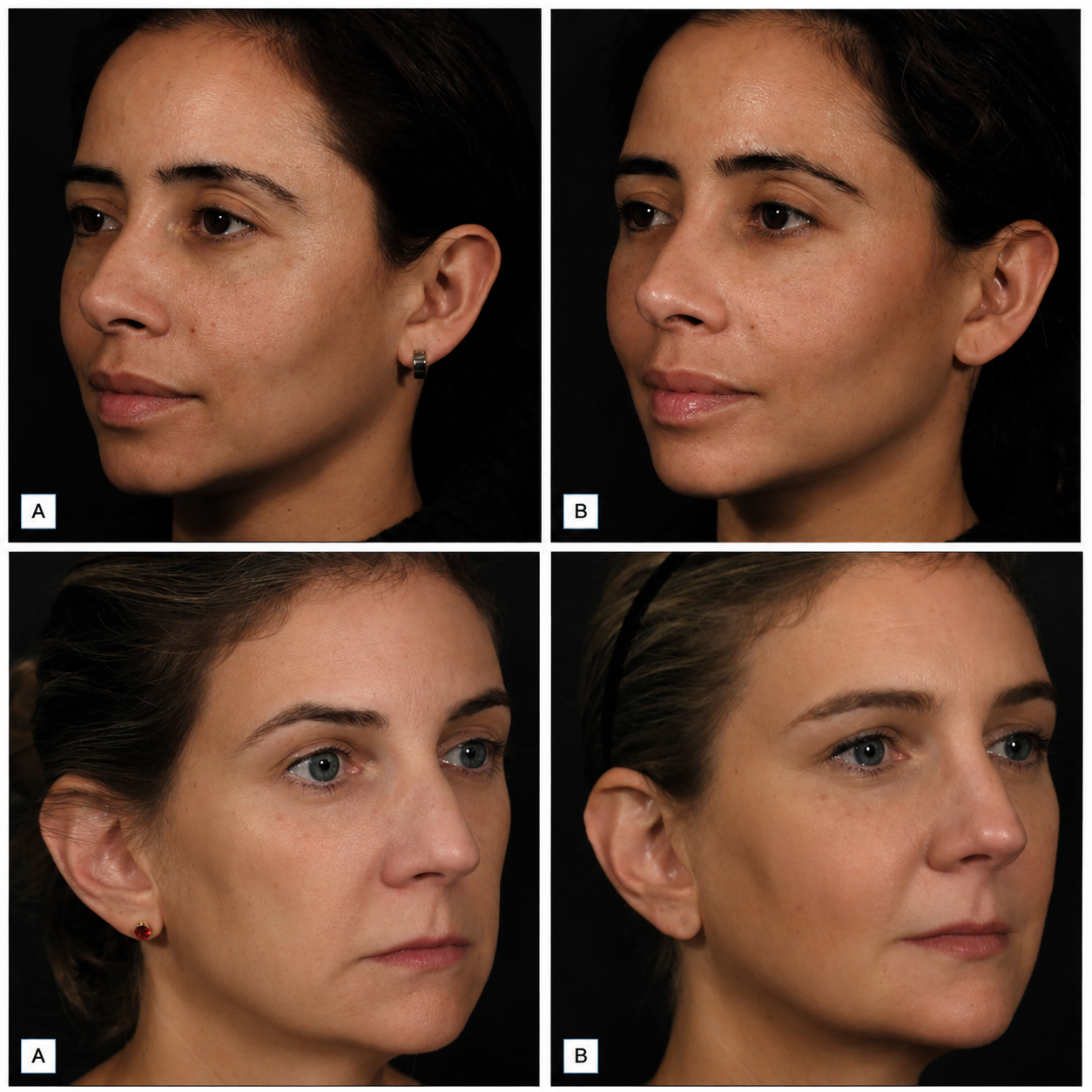
The clinical examples in the supplied chapter illustrate an important point: outcomes depend on baseline anatomy, degree of tissue depletion, number of vials, number of sessions and the time allowed for collagen remodeling. Younger or fuller-faced patients may require less treatment, while patients with more significant volume loss may need a staged series.
How Many Sculptra Sessions Are Needed?
There is no universal number of sessions or vials. Treatment should be based on the surface area being treated, baseline volume loss, age, tissue quality and the desired degree of correction. Someone with a small face and significant depletion may need several staged sessions, while a larger face with mild loss may require a different plan.
A commonly used principle is “treat, wait, assess.” Repeat treatment should generally not be rushed because the collagen response needs time to develop. The source chapter describes treatment intervals commonly around 4 to 6 weeks, with longer intervals sometimes appropriate in younger or fuller-faced patients.
How Long Can Sculptra Results Last?
PLLA is valued for durability. The supplied chapter reports that gradual, natural-looking results can last for more than two years and notes that in studies supporting early approval, a large proportion of patients still showed correction at the 25-month endpoint. Individual longevity varies with age, metabolism, baseline collagen quality, treatment intensity and ongoing facial aging.
Can Sculptra Improve Skin Quality?
Because the treatment stimulates collagen rather than simply placing a gel, changes in tissue quality may accompany changes in volume and support. Clinical examples in the source chapter show improvements in facial contour as well as visible skin-quality changes over time. This is one reason PLLA is often considered within a broader regenerative aesthetic plan.
Sculptra for the Body
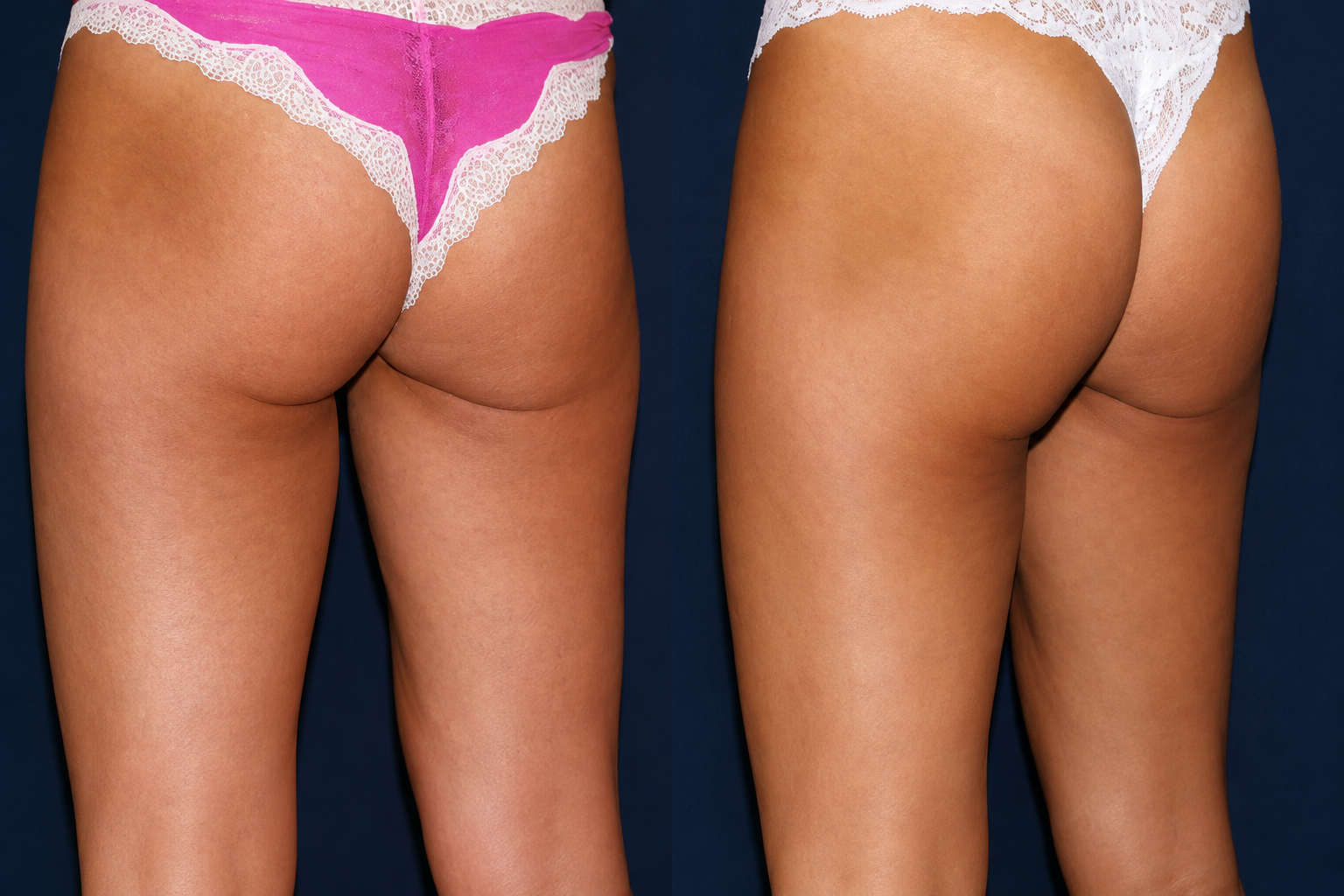
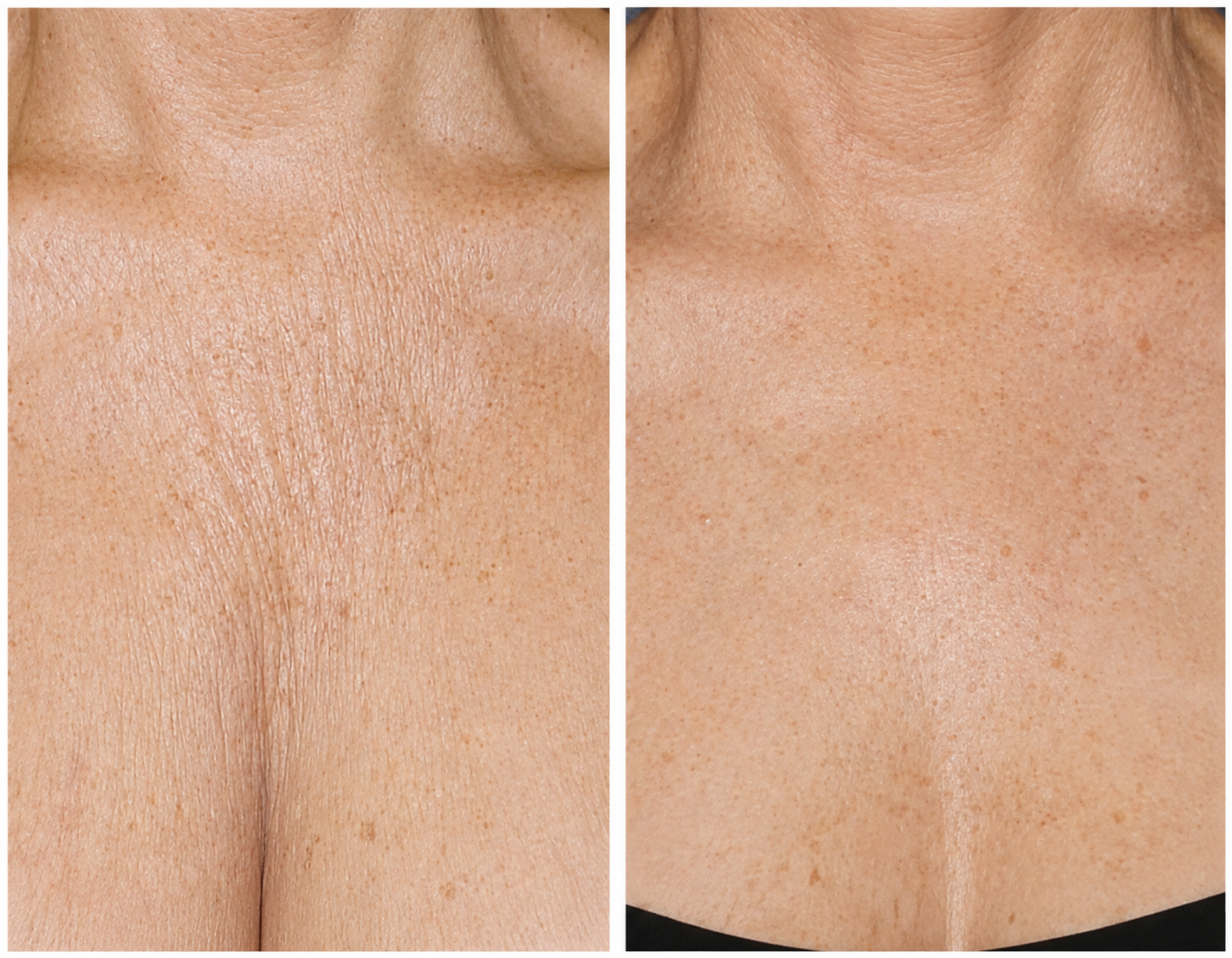
PLLA has also been used off face for selected patients with tissue laxity or contour concerns. Published applications discussed in the chapter include the décolleté, arms, abdomen and buttocks, with additional reports involving the thighs and upper knees. These uses require different dilution, distribution and anatomical planning from facial treatment and are not appropriate for every patient.
Can Sculptra Be Used for Acne Scars?
The chapter also describes PLLA in combination with subcision for selected atrophic scars, including acne scarring. This is not a universal acne-scar treatment. Rolling scars, tethered scars, boxcar scars and ice-pick scars behave differently, so the treatment plan should be based on scar morphology and the presence or absence of underlying volume deficiency.
In appropriately selected patients, combining release of scar tethering with volume or collagen restoration can be more logical than treating only the skin surface.
Who May Be a Good Candidate for Sculptra?
- Patients who prefer gradual, subtle facial rejuvenation rather than an immediate dramatic change.
- Patients with facial volume depletion, hollowing or reduced structural support.
- Patients interested in collagen biostimulation as part of a long-term facial rejuvenation strategy.
- Patients willing to complete a staged treatment plan and return for reassessment.
- Patients whose anatomy is suitable after medical and aesthetic evaluation.
Who May Not Be an Ideal Candidate?
- Someone who needs an immediate “quick fix” before an event.
- A patient with active infection in the treatment area.
- A patient whose main concern is better treated with another modality, such as excess fat, pronounced skin laxity or a problem requiring precise immediate correction.
- Patients with relevant medical contraindications identified during consultation.
The source chapter specifically recommends delaying treatment in areas of active infection and in patients with active autoimmune disease. Medical history, medications, previous procedures and expectations should be reviewed before treatment.
Safety, Side Effects and Complications
Common short-term injection-related effects include swelling, bruising, redness and discomfort. These are usually self-limited. Less common problems can result from poor preparation, uneven product distribution, incorrect depth, excessive focal deposition, inflammatory reactions or vascular events.
Papules and nodules
PLLA should be distributed evenly in the correct tissue plane. Superficial placement can make collagen formation visible as lumps or bumps, while focal over-deposition can contribute to papules or nodules. Correct reconstitution, suspension and injection technique are therefore central to safety.
Granulomatous reactions
True clinical granulomas are rare and are different from localized product nodules. The distinction matters because management differs. Persistent or delayed lumps after any biostimulatory treatment should be clinically assessed rather than treated empirically.
Vascular complications
As with other injectable procedures, inadvertent intravascular injection can cause ischemic complications. PLLA is not dissolved with hyaluronidase, which makes prevention especially important. Detailed anatomical knowledge, controlled injection technique and avoidance of excessive pressure are essential.
What Happens After Sculptra Treatment?
Temporary swelling and a sense of fullness are common immediately after treatment because of the reconstitution fluid. This initial volume decreases, after which the collagen-stimulation phase becomes more relevant. Patients should follow the aftercare instructions provided by their treating clinician. Massage recommendations can vary depending on the product preparation, injection technique and clinician protocol.
Sculptra vs Endolift: Which One Is Better?
These treatments target different problems. Sculptra is primarily a collagen-biostimulating injectable used for structural support and progressive restoration. Endolift is an energy-based treatment typically considered when skin laxity, tissue tightening or selected localized fat concerns are more important. Some patients may benefit from one treatment, while others may require a staged combination plan. The correct choice starts with identifying the dominant anatomical problem.
Sculptra vs Morpheus8
Morpheus8 uses radiofrequency microneedling to remodel tissue and is generally selected for concerns such as skin texture, pores, acne-scar remodeling and laxity. Sculptra works through injectable PLLA-driven collagen stimulation and is more directly relevant to volume depletion and structural support. In selected patients, these approaches can complement each other when timed and planned appropriately.
Sculptra Consultation in Abu Dhabi: What Should Be Assessed?
A meaningful consultation should not begin with “How many vials do you want?” It should begin with diagnosis of the aesthetic problem. A full-face assessment considers skeletal support, superficial and deep fat compartments, retaining ligaments, skin quality, symmetry, previous fillers or energy-based procedures, and the patient’s tolerance for gradual change.
For patients searching for Sculptra in Abu Dhabi, the most important step is choosing a treatment plan based on anatomy and realistic goals rather than a standardized package. Patients may be seeking treatment from areas across Abu Dhabi such as Rabdan, Khalifa City, Al Raha, Yas Island and surrounding communities, but candidacy should always be determined clinically rather than geographically.
