
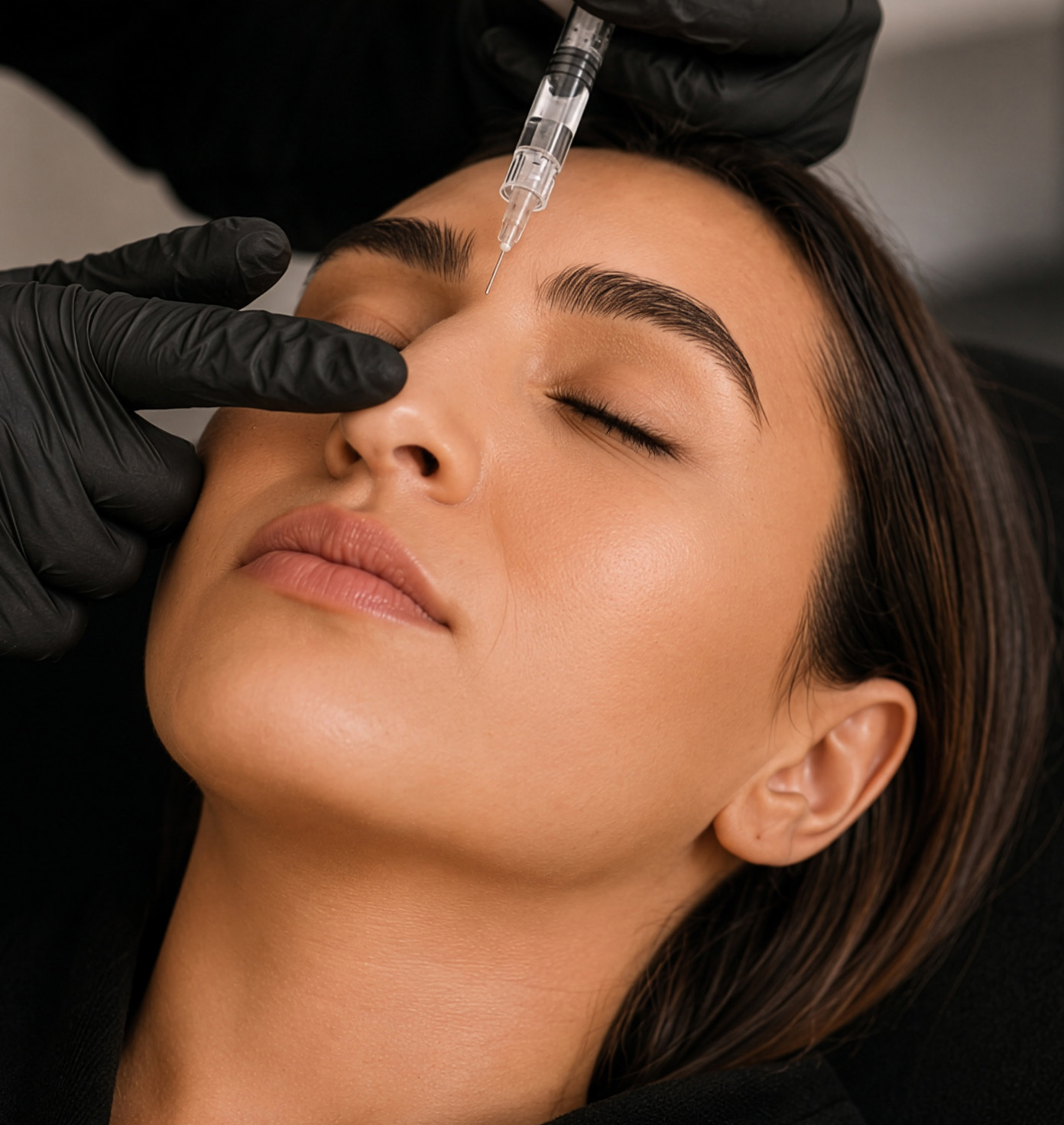
Non-Surgical Rhinoplasty in Abu Dhabi : What Nose Filler Can—and Cannot—Do
A few millimetres of change at the centre of the face can alter the way the entire profile reads. This is why non-surgical rhinoplasty—also called liquid rhinoplasty or nose filler—can produce a noticeable aesthetic improvement even when the amount of product used is conservative. The aim is not to create a different nose. It is to improve proportion, continuity and light reflection while preserving the person’s identity.
The procedure is also widely misunderstood. Filler adds volume; it does not remove bone, cartilage or skin. It may camouflage a mild hump by creating a smoother line above and below it, but the nose is not physically smaller. It cannot open the airway, straighten a severely deviated septum or replace surgery when a structural reduction is required. Most importantly, the nose is one of the most vascularly sensitive areas of the face. Good treatment begins with knowing when not to inject.
For the right patient, hyaluronic-acid nose filler may improve profile balance, bridge definition, small contour irregularities and limited tip support with little downtime. Results are temporary and risks—although uncommon—include vascular occlusion, skin injury and rare vision-threatening complications. A medical assessment is essential.
What Is Non-Surgical Rhinoplasty?
Non-surgical rhinoplasty is a minimally invasive contouring treatment in which a dermal filler—most commonly a hyaluronic-acid gel—is used to adjust selected external landmarks of the nose. The treatment is performed in clinic without incisions or general anaesthesia. Changes can usually be seen immediately, while the final contour becomes clearer after early swelling settles.
A careful plan considers the nose in three dimensions: the frontal view, both oblique views, the side profile and the relationship between the nose, lips and chin. A technically smooth nose may still look out of balance if the chin is retruded or the midface lacks support. This is why isolated treatment based on a single photograph can be misleading; facial proportion matters as much as the nose itself.
What Can Nose Filler Improve?
- Camouflage a small dorsal hump by creating a straighter-looking bridge line.
- Improve a low or underdefined nasal bridge where extra projection suits the face.
- Soften selected surface irregularities or depressions.
- Support a mildly drooping tip in appropriately selected anatomy.
- Improve limited asymmetry when realistic symmetry—not perfection—is the goal.
- Create a more continuous transition between the forehead, nasal root and bridge.
- Improve profile balance when combined with a full facial assessment.
What Can It Not Do ?
- Make a large nose physically smaller; any “slimming” effect is an optical illusion created by improved lines and light reflection.
- Remove a major hump, reduce wide nasal bones or significantly narrow the nostrils.
- Correct a deviated septum, nasal obstruction, snoring or other functional breathing problems.
- Deliver the same structural or permanent changes as surgical rhinoplasty.
- Guarantee perfect symmetry or reproduce a filtered social-media image.
If the main goal is reduction, major tip refinement, correction of breathing or a permanent structural change, surgical rhinoplasty is usually the more appropriate conversation.
Why Nasal Anatomy Makes Safety So Important
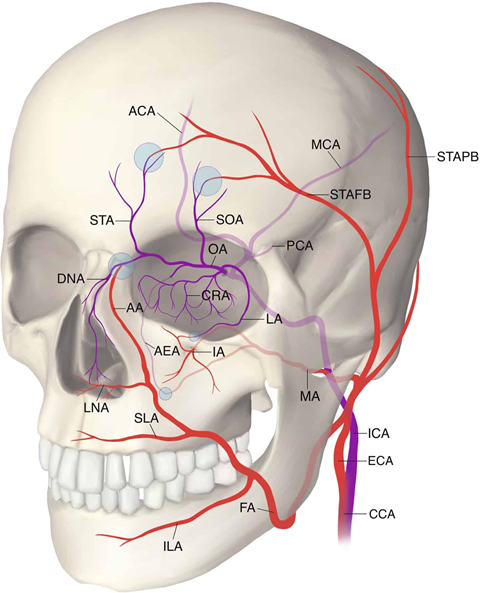
The nose contains several distinct soft-tissue layers over its bony and cartilaginous framework. Its arterial supply communicates with both the external carotid and internal carotid systems. Some vessels around the nose connect with branches related to the ophthalmic circulation. This anatomy explains why accidental placement of filler into a blood vessel can have consequences far beyond a bruise or temporary swelling.
The key safety message for patients is simple: nose filler is not a casual “lunchtime add-on.” It should be performed by a medically trained practitioner who understands the changing depth of nasal tissues, recognizes higher-risk patterns, uses a conservative plan, obtains meaningful consent and has a rehearsed emergency protocol.
How a Safety-First Consultation Should Work
A proper consultation is not simply a choice of brand or syringe size. It should establish whether filler is the right tool at all. Dr. Erfan Rahmani assesses the patient’s goals, nasal shape, skin thickness, profile relationships, medical history, previous injections and any prior nasal surgery or trauma. The discussion should include both the achievable change and the possibility that treatment may be declined.
- What bothers you most in the frontal and side views?
- Do you want camouflage, projection, support, symmetry or actual reduction?
- Have you had rhinoplasty, nasal trauma, threads, permanent filler or previous dissolving?
- Do you have breathing difficulty or a known septal deviation ?
- Are there current infections, inflamed skin lesions, active cold sores or dental infections?
- Are you pregnant or breastfeeding, taking anticoagulants, or living with uncontrolled medical conditions?
- Would a chin or full-profile assessment better address the perceived imbalance?
Who May Be a Good Candidate?
A potential candidate is generally an adult with realistic expectations who wants a modest external contour change, accepts that filler adds volume and understands that results are temporary. The anatomy must permit a conservative plan without requiring excessive product. Healthy skin, a clear medical history and willingness to attend follow-up also matter.
Someone may not be suitable if the desired result requires reduction, the nose is already overfilled, there is active infection or significant inflammation, the vascular or surgical history is uncertain, or the risk-benefit balance is unfavourable. Pregnancy and breastfeeding are also common reasons to postpone elective injectable treatment.
Nose Filler After Surgical Rhinoplasty
A previously operated nose deserves a separate level of caution. Surgery can alter tissue planes, create fibrosis and change the course or mobility of blood vessels. A small irregularity after rhinoplasty may sometimes be camouflaged with filler, but this is not automatically safe or appropriate. In some cases, referral back to a rhinoplasty surgeon—or choosing no injection—is the better decision.
Dr. Erfan’s consultation principle :Previous rhinoplasty is not a routine nose-filler case. Treatment should only be considered after a careful in-person assessment of the scar pattern, skin quality, existing product, vascular risk and the patient’s true objective.

Why Hyaluronic Acid Is Commonly Preferred
For many physicians, hyaluronic acid is the preferred category for non-surgical rhinoplasty because it offers precise contouring and can be broken down with hyaluronidase when clinically indicated. Reversibility does not make the procedure risk-free, and dissolving is not a simple “undo button” for every complication. It does, however, provide an important management option that permanent materials do not.
Permanent or non-medical substances in the nose can cause delayed swelling, migration, nodules, granulomas and infection, and may be extremely difficult to remove. Patients should disclose every previous product—even if injected years earlier or outside the UAE—before any new treatment is considered.
What Happens on the Day of Treatment?
The appointment begins with review of the consent, photographs and the agreed treatment plan. The nose and surrounding skin are cleansed, relevant landmarks are assessed in an upright position and comfort measures are selected according to the patient and product. The treatment itself is usually brief, but it should never feel rushed.
Product is placed conservatively to build shape gradually. The practitioner repeatedly reassesses contour, skin colour, capillary refill, pain and patient symptoms. More filler is not automatically better: overcorrection can make the bridge broad, blur the transition from forehead to nose, create a heavy tip or simply make the nose look larger.
Safety over speed :The most important part of the appointment is not how quickly the injection is completed. It is accurate assessment, conservative planning, continuous observation and the ability to recognize and manage an unexpected vascular event immediately.


When Will I See the Result ?
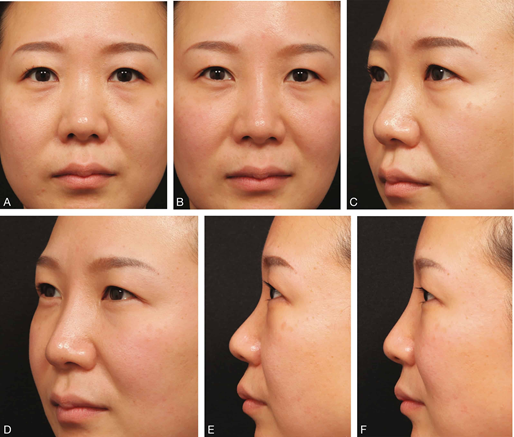
The contour changes immediately, but the first look is not the final result. Mild swelling can exaggerate projection or asymmetry during the first few days. Bruising and tenderness may also occur. A more reliable assessment is made after the tissues settle, often at a planned follow-up rather than by repeatedly pressing or reshaping the nose at home.
| Time point | What patients commonly notice |
|---|---|
| Immediately | Visible contour change; early swelling may affect symmetry. |
| First 24–72 hours | Mild swelling, tenderness or bruising may be most noticeable. |
| Around 1–2 weeks | The contour usually looks more settled; follow-up timing is individual. |
| Following months | Result gradually softens as the hyaluronic-acid gel integrates and later metabolises. |
| Maintenance | Only after reassessment; avoid automatic top-ups that can lead to overfilling. |
How Long Does Nose Filler Last?
Longevity varies with the product, amount, placement, tissue characteristics, metabolism and whether the area has been treated before. Published patient information and clinical studies report a broad range rather than a single guarantee. The safest approach is to review the nose when the result has genuinely softened, not to inject on a fixed calendar simply because a certain number of months has passed.

Recovery & After Care
Most patients return to normal daily activities quickly, but “minimal downtime” does not mean no aftercare. Instructions may be adjusted for the product and the individual case. The treatment area should be protected from avoidable pressure or manipulation while early swelling settles.
- Do not massage, press or attempt to reshape the nose unless specifically instructed.
- Avoid tight glasses or other sustained pressure over treated areas when advised by your physician.
- Keep the injection sites clean and avoid applying unapproved products immediately after treatment.
- Postpone strenuous exercise, saunas, steam rooms and excessive heat for the period advised by the clinic.
- Avoid elective dental or other facial procedures close to the appointment unless cleared by your treating physician.
- Contact the clinic promptly if pain is increasing rather than improving, colour changes develop or vision feels abnormal.
Risks, Side Effects and Red Flags
Common short-term effects include swelling, tenderness, bruising, temporary redness and mild asymmetry while the area settles. Less common complications include infection, prolonged swelling, nodules, visible or palpable product, contour irregularity and an unsatisfactory aesthetic result.
The most serious complication is vascular occlusion, in which blood flow is compromised by filler within or around a vessel. This may injure the skin and, through facial-ophthalmic arterial connections, can rarely threaten vision or cause neurological injury. Current consensus guidance describes filler-related vision loss as rare but potentially catastrophic and emphasises immediate recognition, consent and urgent transfer pathways rather than false reassurance.
Contact the clinic immediately :Increasing or severe pain, persistent blanching, dusky or mottled skin, a cool area, rapidly worsening colour change, unusual headache, drooping eyelid, eye pain, double vision or any change in vision require urgent assessment.
Emergency :Any sudden visual symptom or stroke-like symptom after filler is a medical emergency. Do not wait for a routine follow-up or rely on online advice—seek emergency care without delay and inform the treating clinic.
Non-Surgical vs Surgical Rhinoplasty
| Question | Non-surgical rhinoplasty | Surgical rhinoplasty |
|---|---|---|
| What changes | Adds volume to camouflage or support selected contours | Can add, remove or reposition bone, cartilage and soft tissue |
| Nose size | Cannot physically reduce size | Can reduce or structurally reshape the nose |
| Breathing | Does not correct the septum or airway | May address functional obstruction |
| Anaesthesia | Usually clinic-based without general anaesthesia | Usually requires anaesthesia |
| Recovery | Short; swelling and bruising are possible | Longer, progressive healing |
| Longevity | Temporary; maintenance may be considered | Long-lasting structural change |
| Reversibility | HA filler may be dissolved when clinically appropriate | Not simply reversible; revision is another operation |
| Best for | Modest contour refinement in carefully selected patients | Reduction, major reshaping, functional correction or permanent change |
How to Choose a Nose-Filler Practitioner in Abu Dhabi
The decision should be based on medical competence and judgement—not on the lowest price, a social-media trend or a promise of a “perfect nose.” A safety-focused consultation should feel specific to your anatomy and should include the possibility that the practitioner will recommend surgery, observation or no treatment.
- A licensed medical practitioner with focused training in facial anatomy and injectables.
- A clear explanation of benefits, limitations, alternatives and rare serious risks.
- Use of traceable, appropriately stored products from authorized supply channels.
- A conservative plan that avoids unnecessary volume and repeated automatic top-ups.
- Immediate access to hyaluronidase when hyaluronic-acid filler is used, plus a written emergency pathway.
- Standardized photography, documentation, batch recording and planned follow-up.
- Willingness to decline treatment when anatomy or expectations make the procedure unsuitable.
Dr. Erfan Rahmani’s Approach in Abu Dhabi
Dr. Erfan Rahmani uses a consultation-first approach to facial aesthetics. The objective is to decide whether a small, controlled contour change will genuinely improve facial balance—and whether the benefit justifies the anatomical risk. The assessment includes the entire profile, previous treatments, nasal surgery or trauma, skin quality and the patient’s long-term plan.
If filler would make the nose heavier, cannot achieve the requested reduction, may interfere with future surgery or presents an unfavourable risk profile, the recommendation may be not to inject. That judgement is part of good aesthetic medicine.
Book a consultation :For an individual assessment in Abu Dhabi, contact Dr. Erfan Rahmani on +971 509117732 or visit drerfanrahmani.com. Final suitability, product choice and treatment plan are confirmed only after medical consultation.
