
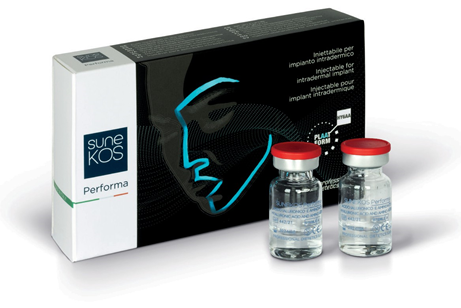
Sunekos® Performa is an injectable skin-renewal treatment based on a patented HY6AA+ combination of low-molecular-weight, non-crosslinked hyaluronic acid and six specific amino acids. Its purpose is not traditional filler-style volumization. Instead, the formula is designed to support extracellular-matrix renewal and stimulate fibroblast-related production of collagen, elastin and fibronectin, with the aim of improving hydration, elasticity, skin firmness, fine lines and overall skin quality. It can be used on the face, periocular area, neck, décolletage and hands.
For patients who want gradual skin-quality improvement rather than a dramatic change in facial shape, Sunekos Performa sits in a distinct category: an injectable bioregenerative approach focused on the dermal environment. The most relevant expectations are smoother texture, brighter and more hydrated skin, better elasticity and softening of fine lines rather than instant structural lifting.
What Is Sunekos® Performa?
Sunekos Performa is a premixed injectable formulation developed around low-molecular-weight hyaluronic acid and a defined group of six amino acids. The product is intended to support renewal of the dermal extracellular matrix (ECM), the structural environment that contains collagen, elastin, fibronectin, hyaluronic acid and other components responsible for skin resilience, hydration and mechanical support.
Its clinical positioning is therefore different from a crosslinked dermal filler. A filler is generally selected when the primary aim is structural volume, contour or projection. Sunekos Performa is described as a skin-quality treatment: the emphasis is on hydration, elasticity, firmness, texture and fine lines.
Why the Extracellular Matrix Matters in Skin Aging
Skin aging is not only a loss of surface smoothness. The deeper dermal environment changes as collagen composition shifts, fibroblast numbers decline, collagen and elastin degradation increases, and hyaluronic-acid availability falls. These changes reduce the skin’s ability to remain hydrated, elastic and mechanically supported.
The source material highlights several age-related ECM changes: type III collagen represents a much larger proportion of collagen in neonatal skin than in aging adult skin; type IV collagen declines with age after approximately the mid-thirties; fibroblast numbers fall; matrix metalloproteinase activity contributes to greater collagen and elastin degradation; and reduced hyaluronic acid contributes to loss of hydration.
What Are Fibroblasts ?
Fibroblasts are key dermal cells involved in producing and organizing components of the extracellular matrix. When fibroblast activity falls with age, the skin has less capacity to maintain collagen, elastin, fibronectin and hyaluronic-acid homeostasis. A treatment strategy designed around fibroblast stimulation therefore aims to improve the quality of the dermal environment rather than simply filling a visible line.
What Is Inside Sunekos® Performa ?
The premixed 3.5 mL vial described in the source contains 35 mg of non-crosslinked low-molecular-weight hyaluronic acid in the approximately 50–250 kDa range, together with 128 mg of six specific amino acids. The patented formulation is referred to as HY6AA+.
| Component | Source Description | Why It Matters |
|---|---|---|
| Low-molecular-weight hyaluronic acid | 35 mg in a 3.5 mL premixed vial; non-crosslinked; approximately 50–250 kDa | Supports hydration and provides a HA-based environment for fibroblast interaction. |
| Six specific amino acids | 128 mg total | Designed to support ECM-related activity and collagen/elastin production. |
| HY6AA+ ratio | Updated HA-to-amino-acid ratio compared with the earlier Sunekos 200 protocol | The source describes improved persistence of HA activity at the injection site and enhanced ECM-related effects. |
Why Non-Crosslinked Hyaluronic Acid ?
Non-crosslinked hyaluronic acid is not designed to behave like a dense structural filler. Its role here is more closely related to hydration and cellular signaling within the dermal environment. The formulation is also described as relatively low resistance during injection, which supports use across broad skin-quality treatment areas.
Why the Six Amino Acids Matter
The amino-acid component is designed to work with hyaluronic acid rather than act as a separate volumizing agent. The source describes increased production of collagen IV, collagen VII, elastin and fibronectin-related activity, creating a rationale for improvements in firmness, elasticity and dermal support.
How Sunekos® Performa Is Proposed to Work
The treatment concept can be understood as a sequence: hyaluronic acid and amino acids are delivered into the dermis; the local environment supports fibroblast activity; ECM-related signaling increases; and the skin gradually develops changes in hydration, collagen/elastin organization and firmness.
- Support hydration through a low-molecular-weight, non-crosslinked HA component.
- Promote fibroblast-related production of ECM components.
- Support collagen types involved in dermal structure and anchoring, including types IV and VII described in the source.
- Support elastin and fibronectin-related activity.
- Improve the dermal environment rather than create a filler-like structural implant.
Hyaluronidase, HA Persistence and the Updated Formula
The updated HY6AA+ ratio is described as reducing hyaluronic-acid degradation by hyaluronidase and prolonging the local action of HA at the injection site. The proposed benefit is longer fibroblast-receptor stimulation and a stronger opportunity for ECM-related signaling. These mechanistic claims are based on the source material and should be interpreted as biological rationale rather than a guarantee of a specific visible result in every patient.
What Can Sunekos® Performa Be Used For ?
- Fine lines and early wrinkles.
- Dry, dehydrated or dull-looking skin.
- Reduced elasticity and skin firmness.
- Periocular fine lines and crepey under-eye skin.
- Dark-circle and eye-bag appearance when skin quality and tissue support contribute to the concern.
- General skin-quality improvement of the face.
- Neck, décolletage and hand rejuvenation.
What Sunekos® Performa Is Not Designed to Replace
Sunekos Performa should not be presented as a substitute for every aesthetic treatment. It does not create the same structural projection as crosslinked filler, does not relax facial muscles like botulinum toxin, and does not mechanically reposition advanced laxity in the way surgery can. Its strongest rationale is improvement of skin quality and the dermal environment.
Sunekos® Performa for the Under-Eye Area
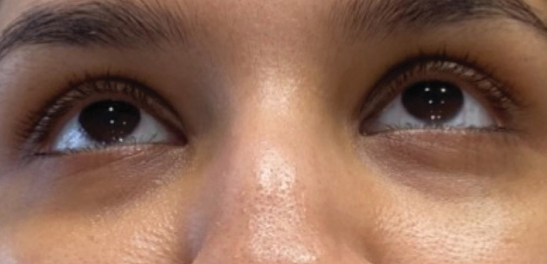
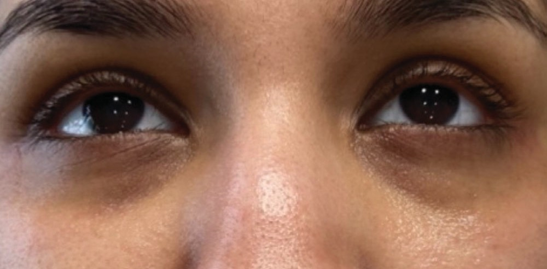
The periocular region is one of the areas emphasized in the source material. The skin around the eye is thin and often shows dehydration, fine lines, loss of elasticity and visible textural change earlier than thicker facial areas. A low-viscosity, non-crosslinked formulation can be used when the objective is skin-quality improvement rather than deep structural filling.
The source includes before-and-after periocular photographs and describes practitioner experience with improvement in fine lines, eye-bag appearance and older patients with pseudoherniated orbital fat. These observations should be interpreted cautiously: the treatment may improve the appearance of the overlying skin and tissue quality, but it does not surgically remove or reposition orbital fat.
Can Sunekos Help Dark Circles ?
Dark circles have multiple causes, including pigmentation, visible vessels, thin skin, shadowing, tear-trough anatomy and changes in tissue quality. Sunekos Performa is most logically positioned when hydration, fine skin texture and dermal support are important contributors. It should not be expected to correct every form of under-eye darkness.
Can It Treat Eye Bags ?
The source describes improved appearance of eye bags in clinical use, including cases with pseudoherniated orbital fat. However, an injectable skin-renewal treatment does not remove fat. Improvement may reflect better skin quality, support and texture. Significant structural eye bags may still require a different treatment strategy.
What Did the Pilot Facial-Aging Evaluation Measure ?
A small pilot evaluation included 10 women between 40 and 67 years old with facial skin-aging concerns. Participants reported no other aesthetic treatment during the preceding year. Each patient received three Sunekos Performa sessions separated by two weeks, followed by a final assessment four weeks after the third treatment.
| Protocol Element | Pilot Evaluation |
|---|---|
| Participants | 10 female patients |
| Age range | 40–67 years |
| Sessions | 3 |
| Interval | 2 weeks between sessions |
| Product per session | 3.5 mL premixed HY6AA+ |
| Injection pattern | 0.1 mL boluses in the deep dermis |
| Areas | Whole face including forehead and periocular region |
| Final assessment | 4 weeks after the third treatment |
High Performance Technique (HPT)
The source describes a High Performance Technique using approximately 0.1 mL boluses placed into the deep dermis across the face, including the periocular region and forehead. Injection points were oriented in relation to the natural tension lines of the skin. Technique, depth and placement should be adapted to anatomy and product training rather than copied mechanically.
What Results Were Reported ?
Computerized VISIA assessment in the pilot evaluation reported a 71% reduction in the appearance of forehead wrinkles and a 44% reduction in periocular wrinkles. Skin dyschromia related to photoaging improved by 16%. Skin texture was described as visibly improved, and all participants reported improvement in skin tension and elasticity.
| Outcome | Reported Result |
|---|---|
| Forehead wrinkle appearance | 71% reduction |
| Periocular wrinkle appearance | 44% reduction |
| Photoaging-related dyschromia | 16% improvement |
| Skin texture | Visible improvement reported |
| Skin tension and elasticity | All patients noticed improvement |
| GAIS appearance assessment | All patients reported improvement |
These numbers are useful for understanding the direction of the reported response, but the evaluation was small and uncontrolled. The figures should not be converted into a promise that every patient will experience the same percentage improvement.
Can Results Be Seen After the First Session ?
The source notes that patients often perceived a benefit after the first treatment, which may encourage completion of the full course. Early changes may relate to hydration and tissue quality, while collagen and ECM remodeling are expected to evolve over a longer period.
How Many Sunekos® Performa Sessions Are Commonly Used ?
The facial-aging pilot protocol used three sessions spaced two weeks apart. The source also shows an example from a two-treatment course, reinforcing that treatment schedules can vary according to area and protocol. The appropriate number of sessions should be individualized rather than presented as one fixed schedule for every patient.
When Should Results Be Assessed ?
Hydration and skin texture can appear to change relatively early, but a regenerative treatment should also be judged after sufficient time for remodeling. In the pilot evaluation, a formal final assessment was performed four weeks after the third session.
Downtime, Comfort and Expected Injection-Site Reactions
The source describes minimal downtime and generally good tolerance. Because the treatment is injectable, temporary papules, redness, swelling, tenderness or bruising can occur even when the product itself is well tolerated. Numbing cream may be used if clinically appropriate and desired.
Patients should be given aftercare instructions and should contact their clinician if they develop severe pain, progressive blanching or discoloration, marked swelling, infection signs or symptoms that are not following a normal post-injection course.
Is Sunekos® Performa a Filler ?
Sunekos Performa contains hyaluronic acid, but the HA is non-crosslinked and the product is positioned as an extracellular-matrix and skin-quality treatment rather than a structural dermal filler. Some tissue-plumping or volume improvement can be noticed, but its primary purpose is not to create filler-style projection or contour.
Sunekos® Performa vs. Sunekos® 200
Sunekos Performa replaced Sunekos 200 in the protocol described in the source. Both use the same six specific amino acids and low-molecular-weight hyaluronic acid, but Performa uses an updated HA-to-amino-acid ratio. The source attributes the new formula to greater persistence of HA activity and stronger ECM-related effects.
Sunekos® Performa and Sunekos® 1200
The source also describes protocols in which Performa is combined with Sunekos 1200 for selected face and hand indications. Sunekos 1200 has a higher molecular weight and is described as having a free-radical scavenging role. The appropriate protocol depends on the problem area and treatment goal.
Who May Be a Good Candidate ?
- Adults with early to moderate signs of skin aging.
- Patients bothered by fine lines, dehydration, dullness or reduced elasticity.
- Patients seeking gradual skin-quality improvement without structural filler-style change.
- Patients with periocular crepiness or fine lines where dermal quality is an important part of the concern.
- Patients seeking treatment of the face, neck, décolletage or hands.
Who Needs Individual Assessment ?
- Patients with active skin or soft-tissue infection in the planned injection area.
- Patients with significant under-eye bags caused primarily by structural fat prolapse.
- Patients with major volume loss who need structural correction rather than skin-quality treatment alone.
- Patients with a history of significant reactions to injectable products or relevant medical conditions.
- Patients whose expectations require surgical lifting or dramatic immediate volumization.
Sunekos® Performa in Abu Dhabi : What Patients Should Ask
Patients searching for Sunekos Performa in Abu Dhabi should focus on diagnosis and treatment design rather than choosing an injectable only by brand name. The same product can be used differently depending on whether the main problem is dehydration, fine lines, periocular skin quality, neck texture or hand aging.- Is my concern primarily skin quality, volume loss, pigmentation or structural laxity?
- Is Sunekos Performa being used alone or as part of a combination plan ?
- How many sessions are recommended for my treatment area ?
- Which injection technique and depth will be used ?
- What degree of change is realistic for my under-eye concern ?
- What downtime and injection-site reactions should I expect ?
- When should the result be reviewed before deciding on additional treatment ?
A good consultation should also explain when Sunekos is not the best answer. For example, marked tear-trough volume deficiency, significant orbital-fat prolapse, pigment-dominant dark circles or advanced facial laxity may require a different or combined approach.
