
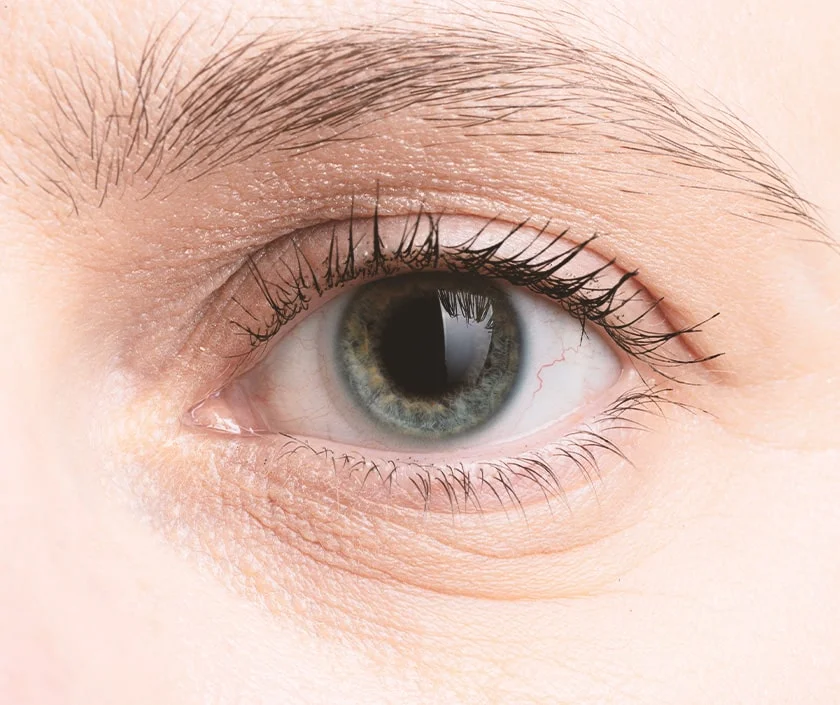
Under Eye Botox can be used selectively around the upper and lower eyelids to soften dynamic infraorbital wrinkles, reduce a prominent pretarsal “jelly roll,” and, in carefully selected patients, subtly widen the visible eye aperture. Because eyelid skin is exceptionally thin and the orbicularis oculi has an important protective function, Under Eye Botox treatment requires conservative dosing, precise placement, careful assessment of eyelid tone, and detailed knowledge of periocular anatomy.
What Is Infraorbital or Lower-Eyelid Botox?
Infraorbital Botox refers to carefully selected neuromodulator treatment beneath the eye, usually targeting hyperactive portions of the orbicularis oculi. The source chapter explains that contraction of this sphincter-like muscle contributes to blinking, eyelid closure, lower-eyelid tone, lateral canthal wrinkles and lower-eyelid rhytides. In some patients, hypertrophy of the pretarsal orbicularis creates a visible roll beneath the lower eyelid when smiling.
This treatment is different from routine crow’s-feet Botox. The lower eyelid has less margin for error, and not every patient with under-eye lines is an appropriate candidate.
What Is the Under-Eye Jelly Roll?
A jelly roll is a bulge or roll immediately beneath the lower eyelashes that becomes more obvious during smiling or squinting. According to the supplied chapter, hypertrophy of the pretarsal orbicularis oculi can contribute to this appearance and may simultaneously narrow the palpebral aperture, making the eye look smaller during animation.
How Can Botox Change the Appearance of the Eyes?
In a suitable patient, selective weakening of an overactive lower-eyelid orbicularis can flatten a prominent muscular roll and allow the eye opening to appear slightly wider. The chapter cites clinical studies reporting measurable increases in vertical palpebral aperture when lower-eyelid treatment was combined with lateral canthal treatment. The cosmetic objective is subtle: a more open and balanced appearance rather than an artificial change in eye shape.
Dynamic Under-Eye Lines vs. Static Wrinkles
- Dynamic wrinkles appear mainly with smiling, squinting or forceful eyelid contraction and are more directly influenced by muscle activity.
- Static wrinkles remain visible at rest and often reflect a combination of skin thinning, photodamage, laxity and volume loss.
- Advanced static lines may need complementary treatment such as skin resurfacing or soft-tissue augmentation rather than neuromodulator treatment alone.
Why Patient Selection Is So Important
The chapter emphasizes that successful periocular treatment begins with a full medical, cosmetic and ophthalmic history. Baseline dry eye symptoms, previous blepharoplasty, eyelid surgery, fillers, facial surgery, asymmetry, ptosis and lower-eyelid laxity can all change the risk-benefit balance.
The lower eyelid “snap test” is specifically discussed as a method of assessing eyelid and ligamentous tone. Patients with slow recovery or significant laxity may be at increased risk of swelling, scleral show or malposition after weakening the orbicularis.
Who May Be a Suitable Candidate?
- A patient with a visible muscular jelly roll during smiling
- Dynamic fine lines directly beneath the eye related to orbicularis activity
- Good lower-eyelid tone and elasticity
- No significant symptomatic dry eye or compromised eyelid closure
- Realistic expectations about subtle improvement
- No major structural problem that would be better addressed with surgery, resurfacing or volume restoration
Who Needs Extra Caution or May Not Be a Candidate?
- Significant lower-eyelid laxity or severe elastosis
- Symptomatic dry-eye disease
- Pre-existing scleral show or ectropion tendency
- Compromised orbicularis oculi function or midfacial paresis
- Previous lower-eyelid blepharoplasty with altered anatomy
- Neuromuscular disorders or medications affecting neuromuscular transmission
- Active infection or inflammation at the injection site
- Pregnancy or lactation, as listed among contraindications in the source chapter
Why Conservative Treatment Matters
The upper and lower eyelids contain extremely thin skin and sit adjacent to structures responsible for eyelid movement and eye protection. The source repeatedly recommends precise placement and conservative dosing. Higher lower-lid doses did not necessarily produce greater eye-opening effects in the studies discussed, but they did increase adverse effects. The chapter therefore favors a cautious approach with reassessment when necessary.
Lower-Eyelid Botox vs. Crow’s-Feet Botox
Crow’s-feet treatment primarily targets the lateral orbital portion of the orbicularis oculi. Lower-eyelid treatment targets a different region and may be considered when a patient has a prominent pretarsal roll or selected infraorbital dynamic lines. The two treatments may be combined in appropriately selected patients, but lower-eyelid treatment is not automatically included in standard crow’s-feet treatment.
Can Botox Treat Upper-Eyelid Asymmetry or Ptosis?
The supplied chapter also discusses specialized functional uses of botulinum toxin for mild-to-moderate upper-lid ptosis, eyelid malposition and fissure asymmetry. These are advanced indications in which very precise low-dose placement is used to alter the balance of eyelid muscles. They should not be confused with routine cosmetic wrinkle treatment and require specialist assessment.
Can Botox Correct One Eye Looking Smaller When Smiling?
Some patients animate asymmetrically and notice that one eye appears smaller in photographs. The chapter describes selective weakening of orbicularis tone on the smaller-appearing side as a potential approach in appropriate cases, including selected patients with post-facial-palsy synkinesis. The cause of asymmetry must be identified before treatment.
Possible Side Effects and Complications
Most injection-site effects are temporary, but periocular treatment has specific functional risks because the orbicularis oculi contributes to eyelid tone, blinking and tear dynamics.
- Bruising or ecchymosis
- Temporary fullness or lower-eyelid swelling
- Dry eye or tearing
- Lower-eyelid laxity or scleral show
- Ectropion or incomplete eyelid closure in susceptible patients
- Eyelid ptosis if toxin diffuses to eyelid-elevating structures
- Diplopia in rare cases if extraocular structures are affected
- Accentuation of lower-lid bags, laxity or festoons in an unsuitable patient
The chapter attributes many serious adverse events to inappropriate patient selection, misplaced injections or poor technique and emphasizes that detailed history and examination can prevent many problems.
Combination Treatments for More Complete Eye Rejuvenation
Under-eye aging is not caused by muscle activity alone. Skin quality, pigmentation, volume loss, ligamentous laxity and skeletal support all contribute. The chapter therefore describes botulinum toxin as one component of a broader periorbital rejuvenation strategy.
- Photoprotection and appropriate topical skin care
- Retinoids and selected topical rejuvenation strategies
- Laser or light-based treatment for photodamage and texture
- Radiofrequency or focused ultrasound in selected patients
- Hyaluronic-acid filler for appropriate static folds or volume loss
- Surgery when structural eyelid laxity, excess skin or significant malposition requires correction
Botox and Under-Eye Filler: Different Jobs
Botox primarily modifies excessive muscle activity. Filler primarily restores volume and can support deep static folds or age-related hollowing. The chapter describes the two modalities as complementary in suitable patients. A patient with a tear trough or volume deficit should not automatically receive lower-eyelid Botox simply because wrinkles are present.
Botox and Laser / Resurfacing
For patients with static wrinkles and photodamage, resurfacing may address skin quality while neuromodulator treatment reduces the repetitive muscular folding that recreates dynamic lines. The chapter describes a synergistic role for combination treatment and notes that ongoing neuromodulator treatment can help maintain results.
Lower-Eyelid Botox in Abu Dhabi - Frequently Asked Questions
