
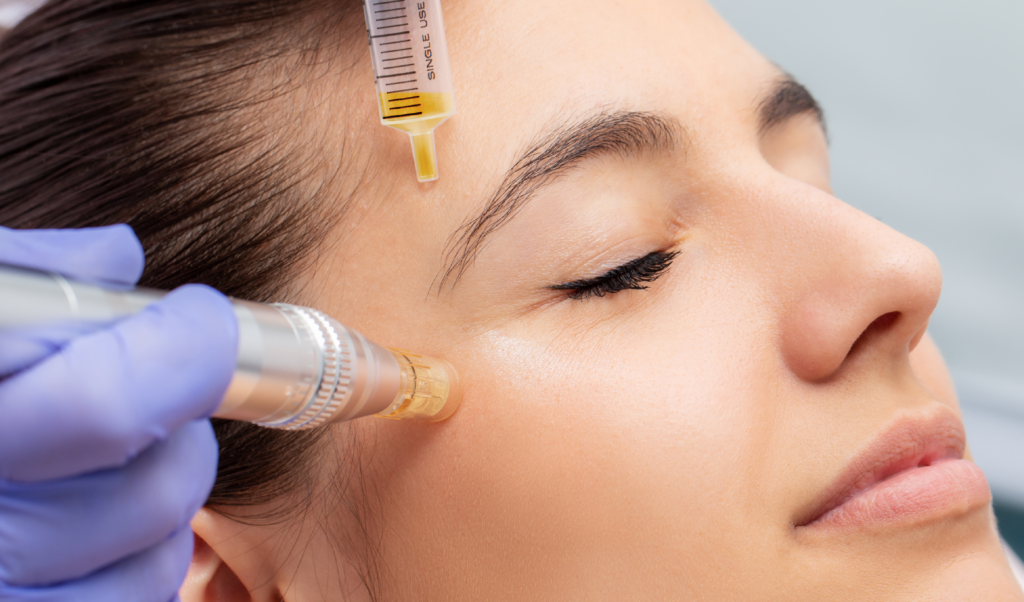
PRP combination treatments in Abu Dhabi are designed around a simple principle: different treatments act on different parts of the healing and remodeling process. Energy-based procedures can create a controlled stimulus in the skin or scalp, while platelet-rich plasma (PRP) provides an autologous source of platelets, growth factors and cytokines that may support repair and tissue remodeling.
PRP is commonly paired with procedures such as RF microneedling, fractional laser and conventional microneedling. The goal is not to make PRP replace these treatments, but to use its regenerative signaling as an adjunct where the treatment plan targets acne scars, skin quality or hair loss.
What is PRP and why is it used in combination treatments?
Platelet-rich plasma is prepared from the patient’s own blood. After centrifugation, a platelet-enriched plasma fraction is collected. Platelets release signaling molecules involved in wound repair, angiogenesis, inflammation and tissue remodeling, including PDGF, TGF-β, VEGF, EGF, bFGF and IGF-1.
Because PRP does not depend on thermal injury or chemical resurfacing, it can be used as an adjunct to treatments that work through a different mechanism. This makes PRP particularly relevant to combination plans in which one procedure creates controlled tissue stimulation and PRP is then used to support the subsequent biological response.
Why combination treatment can make sense
Facial aging, acne scarring and hair loss are multifactorial. A single modality rarely addresses every biological and structural component. Combination treatment therefore aims to match complementary mechanisms rather than simply adding more procedures.
- RF microneedling or fractional laser can trigger controlled tissue injury and collagen remodeling.
- PRP delivers an autologous platelet concentrate with regenerative signaling molecules.
- Microneedling can create channels that may facilitate topical delivery of PRP in selected protocols.
- Hair-loss plans may combine PRP with established medical therapy or device-based stimulation when clinically appropriate.
- The exact combination, sequence and number of sessions should be individualized rather than standardized for every patient.
PRP + RF Microneedling for Acne Scars
Both PRP and microneedling radiofrequency can influence fibroblast activity and collagen remodeling. The source chapter describes these approaches as potentially synergistic for acne scars and other types of scarring, with PRP used after the energy-based treatment to support recovery and remodeling.
For atrophic acne scars, the treatment plan should still be based on scar morphology. Rolling, boxcar and ice-pick scars do not necessarily respond to the same intervention, and some patients may need subcision, focal resurfacing or other scar-specific treatments in addition to PRP.

PRP + Fractional Laser for Skin Rejuvenation
Skin rejuvenation strategies often aim to improve texture, tone, pore appearance, fine lines and overall radiance. Fractional laser creates controlled zones of injury that stimulate repair. The chapter reports clinical and histologic studies in which adding PRP after fractional laser was associated with increased collagen, more fibroblasts and changes at the dermoepidermal junction.
For patients in Abu Dhabi, treatment selection should also take skin phototype, history of post-inflammatory hyperpigmentation, sun exposure, downtime tolerance and the specific laser platform into account. PRP does not remove the need for conservative energy selection and strict photoprotection.
PRP + Microneedling for Facial Rejuvenation
Microneedling combined with PRP has been studied as a facial rejuvenation strategy. In the source chapter, a comparative study reported improved collagen organization, fewer abnormal elastic fibers and improved dermal structure after a series of combined sessions.
This type of combination may be considered when the main goal is skin quality rather than structural lifting or major volume replacement. Patients with substantial laxity, deep folds or significant volume loss may require a different treatment category.
PRP Combination Treatments for Hair Loss
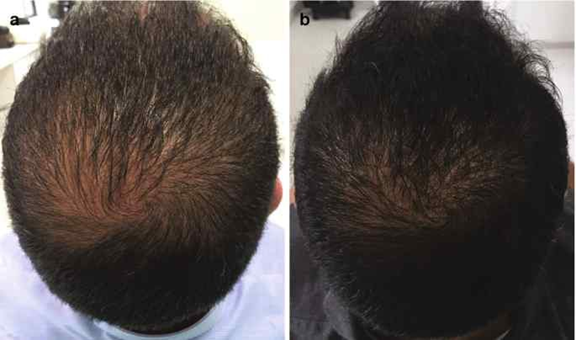
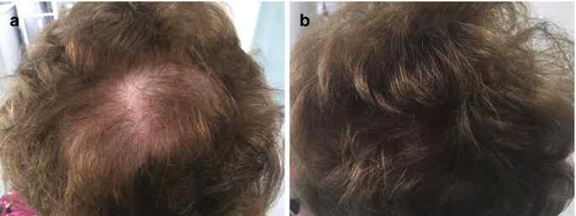
PRP has become a widely discussed regenerative option for non-scarring hair loss. Platelet-derived signaling molecules may affect inflammation, follicular activity and dermal papilla cells. The chapter also describes PRP as a potential partner for treatments such as minoxidil, finasteride, low-level laser therapy, fractional laser and RF microneedling.
Combination therapy should be diagnosis-led. Androgenetic alopecia, female-pattern hair loss, telogen effluvium and inflammatory or scarring alopecias require different work-ups and do not have the same evidence base or treatment pathway.
Can PRP be used around a hair transplant?
The source chapter notes that PRP has been used to prime the scalp around hair-transplant procedures with the aim of supporting graft survival and wound healing. This should be framed as an adjunctive strategy rather than a substitute for appropriate transplant planning or medical treatment of ongoing hair loss.
Treatment Planning & Patient Selection
How is a PRP combination plan selected?
- Define the main problem: scar, texture, photodamage, hair loss, laxity or another concern.
- Choose the primary treatment mechanism: resurfacing, RF microneedling, laser, microneedling or hair-restoration therapy.
- Decide whether PRP adds a reasonable biological adjunct based on the indication and evidence.
- Review skin type, medical history, medication use, infection risk and downtime tolerance.
- Set realistic goals and explain that combination treatment does not guarantee a superior outcome for every patient.
How many sessions are needed?
There is no universal PRP combination protocol. The source chapter describes several research protocols using a series of sessions, commonly around three treatments spaced approximately one month apart for certain scar or hair-loss combinations. Other facial-rejuvenation studies used different schedules. The correct regimen therefore depends on the indication, device, PRP preparation method and clinical response.
A common research pattern is a short series rather than a single session, but there is no single standardized PRP protocol. Session number and spacing should be individualized by the treating clinician.
Safety, limitations and realistic expectations
PRP is autologous, but that does not make every PRP treatment risk-free. Injection-related discomfort, bruising, bleeding and infection remain possible, and the risk profile also depends on the device or procedure being combined with PRP.
The source chapter specifically highlights the lack of consensus on PRP preparation, including differences in centrifugation systems, activation methods and the concentrations of platelets, leukocytes and red blood cells. This variability is one reason outcomes can differ between protocols and studies.
- Active infection and medication history should be reviewed before treatment.
- Patients taking antiplatelet or systemic immunosuppressive medication require individualized medical assessment.
- Energy-based treatment carries its own procedure-specific risks and downtime.
- Hair-loss treatment should start with the correct diagnosis before a regenerative protocol is chosen.
- PRP should not be marketed as a guaranteed cure or as equivalent to surgery, transplantation or disease-specific medical therapy.
PRP alone vs PRP combination treatment
| Approach | Potential role | Best framing |
|---|---|---|
| PRP alone | Regenerative signaling / adjunctive tissue support | May be appropriate for selected hair or skin indications |
| PRP + RF microneedling | Controlled dermal stimulation + regenerative adjunct | Acne scars, skin quality, selected hair-loss protocols |
| PRP + fractional laser | Fractional resurfacing + regenerative adjunct | Photoaging, texture, scars, selected hair protocols |
| PRP + medical hair therapy | Biological adjunct + disease-directed treatment | Diagnosis-led hair restoration plans |
