

Endolift Face & Body Contouring in Abu Dhabi | Skin Tightening
Modern facial and body rejuvenation is rarely about treating one tissue layer in isolation. A patient may have skin laxity, localized fat, volume loss, fine lines, textural irregularity and changes in collagen quality at the same time. Endolift can address part of that picture from the deeper dermal–subdermal level, while carefully selected complementary procedures can target the components that a single modality may not fully correct.
This is the logic behind a multimodal treatment plan: not “more procedures,” but the right procedure for the right layer, in the right sequence. The 2026 narrative review that forms the scientific basis of this page describes Endolift as a 1470 nm diode-laser platform with clinical use in skin tightening, soft-tissue remodeling and localized lipolysis, and evaluates how combining it with injectables, regenerative strategies and resurfacing can broaden aesthetic outcomes.
CLINICAL PRINCIPLE :
Combination therapy is not automatically better for every patient. A conservative plan may involve Endolift alone. Additional modalities are considered only when they address a separate, clearly identified concern.
What Is Endolift and What Does It Actually Target?
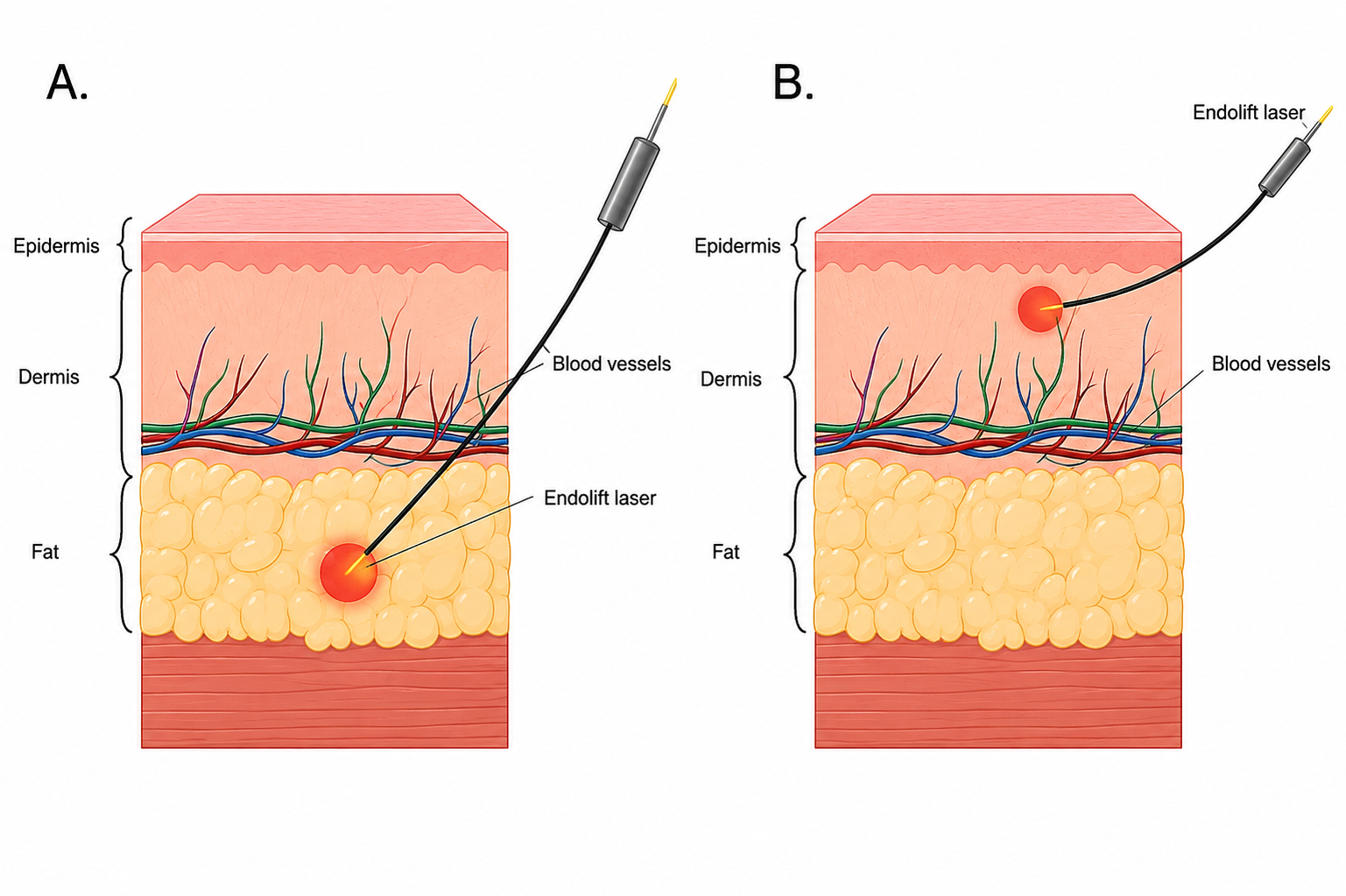
Endolift uses a very fine optical fiber to deliver 1470 nm diode-laser energy below the skin. The review describes this wavelength as having strong affinity for water within the target tissue, creating a controlled photothermal effect in deeper tissue while avoiding the need for surface ablation as the primary mechanism.

Two core effects explain why the treatment can be useful in different indications:
- Selective lipolysis in appropriately selected areas with localized adipose tissue. Thermal interaction can disrupt adipocyte integrity and support contour reduction.
- Collagen remodeling and tissue retraction. Controlled heating can produce immediate contraction of connective septa and can stimulate a later wound-healing response with neocollagenesis and extracellular-matrix remodeling.
This dual action is important because some patients need more than simple “skin tightening.” For example, a heavy lower face may involve both laxity and a resistant fat compartment, while a thin, deflated midface may need tightening plus strategic volume restoration rather than aggressive fat reduction.
Why Combine Endolift With Other Aesthetic Procedures?
Facial aging and body-contour concerns are multidimensional. The review emphasizes that a single device cannot always correct structural laxity, volume depletion and superficial texture at the same time. A combination strategy can therefore be designed around complementary mechanisms rather than repetitive treatment of the same layer.
| Concern | Endolift Role | Possible Complement | Why the Combination May Help |
|---|---|---|---|
| Laxity / heavy tissue | Deep tightening + selected lipolysis | HA or CaHA filler | Tighten first, then restore volume where needed without simply adding more filler. |
| Volume loss | Improves tissue support | HA / CaHA | Addresses deflation that laser tightening alone cannot replace. |
| Skin quality / regenerative goal | Photothermal remodeling | Nanofat; regenerative strategies | Combines a thermal remodeling signal with biological tissue-support concepts. |
| Fine surface texture / pores | Deep dermal-subdermal effect | Fractional resurfacing or RF microneedling | Treats deeper support and surface texture in a layered approach. |
| Acne scarring | Deep tethering / subcision-type effect in selected scars | Resurfacing or RF microneedling | Addresses both deep tethering and superficial irregularity. |
Where Endolift Fits Across the Face, Neck and Body
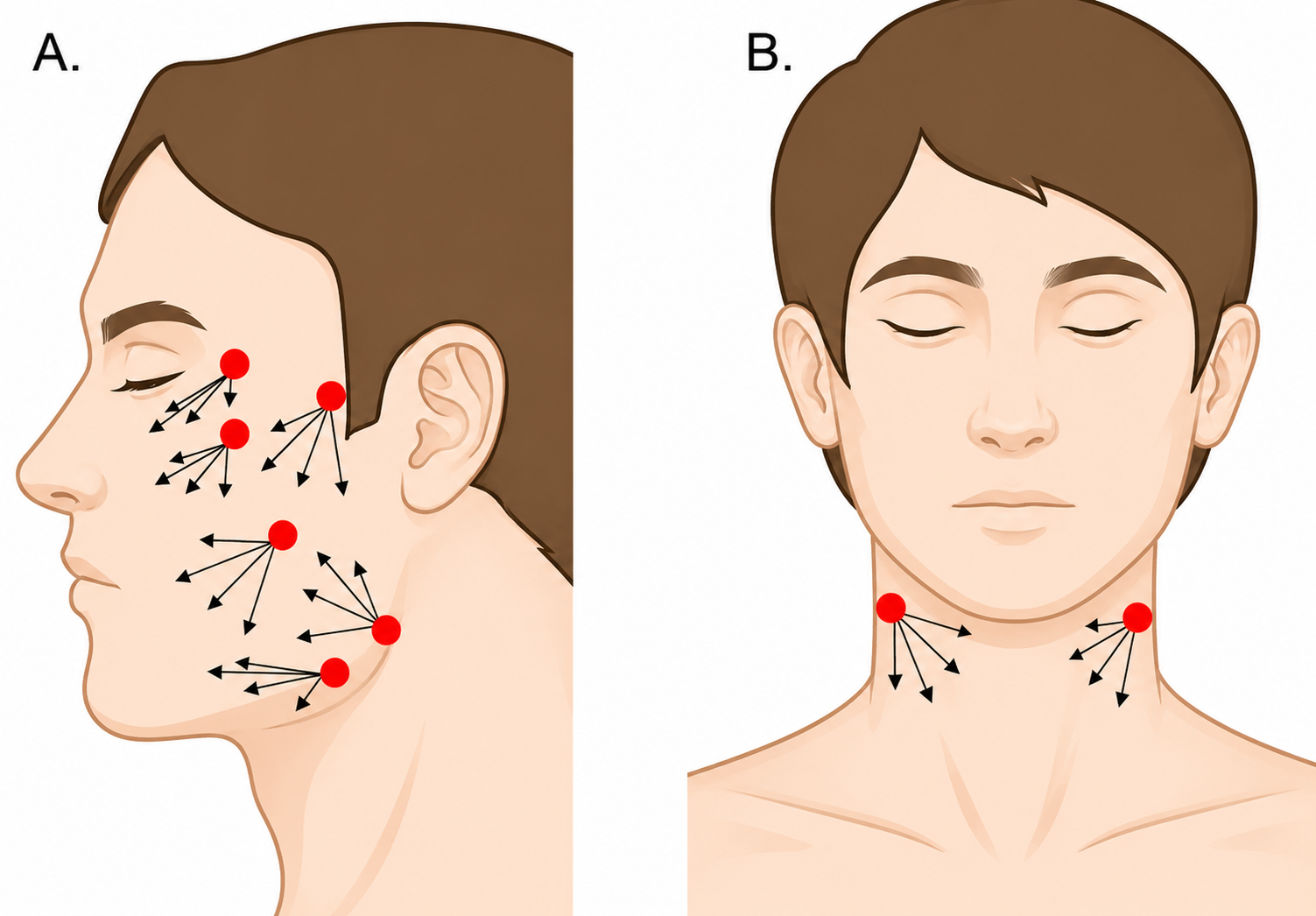
The review summarizes Endolift use across delicate periorbital skin, the upper face, jowls, submental region, horizontal neck lines, and localized body adiposity in the arms and lower abdomen. Treatment depth, fiber selection and energy delivery are not one-size-fits-all; they are adapted to tissue thickness, fat distribution and the specific clinical goal.
Endolift + Dermal Fillers: The “Lift and Fill” Concept
The review describes combined use of Endolift with hyaluronic acid (HA) or calcium hydroxyapatite (CaHA) as a way to separate two different tasks: structural tightening and volume restoration. Endolift can improve tissue support and reduce selected heavy fat compartments; filler can then be used more selectively in areas that are genuinely deflated.
This distinction matters. Adding filler to a heavy or lax face without addressing tissue position can sometimes create an overfilled appearance. A “tighten first, fill only where needed” philosophy may allow a more conservative volumizing plan in appropriately selected patients.
When might this combination be considered?
- Lower-face heaviness combined with midface deflation
- Mild-to-moderate laxity with localized volume loss
- Patients seeking contour improvement without a surgical lift
- Cases where filler alone would not address skin laxity or tissue descent
SEQUENCING MATTERS :
The review notes that timing is still debated. Same-session placement can create theoretical concerns around thermal effects on filler material and increased edema. Staged treatment may be preferred when the laser and filler would occupy similar tissue planes.
Endolift + Regenerative Approaches
The review discusses regenerative combination strategies, with the most detailed mechanistic discussion focused on nanofat. Endolift provides controlled thermal stimulation and a wound-healing signal, while nanofat can provide adipose-derived cellular and growth-factor components intended to support tissue quality and collagen remodeling.
This type of combination is conceptually attractive for patients whose concern is not only laxity but also skin quality. However, it is more invasive than Endolift alone because nanofat requires a donor site, and the review highlights the importance of spacing and tissue-plane differentiation so that laser heat does not compromise graft viability.
EVIDENCE NOTE :
The source review groups nanofat and PRP within regenerative therapy discussions, but its clearest combination evidence and mechanistic detail are centered on nanofat. A website should therefore avoid presenting Endolift + PRP as equally established without procedure-specific evidence.
Endolift + Fractional Resurfacing or RF Microneedling
Endolift primarily works from a deeper plane, so it has limited ability to directly correct epidermal pigmentation, very fine superficial lines or surface texture. Fractional lasers and RF microneedling work closer to the surface and can complement the deeper tightening effect.
The review describes this as a layered or “sandwich” approach: Endolift supports the deeper foundation, while resurfacing improves the visible surface. This may be particularly relevant in acne scarring, where deep tethering and surface irregularity can coexist.
Potential benefits
- Broader treatment of texture plus laxity
- More complete approach to acne-scar architecture
- Ability to target pores, fine lines and superficial irregularity separately from deep support
Important trade-off
Combining energy-based procedures can increase inflammation, edema and downtime. The review specifically warns that cumulative thermal injury may increase the risk of post-inflammatory hyperpigmentation, particularly in higher Fitzpatrick skin types. This is one reason combination treatment should be individualized rather than routinely stacked in the same session.
A Better Way to Think About Combination Treatment
Rather than asking “Which procedures can I combine with Endolift?”, it is more useful to ask “What are the separate anatomical problems I want to improve?” A clinically rational plan may look like this:
- Define the dominant problem: laxity, fat, volume loss, texture, scarring, pigmentation, or a mixture.
- Use Endolift only where deep tightening, remodeling or selected lipolysis is actually needed.
- Add volume only to true volume-deficient areas rather than filling the entire face.
- Use resurfacing or RF microneedling when the remaining concern is superficial texture rather than deeper laxity.
- Stage procedures when overlapping tissue planes, swelling or cumulative thermal load could compromise safety or interpretation of the result.
What Does the Current Evidence Say?
The 2026 review synthesizes evidence from clinical trials, cohort studies, case series and earlier reviews. It describes measurable improvements reported across several indications, including lower-eye bags, upper-eyelid laxity, forehead and glabellar lines, jowl fat, nasolabial and marionette folds, horizontal neck lines, and localized fat / laxity of the arms and lower abdomen.
IMPORTANT LIMITATION :
The evidence is promising but not uniform in strength. The authors emphasize that many published studies are small case series or retrospective analyses, with variable laser parameters and relatively short follow-up. Larger randomized controlled trials and standardized protocols are still needed.
Safety, Anatomy and “Danger Zones”
A 1470 nm subdermal laser is an operator-dependent procedure. The source review stresses sterile technique, correct treatment depth, controlled retrograde movement, individualized parameters and detailed anatomical knowledge. Potential temporary effects include bruising, swelling, mild discomfort, altered sensation and transient neuropraxia.
The review identifies several facial regions that demand additional caution because of nerves, vessels and delicate anatomy, including the glabella, temple, infraorbital region, nose, perioral area and nasolabial fold. It also emphasizes avoiding fiber insertion in designated prohibited zones and using controlled retrograde energy delivery near vulnerable structures.
Who May Be a Good Candidate?
- Adults with mild-to-moderate skin laxity who prefer a minimally invasive option
- Patients with localized fat plus laxity in selected facial or body areas
- Patients whose rejuvenation needs involve more than one layer — for example laxity plus volume loss or laxity plus texture
- Patients with realistic expectations who understand that multimodal treatment may be staged rather than completed in one session
Who needs extra caution or may not be suitable?
- Pregnancy
- Active infection in the treatment area
- Coagulation disorders
- Certain skin diseases or malignancy
- Metallic implants in relevant treatment contexts
- Anatomical or medical factors that make safe subdermal treatment inappropriate
A face-to-face medical assessment is required because candidacy depends on anatomy, tissue thickness, fat distribution, prior procedures, skin type and the exact result the patient is expecting.
What to Expect From a Tailored Plan
| Stage | What happens |
|---|---|
| Consultation | Assessment of laxity, fat, volume, texture, skin type, previous treatments and priorities. |
| Treatment design | Decision whether Endolift alone is sufficient or whether a staged complementary treatment adds a distinct benefit. |
| Endolift phase | Deep tissue remodeling / tightening and, where indicated, localized contouring. |
| Reassessment | Allow swelling to settle and early remodeling to declare itself before adding unnecessary treatment. |
| Complementary phase | Selective filler, regenerative therapy or resurfacing only if the residual concern warrants it. |
| Follow-up | Results are evaluated over time because collagen remodeling is progressive rather than purely immediate. |
