

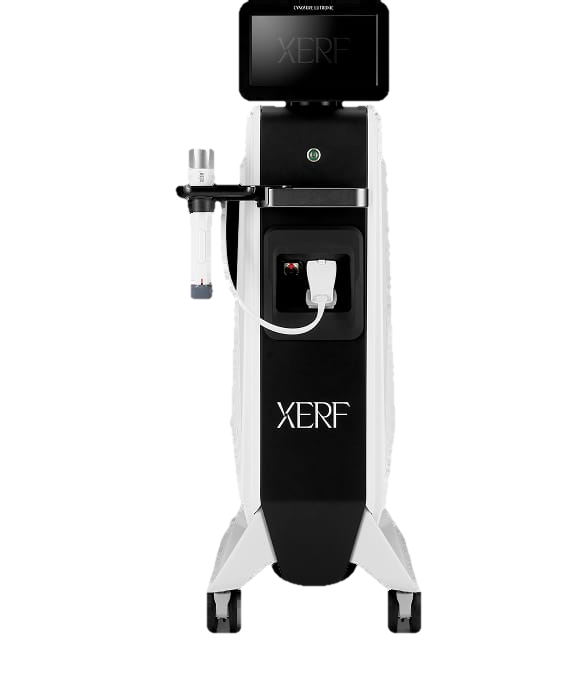
XERF is a non-invasive monopolar radiofrequency platform described in the uploaded clinical training material as using two frequencies, 6.78 MHz and 2 MHz, with shallow, medium and deep treatment modes. The system combines Wave Fit Pulse energy delivery, Integrated Cryogen Delivery (ICD) cooling and real-time surface-temperature monitoring. The training material lists facial lines and wrinkles, eyebrow lifting, and facial and neck laxity among its Canadian indications. For patients in Abu Dhabi, treatment suitability and parameters should be individualized after clinical assessment; local regulatory indications and availability should be verified separately.
What Is XERF ?
XERF is presented in the uploaded clinical training material as a non-invasive dermatologic aesthetic radiofrequency system focused on structural skin firmness. Unlike a treatment that acts only at the skin surface, the system is designed around monopolar radiofrequency energy, multiple depth modes and two radiofrequency frequencies. The training deck repeatedly links the technology to collagen remodeling, deeper connective-tissue support and tailored treatment of different anatomic regions.
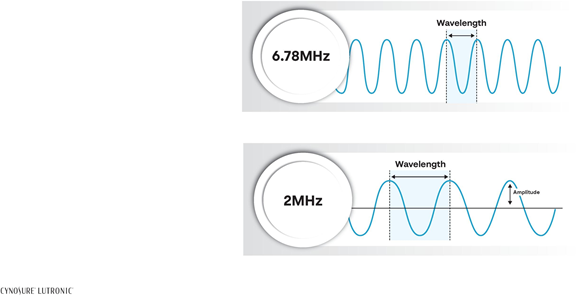
The device is described as using 6.78 MHz and 2 MHz radiofrequency. In the training framework, 6.78 MHz is used in shallow and medium modes, while deep mode combines 6.78 MHz with 2 MHz to distribute energy through thicker tissue regions. The deck also describes Wave Fit Pulse, integrated cryogen cooling, a patented spider-pattern EFFECTOR tip and five temperature sensors used for surface monitoring.
Why Skin Loses Firmness With Age
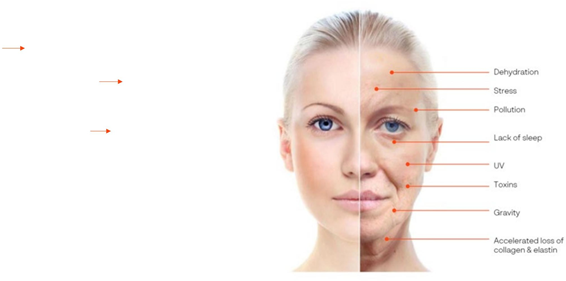
The training deck frames skin ageing as a structural process rather than a purely superficial one. It describes natural ageing, sun and environmental damage, reduced collagen support, damaged or irregular elastin, slower repair and progressive thinning as contributors to visible fine lines, deeper wrinkles, laxity and loss of firmness.
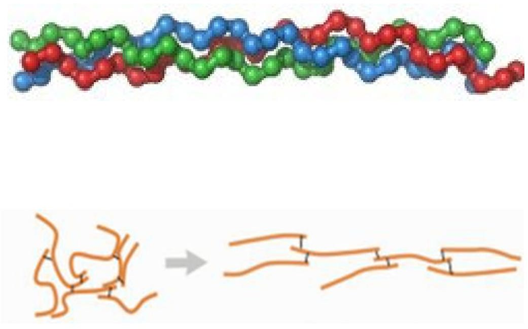
Collagen and elastin have different mechanical roles. The source describes collagen as a strong structural protein that supports and holds skin together, while elastin contributes to the ability of tissue to stretch and return toward its original form. Both are present in dermal layers, and age-related structural change can reduce the resilience of the skin-support network.
How Radiofrequency Produces Heat in Tissue
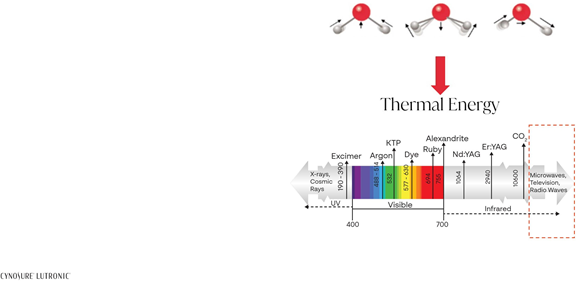
The training material explains radiofrequency as part of the electromagnetic spectrum. In its simplified mechanism description, high-frequency electromagnetic energy interacts with water-containing tissue and generates heat. When dermal temperature is raised in a controlled way, the source links that thermal stimulus to collagen contraction, protein denaturation, fibroblast activation and subsequent neocollagenesis.
This is the biological rationale behind non-invasive RF tightening: the treatment does not physically excise loose tissue. Instead, it attempts to create a controlled thermal stimulus in collagen-rich structures so that tissue contraction and later remodeling can improve firmness over time.
Why Monopolar RF Matters
The source describes XERF as a monopolar RF system. A monopolar configuration uses an active treatment electrode together with a return or grounding electrode. The training deck contrasts this with bipolar RF and states that monopolar energy can travel through multiple tissue layers on its path between the active and return electrodes.
For patients, the practical concept is depth and distribution: the system is designed to deliver thermal energy beyond the most superficial layer while still requiring stable tissue contact, a properly placed return pad, coupling gel and continuous clinical monitoring.
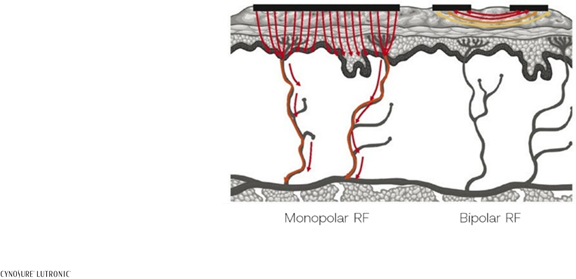
The Structural Target : Dermis, Fibrous Septa and the Facial Support Network
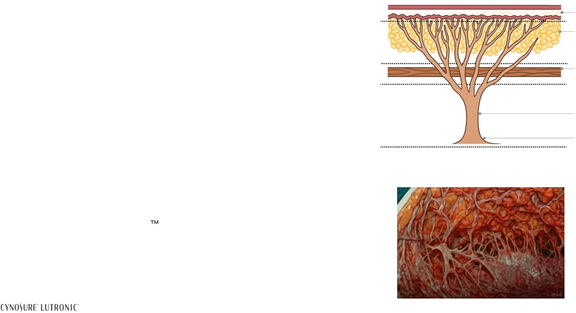
One of the strongest themes in the training presentation is structural skin firmness. The source describes collagen not only in the dermis but also along fibrous sheaths and septa within subcutaneous tissue, fascia and SMAS-related support layers. It states that a meaningful proportion of subcutaneous tissue contains collagen-rich fibrous septa that create a connective network between fat lobules.
The deck also discusses the retinacular cutis and fibro-septal network as structures that support and connect different layers. These structures include collagen, elastin, ligaments and other extracellular-matrix components. The training concept is that strengthening this connective network can improve the integrity and firmness of soft tissue without surgically removing skin.
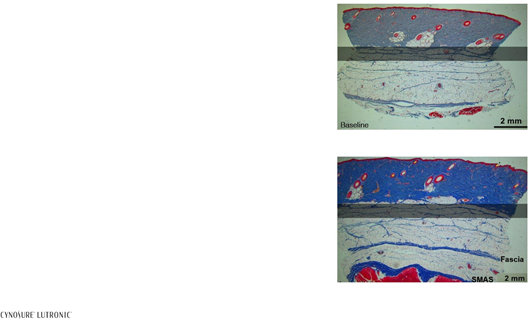
Histology and Dermal Remodeling Evidence Shown in the Training Deck
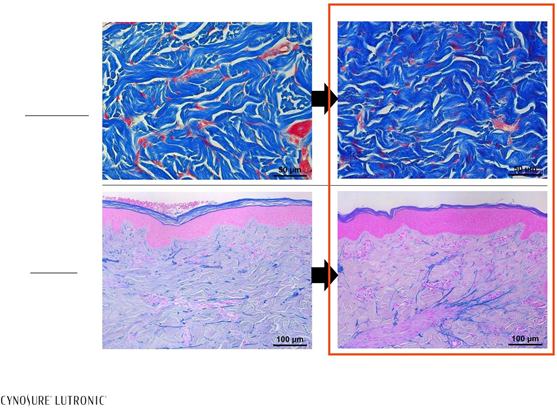
The presentation includes preclinical histology visuals using Masson’s trichrome staining and a separate dermal-remodeling figure showing thicker collagen and increased overall collagen density at follow-up. It also describes an increase in elastin production in tissue after treatment.
The deck cites a 2024 Journal of Cosmetic Dermatology article on monopolar radiofrequency for dermal temperature regulation and remodeling in a porcine model. This is important evidence context: histologic remodeling in an animal model can support biological plausibility, but it should not be presented as the same level of evidence as a large randomized human trial.
Two Frequencies : 6.78 MHz and 2 MHz
The training deck describes XERF as a multi-frequency system using 6.78 MHz and 2 MHz. It states that 6.78 MHz produces shorter, more compact wavelengths and is used through the dermis in shallow and medium modes. The 2 MHz component is described as penetrating more deeply and across a broader tissue area.
In deep mode, the presentation combines 6.78 MHz and 2 MHz. The source says this allows selective heating and tissue contraction while attempting to minimize heat exposure to surrounding fat. That is a manufacturer-training claim and should be presented as such rather than converted into a guarantee of zero fat effect.
Three Depth Modes : Shallow, Medium and Deep
| Mode | Frequency described in source | Example areas in training deck |
|---|---|---|
| Shallow | 6.78 MHz | Thinner anatomic regions such as the forehead |
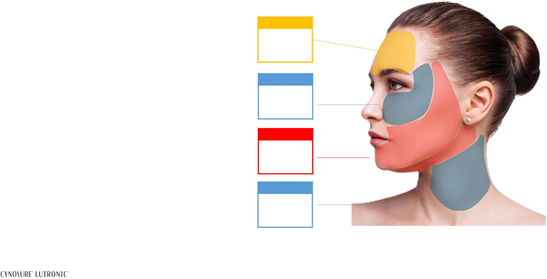
| Medium | 6.78 MHz | Slightly thicker areas such as cheeks and neck |
| Deep | 6.78 MHz + 2 MHz | Thicker regions such as lower face and submental area |
The training presentation repeatedly emphasizes that depth selection should vary with skin thickness and individual anatomy. It specifically states that healthcare professionals should use clinical judgment to determine the most appropriate mode for each area.
The training presentation states that there are no definitive predictors of clinical response, but it lists general characteristics that may be useful when selecting patients. These include mild-to-moderate laxity with relatively elastic, thinner skin and mild-to-moderate changes in texture, sagging and volume.
That is an important limitation for patient-facing marketing. XERF should not be presented as equally suitable for every degree of laxity. Patients with severe excess skin, major structural descent or a concern driven primarily by volume deficiency may need a different or combined treatment strategy.
Consultation PrincipleFor patients searching for XERF in Abu Dhabi, Dr. Erfan Rahmani can assess whether the main concern is skin laxity, jawline definition, brow position, fine lines, skin quality, submental contour, structural volume loss or a combination. Device choice should follow diagnosis rather than the other way around.
How Many XERF Sessions Does the Training Deck Recommend ?
The uploaded training presentation recommends a minimum of two treatments with intervals of four to six weeks. It states that results can vary from patient to patient and recommends photography at each treatment session.
The deck also explains that neocollagenesis occurs over time: treatment results may become evident at around one month and can continue developing for up to approximately six months after treatment. Follow-up sessions may be recommended according to the patient’s goals.
Important Protocol ContextThis minimum-two-session schedule comes from the manufacturer clinical training deck. Other published clinical studies may use different study designs, including single-session protocols. The number of sessions for an individual patient should therefore not be presented as a universal rule.
What Areas Can Be Treated ?
The source training protocols focus heavily on the face and neck. The full-face-and-neck protocol separates treatment by tissue thickness and anatomy: the forehead is mapped to shallow treatment, the midface and neck to medium treatment, and the lower face and submental region to deep treatment.
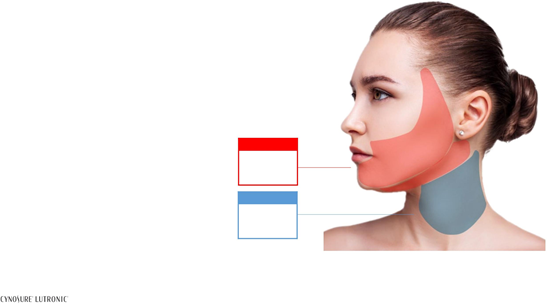
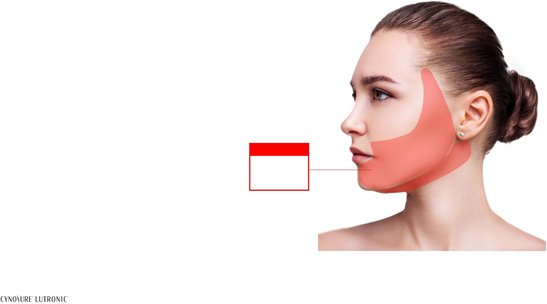
Additional source protocols are provided for the lower face and neck, and for the lower face plus submental region. The deck also instructs operators not to treat the thyroid and vocal-cord area and to use care around nerve pathways and bony prominences such as the orbital rim.
What Happens During a XERF Treatment Session ?
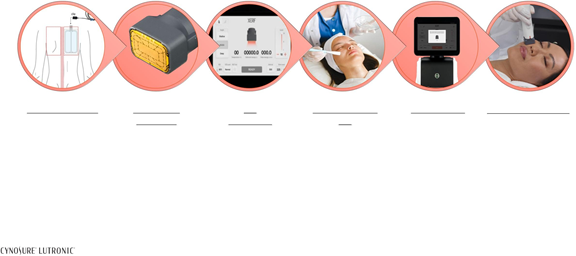
The operator-training section begins with a neutral return pad, a connected EFFECTOR tip, a thin layer of coupling gel, system checks and impedance synchronization before RF delivery. The return pad is placed on a clean, flat, hair-free region with good tissue contact, and the source stresses that the patient should report any heat or discomfort beneath the pad immediately.
The skin is assessed, settings are selected according to anatomy and skin thickness, and a thin even gel layer is maintained so the handpiece can move smoothly and maintain contact. The source also recommends Fitzpatrick skin-type assessment and low-energy test procedures in a similar area when appropriate.
Comfort Is Not the Same as Effectiveness
The training presentation specifically warns that increasing pain does not correlate with a more effective treatment outcome. When a patient reports discomfort, the source advises checking full EFFECTOR contact, increasing ICD cooling, changing from stamping to sliding where appropriate, adjusting depth mode or decreasing energy.
This is a useful patient message: a stronger painful sensation should not be marketed as proof that the treatment is working better. Comfort, stable tissue contact, appropriate temperature response and a controlled clinical endpoint are more relevant than deliberately maximizing pain.
Immediate Clinical Endpoint
The training material describes mild-to-moderate erythema as a typical immediate clinical endpoint. The deck includes examples of mild and moderate redness immediately after treatment and notes that additional cooling can be used to reduce discomfort during treatment.

Aftercare Recommendations in the Training Material
- Remove residual ultrasound/coupling gel from the treated area.
- Do not use cold or ice compresses on the treated area according to the source protocol.
- Keep the treated area moisturized and hydrate daily.
- Recognize that activities increasing blood flow or body temperature may temporarily increase redness.
- Avoid cosmetics containing alcohol for at least one week after treatment in the source protocol.
- Use daily broad-spectrum UVA/UVB sunscreen with SPF 50+ and physical sun protection such as a hat or parasol when outdoors.
- Contact the treating healthcare professional if there are questions or concerns.
Contraindications and Precautions Listed in the Source
The training deck contains a broad safety-screening list. Some items are presented as contraindications and others as precautions. Because this is a manufacturer training presentation rather than a patient-specific medical assessment, the final decision should remain with a qualified clinician and the current operator manual.
| Source-listed issue | How the training material frames it |
|---|---|
| Pacemaker, implanted defibrillator or other implanted electrical device | Do not use; RF may adversely affect the device or current |
| Metal implant outside the electrical pathway | Treat cautiously and monitor for discomfort |
| Pregnancy or breastfeeding | Listed among patients not to treat |
| Active or significant systemic disease | The source lists uncontrolled diabetes, malignancy, acute disease, autoimmune disease and hypertension among precautions/exclusions |
| Epilepsy | Listed as a precaution |
| Tanned or sun-damaged skin | Listed as a precaution |
| Recent neurotoxin or filler | The source lists treatment within the previous four weeks |
| Recent fat graft or skin graft in treatment area | The source lists the previous six months |
| Recent facelift surgery | The source lists the previous two months |
| Keloids / history of keloid scarring | Listed as a precaution |
| Recent tattoos or cosmetic tattoos in treatment area | Listed as a precaution |
| Long-term anti-inflammatory medication / aspirin / blood-disorder medication | Listed for caution |
| Herpes tendency | The source recommends prophylactic antiviral treatment before treatment |
| Adhesive allergy | Warn about possible reaction at return-pad contact site |
| Corn allergy | The training material flags the corn-derived ingredient in Parker Aquasonic gel |
Pre-Treatment Recommendations
- Hydration is emphasized; the source advises increasing water intake and reducing alcohol.
- The deck gives a minimum daily fluid recommendation and discusses coffee intake in the 24 hours before treatment.
- Avoid excessive sun exposure in the weeks before treatment.
- Discontinue irritating topical agents before treatment according to clinician direction.
- Arrive with clean skin and no lotion, makeup, perfume, powder or oil on the treatment area.
- Shave coarse hair over the treatment region; the source specifically notes beard hair can affect treatment.
- Remove all jewellery before treatment.
Possible Side Effects and Complications Listed in the Training Deck
The source includes an extensive complication list. This does not mean that every event is expected or common; it is a safety-training list intended to support informed screening and follow-up.
| Category | Examples listed in source |
|---|---|
| Surface / thermal | Surface irregularities, burns, blisters, crusting, scarring |
| Pigment / colour | Pigmentary change, erythema, pallor, bruising |
| Swelling / inflammatory | Edema, swelling, urticaria/itching, dryness, folliculitis, acne |
| Neurologic / sensory | Sensory change, pain, discomfort, tingling, headache |
| Infectious | Infection, herpes simplex flare |
| Periocular | Itching around the eye area, corneal epithelial erosions |
| Contour / structural | Nodules or lumps, fat atrophy, platysmal ridging |
| Other | Fatigue, ulceration |
How to Read a Manufacturer Safety List
A comprehensive complication list is not an incidence table. The training presentation does not provide a frequency for each listed event. A website should therefore avoid implying that every item is common or equally likely.
Before-and-After Examples in the Training Presentation
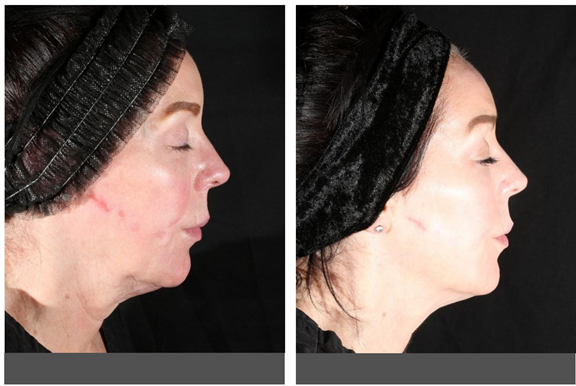
The training deck includes practitioner case examples with before-and-after photographs and source-specific treatment settings. These images are useful as educational examples, but they should not be presented as guaranteed outcomes. Lighting, pose, anatomy, baseline laxity, settings and individual healing/remodeling response all affect appearance.

What XERF Can and Cannot Realistically Do
The source positions XERF as a non-invasive treatment for structural skin firmness, facial lines and wrinkles, eyebrow lifting and facial/neck laxity. That is different from surgical excision, structural filler replacement or treatment of a primary pigment disorder.
- XERF may be considered when the main concern is mild-to-moderate laxity and skin firmness.
- The source supports a role in facial lines/wrinkles and eyebrow-lift treatment concepts.
- The training protocol addresses face, neck and submental contour by adapting depth to anatomy.
- The source does not establish that XERF can replace surgery in severe laxity.
- The source does not establish that XERF replaces dermal filler when true structural volume loss is the dominant issue.
- The source does not provide evidence that XERF is a primary treatment for melasma or focal pigmentation.
- The source does not justify a ‘zero fat-loss risk’ claim; it describes an approach intended to minimize heat exposure to surrounding fat in deep mode.
Why a Consultation Matters More Than Choosing a Device Online
Two people asking for ‘skin tightening’ may have completely different underlying problems. One may have early skin laxity, another may have volume loss, another may have heavy tissue, another may have a prominent submental fat compartment, and another may have structural ptosis that is unlikely to respond adequately to a non-invasive device.
For that reason, Dr. Erfan Rahmani’s consultation approach should focus first on anatomy and the patient’s desired endpoint. For patients searching for XERF in Abu Dhabi, the useful question is not simply ‘Is XERF good?’ but ‘Is XERF the right tool for my specific anatomy and goal ?’
More information and consultation Details : www.drerfanrahmani.com
