
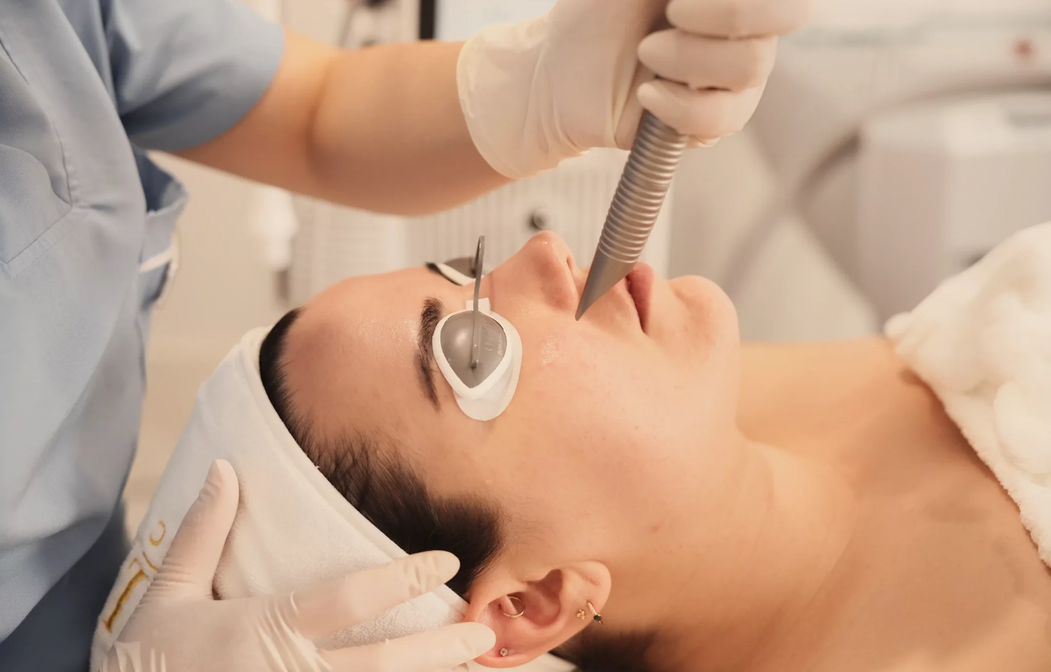
Fotona is an Er : YAG-based skin resurfacing platform designed to cover a wide spectrum of treatment depths and tissue effects, from light superficial peels and non-ablative thermal treatments to deeper full-field and fractional resurfacing. Its core technologies include Variable Square Pulse (VSP) control, F-Runner fractional scanning, S-Runner full-field scanning, Turbo pulse stacking and V-Smooth thermal modes. The central principle is controlled adjustment of ablation and coagulation so the treatment can be matched to the clinical goal and expected downtime.
Er-YAG resurfacing because it separates two major physical effects: ablation, where tissue is removed, and coagulation, where heat is deposited without the same degree of tissue removal. By changing fluence, pulse duration, scan pattern and treatment mode, a practitioner can shift the balance between surface resurfacing and thermal collagen remodeling
What Is Fotona ?
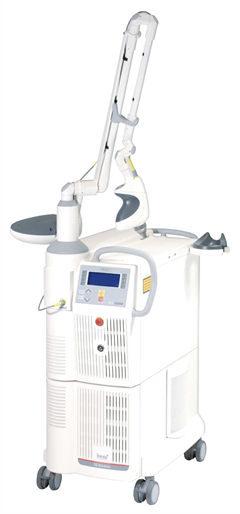
Fotona is an Er-YAG laser workstation developed for skin resurfacing and rejuvenation. The platform was designed to support a broad continuum of treatment styles rather than a single fixed procedure. These include superficial light peels, deeper peels, non-ablative thermal treatment, fully ablative resurfacing, full-field resurfacing and fractional resurfacing.
A major concept behind the system is treatment customization. Instead of viewing every resurfacing treatment as simply “strong” or “weak,” the platform separates the variables that determine tissue response: pulse energy, fluence, pulse duration, coverage, scan pattern, ablation depth and coagulation depth. This allows a treatment to be built around the indication and the patient’s acceptable recovery period.
Why Er : YAG for Skin Resurfacing?
The Er-YAG wavelength is strongly absorbed by water, the principal chromophore involved in cutaneous resurfacing. This high water absorption allows laser energy to remove very thin layers of tissue efficiently while limiting unnecessary thermal spread when short pulses are selected.
That property is particularly important in resurfacing because the desired treatment may vary from an ultra-light peel to controlled deeper ablation. The ability to adjust the thermal component separately from the amount of ablation gives Er:YAG a broad clinical range.
Er : YAG vs. CO₂ : The Tissue-Interaction Difference
Both Er-YAG and CO₂ lasers can be used for ablative resurfacing, but their interaction with water differs. The source material emphasizes that Er-YAG has higher water absorption and therefore can vaporize tissue with less unavoidable heat conduction when parameters are chosen for efficient ablation. CO₂ resurfacing has a larger intrinsic thermal component. Clinically, this means that the balance between tissue removal and heat can differ substantially between platforms and protocols.
The practical point is not that one wavelength is universally better. The important issue is whether the selected wavelength and pulse structure create the depth of ablation, amount of coagulation and recovery profile appropriate for the patient.
Ablation and Coagulation : The Two Core Effects
Ablation and coagulation are distinct physical mechanisms. Ablation removes tissue. Coagulation deposits thermal energy and can create collagen contraction and remodeling without equivalent tissue removal. Most resurfacing procedures involve one or both effects in different proportions.
| Feature | Ablation | Coagulation |
|---|---|---|
| Primary effect | Controlled tissue removal | Controlled thermal effect |
| Main parameter influence | Fluence above the ablation threshold | Pulse duration and energy distribution |
| Typical role | Peeling, resurfacing, texture correction | Collagen remodeling and tightening |
| Recovery impact | Greater ablation usually means more visible recovery | Excessive thermal load can prolong erythema/healing |
| Treatment goal | Precise depth of resurfacing | Useful heat without unnecessary thermal injury. |
The ideal balance depends on the indication. A light peel may use limited ablation and limited thermal injury, while a deeper wrinkle treatment may require greater ablation and a deliberately controlled coagulative component. The aim is not maximum energy; it is the most useful tissue effect for the clinical objective.
Full-Field vs. Fractional Skin Resurfacing
XS Dynamis supports two fundamentally different ways to distribute laser energy across the skin: full-field and fractional resurfacing.
Full-Field Resurfacing
In full-field resurfacing, the entire skin surface inside the treated laser spot is affected. As the laser scans across the area, a continuous layer of skin can be removed. Treatment depth can range from superficial light peels to substantially deeper resurfacing. The more tissue that is treated continuously, the more recovery generally becomes part of the treatment trade-off.
Fractional Resurfacing
In fractional resurfacing, only a fraction of the treatment surface is ablated. The laser creates microscopic columns or channels of treatment while leaving surrounding tissue intact. This preserved tissue can support faster re-epithelialization and healing while the treated columns extend into deeper layers to stimulate remodeling.
| Feature | Full-Field | Fractional |
|---|---|---|
| Coverage | Continuous treatment of the selected surface | Microscopic treatment zones separated by intact tissue |
| Typical goal | Uniform peel/resurfacing | Deep remodeling with preserved surrounding skin |
| Downtime potential | Can be greater as treatment depth increases | Often shorter for comparable depth because untreated tissue remains |
| Customization | Light to deep peel | Coverage percentage + micro-channel depth |
| Clinical strategy | Broad surface renewal | Controlled fractional wound-healing response |
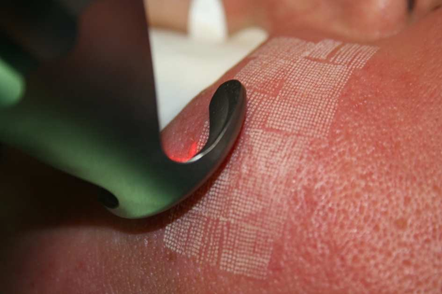
F-Runner : Fractional Er : YAG Resurfacing
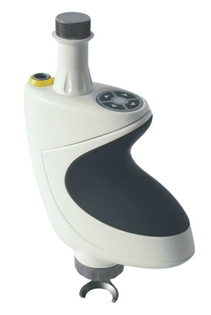
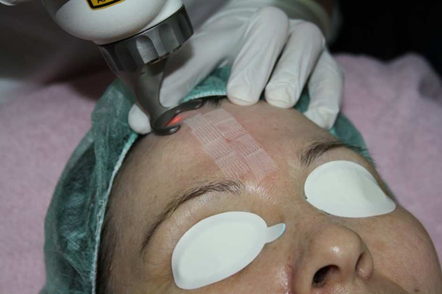
The F-Runner is the fractional scanning component described for XS Dynamis. Instead of removing the entire treatment surface, it creates narrow micro-channels within a selected coverage pattern. The untreated skin between channels remains intact and participates in the healing response.
The source platform specification describes a fixed 250 µm spot size and an adjustable coverage range from 2% to 60%. Standard micro-channel depth was described from less than 5 µm to approximately 1100 µm depending on parameters. With stacked Turbo settings, substantially deeper ablation was described, illustrating how strongly pulse structure can alter tissue depth.
The clinical logic of fractional treatment is to combine controlled injury with preserved tissue. The micro-columns initiate wound healing and collagen/elastin remodeling, while surrounding intact tissue helps accelerate recovery.
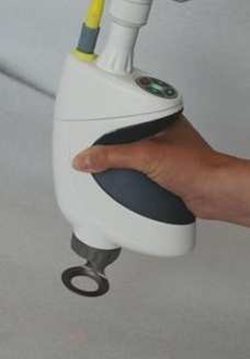
S-Runner : Full-Field Ablation and Thermal Resurfacing
The S-Runner is the full-field scanning system described for the platform. Its purpose is to automate uniform Er:YAG delivery across larger treatment areas. The source describes scan areas up to approximately 40 × 40 mm (16 cm²).
The S-Runner can be used across a spectrum ranging from superficial light peels to deeper resurfacing. It can also operate in thermal regimes where coagulation and collagen remodeling are emphasized rather than pure tissue removal. This is where V-Smooth becomes relevant.
V-Smooth Technology : Controlled Long-Pulse Thermal Remodeling
V-Smooth was developed as a variable-duration extension of the SMOOTH concept. In this context, “coagulation” refers to controlled thermal effects in the skin that are used to promote collagen remodeling rather than blood coagulation in the everyday sense.
The source describes irradiation times extending up to 0.5 seconds, with computer-controlled scanning used to prevent one area from receiving prolonged uninterrupted heating. The scanner irradiates a spot for the intended duration, moves to another spot, and can return at controlled intervals.
VSP Technology : Controlling Pulse Shape, Ablation and Heat
Variable Square Pulse (VSP) Technology is the pulse-control framework described for XS Dynamis. The system delivers energy in computer-controlled pulse sequences with defined pulse width and pulse energy. Energy Feedback Control is used to monitor individual pulse output.
For resurfacing, two parameters are particularly important: fluence and pulse width. Fluence describes energy delivered per unit area, measured in J/cm². Pulse width describes how long the laser emits that energy. Changing either variable can shift the balance between tissue removal and thermal diffusion.
Three Practical Rules for Ablation and Coagulation
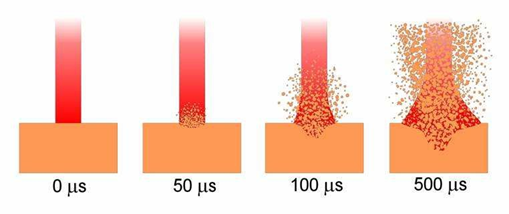
- There is an ablation threshold. Below it, tissue removal is minimal; above it, ablation depth rises with increasing fluence.
- Below the ablation threshold, increasing fluence can increase coagulation depth. Once strong ablation begins, the relationship changes because more energy is consumed in vaporizing tissue.
- Longer pulse durations allow more time for heat to diffuse into tissue, increasing the coagulative component.
Factory Presets and Treatment-Depth Prediction
Fotona was designed with factory preset treatment modes and software that estimates expected ablation and coagulation depths from selected parameters. The purpose is to translate complex laser physics into clinically usable treatment choices such as a light, medium or deeper peel.
Presets do not remove the need for clinical judgment. They provide a starting framework that can be adjusted and stored, while the practitioner still needs to consider skin type, treatment area, indication, prior procedures and acceptable downtime.
From Ultra-Light Peel to Deep Resurfacing : One Platform, Different Biological Goals
A useful way to understand XS Dynamis is as a treatment spectrum rather than a single procedure. At one end, the goal may be a very superficial peel with minimal coagulation. At the other end, the system can be configured for deep fractional or full-field resurfacing with a much more substantial wound-healing response.
- Superficial Peel : Surface refresh, fine texture and limited downtime.
- Medium-depth resurfacing : Stronger treatment of photoaging and textural irregularity.
- Deep Resurfacing : Selected deeper wrinkles or scar-related concerns with greater recovery.
- Fractional resurfacing : Microscopic channels with preserved intervening skin.
- Non-ablative / minimally ablative thermal treatment : Collagen remodeling with less surface removal.
What Can Fotona is Be Used to Treat ?
The source material lists a broad range of resurfacing indications. The appropriate mode and depth are not the same for each condition, and the treatment must be adapted to the diagnosis and tissue target.
- Mild to deeper wrinkles.
- Persistent peri-oral and periocular wrinkles.
- Acne scars, post-traumatic scars and surgical scars.
- Selected actinic keratoses under appropriate medical assessment.
- Selected benign pigmented lesions after appropriate diagnosis.
- Skin laxity in facial or body areas, including upper and lower eyelid skin in appropriately selected cases.
- Aging skin with deteriorating tone and texture.
Wrinkles and Photoaged Skin
Wrinkle treatment can range from light surface renewal to deeper resurfacing. Fine lines and uneven surface texture may require only a superficial treatment, while persistent peri-oral lines or deeper wrinkles can require more aggressive ablation. The choice changes both expected improvement and recovery time.
Acne Scars and Other Scars
Fractional Er-YAG resurfacing can be useful when the aim is to create controlled microscopic treatment columns and stimulate remodeling while preserving intervening skin. Scar morphology matters: rolling, boxcar, ice-pick, hypertrophic and tethered scars do not respond to the same treatment strategy, so laser resurfacing may be one part of a multimodal scar plan rather than the only procedure.
Pigmented Lesions and Actinic Keratosis
The source lists benign pigmented lesions and actinic keratosis among resurfacing indications. These conditions require accurate diagnosis before treatment. A laser should not be used to remove an undiagnosed pigmented lesion simply for cosmetic reasons, and suspicious lesions require appropriate medical evaluation.
Eyelid and Periocular Resurfacing
The periocular region is included among potential resurfacing areas. Because eyelid skin is thin and the eye is a critical adjacent structure, treatment planning, eye protection, energy selection and operator experience are especially important in this region.
How Treatment Intensity Changes Downtime
The breadth of XS Dynamis means there is no single “XS Dynamis downtime.” Recovery depends on whether the procedure is non-ablative, minimally ablative, fractional, full-field, superficial or deep.
| Treatment Direction | Typical Tissue Effect | Relative Recovery |
|---|---|---|
| Non-ablative thermal | Heat-driven remodeling with little/no tissue removal | Lowest visible recovery |
| Light peel | Superficial ablation | Short visible recovery |
| Fractional ablative | Microscopic ablation with intact skin between columns | Intermediate, depending on coverage/depth |
| Deep fractional | Deeper micro-channels and stronger remodeling | Greater swelling/erythema/crusting potential |
| Deep full-field | Continuous deeper ablation | Highest recovery burden in this spectrum |
Safety : Why More Aggressive Is Not Automatically Better
Resurfacing creates a deliberate tissue response. Increasing fluence, depth, coverage or thermal load can increase the biological effect, but it can also increase erythema, edema, crusting, infection risk, pigmentary change, delayed healing and scarring risk. The objective is controlled treatment rather than maximum settings.
The key technical principle from the XS Dynamis design is that ablation and coagulation should be optimized together. Moderate thermal coagulation can be useful, but excessive heat may prolong recovery and increase complication risk. Similarly, deeper ablation may be appropriate for a selected scar or wrinkle but unnecessary for a mild texture concern.
Who May Need a More Conservative Plan ?
- Patients with a tendency toward post-inflammatory hyperpigmentation.
- Patients with darker skin types, where aggressive resurfacing may carry higher pigmentary risk.
- Patients with active infection or impaired wound healing.
- Patients using medications or having medical conditions that affect healing or photosensitivity.
- Patients with recent aggressive procedures in the same area.
- Patients whose concern can be addressed with a lower-downtime modality.
How Er-YAG Resurfacing Differs From RF Microneedling and Non-Ablative Tightening Devices
Er-YAG resurfacing can directly remove tissue, thermally remodel tissue, or combine both depending on the mode. RF microneedling delivers radiofrequency energy through needles at selected depths and does not use optical ablation. Non-ablative tightening technologies primarily heat tissue without intentionally resurfacing the epidermis.
These technologies are not interchangeable. A patient whose dominant issue is epidermal texture or a scar surface may benefit from a resurfacing strategy, while a patient seeking deeper tightening with minimal surface disruption may be better suited to another modality or a combination plan.
Fotona in Abu Dhabi : What Patients Should Ask
Patients searching for Fotona or Er:YAG laser resurfacing in Abu Dhabi should ask which exact treatment mode is being recommended rather than focusing only on the device name. “Er:YAG” can describe anything from an ultra-light peel to a deep ablative resurfacing procedure, and the recovery profile is completely different.
- Is the treatment full-field or fractional ?
- Is the goal ablation, coagulation, or a combination ?
- How deep is the planned treatment and what coverage percentage will be used ?
- Which scanner or handpiece is being used ?
- What level of redness, peeling, crusting or swelling should I expect ?
- What is the risk of post-inflammatory hyperpigmentation for my skin type ?
- Is the treatment intended for texture, scars, wrinkles, laxity or pigmentation ?
- Would a less aggressive Fotona mode or another device provide a better risk-to-downtime balance for my concern ?
A strong consultation should define the tissue target, expected depth, healing period and realistic endpoint before treatment. The name of the platform matters less than how intelligently the laser is being used for that particular skin problem.
