

Morpheus8 is an adjustable-depth fractional radiofrequency microneedling treatment designed to deliver controlled RF energy into the dermis and subdermal tissue. The 2019 source paper describes its use for skin tightening and subdermal adipose remodeling, both alone and in combination with bipolar RF technologies. Treatment depth and energy are customized to anatomy, tissue thickness and patient goals.
Evidence Integrity : What This Paper Actually Studied
The uploaded paper is a 2019 Level 4 evidence supplement describing RF microneedling (Fractora modified to Morpheus8) with or without bipolar RF (FaceTite/BodyTite) for a “treatment gap” population: patients seeking more tightening than mild non-invasive options may provide, but who are not appropriate for or do not want excisional surgery.
Important distinction
The strongest numerical outcome in the paper – 93% patient satisfaction in a 247-patient neck/jowl series – relates to COMBINATION treatment using RF microneedling plus bipolar RF. It should not be presented as a Morpheus8-alone success rate.
The paper also discloses that several authors were consultants to InMode and that InMode Corporation co-funded development of the supplement. That does not invalidate the findings, but it is important context when communicating evidence quality.
Morpheus8 RF Microneedling for Skin Laxity in Abu Dhabi
Skin laxity does not always fit neatly into “mild” or “surgical.” Some patients have early jowling, neck laxity, recurrent laxity after previous procedures, or localized body looseness that may benefit from a minimally invasive approach. Adjustable-depth RF microneedling was developed to bridge part of this treatment gap by combining mechanical microneedling with controlled radiofrequency heating at selected tissue depths.
How Morpheus8 Works
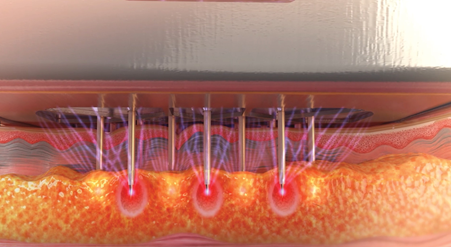
Morpheus8 uses an array of coated microneedles with programmable depth and RF energy delivery. In the source paper, the 24-needle platform penetrates into subdermal tissue and produces thermal effects that may contribute to contraction of the reticular dermis and surrounding connective tissue, while also stimulating neocollagenesis, elastogenesis and angiogenesis.
Unlike light-based devices, radiofrequency does not rely on a specific chromophore. The paper notes that RF can therefore be used across skin types, although energy should still be selected conservatively – particularly in darker Fitzpatrick phototypes and over thin or bony anatomy.
Why Adjustable Depth Matters
Different areas have different skin thickness, underlying fat distribution and proximity to bone or nerves. The source article describes shallower treatment for facial and periorbital areas and deeper treatment for body tissue. It also notes an additional zone of thermal effect beyond the physical needle depth, which should be considered during treatment planning.
- Periorbital and bony facial areas require shallower, more conservative treatment.
- Facial soft tissue and the neck can be treated at intermediate depths with careful energy selection.
- Body areas may require greater penetration depth to address thicker tissue and subdermal components.
- Thin skin and bony regions require lower energy and avoidance of aggressive pulse stacking.
Morpheus8 Alone vs Morpheus8 + Bipolar RF
RF microneedling delivers thermal energy from the skin surface down into the dermal and subdermal layers. Bipolar RF systems such as FaceTite/BodyTite deliver heat from a deeper tissue plane. The authors describe these as complementary directions of energy delivery: superficial-to-deep with RF microneedling, and deep-to-superficial with bipolar RF.
For website accuracy, these treatments should not be treated as interchangeable. Morpheus8 may be selected as a standalone treatment in appropriate cases, while combination treatment may be considered when a clinician is intentionally targeting both superficial laxity and deeper fibroseptal/adipose components.
Treatment Areas Discussed in the Evidence
Lower Face, Jowls and Neck
The paper highlights early jowling, neck laxity and recurrent laxity after facelift as common examples of the “treatment gap.” In the authors’ combination-RF series, 247 patients with neck laxity and jowling were treated with RF microneedling plus bipolar RF. Ninety-three percent reported that they were pleased with their results and would undergo the procedure again.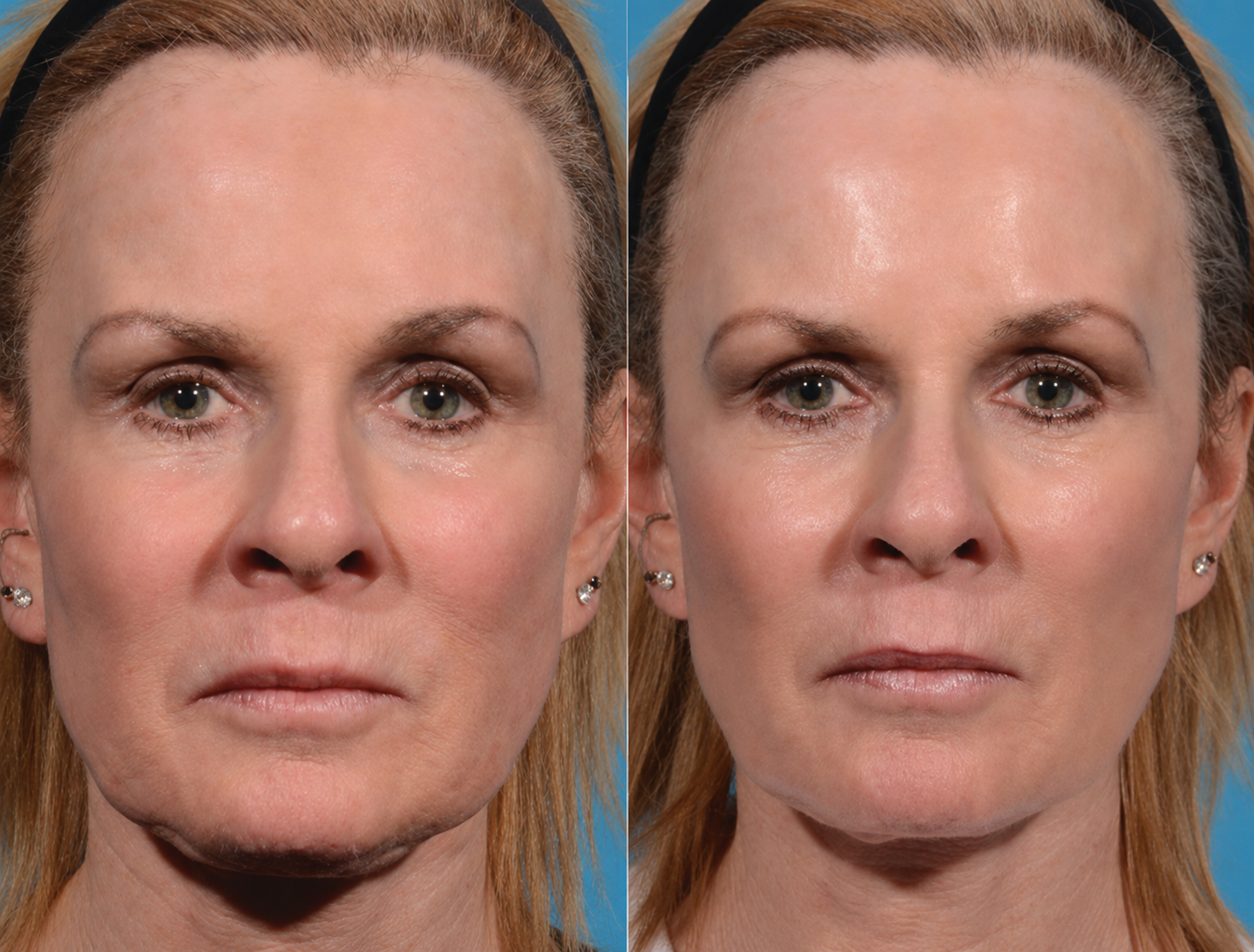
Clinical interpretation
The photographs are educational examples from the publication. They are not photographs of Dr. Erfan Rahmani’s patients and should not be displayed as personal clinical results.
Abdomen and Localized Body Laxity
The paper also discusses abdominal skin laxity and focal areas of adiposity such as the supra- and infraumbilical region. In these zones, deeper RF treatment is described as a way to influence subdermal adipose tissue while tightening the overlying dermis. Combination bipolar RF may add deeper heating of the fibroseptal network.

Back Rolls and Other Focal Areas
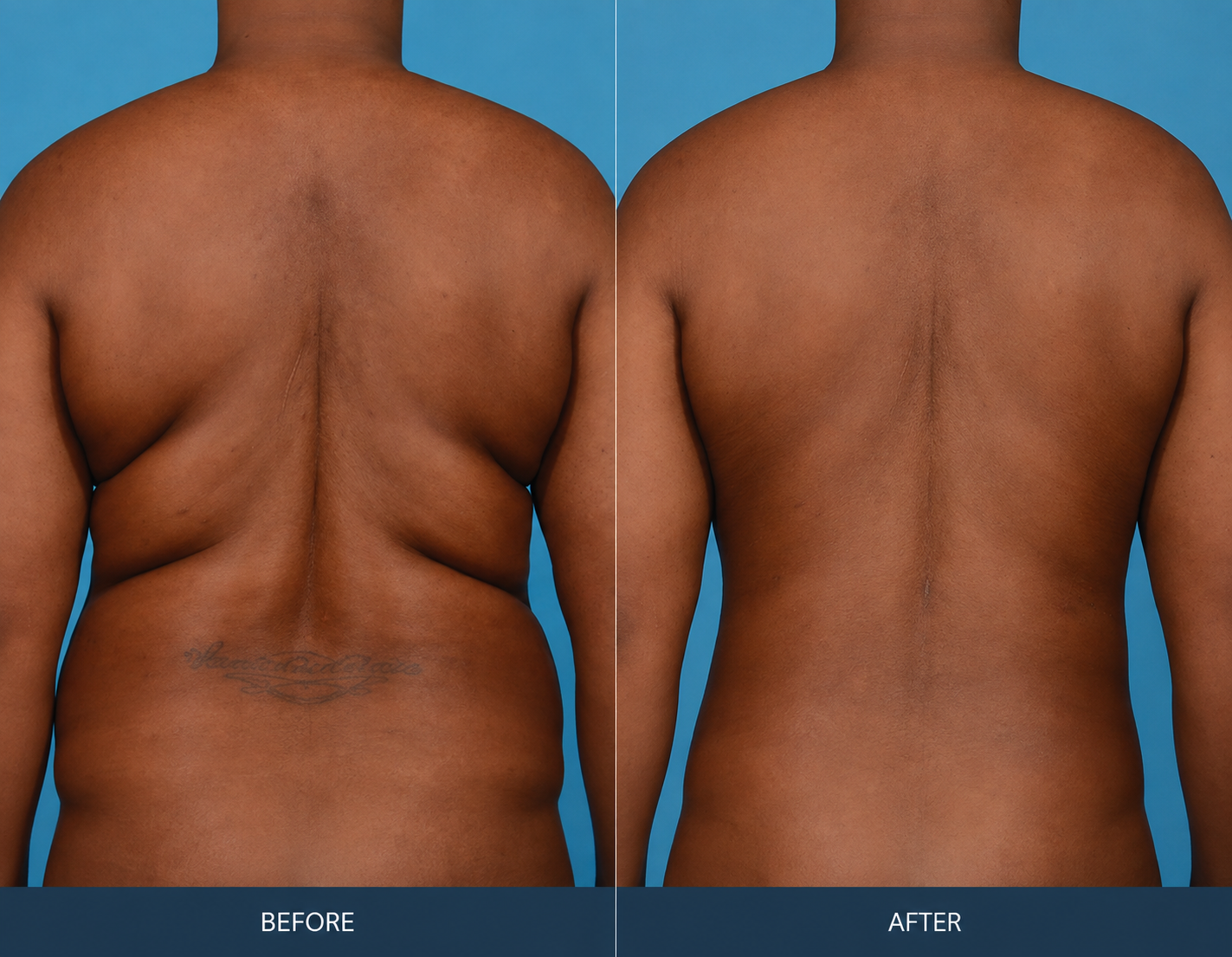
The authors describe back rolls, tissue near the knees, axillary rolls and upper-arm/axillary junctions as examples of localized areas that can be difficult to address when skin elasticity is reduced and excisional surgery is not desired.
Clinical Evidence at a Glance
| Evidence point | Population / protocol | Reported result | How to communicate it |
|---|---|---|---|
| 247-patient neck/jowl series | RF microneedling + bipolar RF; mean age 55 | 93% pleased and would repeat | Combination-therapy satisfaction, not Morpheus8-alone efficacy |
| Objective Baker classification | Combination neck/jowl cohort | Average improvement of 1.4 points | Useful as supportive evidence, but scale and design have limitations |
| Complications in 247-patient series | Combination treatment | Swelling >6 weeks 4.8%; hardening >12 weeks 3.2%; neuropraxia 1.2%; all resolved without further intervention | Discuss study-specific risks; individual risk depends on area, depth, energy and technique |
| Evidence level | Supplement / clinical experience | Level 4 | Supports clinical rationale but is not equivalent to a randomized controlled trial |
Who May Be a Good Candidate?
Candidate selection should be based on examination rather than a single photo or a device request. The source paper particularly focuses on patients with mild-to-moderate laxity who fall between non-invasive treatment and surgery.
- Early jowling or lower-face laxity where surgery is not yet indicated or desired.
- Submental or neck laxity in appropriately selected patients.
- Recurrent laxity after previous aesthetic procedures, when anatomy and scar tissue permit safe treatment.
- Localized body skin laxity or soft-tissue irregularity in areas such as the abdomen, upper arms or back rolls.
- Patients who understand that minimally invasive tightening is not a substitute for excisional surgery when surgery is clearly indicated.
When Treatment May Need to Be Avoided or Postponed
The 2019 protocol lists examples of contraindications or situations requiring caution, including active infection, pregnancy, impaired wound healing, immunocompromised states, collagen disorders and unrealistic expectations. A history of herpes simplex was also considered during pre-treatment planning.
Possible Side Effects and Complications
Expected short-term effects can include redness, swelling, tenderness and pinpoint bleeding. The paper notes that more serious RF-related complications are uncommon when treatment is performed judiciously, but can include thermal burns, contour irregularity and superficial nerve injury. Risk varies substantially with treatment depth, energy, anatomy, technique and whether other RF procedures are combined.
Downtime and Aftercare
The source table reports approximately 2-5 days of downtime. Its 2019 aftercare protocol describes immediate cooling and temporary topical wound care while the microneedle channels close, typically within 1-3 days. Modern aftercare protocols may differ by device, tip and clinician, so patients should follow the instructions provided for their specific treatment.
When Will Results Be Visible?
RF microneedling is a remodeling treatment rather than an instant lifting procedure. The paper cites evidence of active dermal remodeling by around 10 weeks, and several of its clinical photographs are shown at six months. In practice, early tissue tightening may be noticed sooner, while collagen and soft-tissue remodeling evolve over the following weeks and months.
Realistic Expectation
Morpheus8 can improve selected cases of skin laxity, texture and contour, but it does not reproduce the magnitude or predictability of an appropriately indicated surgical lift. The best treatment is determined by the degree of laxity, tissue quality, fat distribution and the patient’s tolerance for downtime and invasiveness.
