

Endolift for Static Glabellar Lines in Abu Dhabi</h3
Deep vertical lines between the eyebrows can remain visible even when the face is at rest. These are often described as static glabellar lines or fixed frown lines. Because the glabellar region is influenced by repeated activity of the corrugator, depressor supercilii, and procerus muscles, persistent creases can become a challenging aesthetic concern.
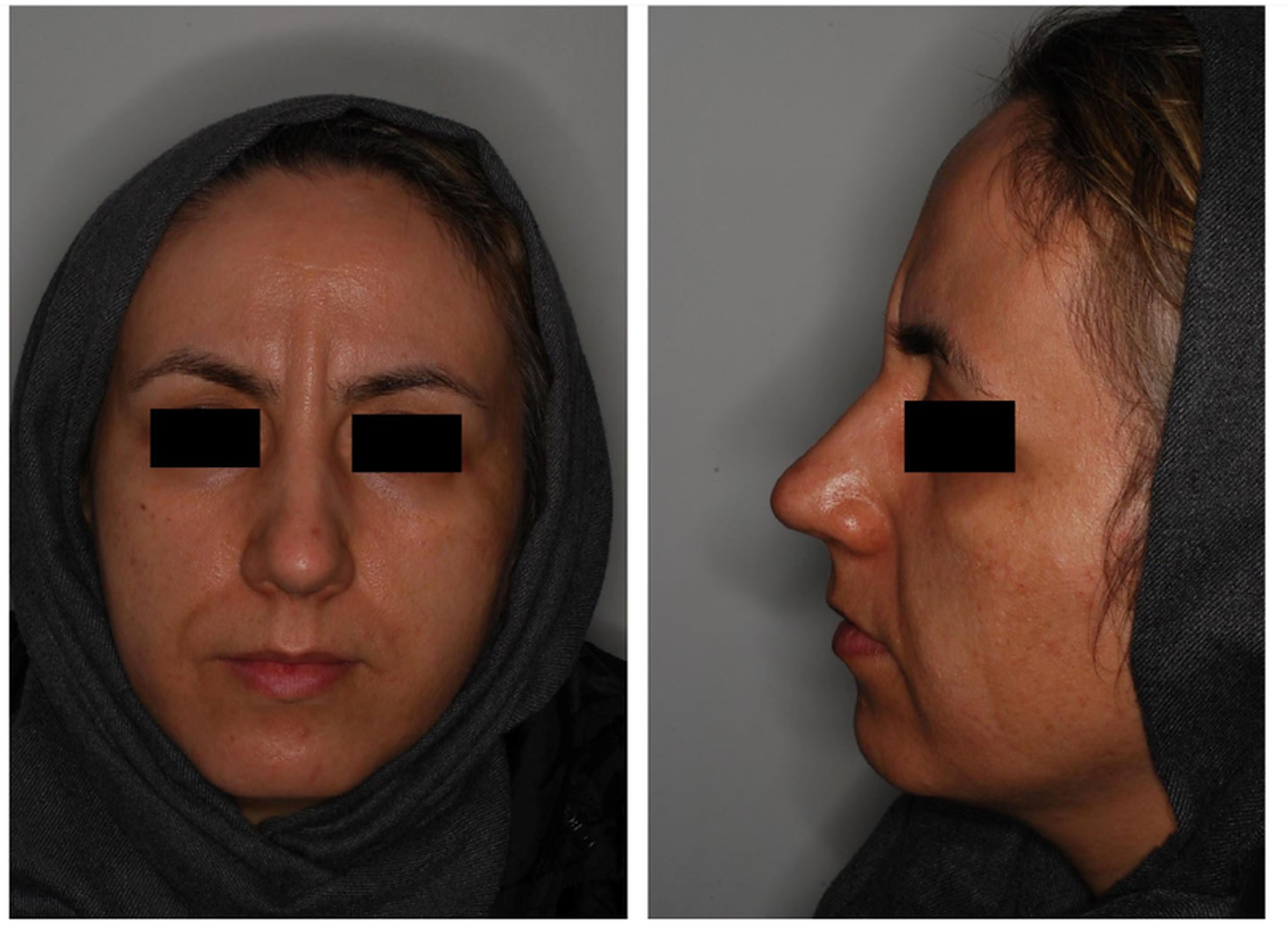
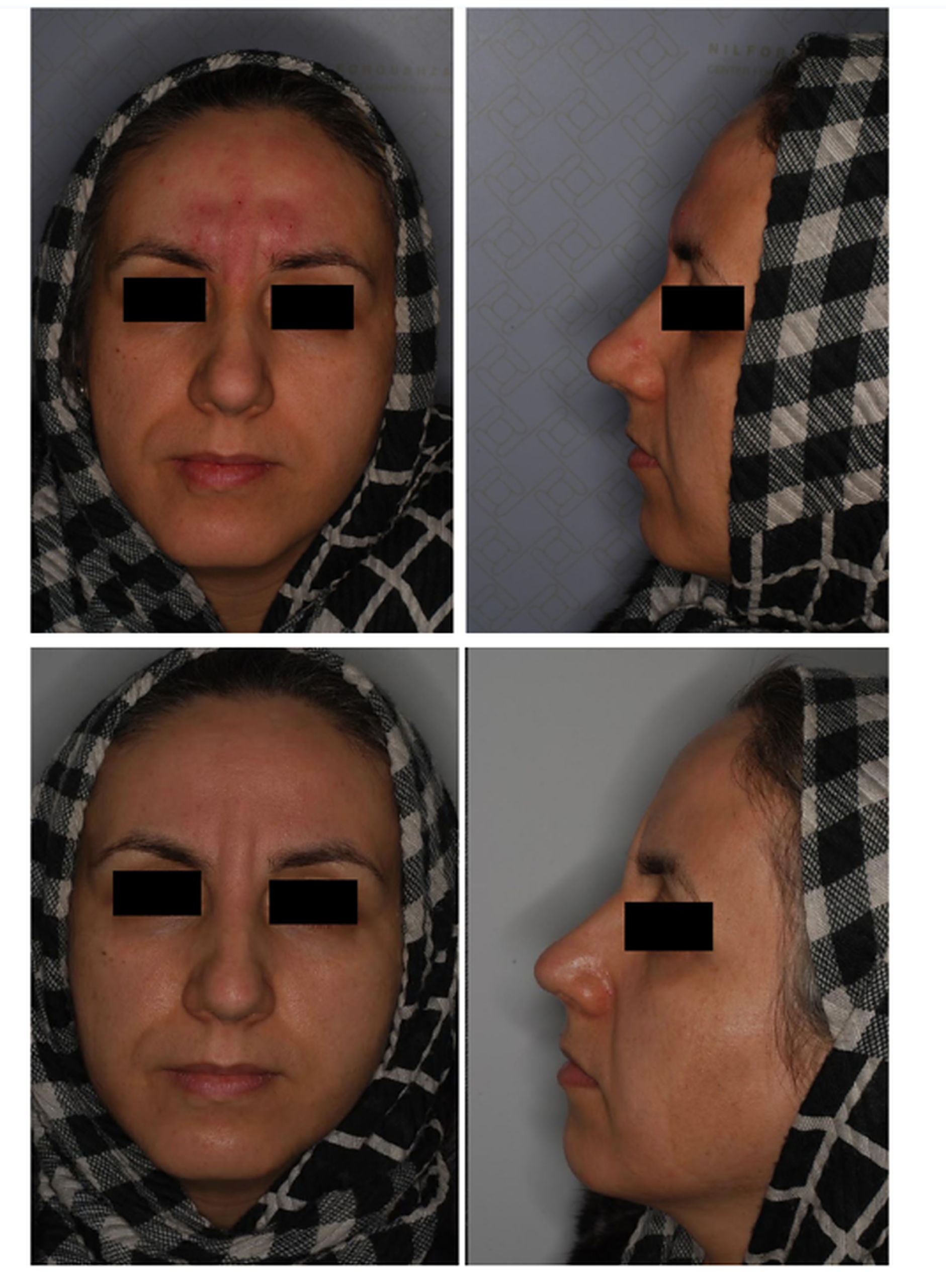
A 2024 case report in Skin Research and Technology described the use of a 1470 nm Endolift diode laser in a patient with deep static glabellar lines. The report is clinically interesting because the patient had previously undergone two botulinum toxin treatments and one filler treatment during the preceding year without satisfactory improvement. After one Endolift session, the authors reported a visible reduction in line depth at four weeks and high patient satisfaction.
Can Endolift improve static glabellar lines? A published 2024 case report suggests that Endolift may improve deep static glabellar lines in selected patients. However, the evidence is currently limited to a single patient, so it should be presented as a potential option rather than a guaranteed or universally superior treatment.
What are glabellar lines?
Glabellar lines are the vertical or oblique creases that develop between the eyebrows. The source article notes that contraction of the corrugator, depressor supercilii and procerus muscles contributes to their formation. In some people, repeated movement and tissue changes leave a visible crease even at rest.
Why can static frown lines be difficult to treat?
Botulinum toxin type A is widely used for upper-face rhytides and has a reversible effect, but maintenance requires repeat injections. In the published case, the patient had already received botulinum toxin twice and filler once without sufficient improvement of the vertical crease. That history was one reason the authors explored a minimally invasive laser-based approach.
What is Endolift?
Endolift is a minimally invasive laser technique that delivers 1470 nm diode laser energy through a fine optical fiber placed beneath the skin. The source describes the technique as a method intended to create focused tissue effects while supporting skin rejuvenation. In the reported case, a single treatment session was used for the glabellar area.
For a patient-facing website, the important message is not the device setting but the treatment concept: a controlled subdermal laser approach performed by a trained medical practitioner after assessment of anatomy, skin thickness, line depth, and treatment goals.
What did the 2024 case report find?
The report involved one 42-year-old woman with deep vertical static glabellar lines. Photographs were obtained before treatment, immediately afterward, and one month later. The authors described a remarkable decrease in the depth of the glabellar lines and treated-area muscle bulk, and the patient rated herself “very satisfied” after the single treatment session.
Recovery and side effects reported in the case
The authors stated that the procedure did not require formal recovery time. The patient reported mild pain, redness, and swelling in the treated area; these effects resolved after a few days. At four weeks, both the patient and the treating dermatologist reported marked improvement.
Evidence limitation
This is a case report, not a randomized clinical trial. A single successful case cannot establish average success rates, durability, superiority over botulinum toxin or filler, or the frequency of uncommon adverse events. The article itself calls for larger randomized controlled trials.
How Endolift fits alongside Botox and filler
The treatments address different aspects of the glabellar region and should not be presented as interchangeable in every patient. The source article describes botulinum toxin as a popular and reversible treatment for upper-face rhytides that requires repeat treatment to maintain effect. It also documents that this particular patient had previously received filler without adequate improvement.
In practice, the most appropriate strategy may be one treatment or a combination, depending on whether the dominant problem is muscle activity, an etched static crease, tissue quality, volume change, or another anatomical factor. This decision should follow a medical consultation.
| Option | Role in the source/context | Potential advantage | Important limitation |
|---|---|---|---|
| Botulinum toxin A | Common upper-face wrinkle treatment; the case patient had two prior sessions. | Well-established for movement-related upper-face lines. | Effect is reversible and maintenance requires repeat treatment. |
| Dermal filler | The case patient had one prior filler treatment without adequate improvement. | May be considered when structural support or contour is relevant. | The case report does not establish filler-vs-Endolift superiority. |
| Endolift 1470 nm | Used once in the reported patient with deep static glabellar lines. | Minimally invasive approach with no formal downtime reported in this case. | Evidence for static glabellar lines is currently limited to a case report. |
Who may consider a consultation?
A consultation may be reasonable for patients who are concerned by a persistent glabellar crease and want to understand whether their line is mainly dynamic, static, or mixed. The source does not define a validated candidate-selection algorithm for Endolift in this area, so assessment must remain individualized.
- A visible vertical glabellar crease that persists at rest.
- Previous treatment that did not adequately improve the static component, as occurred in the published case.
- Preference for a minimally invasive approach after discussion of alternatives, uncertainties, and expected recovery.
- Realistic expectations and willingness to accept that evidence for this specific indication is still limited.
When might another approach be more appropriate?
If the concern is predominantly created by muscle contraction rather than a fixed crease, another treatment strategy may be more suitable. Likewise, any active medical or skin issue, unusual anatomy, previous procedural complication, or uncertainty about diagnosis should be evaluated before treatment. The case report should not be used as a substitute for individualized medical assessment.
Consultation approach in Abu Dhabi
For patients considering treatment with Dr Erfan Rahmani in Abu Dhabi, the website can position the consultation around three questions: What is producing the line? Is it primarily dynamic or static? And which treatment—or combination of treatments—offers a reasonable balance of benefit, downtime, and risk for that individual?
This keeps the page clinically credible while still targeting high-intent local searches such as “glabellar line treatment Abu Dhabi,” “static frown line treatment Abu Dhabi,” and “Endolift Abu Dhabi.”
