
What is Profhilo Structura?
Profhilo Structura is a high-concentration hyaluronic-acid formulation based on hybrid cooperative complexes and NAHYCO technology. In the supplied 22-subject retrospective case series, treatment in the superficial facial fat compartment was associated with increased measured tissue thickness, clinical midface improvement and high patient-reported improvement. Some effects remained observable at six months, although the six-month thickness difference was not statistically significant.
Profhilo Structura in Abu Dhabi : Midface Volume Restoration and Biorevolumetry
Facial aging involves more than surface wrinkles. Age-related changes in the superficial and deep facial fat compartments can contribute to midface deflation, reduced support, contour changes and a more tired appearance. Profhilo Structura® was developed to address this deeper component of aging by integrating within the superficial adipose compartment.
The source is a 2023 retrospective case series of 22 adults aged 36–60 years with moderate to significant midface volume deficit. Treatment outcomes were followed with ultrasound measurements, clinical photographs and the Global Aesthetic Improvement Scale (GAIS) over six months.
Evidence LevelThe article is a small retrospective case series rather than a randomized controlled trial. IBSA Farmaceutici Italia supported article writing/editing/publication, and two authors were employees of IBSA. These facts should remain visible when interpreting the strength of the findings.
What Is Profhilo Structura?
The article describes Profhilo Structura as a formulation of hybrid cooperative complexes (HCCs) created with NAHYCO® technology. The 2 mL product contains 45 mg of low-molecular-weight HA plus 45 mg of high-molecular-weight HA, for a total of 90 mg of hyaluronan.
- High cohesivity with preserved Spreadability.
- Lower viscosity than cross-linked HA fillers in the study.
- Designed to integrate within superficial adipose tissue.
- Investigated for midface volume deficit and adipose-tissue restoration.
- Preclinical work cited by the authors suggests effects on adipose stem-cell viability and differentiation.
Why Facial Fat Compartments Matter
The paper frames part of facial aging as depletion and redistribution of facial fat compartments. This is a different treatment target from dermal hydration alone and helps explain why Structura is positioned differently from standard skin-focused Profhilo formulations.
What does Profhilo Structura target ?The study specifically evaluated Profhilo Structura in the superficial facial fat compartment in adults with midface volume deficit. The proposed goal is adipose-tissue restoration and repositioning rather than skin hydration alone.
Profhilo Structura vs Classic Profhilo
| Feature | Classic Profhilo | Profhilo Structura in this source |
|---|---|---|
| Main focus | Skin bioremodeling, hydration and elasticity | Superficial fat-compartment restoration and volume deficit |
| Treatment concept | Dermal/skin quality | Adipose integration / biorevolumetry |
| Formulation emphasis | Hybrid HA complexes | More cohesive formulation with 90 mg HA in 2 mL |
| Outcome measures | Skin-quality endpoints in other literature | Ultrasound thickness, clinical photography and GAIS |
Profhilo Structura vs Cross-Linked HA Filler
The study reports lower viscosity but high cohesivity and spreadability compared with cross-linked HA fillers. The authors describe tissue thickening and compaction while preserving a natural appearance. This does not make the treatments interchangeable: conventional fillers may be preferred when precise structural projection or contour shaping is the main objective.
Ultrasound Evidence and Tissue Integration
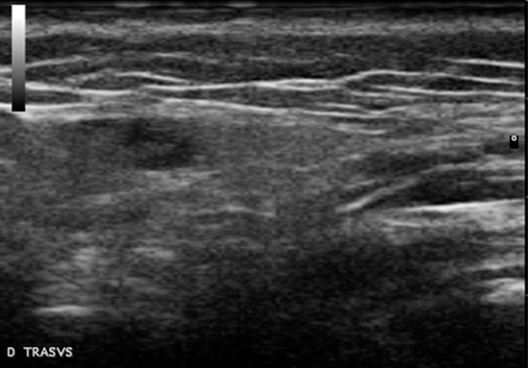
The study measured tissue thickness in the preauricular region using parallel and transversal ultrasound scans before treatment, at 30 days, and at three and six months.
A statistically significant increase in measured thickness was reported after treatment, especially at 30 days and three months. At six months, the effect remained observable but the thickness difference was no longer statistically significant.
Fat-Compartment Integration on Ultrasound
Qualitative ultrasound images showed increased hyperechoic areas and increased subcutaneous thickness after treatment. The authors interpreted this as evidence of product integration within the superficial adipose compartment and as supportive of their adipose-restoration hypothesis.

Clinical Results and Patient Satisfaction
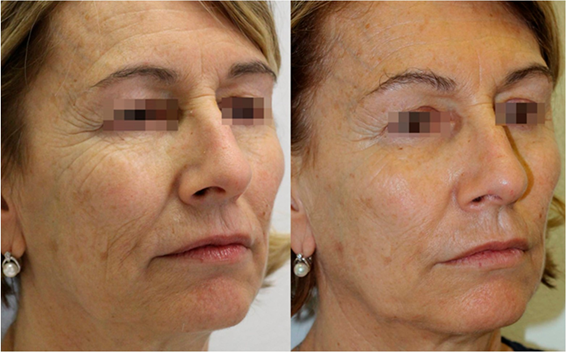
Clinical photographs in the paper showed persistent improvement three months after the beginning of treatment. The authors highlighted changes in the midface, including the zygomatic and peri-orbital region, as well as the lower third around the jawline and marionette lines.
GAIS Results
Patient self-assessment also improved over follow-up. The paper reports that 77% of participants already perceived improvement after the first treatment, increasing to 91% one month later.
What Does “Biorevolumetry” Mean?
The authors propose “biorevolumetry” to describe a combination of increased volume, a lipolifting effect and stimulation of adipogenic differentiation. Because this terminology is proposed by the paper, it should be framed as the authors’ conceptual model rather than as a universally established clinical category.
Does Profhilo Structura restore facial volume ?In this case series, Profhilo Structura was associated with increased measured tissue thickness and visible midface improvement. The authors interpret this as adipose-tissue restoration and biorevolumetry. Larger independent controlled studies are still needed to establish the magnitude and durability of this effect.
Treatment Course Described in the Study
The study used two treatment sessions separated by 30 days, with follow-up at three and six months. Treatment was delivered into the superficial fat compartment, and outcomes were monitored with ultrasound and clinical assessment.
Clinical-Content NoteThe exact cannula size, injection depth and anatomic access details belong to the published study protocol and should not be presented on a patient-facing page as self-treatment instructions.
| Study element | Reported protocol |
|---|---|
| Population | 22 subjects aged 36–60 with moderate/significant midface volume deficit |
| Treatment sessions | Two |
| Interval | 30 days |
| Follow-up | Three and six months after first treatment |
| Assessment | Ultrasound thickness + tissue integration + clinical photos + GAIS |
Safety and Study Exclusions
No product-related adverse reactions were reported in the 22-subject cohort. However, the study used selected inclusion and exclusion criteria, and safety assessment was based on spontaneous reporting plus investigator questioning.
- Pregnancy or lactation
- Active inflammatory skin disease or infection
- Known hypersensitivity to product components
- Hemostatic or coagulation disorders
- Immunological deficits or autoimmune conditions
- Recent aesthetic procedures that could interfere with study outcomes
- Medications judged capable of influencing study results
Evidence Interpretation for the Website
| Source finding | Website-safe wording | Limitation |
|---|---|---|
| Thickness increased at early follow-up | Treatment was associated with increased measured tissue thickness | Small retrospective cohort |
| Effects observable at six months | Some effect remained visible across six-month follow-up | Six-month thickness difference was not statistically significant |
| 77% then 91% positive GAIS | Most participants reported improvement | Subjective measure; no untreated control |
| No adverse reactions reported | Treatment was well tolerated in this selected cohort | Cannot define population-wide safety |
| Ultrasound integration | Ultrasound findings were consistent with superficial fat-compartment integration | Mechanistic interpretation needs independent confirmation |
Who May Be a Relevant Candidate?
Based on the study population, the most directly supported profile is an adult with moderate to significant midface volume deficit in whom age-related superficial fat-compartment change is part of the problem. The study does not establish outcomes for every facial anatomy, age group or degree of volume loss.
When Another Treatment May Be More Appropriate
- Precise bony projection or focal contour shaping may favor a structural filler strategy.
- Marked global volume loss may require a multimodal approach.
- Primarily dermal concerns such as hydration and texture may align more closely with skin-focused bioremodeling.
- Patients with relevant medical contraindications require individualized assessment.
