

Low-Energy Morpheus8 + Nanofat in Abu Dhabi : Fat-Preserving RF Microneedling and Regenerative Skin Quality
Morpheus8 nanofat Abu Dhabi is a growing search for patients who want facial rejuvenation without losing healthy facial fat. Radiofrequency (RF) microneedling and fat grafting are often combined cautiously because thermal energy can damage adipose tissue. A 2025 retrospective clinical study asked a more nuanced question: can RF be deliberately modulated so that fat is reduced only where contouring is wanted, while regenerative nanofat is preserved and used to improve skin quality elsewhere? This guide explains what the study did, what it found and, just as importantly, what it cannot prove
Study at a Glance
| Study feature | Source detail |
|---|---|
| Design | Retrospective clinical study |
| Participants | 20 |
| Sex | 19 women, 1 man |
| Age range | 20–45 years |
| Setting | Patients undergoing facial plastic surgery in Colombia, 2020–2024 |
| Adjunct treatment | Morpheus8 RF microneedling + nanofat grafting |
| Nanofat volume | 10–20 mL injected; mean 13.3 mL |
| Topical nanofat | 2 mL applied after microneedling |
| Main outcome | Global Aesthetic Improvement Scale (GAIS) |
| Evaluators | 9 blinded evaluators |
| Follow-up photography | 6 and 12 months stated in Results |
| Safety | No immediate or delayed complications reported |
Why This Study Is Clinically Interesting
The authors did not use one uniform facial energy setting. Their protocol was compartment-specific: deep, relatively higher-energy treatment in selected contouring zones, and progressively lower energy and more superficial treatment across the rest of the face.
This matters because excessive subcutaneous fat loss can worsen hollowing and laxity. The source explicitly frames indiscriminate lipolysis as a potential problem rather than a universal treatment goal.
What Is Nanofat?
The source describes nanofat as processed autologous adipose tissue containing regenerative cellular components, including adipose-derived stem cells, stromal vascular fraction-related cells and growth factors.
Unlike structural fat grafting, nanofat is not primarily presented as a volumizing adipocyte graft. The paper describes it as relatively depleted of intact adipocytes while retaining regenerative cellular and signaling components that may improve skin quality. Previous literature links nanofat with improvements in skin texture, elasticity, pigmentation and wound-healing biology. In this study it was delivered both by subcutaneous injection and topically after RF-created microchannels.
Why Combine Nanofat with RF Microneedling?
This combination is what makes Morpheus8 nanofat Abu Dhabi treatment plans different from standard RF microneedling.Morpheus8 creates controlled microneedle channels and RF-mediated thermal injury in the dermis and subdermis. The source proposes that this can stimulate collagen and elastin remodeling while also creating channels that facilitate topical nanofat penetration.
Nanofat then supplies an autologous regenerative substrate containing growth factors and stromal-cell populations. The authors describe the combination as addressing both structural and regenerative components of facial aging. The synergy is biologically plausible, but with no direct control arms the study does not prove the combination is superior to either treatment alone.
The Central Idea: Selective Fat Remodeling, Not Global Fat Destruction
Not every facial compartment should be treated the same way. Some zones benefit from reducing excess adipose tissue, while others need volume preservation.
The authors reserved deeper, higher-energy treatment for the submental region, jowls and Bichat fat-pad region, where localized reduction was desired. The mid and lower face received lower energy at intermediate depth, and the final whole-face pass used very low energy at 2 mm. This attempts to preserve the facial fat compartments that contribute to a youthful appearance while still improving contour and skin quality.

Three-Pass Morpheus8 Protocol Reported in the Study
| Pass | Mode | Energy | Depth | Primary source intent |
|---|---|---|---|---|
| 1 | Fixed | 18–20 energy units | 5–6 mm | Selective localized fat reduction: submental, jowl and Bichat-fat-pad regions |
| 2 | Cycle | 10–15 energy units | 3–4 mm | Middle and lower facial thirds |
| 3 | Cycle | 5 energy units | 2 mm | Entire face, including upper third; minimal energy to create controlled microtrauma / microchannels |
Why the Authors Chose Lower Energy
Lower-energy settings were selected to reduce risks associated with excessive heat, including burns and post-inflammatory hyperpigmentation, and to protect facial adipose tissue from unintended depletion. This was particularly relevant because the patient population included higher Fitzpatrick skin types, where inflammatory pigment change is an important concern.
The paper also links excessive facial lipolysis with accelerated aging, through reduced subcutaneous volume and changes in the endocrine and structural role of adipose tissue. That is a caution for any RF microneedling plan that uses deep energy indiscriminately.
Fat Preservation vs Fat Reduction: A Zone-by-Zone Concept
The study treats the face as a map of different goals. The submental and jowl zones may benefit from some adipose reduction, whereas the malar, temporal and perioral regions often require preserved volume and better skin quality. That is why nanofat injection was prioritized in the perioral, malar and temporal areas for collagen synthesis and skin-quality improvement.
This is conceptually different from a “full-face fat melting” protocol. The source supports precise energy placement rather than a single aggressive depth across every facial zone.
Nanofat Harvesting and Processing in the Study
Autologous fat was harvested from one selected body site using a modified tumescent technique, and the aspirate was allowed to separate before further processing. It then underwent standardized filtration and emulsification using filters of progressively smaller diameter, a step the authors describe as reducing fat-cell size while preserving growth factors and regenerative cellular components.
The investigators avoided power-assisted and ultrasound-assisted liposuction to minimize cellular damage in the harvested material.
How Nanofat Was Delivered
The source reports two delivery routes. First, nanofat was injected subcutaneously with volumes individualized to facial anatomy (10–20 mL, mean 13.3 mL). Second, after the third low-energy RF pass created microchannels, 2 mL of purified nanofat was applied topically. The authors describe the topical step as a drug-delivery-like mechanism, suggesting microneedling channels may improve penetration of regenerative material into the dermis.
Why the Final 2-mm Pass Matters
The third pass used the lowest reported energy (5 units at 2 mm) across the entire face. It was intended to create controlled microtrauma and channels without excessive coagulation, not to cause lipolysis. In other words, the study treats depth and energy as separate tools: deep high-energy treatment for selected contouring zones, and low-energy microneedling for regenerative skin-quality goals.
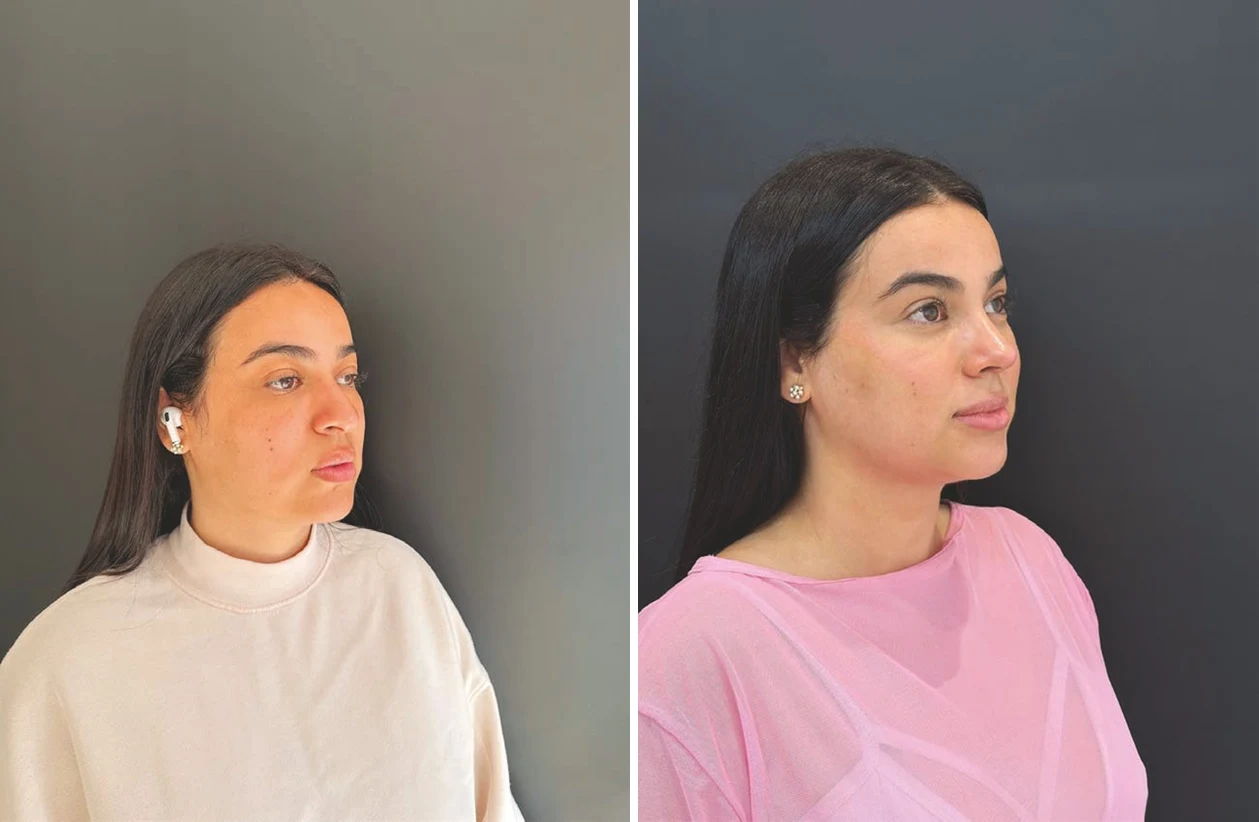
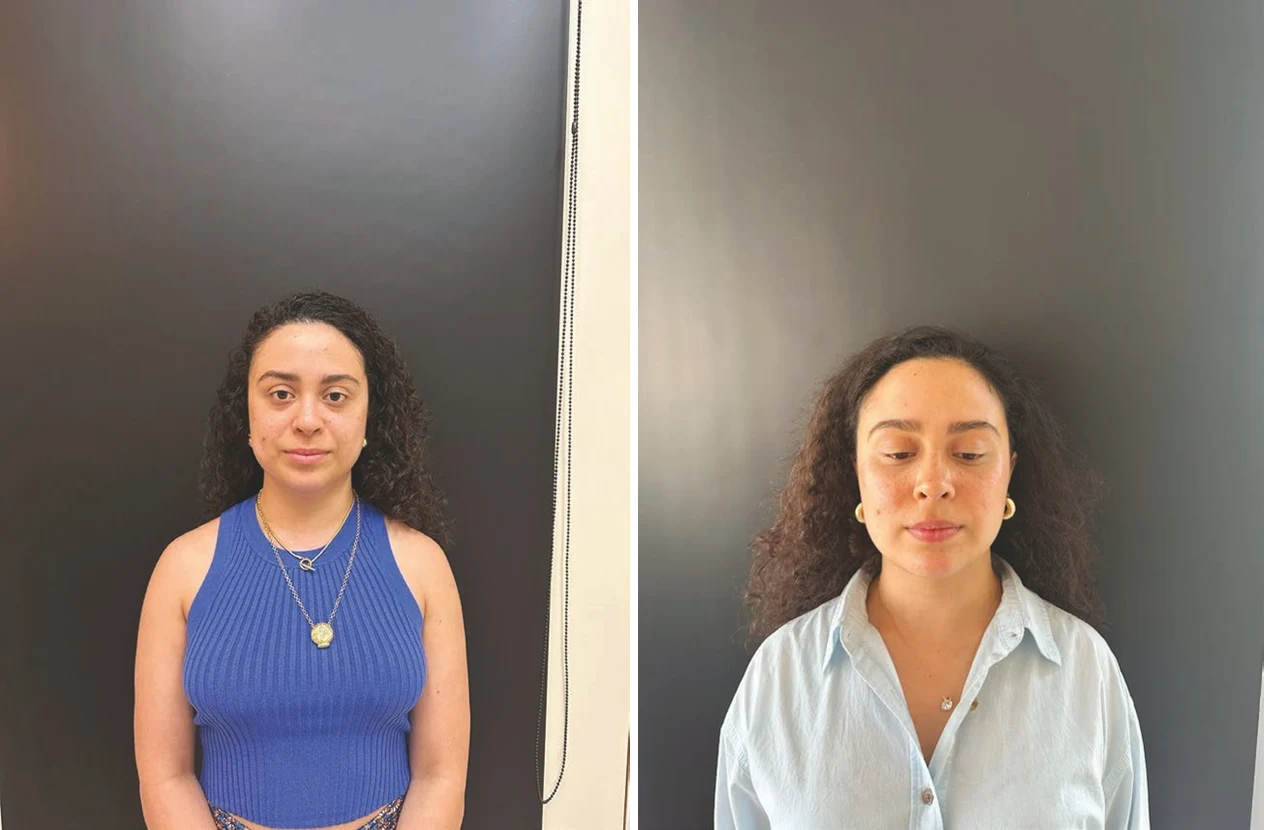
What Did the Clinical Photographs Suggest?
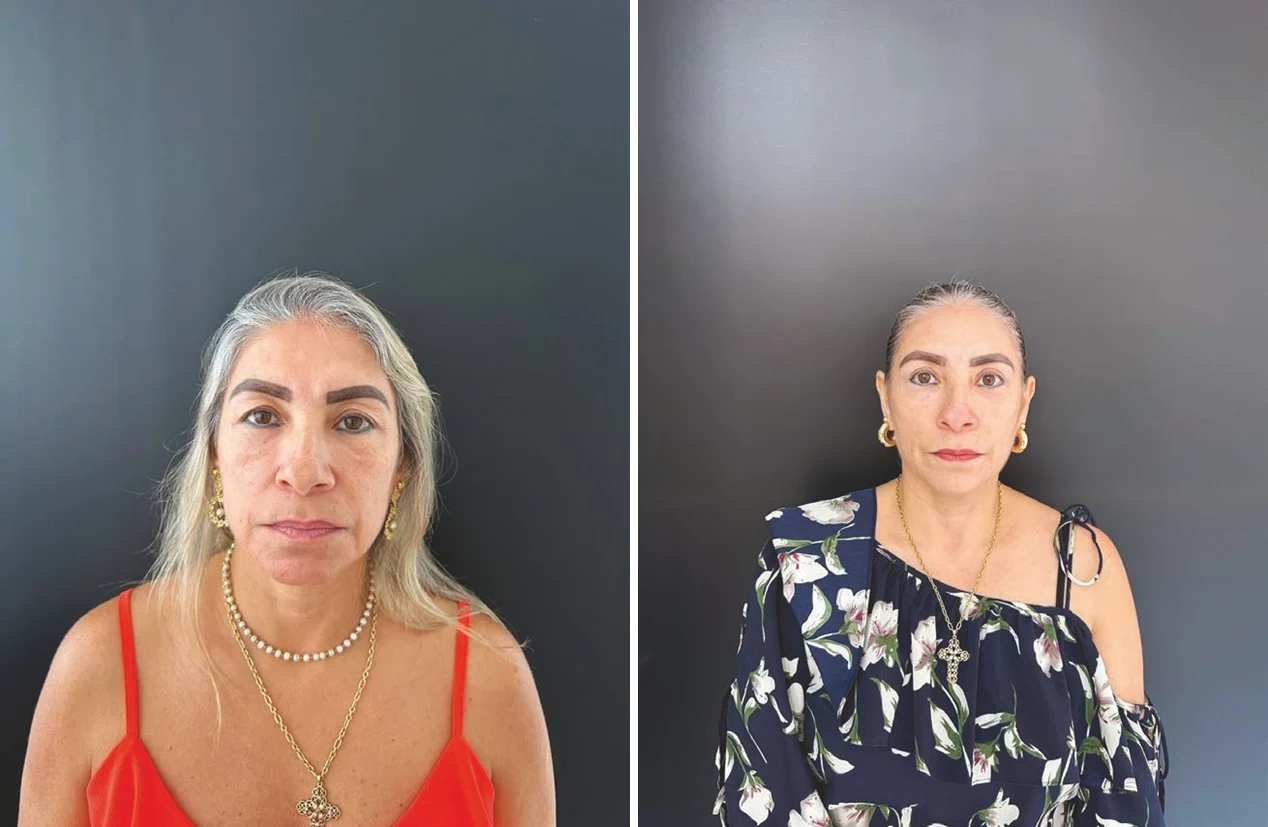
Representative photographs show changes in skin texture, tone and wrinkle appearance over six- and twelve-month follow-up. The authors highlight reduced pore visibility, increased luminosity and fewer fine wrinkles in nonsurgical regions such as the malar and perioral areas. That reduces, but does not eliminate, the possibility that all visible improvement came from the accompanying surgery.
Clinical photography remains subjective, and the authors themselves recommend more objective future tools such as 3D imaging.
Six-Month and One-Year Findings
Standardized photographs were obtained at six and twelve months. The Discussion describes significant improvement at both time points, with an overall mean GAIS around 1.7. The authors propose ongoing remodeling and regenerative activity over time.
However, because there was no untreated control and every patient also underwent surgery, the durability of the RF-nanofat contribution cannot be isolated with confidence.
Pores, Luminosity and Fine Wrinkles
Blinded evaluators reported visible improvements in pore visibility, luminosity and fine wrinkles in areas such as the malar and perioral regions. These endpoints were assessed qualitatively rather than with dedicated quantitative imaging, so the study supports visible improvement reported by expert reviewers but does not establish an exact percentage change. It is more defensible to describe qualitative skin-quality improvement than to promise a specific numeric result.
Safety: What Was Reported?
No immediate or delayed complications were reported among the 20 patients, and the low-energy settings were chosen specifically to reduce the risks of burns, post-inflammatory hyperpigmentation and excessive fat loss. This is encouraging, but a 20-patient retrospective study is too small to estimate uncommon complications reliably.
Why Fat Loss Is a Special Concern with Deep RF Microneedling
Facial fat compartments are not simply unwanted tissue; they contribute to contour, support and youthful proportions. In patients who are already thin or volume-depleted, aggressive subdermal heating may accentuate hollows and make laxity look worse. The study supports a more sophisticated goal: reduce adipose tissue only where it is genuinely excessive, and preserve or support volume where fat contributes positively to facial structure.
Morpheus8 for Fat Reduction vs Morpheus8 for Skin Quality
| Treatment goal | Source-aligned strategy | Key concept |
|---|---|---|
| Localized submental/jowl fat reduction | Deeper selective first pass | Use energy intentionally where volume reduction is desired |
| Mid/lower-face remodeling | Intermediate depth and lower energy | Balance contour with preservation |
| Whole-face skin quality | Low-energy 2-mm final pass | Controlled microtrauma / dermal remodeling rather than aggressive lipolysis |
| Regenerative support | Injected + topical nanofat | Support skin quality in selected compartments |
Can This Study Prove a Synergistic Effect?
The authors use the term “synergistic” because RF microneedling may stimulate remodeling and create channels while nanofat provides regenerative cellular and signaling components. But synergy was not tested against separate Morpheus8-only and nanofat-only groups. The study suggests synergy; it does not experimentally prove it. A plausible mechanism and a strong before-and-after result are not the same as a controlled comparison.
The Biggest Limitation: Surgery Was Happening at the Same Time
All 20 patients were undergoing facial plastic surgery, including rhinoplasty, blepharoplasty, submental liposuction and lipofilling. That creates a major confounding problem: changes around the eyes may reflect blepharoplasty, contour may be influenced by liposuction or fat grafting, and postoperative edema can change early appearance.
The authors acknowledge this and point to improvements in nonsurgical regions as supportive evidence. Still, only a controlled trial can reliably separate the effects of RF, nanofat and surgery.
Other Important Limitations
- Small cohort: only 20 patients.
- Nineteen of 20 participants were women, so results cannot be assumed to generalize equally to men.
- Retrospective design rather than prospective randomization.
- Moderate interrater reliability (ICC = 0.72), showing meaningful variation between evaluators.
- Outcomes relied heavily on photography and GAIS rather than 3D volumetry, ultrasound, cutometry, histology or standardized pore/wrinkle imaging.
- The authors call for larger prospective controlled studies, histopathologic analysis and longer follow-up.
Who Might Be Worth Assessing for a Fat-Preserving RF Strategy?
The study population was relatively young (20–45 years), and the concept is especially relevant when a patient wants skin-quality improvement without unnecessary facial fat loss. Potentially relevant concerns include early laxity, visible pores, fine rhytids, dull skin quality, mild contour irregularity, selective submental or jowl fullness and a preference for regenerative rather than purely volumizing treatment.
The source does not establish a universal candidate profile, and all participants were surgical patients. A stand-alone nonsurgical candidate should be assessed independently rather than assumed to match the study population.
When the Goal Is Volume Preservation
Patients with naturally thin faces, age-related temporal or malar hollowing, or previous volume loss may not benefit from indiscriminate deep high-energy treatment. The article's philosophy supports reducing intensity in volume-preservation zones and directing regenerative treatment toward skin quality. The principle is broader than one device: some facial fat compartments are aesthetically valuable.
When Selective Fat Reduction May Be Useful
The study used deeper treatment in the submental area and jowls, where reducing localized excess could improve contour. But not every jowl is a fat problem. Jowling can also reflect ligamentous laxity, skeletal aging, tissue descent and skin excess. A sound plan distinguishes excess adipose tissue from structural descent before choosing a fat-remodeling strategy.
Morpheus8 + Nanofat vs Other Options
Versus Standard Morpheus8
The study does not compare the combination with a Morpheus8-only group. Standard RF microneedling aims for controlled thermal injury and collagen remodeling; nanofat adds an autologous regenerative strategy that may support skin quality, but the magnitude of any additional benefit is unquantified. Avoid claiming the combination is proven superior.
Versus Dermal Filler
These treatments solve different problems. Fillers provide immediate structural volume or contour, whereas nanofat in this study was presented primarily as a regenerative preparation, not a precise filler substitute. Patients who need projection of the chin, jaw, cheek or temple may still need a structural volumizing strategy; those prioritizing skin quality may be more aligned with regenerative approaches. The study did not compare nanofat with hyaluronic-acid fillers, biostimulators or polynucleotides.
Versus Biostimulators
Biostimulators such as PLLA or CaHA work through a different mechanism: a tissue response to an injectable biomaterial, whereas nanofat supplies adipose-derived regenerative cellular components and growth factors. No head-to-head comparison exists in the source, so the choice should rest on anatomy, goals, desired onset, volume needs, tolerance for procedures and the evidence for each modality.
Recovery and Downtime
The study did not report a detailed standardized downtime table; no immediate or delayed complications were observed. Because treatment was performed alongside facial surgery, recovery cannot be attributed specifically to RF microneedling plus nanofat. A stand-alone patient should receive counseling based on the actual Morpheus8 settings, nanofat harvesting and injection plan and the individual treatment area.
What This Study Supports
- A compartment-specific RF strategy can use different depths and energies for different facial goals.
- Low-energy whole-face RF microneedling can be combined with nanofat injection and topical application in a small clinical cohort.
- Global aesthetic scores improved significantly after treatment.
- Blinded evaluators reported improvements in pore visibility, luminosity and fine wrinkles in nonsurgical regions.
- No adverse events were reported.
- Preserving facial fat while selectively reducing localized excess is clinically relevant to rejuvenation.
What This Study Does Not Prove
- That Morpheus8 + nanofat is superior to Morpheus8 alone.
- That nanofat is superior to biostimulators, fillers, PN/PDRN or skin boosters.
- That the exact energy settings are safe or optimal for every patient.
- That no fat loss occurs outside the intended reduction zones.
- A standardized dose or cellular concentration of nanofat.
- The separate effects of surgery, RF and nanofat, as there was no control group.
- Complication rates for rare events, given the small cohort.
Morpheus8 Nanofat Abu Dhabi with Dr. Erfan Rahmani
For patients researching Morpheus8 nanofat Abu Dhabi options, the key question is not simply “How deep can Morpheus8 go?” but “Which facial compartments should be tightened, preserved, reduced or regenerated?”
Dr. Erfan Rahmani can assess facial fat distribution, skin thickness, volume deficiency, jowl or submental fullness, scar history, skin quality and previous aesthetic procedures before deciding whether RF microneedling, a regenerative injectable, an energy-based device or a combination is appropriate.
Frequently Asked Questions
What is low-energy Morpheus8?
In this study, the authors used lower RF energy across most facial regions to promote controlled dermal remodeling while trying to preserve facial fat, reserving deeper/higher treatment for localized reduction zones.
What is nanofat?
The source describes nanofat as processed autologous adipose tissue rich in regenerative cellular components and growth factors, used primarily for skin-quality regeneration rather than structural volume.
How many patients were studied?
Twenty patients aged 20–45 years.
Were most patients women?
Yes. Nineteen of the 20 participants were women.
Was this a nonsurgical study?
No. All patients were undergoing facial plastic surgery, and the RF + nanofat treatment was adjunctive.
How did GAIS change?
Mean GAIS improved from 3.35 before treatment to 1.76 after treatment, with a reported mean difference of 1.59 and Cohen d of 2.12.
What was reported at three months?
The text reports a mean GAIS of 1.52 ± 0.63 and states that 85% were rated very much improved.
Were adverse events reported?
No immediate or delayed adverse events were reported in the 20-patient cohort.
Did the study prove the combination is better than Morpheus8 alone?
No. There was no Morpheus8-only control group.
Did it prove the combination is better than nanofat alone?
No. There was no nanofat-only control group.
Why use lower energy?
The authors aimed to reduce excessive heat, burns, post-inflammatory pigmentation and unintended facial fat depletion.
Where did they intentionally target fat reduction?
The first deep pass was selectively applied to regions such as the submental area, jowls and Bichat-fat-pad region.
Where was nanofat injected?
The source prioritizes perioral, malar and temporal regions for skin-quality and collagen-related goals.
How much nanofat was injected?
10–20 mL, with a mean of 13.3 mL in the study.
Was nanofat also applied topically?
Yes. The source reports topical application of 2 mL after microneedling.
Can Morpheus8 cause facial fat loss?
Deep or high-energy RF can affect subcutaneous fat. The article argues for precise, compartment-specific settings to avoid unwanted facial volume loss.
Does every jowl need fat reduction?
No. Jowling can reflect fat, ligamentous laxity, tissue descent, skeletal changes and skin excess. Diagnosis should precede treatment.
Were outcomes measured objectively with 3D imaging?
No. The authors identify photographic assessment as a limitation and recommend more objective tools in future studies.
How long were patients followed?
The source reports standardized photography at six and twelve months, with continued improvement discussed through one year.
Where can I learn more in Abu Dhabi?
For consultation information with Dr. Erfan Rahmani, visit www.drerfanrahmani.com.