
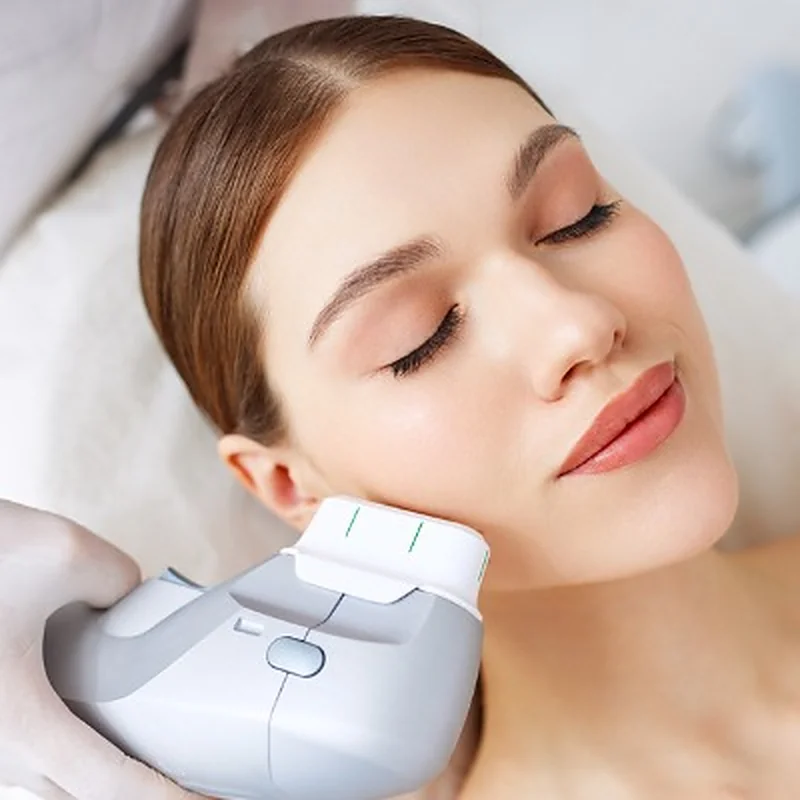
HIFU skin tightening in Abu Dhabi is one of the most searched non-surgical options for mild sagging, a softer jawline and early neck laxity. This guide explains how Ultherapy and other HIFU devices really work, what results to expect, the risks, and how to choose a qualified provider.
HIFU Skin Tightening Abu Dhabi: The Complete Medical Guide to Ultherapy, SMAS Lifting and Jawline Definition
An evidence-based, patient-focused guide to focused ultrasound treatment for the face, neck and selected body areas, with clear answers on outcomes, safety, candidacy and realistic expectations.
The essential answer: does Ultherapy or HIFU really lift the skin?
Yes. Focused ultrasound can produce measurable but generally modest improvements in mild-to-moderate skin laxity in appropriately selected patients. The effect comes from creating controlled thermal treatment zones beneath the skin that start tissue remodeling. It is not a surgical facelift, does not remove redundant skin, and cannot reliably reverse advanced jowling or severe neck laxity.
Ultherapy is a specific microfocused ultrasound platform that includes real-time ultrasound visualization (often abbreviated MFU-V). Other devices marketed as HIFU can differ substantially in image guidance, performance, regulatory status and evidence.
A systematic review and meta-analysis of 42 studies on MFU-V reported investigator-assessed aesthetic improvement in 89% of evaluable patients (95% confidence interval 81–94%, n=411). This means some degree of improvement. It is not an 89% lift, an 89% reduction in wrinkles or an individual guarantee. Patient-reported improvement was 84% (n=312), and the pooled mean pain score was about 4.85/10. The authors cautioned that study quality and definitions of satisfaction vary.[1]
For patients researching skin tightening in Abu Dhabi, the main question is not whether the marketing says "HIFU" or "Ultherapy." It is which exact device is used, which anatomical concern is being treated, whether the operator is qualified, and how realistic the expected result is.
At a glance: what patients should know
| Question | Evidence-led answer |
|---|---|
| Main purpose | Improve mild-to-moderate skin laxity and some aspects of facial contour through collagen remodeling |
| Technology | Focused ultrasound; Ultherapy uses microfocused ultrasound with visualization (MFU-V) |
| Common treatment targets | Brow, submental region, neck and décolleté; abdomen and upper arms are also included in current US Ulthera labeling[2] |
| Common focal depths | 1.5, 3.0 and 4.5 mm with selected MFU-V transducers, subject to anatomy and product labeling[3] |
| Ideal response window | Changes often become more visible around 2–3 months, with variability thereafter[4] |
| Recovery | Many patients resume routine activities immediately, but redness, soreness or swelling may occur |
| Number of sessions | Individualized; an automatic "2–3 sessions per year" is not a universal standard |
| Major limitation | Cannot replace surgery when skin redundancy, substantial fat, muscle bands or advanced descent are dominant |
| Important risks | Pain, swelling, bruising, temporary altered sensation; rare burns, tissue atrophy or neurologic symptoms have been reported[5] |
1. What is HIFU, and what does "Ulthera" mean?
HIFU stands for high-intensity focused ultrasound. It describes a physical principle: acoustic waves are concentrated into a small focal region rather than spread diffusely. Focused ultrasound is used in several medical fields, and aesthetic skin tightening is only one application. When delivered through an appropriate dermatologic device, small controlled regions beneath the skin are heated while the overlying surface is generally preserved.
Ultherapy is the branded treatment associated with the Ulthera System, a specific device family using microfocused ultrasound. Its key differentiator is real-time ultrasound visualization of tissue beneath the transducer, sometimes marketed as DeepSEE. This imaging can allow trained providers to check tissue depth and contact before delivering treatment. Calling a procedure "HIFU," "4.5-mm SMAS lifting" or "non-surgical facelift" does not establish that it uses a genuine Ulthera device, provides real-time imaging, or shares the same studies and clearances.
Claims such as "most efficient," "completely safe," "eliminates wrinkles" and "permanent destruction of fat" need a higher standard of proof than most marketing supplies. A trustworthy service description explains potential improvement and its limitations rather than making absolute promises.
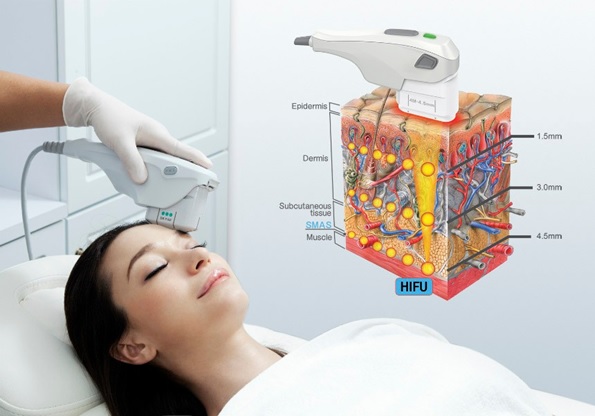
2. How does HIFU skin tightening work? The science of controlled thermal zones
Unlike ablative laser resurfacing, which acts mainly through the skin surface, focused ultrasound concentrates energy at a selected subsurface depth. Acoustic energy is converted into heat within small focal regions. These zones may cause immediate collagen contraction and then stimulate a wound-healing response involving extracellular matrix remodeling, fibroblast activity and new collagen formation. The degree, location and longevity of the response depend on energy delivery, the exact device, tissue architecture, patient biology and time after treatment.
It is tempting to call any increase in perceived firmness "new collagen." Clinically, early changes may also involve temporary inflammation, hydration shifts or short-lived tissue contraction. True structural remodeling takes time. Immediate lifting is neither universal nor proof that a full neocollagenesis response has occurred. Descriptions of "elastin regeneration" also need caution because direct human histologic evidence is less extensive than marketing language suggests.
The targeted microthermal areas are not intended to burn surrounding skin. Even so, surface burns or injury can occur when energy is misapplied, devices are faulty, coupling is poor, or anatomical boundaries are ignored. Claims that ultrasound "heats but never burns" are inaccurate as general safety guarantees.
Why do depth and tissue thickness matter?
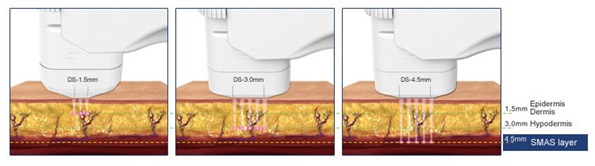
A 4.5-mm focal depth is commonly associated with deeper fibromuscular or fibrous tissue planes. However, the superficial musculoaponeurotic system (SMAS) is not a flat sheet lying at exactly 4.5 mm everywhere on every face. Its apparent depth and the surrounding fat vary by area, age, facial habitus and individual anatomy. A transducer that suits one zone may be inappropriate for thin tissue over bone or near nerve pathways.
In many MFU-V systems, 1.5-mm, 3.0-mm and 4.5-mm transducers may be used to address different tissue depths. These are nominal device focal settings, not a universal instruction to treat every layer, and they do not authorize treatment of the eyelids or inside the orbital rim. Device-specific labeling, image guidance, careful examination and clinician training all matter.[3,6]
3. What is the SMAS, and can HIFU reproduce a surgical facelift?
The superficial musculoaponeurotic system connects superficial facial soft tissues and helps transmit facial expression and support through the face. Surgeons may reposition deeper layers, release retaining ligaments, redrape skin and remove excess tissue during different types of facelift. Focused ultrasound performs none of those surgical maneuvers.
The two approaches can still be relevant to the same complaint: a softer jawline, early lower-face descent or age-related neck laxity. In the mild-to-moderate range, controlled collagen remodeling may subtly improve firmness or the appearance of the contour. With marked laxity, heavy jowls, significant platysmal banding or excess skin after weight loss, the response is less predictable and often insufficient compared with surgery.
A useful consultation distinguishes laxity, volume loss, fat excess, skeletal structure and muscle-related concerns. A poorly defined jawline can reflect any combination of these. A technology that tightens collagen does not automatically replace cheek volume, remove a large double chin, correct bone projection or tighten dramatically redundant skin.
4. Ultherapy vs generic HIFU: the differences that matter
| Dimension | Ultherapy / MFU-V | Other HIFU platforms |
|---|---|---|
| Primary mechanism | Focused ultrasound thermal coagulation zones | Also focused ultrasound, with varying engineering |
| Ultrasound tissue imaging | Integrated in the Ulthera system | Device-dependent; not all platforms offer comparable imaging |
| Evidence base | Substantial published MFU-V literature[1] | Must be evaluated for each exact device; not automatically transferable |
| Regulatory status | Device-specific FDA clearances for defined indications[2] | Varies by manufacturer and market |
| Depth targeting | Specific approved transducers and protocols | Varies by transducer, calibration and platform |
| Patient comfort | Variable; moderate pain is possible | Variable by treatment and device |
| Best comparison | Verified device, qualified operator, anatomy-specific plan and realistic goals | The same four checks are necessary |
Studies comparing MFU-V with other devices have highlighted differences in imaging, thermal-coagulation precision and equipment performance.[6] It would be incorrect, however, to claim that every non-Ulthera device is ineffective, or that a brand name alone eliminates risk. Safety and outcomes depend on more than the logo.
A practical question to ask in Abu Dhabi: "Is this genuine Ultherapy with imaging, or a different focused-ultrasound device? What are its exact model, local registration and safety protocols?" A clear answer is more meaningful than a generic claim that all 4.5-mm HIFU treatments reach the SMAS identically.
5. Which areas can benefit from focused ultrasound?
Brow and upper-face support
A subtle eyebrow lift is among the established Ulthera indications in the United States.[2] When appropriate, the goal is modest support and a fresher upper-face appearance, not the dramatic elevation of a surgical brow lift. Heavy upper-eyelid skin, substantial brow ptosis or true excess eyelid tissue may need a different assessment. Energy must never be applied directly to unsafe ocular structures.
Jawline and early jowls
Patients with mild loss of mandibular definition may notice a more refined appearance after remodeling. The outcome depends on the extent of descent, underlying fat and bone support. Focused ultrasound cannot remove a large hanging jowl, and an overly aggressive plan on a thin face risks an unfavorable loss of fullness or altered contour.
Submental area and double chin
Some marketing describes permanent fat-cell destruction in the double chin and buccal fat regions. That is not a reliable general promise for aesthetic HIFU. A double chin can reflect localized fat, skin laxity, anatomy or all three. MFU-V is supported as a tissue-lifting modality in the submental area, but a skin-tightening response must not be confused with a predictable percentage of fat destruction. For a fat-dominant concern, other approaches may be more appropriate after examination.
Neck and early crepey skin
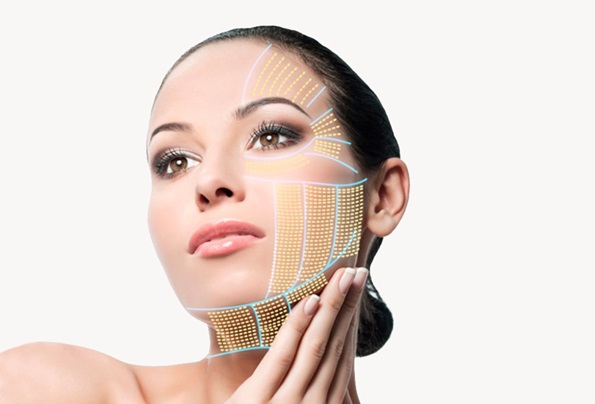
Appropriately selected neck tissue may benefit from tightening, especially when the problem is early laxity rather than heavy skin redundancy or prominent platysmal bands. The thyroid, major vessels, nerves, laryngeal structures and other sensitive tissues make anatomical mapping particularly important. A clinician should avoid prohibited zones under the device's instructions for use.[3]
Décolleté and upper chest
Improvement in lines and wrinkles of the décolleté is an identified Ulthera application.[2] The aim is not to "erase every crease" but to improve certain signs of skin quality. Sun protection and realistic skincare remain important because ultrasound does not prevent future ultraviolet damage.
Arms and abdomen
Updated US FDA indication documentation for the Ulthera System also includes improvement in the appearance of lax skin on the abdomen and the anterior and posterior arms.[2] This is a valuable distinction from older summaries that focus only on the face and neck. Evidence and protocols for body applications are still developing, and recent expert consensus emphasizes accurate visualization, patient selection and appropriate expectations.[7] These indications should not be generalized to every HIFU machine.
Thighs, back and cellulite
Some brochures also mention inner arms, legs, back and cellulite. These are claims made by marketing material, not proof of a validated effect for any device. Cellulite involves fibrous septae, fat architecture and skin characteristics, and focused-ultrasound lifting is not an established universal cellulite cure. Ask whether the proposed platform has evidence specifically for the body site and desired outcome.
6. Who is an ideal candidate?
A suitable candidate commonly has mild-to-moderate skin laxity, understands that changes may be subtle, and has a concern that can plausibly respond to collagen remodeling. Age alone is a weak predictor. While some brochures say "30 years and older," younger or older adults may be more or less suitable based on examination, not birthdays.
Patients who may need another strategy include those with severe skin redundancy, large fat deposits, marked lower-face descent, substantial midface volume loss, unrealistic expectations, active disease in the treatment zone, or anatomy that would require treatment in a restricted region. A good assessment should openly discuss situations where not treating is preferable.
Before proceeding, the consultation should cover medical history, prior procedures, filler or thread placement, implanted devices, scars, medications, pregnancy or breastfeeding status, active skin conditions and a detailed examination of the target area. Photographs taken under consistent conditions help document what is, or is not, changing.
7. Contraindications and precautions: the safety conversation
Current manufacturer instructions for the Ulthera System list open wounds or lesions, severe or cystic acne in the treatment area, and active or metallic implants in the treatment area among contraindications.[3] They also describe cautionary situations involving mechanical implants, prior fillers, existing keloids and anticoagulant therapy, and advise avoiding sensitive anatomical regions including the thyroid, major vessels and nerves, breast tissue, and the eyes or orbital rim.
The manufacturer notes that use has not been evaluated in certain populations, including pregnant or breastfeeding women and children. These details should be read from the current instructions for the exact equipment, not from an old generic website article. Prior facial fillers, implanted hardware and other energy-based procedures should be disclosed before treatment planning.
Some brochures state that treatment is suitable for all phototypes and in any season. Focused ultrasound does not rely mainly on the pigment-selective mechanism of some lasers, but that does not make every skin condition or clinical scenario automatically suitable. The clinician must still assess active irritation, infection, healing status, prior treatment and skin vulnerability.
8. What actually happens during a treatment session?
The process begins with evaluation of the reason for laxity and the intended anatomical target. The clinician identifies areas where treatment could add value, explains alternatives, and documents a treatment plan and informed consent. The treatment area is prepared and an approved coupling gel is used. For MFU-V devices, tissue visualization may help confirm anatomy and transducer contact before energy is delivered.
During treatment, the applicator is placed systematically over the planned region, following the approved device protocol. Patients may notice warm pulses, tingling, prickling or deep tenderness. Discomfort varies. A practitioner should not equate a high pain level with a "stronger" or more effective result.
Appointment length varies with the area and number of zones. Some sources quote about 60–90 minutes per session, which is a plausible example rather than a fixed requirement. Some focused sessions are shorter and extensive plans are longer. No general article should publish a universal energy setting or "number of shots" for all devices and faces.
9. When will results appear, and how long do they last?
Some patients perceive an early change in tightness, but the more meaningful remodeling process is gradual. Manufacturer patient information describes final visible improvement commonly developing over two to three months, sometimes with changes continuing after that.[4] Claims that complete collagen reorganization occurs after precisely 21 days should not be read as a universally verified biological timetable.
It is better to document results at meaningful intervals with photographs than to judge success from mirror impressions in the first week. A commonly cited duration is up to a year or longer for some people, but outcomes vary by baseline laxity, device, tissue and aging.[4] No technology stops intrinsic aging, gravity, volume loss or changes in body weight.
Does everybody need two or three treatments a year?
No. Some clinics suggest two to three annual sessions, but that is not an evidence-based universal prescription for Ultherapy. Official Ultherapy patient information indicates that many patients obtain meaningful results from one treatment, with reassessment and maintenance individualized.[4] Other machines and indications may use different schedules, but frequency should follow validated device-specific guidance and clinical needs, not repeated sessions by default.
10. Downtime, side effects and what deserves attention
Most people can resume routine activities soon after a non-ablative ultrasound session. "No downtime" means there is usually no required recovery period, not that nothing can happen afterward. Temporary redness, tenderness, swelling, bruising and altered skin sensation are possible. The meta-analysis found redness, swelling, bruising and tenderness among the commonly reported adverse effects, generally mild to moderate in the included studies.[1]
A systematic adverse-event review identified 19 publications covering 506 MFU-V patients and also examined a US FDA device-event database. Serious published events were uncommon, but events reported in the database included fat atrophy, neurological complaints and scarring.[5] Voluntary reports cannot establish incidence rates or causation, yet they are a reminder that "zero risk" is not an acceptable clinical promise.
Seek timely professional assessment for escalating or severe pain, blisters, focal burns, persistent or progressive facial weakness, concerning asymmetry, extensive numbness or any other unexpected symptom. Prompt communication with the treating clinic is important. Symptoms involving the eye or acute neurologic deficits require urgent medical evaluation.
11. Ultherapy, radiofrequency, lasers, Endolift and surgery: choosing the right modality
| Modality | Primary treatment concept | Often relevant for | Key limitation |
|---|---|---|---|
| MFU-V / Ultherapy | Controlled focused ultrasound remodeling at selected tissue depths | Mild-to-moderate laxity, brow, neck, submentum; selected body laxity | Subtle-to-moderate lift rather than surgical repositioning |
| Generic aesthetic HIFU | Focused ultrasound with device-specific depth, protocols and evidence | Similar aims, when supported by the specific device | Cannot assume Ultherapy evidence or imaging characteristics apply |
| Monopolar radiofrequency | Volumetric tissue heating | Diffuse skin quality or mild laxity in suitable patients | Different heating profile; device and technique matter |
| RF microneedling | Needles and RF energy within the skin | Texture, acne scars and certain laxity concerns | Invasive to the skin surface; potential pigment, scar or fat effects |
| Endolift / subdermal laser | Fiber-delivered laser energy in subcutaneous planes | Selected laxity or contour problems | Minimally invasive, with a different risk profile and technique |
| Surgical facelift / neck lift | Surgical tissue repositioning and skin redraping | Moderate-to-severe descent or excess skin | Surgery, anesthesia and recovery |
| Dermal fillers / biostimulators | Volume restoration or collagen stimulation, depending on product | Deflation and contour support | Does not mechanically remove redundant skin |
The best strategy follows the anatomy, not the trend. Some people need better skin texture, others need volume, fat reduction or surgery. Treating a volume-deficient face with indiscriminate thermal energy can give a poorer aesthetic result even when the procedure itself is technically uneventful.
12. Can HIFU be combined with fillers, microneedling and other treatments?
Many clinics promote combinations with Dermapen, diamond-tip exfoliation, intense pulsed light, injectable hyaluronic acid, calcium hydroxylapatite, collagen stimulators, lip treatments, tear-trough correction and nonsurgical rhinoplasty. Clinicians may consider these combinations, but combining procedures does not automatically make treatment "much more effective." Each intervention addresses a different component of aging and needs its own evidence, informed consent and scheduling decision.
The correct order and interval depend on the treatment site, device parameters, prior filler location and risk profile. The Ulthera instructions state the system has not been evaluated directly over certain materials, including dermal fillers, and highlight precautions.[3] Ultrasound delivered directly over recent filler should therefore not be endorsed as a blanket recommendation. Planning should prioritize tissue assessment, compatibility, safety and the patient's actual goals.
13. Understanding the strength and limits of the evidence
The evidence is not a choice between "HIFU definitely works for everyone" and "HIFU never works." The most informative literature shows measurable improvement in selected participants, alongside uncertainty about standardization, effect size, durability and differences between devices.
- 2025 meta-analysis: Forty-two MFU-V studies were included, with pooled investigator-rated improvement of 89% among 411 patients and moderate average pain. Study heterogeneity and differences in assessment must temper claims.[1]
- 2025 FDA documentation: The Ulthera System's indications include brow, submental and neck lifting, décolleté lines, and certain arm and abdominal laxity applications. Indications are device-specific, not a guarantee of outcome. You can verify device clearances in the FDA 510(k) database.[2]
- 2025 adverse-event systematic review: Temporary swelling, redness and pain were commonly seen, while rare but potentially significant complaints were described in safety reporting systems. The review did not establish that later facelifts are generally compromised.[5]
- 2025 body consensus: Selected abdomen and upper-arm cases require careful patient selection, visualization, realistic endpoints and treatment planning. Research is ongoing.[7]
The most honest summary is that focused ultrasound is a legitimate non-surgical option for certain laxity problems, but results are variable, it cannot replace every facelift, and the exact device matters.
14. How to choose a provider for HIFU skin tightening in Abu Dhabi
Ask the clinic for the full device brand and model, the applicable local regulatory registration, the intended indication, and whether live tissue visualization is available. Confirm the clinician's licensing and training for the procedure. Discuss whether the concern is skin, fat, volume or muscle, and ask to see examples that reflect your age and baseline laxity, not only dramatic images from unrelated patients.
A strong consultation should cover what improvement is realistically visible, how it will be documented, what alternatives exist if the response is small, expected discomfort, contraindications and an aftercare contact plan. Marketing terms such as "FDA-approved HIFU," "no burns ever," "permanent buccal fat removal" or "surgery-equivalent lifting" deserve scrutiny unless tied to precise, supportable claims.
What determines the cost of HIFU or Ultherapy in Abu Dhabi?
Cost varies with the specific device, the number and size of areas treated, consumables, clinician time and the personalized treatment scope. A generic HIFU quotation should not be compared directly with a verified MFU-V session unless both describe the same clinical objectives and device standards. An individualized quotation should follow examination.
15. A practical expectation checklist before booking
Your treatment plan should specify the clinical problem, not just the marketing label. Decide whether you want better definition of an early jowl, mild neck laxity, brow support or improved skin texture. Ask how success will be measured at follow-up. Clarify whether one session is expected, whether reassessment comes before maintenance, and which symptoms require a callback.
A responsible provider should be willing to say when your anatomy suggests that RF, collagen stimulation, fat management, fillers or surgery would be more suitable. The most professional recommendation is sometimes to avoid a treatment with a poor risk-benefit ratio, even when that procedure is commercially popular.
16. Frequently asked questions: Ultherapy and HIFU
1. Is Ultherapy the same as HIFU?
Ultherapy is a specific focused-ultrasound device with real-time imaging. HIFU is the wider technology category, and individual machines differ.
2. Does HIFU really tighten facial skin?
It can improve mild-to-moderate laxity in selected patients, but the magnitude and duration of improvement vary.
3. Does HIFU lift the SMAS?
Energy may target deep fibrous tissue planes associated with the SMAS, but it does not surgically reposition the SMAS or substitute for a facelift.
4. Is Ultherapy better than generic HIFU?
Ultherapy has specific visualization, regulatory documentation and published data. That does not prove every other HIFU system is ineffective; each requires its own evaluation.
5. Can ultrasound lift the jawline?
Early jowling and mild laxity may improve. Significant descent or volume-related contour problems may need another approach.
6. Can Ultherapy reduce a double chin?
It may lift lax submental tissue. It should not be presented as a guaranteed fat-melting or permanent fat-removal procedure.
7. Does HIFU remove buccal fat?
There is insufficient basis for promising permanent buccal fat removal from a generic facial HIFU session.
8. Will my face look thinner afterward?
Some patients may perceive altered contour. Unwanted fat loss has been reported rarely, so careful selection and treatment depth are important.
9. Can HIFU treat a sagging neck?
Selected mild-to-moderate neck laxity may respond. Severe redundant skin or platysmal bands may require other treatments.
10. Does it work on the upper eyelids?
Brow lifting can indirectly improve upper-face appearance, but treatment directly over the eyelids and within the orbital rim is restricted under Ulthera labeling.
11. Does Ultherapy treat under-eye bags?
It is not a universal treatment for prominent eye bags, which can arise from fat prolapse, swelling, skin laxity or anatomy.
12. Is HIFU safe for all skin tones?
Focused ultrasound is not primarily pigment-selective, but overall suitability still depends on medical history, skin health, anatomy and device instructions.
13. Is the procedure painful?
Discomfort ranges from mild to significant. A meta-analysis reported average pain around 4.85 out of 10 for MFU-V.[1]
14. Is anesthesia always needed?
Comfort plans vary with the patient and equipment. The treating clinician determines what is appropriate and safe.
15. Is there downtime?
Many patients resume normal routines quickly, although transient tenderness, redness and swelling are possible.
16. How long does redness last?
Often hours, but duration varies. Persistent, worsening or unusual symptoms require clinical assessment.
17. Can HIFU cause nerve damage?
Neurologic symptoms have been reported, although significant injuries are uncommon in the reviewed literature. Qualified treatment and careful anatomy matter.
18. Can HIFU burn the skin?
Yes, unintended burns are possible. A claim of zero burn risk is inappropriate.
19. Can ultrasound cause fat atrophy?
Rare cases and device-event reports describe unwanted tissue atrophy, and the true frequency is difficult to establish.[5]
20. Is it safe with a pacemaker or metal implant?
The device instructions identify relevant implant-related contraindications and precautions. Disclose all implants before your consultation.
21. Can I have it during pregnancy?
The manufacturer states the technology has not been evaluated for pregnant or breastfeeding patients, so elective treatment is generally deferred pending clinical guidance.
22. Is HIFU safe after dermal fillers?
It depends on filler type, placement, timing and device. Do not assume direct treatment over filler is safe; discuss it with your clinician.
23. How soon will I see a difference?
Some people notice an early change, but results more often evolve over roughly two to three months.
24. How long does it last?
Results vary. Some patients report benefit for up to a year or longer, but there is no universal fixed duration.
25. How many sessions do I need?
Many Ultherapy patients may benefit from one session. Additional treatment depends on clinical reassessment and the specific device.
26. Will I need two or three HIFU sessions every year?
Not necessarily. That schedule is not a standard prescription for all Ultherapy patients.
27. Can HIFU replace a facelift?
No. It does not remove excess skin, release ligaments or reposition tissues surgically.
28. What is better: HIFU or radiofrequency?
It depends on target depth, tissue condition, device, pain tolerance and whether laxity or texture is the main complaint.
29. Can HIFU and Endolift be combined?
Only after an individual treatment plan. The two deliver energy through different mechanisms and may increase cumulative tissue effects.
30. Can Ultherapy help the abdomen or upper arms?
Current FDA indications for the Ulthera System include the appearance of lax skin in these areas. Suitability and evidence remain indication-specific.[2,7]
31. Does HIFU help cellulite?
The evidence does not support marketing generic facial HIFU as a universal cellulite cure.
32. What makes an Ultherapy consultation trustworthy?
Transparent device identification, clear patient selection, realistic before-and-after documentation, a safety discussion and willingness to recommend alternatives.
33. How much is Ultherapy in Abu Dhabi?
There is no meaningful single price independent of device verification, treatment area and clinician assessment. Request an itemized quotation.
34. Is Ultherapy worth it?
It may be, for a patient with appropriate mild-to-moderate laxity who values a non-surgical option and understands that improvement is generally more subtle than surgery.