
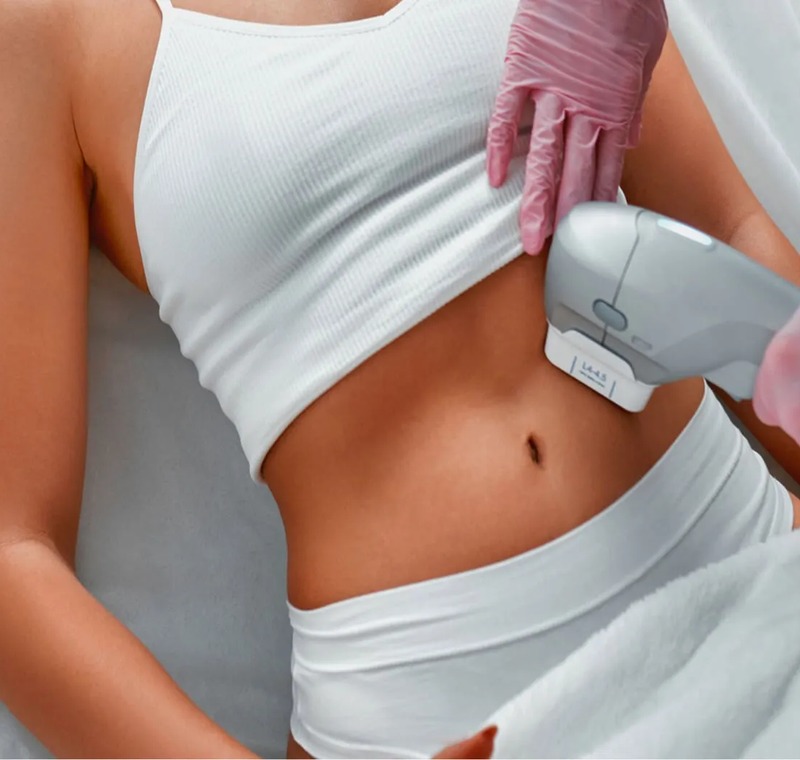
HIFU for Skin Tightening and Body Contouring: An Evidence-Based Guide
High-intensity focused ultrasound (HIFU) has become one of the most discussed non-surgical technologies for tightening lax skin, refining the jawline and neck, and treating selected areas of localized subcutaneous fat. The appeal is straightforward: focused ultrasound energy can be delivered below the skin surface without an incision, creating controlled thermal zones that trigger tissue contraction, collagen remodeling, and — at appropriate depths and settings — disruption of adipose tissue.
The important question is not whether the word "HIFU" sounds impressive. The important question is what the clinical evidence actually shows, which anatomical problem is being treated, how deeply the device delivers energy, and whether the selected protocol matches the patient's tissue thickness and degree of laxity.
This guide translates a 2025 systematic review into practical, patient-friendly language while preserving the paper's quantitative results, technology comparisons, safety data, limitations, and emerging applications. It is designed for readers researching HIFU in Abu Dhabi or elsewhere who want to understand what a realistic non-surgical result can look like before deciding whether the treatment fits their goals.
| Question | What the 2025 systematic review reported |
|---|---|
| How many studies? | 45 clinical trials and cohort studies selected from 3,865 initially identified records. |
| Skin tightening | Reported skin-laxity improvement of roughly 18% to 30%, particularly lower face, neck, and periorbital regions. |
| Body contouring | Circumference reduction of about 2.5 to 4.5 cm in reviewed body-contouring studies, notably abdomen and thighs. |
| Abdominal example | Average waist reduction around 3 cm (reported range 2.5–4.5 cm) after one session in one study; effect observed in 68.7% at 8 weeks. |
| Submental example | 62.5% achieved at least a 1-point clinician-rated improvement in one triple-layer HIFU study; 67.5% were satisfied at 8 weeks. |
| Patient satisfaction | Several cited studies reported satisfaction above 80%, particularly for facial rejuvenation and body contouring. |
| Typical timing | The review states that results commonly become visible within about 3 months and may last up to a year. |
| Evidence level | Level of Evidence 3 (Therapeutic). |
What Is HIFU?
HIFU stands for high-intensity focused ultrasound. In aesthetic medicine, the technology concentrates ultrasound energy at predetermined depths beneath the skin. Unlike treatments that primarily affect the surface, focused ultrasound can create small thermal coagulation points in deeper tissue while leaving intervening tissue relatively untreated. The review describes these thermal injury zones as approximately 1 mm³ and notes that the untreated spaces between them support regeneration.
The biologic response depends on the target. In the dermis and deeper supporting tissue, controlled thermal injury produces immediate collagen contraction followed by a wound-healing response and new collagen formation. In body contouring protocols, energy can be directed toward subcutaneous fat, producing thermal disruption and subsequent clearance of damaged adipocytes through normal metabolic and lymphatic processes.
How Deep Does Aesthetic HIFU Work?
The systematic review describes commonly used depths from approximately 1.5 to 4.5 mm for facial skin tightening, with frequencies varying by platform. At these depths, treatment can address the dermis and deeper support structures, including the superficial musculoaponeurotic system (SMAS) in selected facial protocols. Conventional HIFU depths include 1.5, 2.0, 3.0, and 4.5 mm, while microfocused ultrasound with visualization (MFU-V) commonly uses 1.5, 3.0, and 4.5 mm.
The review reports focal temperatures around 60°C to 70°C at the treatment point. This controlled thermal exposure induces coagulative tissue effects, collagen remodeling, and contraction. In practice, "HIFU" is not a single uniform treatment: cartridge depth, frequency, number of thermal coagulation points, pattern, anatomy, and operator technique all influence what tissue is actually treated.
How Strong Is the Evidence?
The review searched PubMed, Embase, and the Cochrane Library for studies published between January 2010 and October 2024. It initially identified 3,865 articles and selected 45 for in-depth analysis. Included studies had to report quantifiable outcomes such as changes in skin elasticity, wrinkle measurements, or circumference of the waist, thighs, or arms. Studies without objective clinical measurements or statistical comparisons were excluded.
The paper assigns an overall Level of Evidence of 3 (Therapeutic). That is meaningful evidence, but it is not the same as a large body of uniform randomized controlled trials using one device, one protocol, and one patient population. The authors repeatedly point to heterogeneity in treatment settings, depths, devices, selection criteria, and outcome measurements. The most scientifically responsible interpretation: HIFU has a consistent signal of benefit, but the exact magnitude of benefit for an individual patient remains variable.
What Results Can HIFU Produce on the Face and Neck?
Facial skin tightening is one of the best-supported aesthetic uses in the review. Across cited studies, improvement in skin laxity ranged from approximately 18% to 30%, with the lower face, neck, and periorbital region among the most frequently improved areas. The proposed mechanism is deep focal heating followed by collagen contraction, collagen regeneration, and elastin remodeling.
A prospective study highlighted by the review followed 50 patients with mild-to-moderate facial laxity after a single session of microfocused ultrasound with visualization. Over six months, the study reported significant wrinkle reduction, improved texture, and better facial ptosis correction without major adverse effects. Other cited studies reported visible tightening in the jawline and submental region, along with improvements in firmness and skin texture.
Jawline and Lower-Face Tightening
The lower face is a logical target because HIFU can be delivered to deeper tissue planes that contribute to support and contour. The review describes improvements in lower-face laxity and jawline definition in multiple studies. It also makes an important distinction: ultrasound treatment is most appropriate when the clinical problem is mild-to-moderate laxity. When sagging is severe, non-surgical energy-based treatment should not be presented as an equivalent substitute for a surgical facelift.
Neck and Submental Area
The neck and submental area are repeatedly represented in the review. HIFU may be used for skin tightening and, when a device and protocol are designed for it, for localized submental fat reduction. In a triple-layer HIFU study involving 40 Korean patients, 62.5% demonstrated at least a 1-point improvement on a clinician-reported submental fat scale, and 67.5% reported satisfaction with facial and chin appearance at eight weeks.
Periorbital Area and Delicate Zones
The review also summarizes data for periorbital wrinkles and laxity. These areas require particularly careful depth selection because of thin tissue and nearby anatomical structures. Visualization-guided ultrasound can improve targeting precision, and parallel-beam technology has been explored for superficial tightening in delicate regions. The closer the treatment is to thin or anatomically sensitive structures, the more important device selection and operator experience become.
HIFU for Body Contouring and Localized Fat Reduction
HIFU is also used for noninvasive body contouring, but its goal should be framed accurately. The studies reviewed focused on localized subcutaneous fat and circumference change — not general weight loss. Body-contouring studies reported circumference reductions of approximately 2.5 to 4.5 cm, particularly in the abdomen and thighs.
One study of abdominal HIFU reported an average waist reduction of about 3 cm, with a reported range of 2.5 to 4.5 cm after a single treatment. The effect was observed in 68.7% of patients at eight weeks. The review also cites studies of flanks, thighs, arms, and submental fat, with improvements in contour plus a secondary tightening effect attributed to collagen stimulation.
A practical limitation: conventional HIFU transducers create relatively small treatment spots. On large body areas, many pulses may be needed to cover the required surface. This can make body treatment longer, more expensive, more uncomfortable, and more variable than facial treatment — an important detail when setting expectations for abdomen or thigh contouring.
When Do HIFU Results Appear — and How Long Can They Last?
Typical improvements in tightening, wrinkle reduction, and fat reduction become visible within about three months and can last up to one year. This timing is biologically plausible because immediate thermal contraction is followed by slower collagen remodeling and tissue reorganization.
"Up to a year" should not be interpreted as a guaranteed duration for every patient. The authors call for longer-term studies beyond 12 months and note that durability may vary with age, skin type, degree of laxity, treatment parameters, device, and use of combination therapies. Maintenance strategy therefore needs to be individualized rather than scheduled automatically for everyone.
HIFU vs MFU-V vs Parallel-Beam Ultrasound
The review separates conventional HIFU from microfocused ultrasound with visualization (MFU-V) and synchronous parallel-beam technology. These systems all use ultrasound, but they are not technically interchangeable. Their depth control, imaging capability, tissue targets, and intended applications differ.
| Aspect | HIFU | MFU-V | Synchronous parallel-beam technology (SUPERB) |
|---|---|---|---|
| Mechanism | Delivers focused ultrasound energy to create thermal injury at targeted depths | Combines focused ultrasound energy with real-time imaging for precise targeting | Nonfocused ultrasound waves create thermal injury |
| Visualization capability | No real-time visualization | Real-time imaging allows visualization of different tissue layers during treatment | No real-time visualization |
| Target tissues | Dermis, SMAS, platysma, and subcutaneous fat | Dermis, SMAS, platysma | Dermis |
| Clinical applications | Skin tightening, lifting, skin rejuvenation, and body contouring | Skin tightening, lifting, and skin rejuvenation | Skin tightening, rejuvenation, and cellulite |
| Depth of penetration | Different depths (1.5, 2.0, 3.0, and 4.5 mm) at frequencies of 2 to 7 MHz | Specific depths (1.5, 3.0, and 4.5 mm) at frequencies of 4 to 10 MHz | Cylinder at 1.5 mm depth at 11 to 12 MHz frequencies |
| Precision | Less precise targeting of depth. No visualization | Highly precise; visualization ensures accurate targeting of desired layers | Less precise. Targets the dermis |
| Fat reduction capability | Can target the subcutaneous fat, suitable for body contouring at lower frequencies | Avoids fat layers, not suitable for fat reduction | Not suitable for fat reduction. Suitable for cellulite |
| Predictability of outcomes | High, highly dependent on operator skill and experience | High, guided by imaging and operator skill, with consistent results | Variable |
| Key advantages | Versatile. Can target both fat and skin. Suitable for body contouring | Precision. Skin tightening and lifting. Consistent outcomes | Skin tightening and lifting. Variable outcomes |
| Limitations | Lack of visualization can lead to variability in outcomes. Operator skill vital. Can unintentionally target fat layers | Not designed for fat reduction. Operator skill vital to use imaging effectively. Can unintentionally target fat layers | Not designed for fat reduction. Operator skill vital |
| Best suited for | General skin rejuvenation, skin tightening and lifting. Noninvasive body contouring | Noninvasive skin tightening and lifting, especially in delicate areas (e.g. periorbital skin) | Noninvasive skin tightening and lifting |
| Examples of devices | Ultraformer | Ultherapy, Ultherapy Prime | Sofwave |
Conventional HIFU sessions typically last about 45 to 75 minutes, MFU-V protocols for the full lower face and submentum may average around 90 minutes, and parallel-beam protocols take roughly 40 to 50 minutes. Actual treatment time depends on area, device, number of lines or thermal coagulation points, and protocol.
One clinically important distinction is visualization. MFU-V provides real-time imaging of tissue layers, which may improve confidence that energy is delivered to the intended plane and may reduce unintended targeting of fat. Conventional HIFU is more versatile for body contouring because it can target subcutaneous adipose tissue at appropriate settings, whereas MFU-V is characterized primarily as a precision tightening and lifting technology rather than a fat-reduction platform.
HIFU vs Radiofrequency, Laser, Cryolipolysis, and Surgery
HIFU vs Radiofrequency (RF)
RF primarily heats the dermis to stimulate collagen at comparatively shallower levels, whereas HIFU can concentrate energy in deeper planes including the SMAS and, with appropriate protocols, subcutaneous fat. This is why HIFU is often selected for deeper lifting or focal contouring, while RF may be useful for dermal tightening and texture. Studies combining ultrasound and RF reported improved elasticity, skin tone, and tightening compared with single-modality treatment.
HIFU vs Laser or IPL
Lasers and intense pulsed light are better suited to surface-level issues such as pigmentation, fine lines, and textural irregularities, while HIFU is distinguished by deeper penetration. This doesn't make one modality universally better; it means treatment should match the anatomical target. Surface pigment, dermal texture, deeper laxity, and localized fat are different problems and may require different technologies or a multimodality plan.
HIFU vs Cryolipolysis
HIFU provides a more focused approach to selected localized fat deposits than RF or cryolipolysis because ultrasound energy can be directed to a defined tissue layer. The review does not provide a head-to-head pooled numerical comparison against cryolipolysis, so claims that one technology is categorically superior would go beyond the evidence summarized in this paper.
HIFU vs Liposuction or Surgical Lifting
HIFU is noninvasive and generally requires little downtime, which is its major advantage over surgery. Liposuction can remove substantially larger volumes of fat but involves anesthesia, incisions, recovery, and surgical risks. Likewise, a surgical facelift can reposition tissue to a degree that an energy-based procedure cannot reproduce in severe laxity. HIFU is a non-surgical option for appropriately selected patients rather than a universal replacement for surgery.
Safety and Side Effects: What the Review Actually Shows
Across the included studies, HIFU was generally described as having a favorable safety profile. Commonly reported reactions were temporary erythema, swelling, tenderness, and treatment discomfort. Poor technique, incorrect depth, or inappropriate energy delivery can cause thermal injury, inconsistent outcomes, or unintended fat loss, especially in thin or sensitive areas.
| Side effect | Frequency |
|---|---|
| Mild erythema | 30% to 50% (resolves in 24–48 h) |
| Swelling | 10% to 20% (resolves within a few days) |
| Tenderness | 15% to 25% (subsides in 1–2 weeks) |
| Nerve irritation | <1% (typically transient) |
| Fat atrophy (unintentional) | <1% (because of improper depth selection) |
Important Evidence Nuance
The review is internally heterogeneous in how adverse events are summarized. Its abstract describes fewer than 5% of patients reporting transient erythema, swelling, or mild discomfort, while its detailed data table lists much higher ranges for common mild reactions (for example erythema 30%–50% and swelling 10%–20%). These figures likely reflect different definitions and study subsets. For patient counseling, it is safer to say that mild temporary reactions are common in some protocols, whereas serious complications are uncommon when treatment is appropriately performed.
Why Operator Skill Matters
The paper repeatedly identifies operator skill as a major determinant of safety and predictability. Aesthetic ultrasound requires knowledge of facial and body anatomy, tissue thickness, appropriate cartridge depth, and the location of structures that should not be exposed to excessive thermal energy. Inexperienced use can lead to burns, tissue injury, unintended fat atrophy, or simply inconsistent results. This is one of the strongest practical messages in the review.
Who Is Most Likely to Benefit?
The review supports HIFU most clearly in patients with mild-to-moderate laxity, localized contour concerns, or a desire for gradual tightening without surgery. Patients with more severe laxity may need multiple sessions, combination therapy, or a different treatment strategy. Age, skin type, tissue thickness, degree of laxity, and anatomical area all influence outcome.
- A patient with mild-to-moderate lower-face or neck laxity who wants non-surgical tightening.
- A patient with a jawline or submental concern where the treatment goal is clearly distinguished between skin laxity and localized fat.
- A patient with a localized body-contouring concern, such as selected abdominal, flank, thigh, or arm fat, who understands that HIFU is contouring rather than generalized weight-loss therapy.
- A patient who accepts gradual improvement over weeks to months rather than an immediate surgical-level change.
- A patient who can be treated with an anatomy-appropriate depth and device protocol by a trained operator.
The systematic review does not provide a universal contraindication checklist for all HIFU platforms. Contraindications and precautions are device-specific and should be checked against the manufacturer's instructions, the patient's medical history, and the treating clinician's examination.
Combination Treatments: Why Multimodality Plans Are Increasing
A recurring theme in the review is that aesthetic aging is multidimensional. Laxity, texture, volume loss, dynamic wrinkles, pigmentation, and scars do not originate in the same tissue layer. Several included studies evaluated HIFU in combination with other modalities:
- HIFU + monopolar radiofrequency: cited for enhanced tightening and elasticity in selected studies.
- HIFU + microneedling / RF microneedling: reported to improve texture and elasticity in multimodality protocols.
- HIFU + fractional CO2 laser: studied for combined lifting, tightening, and resurfacing of the face and neck.
- HIFU + dermal fillers and botulinum toxin: used to combine deep tightening with correction of volume loss and dynamic wrinkles.
- HIFU + other injectables: combined contouring approaches show future potential for regenerative combinations, while some proposed combinations have not been directly studied.
Combining modalities should be based on separate anatomical targets, not simply on the assumption that "more treatments" produce a better result. The review supports multimodality strategies but repeatedly highlights the need for protocol standardization and trained application.
Parallel-Beam Ultrasound: What Is New?
The review discusses synchronous parallel-beam technology as an emerging ultrasound approach designed to distribute energy more uniformly in superficial tissue. Cited studies used a depth of around 1.5 mm and reported more consistent tightening in mild-to-moderate facial laxity with lower discomfort. Uniform energy distribution may reduce the risk of overtreatment and improve predictability in delicate areas such as the periorbital region and neck.
This technology is not the same as conventional focused HIFU or MFU-V. It is described as nonfocused ultrasound targeting the dermis, without real-time visualization and without a primary fat-reduction indication. Its role is more aligned with superficial tightening and collagen remodeling.
Patient Satisfaction and the Importance of Personalization
Several studies cited by the review reported patient satisfaction above 80%, particularly for facial rejuvenation and body contouring. Better satisfaction is connected to personalized treatment planning — adjusting depth, energy, coverage, and treatment area to the patient's anatomy rather than using a fixed protocol for everyone.
Satisfaction is also influenced by expectation. A patient expecting a subtle-to-moderate non-surgical improvement may judge the same result very differently from a patient expecting a surgical transformation. A high-quality consultation should separate the goals of tightening, lifting, fat reduction, texture improvement, and volume restoration before deciding whether HIFU is the correct tool.
Emerging Uses: Acne Scars, Pigmentation, and Skin Brightening
The review includes emerging applications beyond tightening and contouring, but clearly describes these areas as less established. In one acne-scar study involving 53 patients, approximately 76% experienced moderate-to-significant improvement in scar texture and depth over six months, with some patients showing up to a 50% reduction in scar severity. The treatment was generally well tolerated, with temporary redness and swelling reported.
A randomized controlled study of UV-induced hyperpigmentation in Fitzpatrick skin types III and IV reported improvement in pigmentation and overall skin tone. Another study combined HIFU with a topical agent and reported improved luminosity and hydration after three sessions. These results are interesting, but the review explicitly calls for more rigorous clinical trials before these indications can be treated as established HIFU standards.
Limitations of the Evidence
The systematic review is supportive of HIFU, but its limitations are clinically important. Results vary with patient age, skin type, degree of laxity, device settings, treatment depth, and operator technique. Protocols are not standardized across platforms, which makes direct comparison difficult. Pain and discomfort can be significant at higher energy settings, especially in sensitive areas.
The authors also note a lack of robust long-term data beyond 12 months and limited evidence in darker skin types. Although HIFU is described as generally safe across Fitzpatrick skin types, the review calls for more research on long-term safety and the risk of post-inflammatory hyperpigmentation in darker skin. The evidence base is also heterogeneous because HIFU, MFU-V, and parallel-beam systems have different technical characteristics and should not be treated as one identical intervention.
HIFU in Abu Dhabi: What to Ask Before Booking
For someone researching HIFU in Abu Dhabi, the most useful question is not simply "Do you offer HIFU?" The evidence suggests that the quality of planning matters as much as the technology category. A consultation should identify the exact tissue problem and match it to the correct depth and modality.
- Which exact ultrasound technology and device will be used — conventional HIFU, MFU-V, or another ultrasound platform?
- What is the main target: dermal laxity, deeper support, submental fat, or body fat?
- Which depths will be treated and why are those depths appropriate for my anatomy?
- How many treatment lines or thermal coagulation points are planned for this area?
- What degree of improvement is realistic for my current laxity and tissue thickness?
- Would another modality — such as RF, laser, injectable treatment, or surgery — better address part of the problem?
- What temporary side effects should I expect, and what are the device-specific risks?
- How will progress be documented with standardized photographs or objective measurements?
Clinical Interpretation: What HIFU Can — and Cannot — Realistically Do
| Clinical goal | Evidence-informed interpretation |
|---|---|
| Mild-to-moderate face/neck laxity | Supported use. The review reports measurable tightening and lifting, especially lower face, neck, jawline, and periorbital areas. |
| Severe facial laxity | HIFU may produce some improvement, but the review notes that more severe laxity may require multiple sessions or adjunctive treatment. Surgical options may provide a different magnitude of correction. |
| Localized abdominal/thigh fat | Supported as noninvasive contouring in selected patients; circumference reduction was measurable in reviewed studies. |
| General weight loss | Not the clinical target evaluated in the systematic review. HIFU body studies focus on localized subcutaneous fat and circumference change. |
| Skin texture / acne scars | Promising emerging use, but less established than tightening; more trials needed. |
| Pigmentation / brightness | Early evidence exists, including darker skin types, but the review calls this area under-researched. |
| Guaranteed result | Not supported. Outcomes vary with anatomy, device, depth, energy, protocol, and operator skill. |
Frequently Asked Questions About HIFU
Is HIFU good for skin tightening?
The 2025 systematic review found consistent evidence of tightening, with reported skin-laxity improvements of about 18% to 30% in several studies, particularly in the lower face, neck, and periorbital region.
How long does HIFU take to show results?
Typical improvements become visible within about three months as collagen remodeling develops.
How long do HIFU results last?
Results can last up to a year, while longer-term durability beyond 12 months needs further study.
Can HIFU reduce a double chin?
Yes, selected protocols can target submental tissue. In one triple-layer HIFU study, 62.5% achieved at least a 1-point clinician-rated improvement, and 67.5% were satisfied at eight weeks.
Can HIFU reduce abdominal fat?
The review includes evidence of localized abdominal fat reduction. One study reported an average waist reduction around 3 cm, with a range of 2.5 to 4.5 cm after one session.
Is HIFU a weight-loss treatment?
No. The systematic review evaluates localized fat reduction and body contouring, not general weight loss. It is more accurate to describe HIFU as a contouring treatment for selected subcutaneous fat deposits.
Is HIFU painful?
Discomfort and tenderness are reported, especially at higher energy settings. Pain management is identified as an area for future improvement.
What are common HIFU side effects?
Temporary erythema, swelling, tenderness, and discomfort are common. Reported ranges include erythema 30%–50%, swelling 10%–20%, and tenderness 15%–25%, with rare nerve irritation and unintended fat atrophy below 1%.
Can HIFU cause fat loss in the face?
Unintended fat atrophy is listed as a rare complication and is associated with improper depth selection. This is one reason anatomy and device settings matter.
What is the difference between HIFU and Ultherapy?
Conventional HIFU is focused ultrasound without real-time visualization and can be used for skin tightening and body contouring. Ultherapy is an example of MFU-V, which adds real-time imaging for more precise tissue targeting and is primarily used for lifting and tightening rather than fat reduction.
Is Ultraformer a HIFU device?
Yes, Ultraformer is listed as an example of HIFU technology in the review's comparison table.
What is MFU-V?
MFU-V means microfocused ultrasound with visualization. It combines focused ultrasound energy with real-time imaging so the operator can visualize tissue layers during treatment.
Can HIFU be combined with radiofrequency?
Yes. Combination studies found ultrasound plus RF improved tightening, elasticity, and skin tone. Combination planning should be based on distinct tissue targets rather than routine stacking.
Can HIFU be combined with fillers or Botox?
A pilot study combining microfocused ultrasound with botulinum toxin and dermal fillers reported comprehensive rejuvenation and acceptable safety.
Does HIFU work for acne scars?
This is an emerging indication. In one study of 53 patients, about 76% had moderate-to-significant improvement over six months, but more evidence is needed.
Can HIFU treat pigmentation?
Early studies suggest possible benefit for UV-induced hyperpigmentation and skin tone, but pigmentation remains a less established indication and needs more rigorous trials.
How many HIFU sessions are needed?
Some studies evaluated a single session, while patients with greater laxity may need multiple sessions or adjunctive treatments. There is no single standardized schedule across devices and patients.
Is HIFU safe for darker skin?
HIFU is generally considered safe across Fitzpatrick skin types, but there is limited long-term evidence in darker skin, and more research is needed on post-inflammatory hyperpigmentation risk.
Why does HIFU sometimes give inconsistent results?
Differences in patient selection, device type, energy settings, treatment depth, coverage, and operator skill are major sources of variability.
Is HIFU better than surgery?
They solve different levels of problems. HIFU offers noninvasive tightening with minimal downtime, while surgery can produce a larger structural change in severe laxity. HIFU is an alternative for appropriately selected non-surgical goals, not a universal replacement for surgery.