
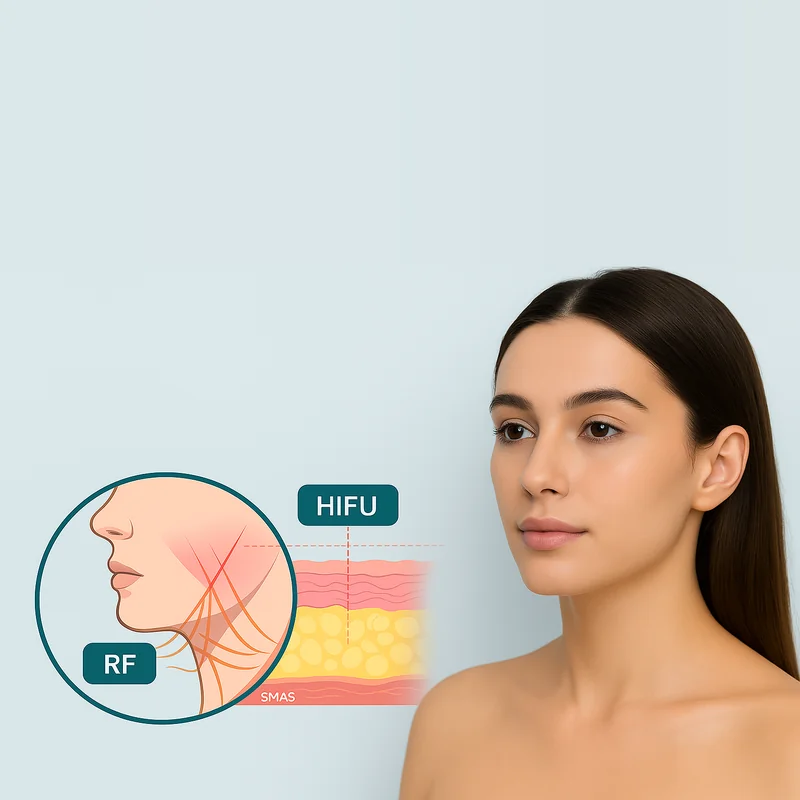
HIFU Skin Tightening : The Evidence-Based Guide to SMAS, Jawline, Double Chin and Neck Lifting
What Is Deep Layer HIFU?
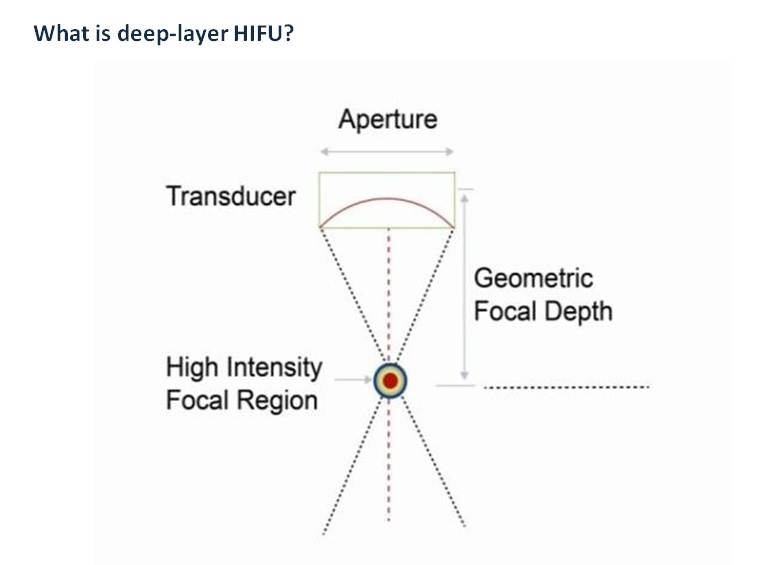
HIFU (high-intensity focused ultrasound) concentrates acoustic energy at preselected depths under the skin through a handpiece or cartridge coupled with ultrasound gel. Tissue responds to these focal zones with contraction followed by gradual collagen remodeling, so improvement builds over weeks to months rather than instantly.
Unlike a resurfacing laser, which interacts mainly with surface structures based on light absorption, focused ultrasound reaches a depth set by the transducer. That does not make HIFU stronger or safer than laser or radiofrequency; each technology has different indications, depth behavior and risks. Independent evidence comes from peer-reviewed studies of identifiable MFU/MFU-V devices and cannot be generalized automatically to every machine.
HIFU and the SMAS: What the Nonsurgical Lift Really Targets
The superficial musculoaponeurotic system (SMAS) is a fibromuscular support layer connected to the facial muscles, retaining ligaments and fat compartments. In the neck, the platysma also shapes laxity and contour.
A common marketing shortcut needs correcting: a 4.5 mm cartridge does not guarantee treatment of the SMAS in every patient. Depth to superficial fascia varies by region, age and individual, and cheek, jawline, submental and neck anatomy differ widely (vessels, glands, nerves, bone). Some microfocused ultrasound systems offer real-time visualization to confirm the plane; generic devices may not.
Ageing is also more than collagen loss: bone remodeling, fat compartment shifts, ligament laxity, photodamage and muscle changes all contribute. Good consultation starts with diagnosis: is the issue skin looseness, excess fat, jowls, reduced skeletal support, or a mixture?
How Does Focused Ultrasound Tighten Skin?
Established microfocused ultrasound systems can reach roughly 60-70 °C inside tiny focal points (not across the whole face). This causes limited collagen contraction and a wound-healing cascade that promotes neocollagenesis over the following months. Three points matter:
- The effect depends on the focal zone actually achieved, not the number on the screen.
- Heat must be controlled; wrong depth or excess energy can injure nerves, fat or skin.
- Collagen remodeling is not a guaranteed visible lift; advanced laxity or unrealistic expectations can lead to disappointment.
Ultrasound is mechanical acoustic energy. The gel improves acoustic coupling; it does not conduct electrical current. Skin injury has been reported with aesthetic ultrasound devices.
HIFU Treatment Depths: 1.5 mm, 3.0 mm and 4.5 mm Explained
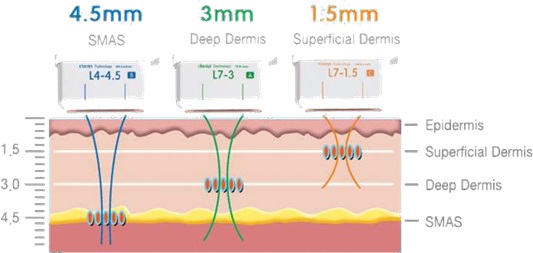
| Nominal depth | Commonly discussed target | Intended objective | Important limitation |
|---|---|---|---|
| 1.5 mm | More superficial dermal region | Fine texture and skin-quality support on selected platforms | Not a substitute for laser resurfacing; needs careful assessment near delicate anatomy |
| 3.0 mm | Deeper dermis / superficial subcutaneous interface | Collagen remodeling and firmness | Depth and effect vary by face area and device |
| 4.5 mm | Deeper connective-tissue/fascial region at selected sites | Structural tightening and lifting | Does not always equal the SMAS; must not be used indiscriminately |
Cartridge colors and codes are manufacturer-specific, not universal. Always verify transducer identifiers against the exact device's current instructions.
Which Areas Can HIFU Treat?
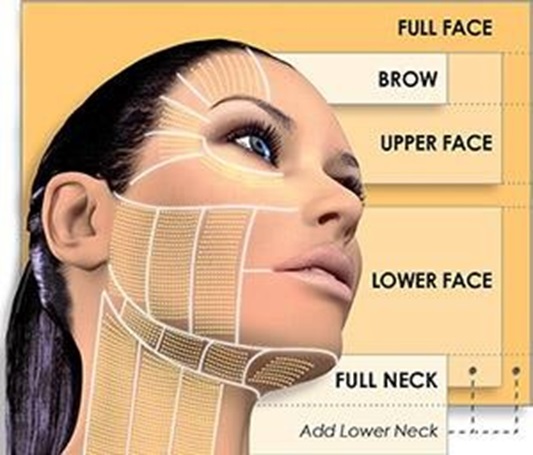
Jawline Definition
For mild laxity along the mandibular border, HIFU may modestly improve firmness. If the blurred jawline comes from pronounced jowl fat, marked platysma laxity or skeletal contour, surgical-level correction is unlikely. Use consistent frontal, oblique and profile photos to judge change.
Double Chin (Submental Area)
"Double chin" is not a diagnosis; it may reflect fat, skin laxity, neck anatomy, posture or deeper structures. Tightening programs are not automatically fat-removal procedures, and unwanted fat loss is undesirable in a slim face. Define whether the goal is tightening, fat reduction or both.
Neck Laxity
Mild-to-moderate looseness may respond. Strong vertical platysmal bands, major skin redundancy and subplatysmal fullness usually need other options. The thyroid, trachea and other anterior-neck structures are not intended targets.
Brow and Periorbital Skin
Selected MFU systems have evidence and clearance for a modest brow lift, not correction of heavy eyelid skin. Periorbital treatment is high-consequence and depends strictly on device labeling and clinician expertise. Claims of routine, risk-free eyelid HIFU deserve skepticism.
Texture, Pores and Pigment
Shallower programs are marketed for fine lines and texture, but ultrasound is not the primary treatment for pigmentation or acne scarring; lasers, topicals or microneedling may suit better.
Who Is a Good Candidate for HIFU?
The best candidate has mild-to-moderate laxity, wants to avoid incisions, accepts gradual and sometimes subtle change, and has suitable skin and fat anatomy. Reviews report less predictable results with greater laxity and higher BMI (above 30 has been discussed as a relative factor, not a blanket exclusion). Thin-faced patients need protection against hollowing.
Some patients are better served by a surgical consultation (significant descent), neuromodulators (dynamic lines), fillers (volume deficit) or fat-targeting treatments. Sometimes a good outcome means not performing HIFU.
Contraindications and Precautions
Training documents often list pregnancy, bleeding disorders, active herpes, autoimmune skin disease, diabetes, epilepsy, facial palsy and open wounds. These are not a universal, device-independent list; some are no-treatment zones, others need individual medical review.
| Issue | Practical interpretation |
|---|---|
| Pregnancy / breastfeeding | Usually deferred for elective aesthetic ultrasound; check device labeling |
| Active wound or infection in the field | Do not treat until evaluated and resolved |
| Electronic or implanted devices | Check proximity, implant type, labeling and specialist advice |
| Thyroid, eye, trachea, sensitive anatomy | Respect verified no-treatment zones |
| Neurologic disease, prior facial palsy | Careful history and exam; lower threshold to defer |
| Autoimmune disease, diabetes, anticoagulation | Assess stability, healing risk and manufacturer restrictions |
| Prior fillers, threads, surgery, energy treatments | Document location and dates before planning |
Does HIFU Hurt? Comfort and Recovery
Expect pulses of warmth, tingling or deep pressure, especially over bony areas. A systematic review of 42 MFU-V studies pooled a mean pain score of about 4.85/10, with wide variation. Redness, swelling, tenderness, bruising or altered sensation can occur and are usually mild and self-limited, but burns, neural symptoms, scarring and fat atrophy have been reported. "Zero downtime" is better described as minimal downtime for many patients.
When Do HIFU Results Appear and How Long Do They Last?
Some people feel early tightness, but meaningful remodeling develops over weeks to months. Assessment usually focuses on about 90 days, with further change possible near six months; some studies follow patients to one year. A two- or five-year durability promise is not supported. Maintenance should be based on your actual response, not a fixed sales schedule.
What Does the Scientific Evidence Say?
- 2025 meta-analysis of 42 MFU-V studies (Aesthetic Surgery Journal, DOI 10.1093/asj/sjae228): investigator-assessed improvement in 89% and patient-reported improvement in 84% in available subsets; satisfaction 84%, falling to 62% when a neutral category was offered. Studies were heterogeneous, so these are not personal odds.
- 2023 systematic review of 16 studies (Contini et al.): measurable but generally modest improvement; mild-to-moderate laxity is the better target.
- 2023 meta-analysis of 13 studies, 477 participants (Ling & Zhao): improvement at about three and six months; larger randomized trials are needed.
- Device differences (Pavicic et al., 2022): systems differ in visualization, point uniformity and temperature monitoring.
- Safety review (2025): mainly transient pain and swelling; uncommon focal atrophy and neurologic symptoms. Postmarketing reports cannot establish incidence or causation.
HIFU vs Ultherapy, Ultraformer, Liftera, RF and Endolift
| Technology | Energy delivery | Key distinction | What it cannot promise |
|---|---|---|---|
| Generic aesthetic HIFU | Focused ultrasound at set depths | Quality, settings and imaging vary widely | Performance equal to every ultrasound platform |
| Ultherapy / MFU-V | Microfocused ultrasound with live visualization | Specific researched platform with defined clearances | A surgical facelift result or zero risk |
| Ultraformer / other focused ultrasound | Platform-specific transducers | Needs independent validation | Identical targeting and evidence |
| Liftera and similar systems | Platform-specific delivery | Handpiece geometry and protocols differ | Same depth or results as another brand |
| Monopolar RF | Radiofrequency heating | Different energy distribution | An ultrasound-equivalent effect |
| RF microneedling | Fractional RF via needles | Dermal remodeling and texture | Guaranteed deep-tissue lift |
| Endolift (1470 nm) | Subdermal optical fiber | Minimally invasive, not contact-only | HIFU-like recovery or risk profile |
| Surgical facelift / neck lift | Direct tissue repositioning or removal | Addresses marked descent and redundancy | A scar-free, anesthesia-free result |
The better question is not "which machine is strongest?" but what anatomical problem you have, what change is realistic, and which procedure has relevant evidence for your anatomy.
Fat Loss and the Naturally Thin Face
Attractive contours depend on well-positioned volume. Over-treatment or wrong depth can cause hollowing, especially in narrow or volume-depleted faces. Baseline volume should be documented and the risk of unwanted fat loss discussed during consent.
HIFU Consultation in Abu Dhabi: What to Expect and Ask
A responsible assessment identifies your concern, maps anatomy, reviews prior procedures, explains alternatives and sets a follow-up plan. Before booking, ask:
- Which exact device is used, and is it appropriately authorized and approved for the clinic's licensed scope?
- Does it provide real-time visualization?
- Who performs the treatment, and what anatomy and safety training do they have?
- What realistic outcome should I expect, and what follow-up and emergency contact are available?
How to Read Before-and-After Photos Critically
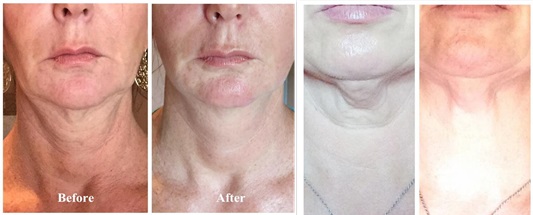
Compare the same angle, expression, distance, head position and lighting. Ask about other treatments in between, timing since the procedure and weight change. Without these details, before-and-after images cannot establish causality or expected magnitude.
Why Device Settings Are Not a Treatment Protocol
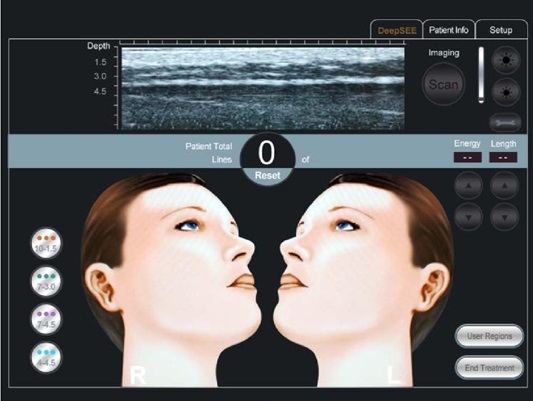
Shot counts, energy ranges and treatment maps in training booklets need verification against the manufacturer's approved instructions. Raising energy because a patient feels no pain is not an evidence-based dosing strategy, and sensation does not confirm correct thermal dosing. Any procedure must follow device-specific instructions, local licensing and patient-specific assessment.
HIFU Aftercare
Treated skin may feel warm, tender or mildly swollen briefly. Gentle skincare, sun protection and clear instructions on what to report are more useful than a rigid checklist. Discomfort does not prove collagen creation. Timing with fillers, lasers or other energy treatments should be planned clinically, not automatically combined on the same day.
HIFU Skin Tightening FAQ
What is HIFU facial treatment?
A non-incisional focused-ultrasound procedure that deposits energy at selected depths to encourage tightening through collagen remodeling. Outcomes vary by device and patient.
Does HIFU lift the face?
Certain studied systems can give a modest improvement in mild-to-moderate laxity, including some brow, submental and neck changes. It does not reproduce a surgical facelift.
Is HIFU the same as Ultherapy?
No. Ultherapy is a specific microfocused ultrasound platform with live imaging and identifiable clearance and clinical data. Generic HIFU machines may differ.
What is the SMAS layer?
A fibromuscular and connective-tissue support system tied to the facial muscles. Its depth is not fixed at 4.5 mm in every area.
Is a 4.5 mm cartridge always working on the SMAS?
No. Anatomy varies by region, age and body composition. Real-time visualization helps verify target depth.
Can HIFU tighten a double chin or treat jowls?
It may help mild laxity, but prominent fat, advanced descent or pronounced redundancy usually needs a different plan.
Does HIFU melt facial fat?
Tightening-focused treatment should not be assumed to reduce fat, and unwanted hollowing is a real concern in selected patients.
Is HIFU safe around the eyes or neck?
Periorbital use is strictly device-dependent. In the neck, the thyroid, trachea and other sensitive structures must be avoided per labeling.
Is HIFU painful, and is anesthesia needed?
It can be moderately uncomfortable (pooled average about 4.85/10). Many protocols use no injected anesthesia, but pain management depends on the patient, device and clinician. Pain is not proof it is working.
Is there downtime?
Many patients resume normal activities quickly, but temporary redness, tenderness, swelling or bruising can occur.
When do results appear and how long do they last?
Typically assessed at 2-3 months, with change possible to six months or longer. Durability varies and no multiyear result can be promised.
How many sessions do I need?
It depends on the device, goal and response; there is no universal shot count or schedule.
Can HIFU cause burns, nerve effects or fat atrophy?
Yes, these have been reported, though common events are mild and transient. Fat loss and nerve symptoms appear in postmarketing reports with uncertain frequency.
Does higher energy mean better results?
No. Incorrect dosing or depth raises injury risk; effectiveness is not a function of maximum energy.
HIFU or radiofrequency, or Endolift: which is better?
Neither is universally superior. They differ in physics, depth, invasiveness and evidence; choice depends on your anatomy and goal.
Can I have HIFU after fillers, or on dark skin?
Fillers: depends on product, placement and interval, so review your injection history first. Dark skin: ultrasound does not rely on epidermal pigment like many light-based treatments, but suitability still needs individual assessment.
Is every HIFU device FDA-cleared?
No. Clearance applies to identified devices and indications, not the general term HIFU.
What warning signs should I never ignore?
Severe worsening pain, new weakness, blistering, marked discoloration, new asymmetry or any visual symptom needs prompt professional assessment.