
Endolift Treatment : What It Is, Does It Work, and What the Evidence Really Says
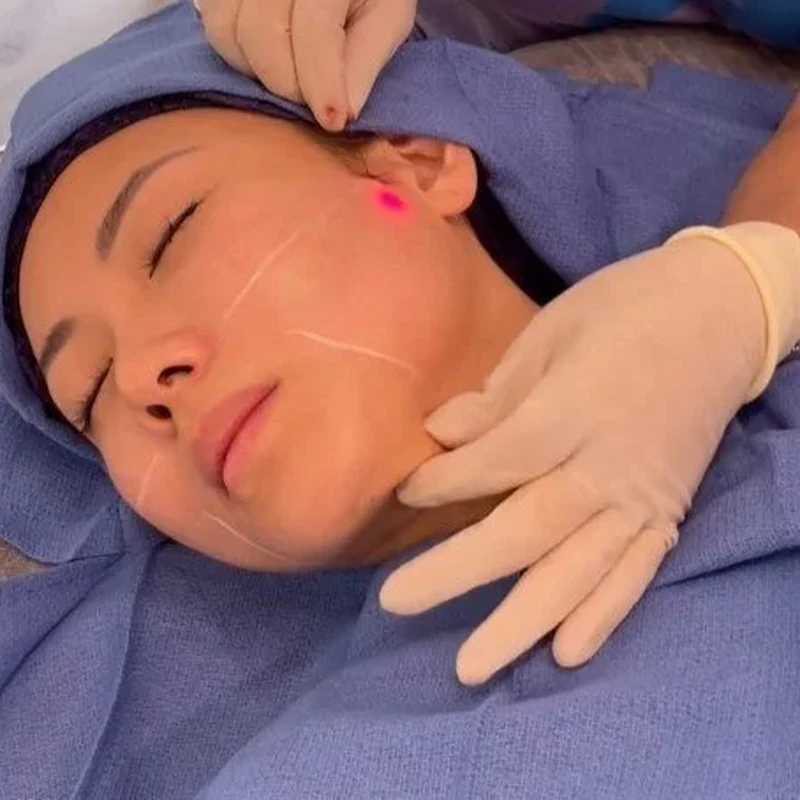
Endolift treatment is a minimally invasive, 1470 nm laser procedure that uses a fine optical fiber placed beneath the skin to tighten and contour selected areas such as the jawline, jowls, lower face and neck. But does it actually work? The honest answer: early studies are encouraging, yet the overall evidence is mixed. This guide breaks down the science, benefits, risks, recovery, candidacy and how to choose a provider, based on a 2024 scientific review and later systematic reviews.
Endolift at a Glance : Benefits, Limitations and Evidence
| Question | Evidence-Based Answer |
|---|---|
| What is it? | A subdermal optical-fiber laser procedure; more accurately described as minimally invasive, not noninvasive. |
| Most-discussed facial applications | Jawline and jowls, submental fullness, lower face, neck, and carefully selected lower-eyelid concerns. |
| How might it work? | Controlled photothermal effects may induce tissue contraction and a subsequent collagen-remodeling response. |
| Does it replace a facelift? | No. Significant skin redundancy, platysmal laxity and substantial tissue descent may be better treated surgically. |
| When are results assessed? | Early contour changes may appear after swelling subsides; remodeling is often evaluated over the following months, though timing varies. |
| What is the evidence quality? | Mixed: mostly small studies, heterogeneous techniques and limited robust comparative follow-up. |
| Main safety issues | Burns, infection, sensory or motor nerve injury, contour irregularity, persistent swelling, nodules and fat necrosis are possible. |
| Most important factor | Careful examination, appropriate indication, a trained operator, sterile technique, protection of delicate anatomy and follow-up. |
1. Why Facial Aging Is Not Simply a Problem of Wrinkles
Aging alters the face at multiple levels. The dermis changes in collagen organization, elastin quality and hydration, while deeper facial fat compartments may shift, change volume or lose their supportive relationships. The jawline can become less defined as overlying tissues descend, forming jowls and changing the submental contour. In some patients the lower face looks heavier because of localized fat; in others, the heaviness results from laxity and tissue descent rather than excess fat.
The 2024 review by Sarmento and Gothe focuses on laser-induced dermal change and clinical rejuvenation. Its reported improvements cannot simply be generalized to every type of facial aging, because fine texture lines, dynamic lines, deep folds, tissue descent and excess skin are different treatment targets.
- Skin laxity: reduced resistance to stretching and a diminished ability to recoil.
- Dynamic wrinkles: driven primarily by muscle contraction.
- Static wrinkles: visible at rest due to collagen change, photoaging and repeated movement.
- Volume deficiency: can create shadows and folds even where little skin excess exists.
- Fat accumulation: a distinct cause of blunted facial contours.
These differences determine whether Endolift, a biostimulator, a neuromodulator, another energy-based treatment or a surgical opinion is most appropriate.
The structures behind a natural-looking jawline
An attractive jawline reflects the relationship between the mandibular skeleton, superficial and deep fat compartments, skin elasticity, retaining ligaments, the superficial musculoaponeurotic system (SMAS), the platysma and the submental tissues. A patient with good skeletal definition and mild, localized laxity may respond differently from one with marked jowling, significant neck skin excess or weak chin projection. No single laser wavelength can correct every anatomical component.
2. The Science of the 1470 nm Endolift Laser
In commonly studied Endolift techniques, 1470 nm light is transmitted through a fine fiber placed in a selected subdermal plane. Water is an important absorber at this wavelength, producing a photothermal interaction in nearby tissues. The clinical goal is controlled energy delivery, not indiscriminate destruction of fat or skin.
The 2024 review describes a sequence in which localized heating triggers a tissue response, activates fibroblasts and encourages remodeling of the extracellular matrix. Proposed benefits include skin firmness, improved texture and contour, and biological changes involving collagen types I and III, along with elastin remodeling and local vascular responses. These mechanisms should be separated from what has actually been shown in large, controlled trials: histological plausibility and small biometric studies are not the same as established long-term benefit across all facial areas.
What does "collagen stimulation" actually mean?
Fibroblasts synthesize collagen and other extracellular-matrix components. When controlled thermal injury occurs, the wound-healing cascade can involve inflammatory mediators, fibroblast activation, collagen synthesis and remodeling. The response depends on dose, depth, individual anatomy and healing.
More collagen does not automatically mean a better result. Excessive heat may cause scarring, fibrosis, tissue loss or injury. The intended endpoint is a controlled response that improves skin and contour without harming adjacent structures, which is why individualized energy planning and operator judgment are essential.
Is Endolift noninvasive or minimally invasive?
The 2024 review repeatedly uses language equivalent to "noninvasive" and describes the technology as "low-intensity." These are the authors' descriptions, not universal technical definitions. Because an optical fiber passes through the skin, minimally invasive is the more accurate term. Endolift should also not be confused with low-level laser therapy (LLLT), which relies on different mechanisms and dosing; Endolift produces a clinically meaningful thermal effect in targeted tissue.
3. What the Original 2024 Scientific Review Examined
The paper Advances in Non-Invasive Facial Rejuvenation: A Review of Endolift and Related Technologies was published by Marcos J. Gomes Sarmento and Rodrigo Cardoso Gothe in Lumen et Virtus, volume 15, issue 40, pages 4352–4357, in September 2024. It is best understood as a narrative literature review that discusses proposed mechanisms and summarizes publications on aesthetic applications, combinations and complications.
The authors discuss work by da Silva, Moura and da Silva (2024), Júnior and colleagues (2023), Borges and colleagues (2023), Benar and Benar (2024), Nilforoushzadeh and colleagues (2022), and Dell'Avanzato (2022). They describe skin texture, rhytids, jowl improvement, lower-eye bags, lower-eyelid laxity and the combination of a subdermal laser with injectable poly-L-lactic acid (PLLA). The review also acknowledges case reports of burns, infection, peripheral neuropathy and fat necrosis.
What it does not provide: a new patient cohort, a randomized trial, a standardized laser protocol validated across devices, a comprehensive assessment of adverse-event frequency, or robust long-term comparisons with surgical facelifting.
Research snapshot: the authors' main themes
| Research Discussed | Focus | How to Interpret It |
|---|---|---|
| da Silva, Moura & da Silva (2024) | Mechanisms and potential orofacial applications of endolaser | Literature-based mechanistic and clinical discussion, not proof of all proposed outcomes. |
| Júnior et al. (2023) | Integrative/narrative review of endolaser facial rejuvenation | Summarizes heterogeneous papers; inherits the limitations of the underlying evidence. |
| Borges et al. (2023) | Reported Endolift/endolaser complications | Important safety signal, but does not establish a population-level complication rate. |
| Benar & Benar (2024) | Internal laser plus PLLA ("Endoskin") | Comparative clinical report described as promising; study design and product-specific factors matter. |
| Nilforoushzadeh et al. (2022) | Lower-eye bags and jowl-related applications | Small clinical studies; preliminary outcomes need careful interpretation. |
| Dell'Avanzato (2022) | Lower-eyelid skin laxity and rhytids | Highly selected reporting with limited generalizability. |
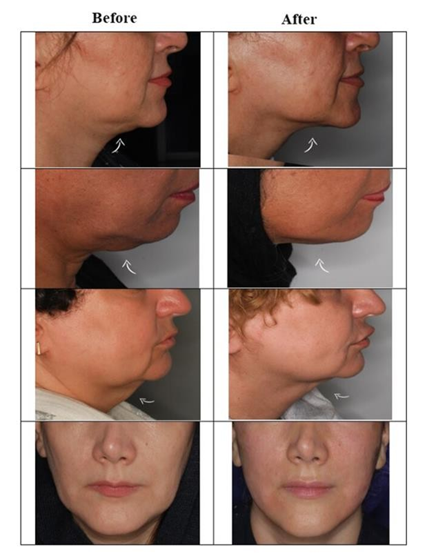
Clinical image from the source paper
The review contains one composite image (Figure 1), attributed to Nilforoushzadeh et al. (2022), comparing selected patients before Endolift and about three months after treatment, showing different lower-face and jawline views.
4. Endolift for Jowls, Jawline and Double Chin
Jowls are among the most frequent reasons patients seek lower-face rejuvenation. They appear as the jawline softens and tissue collects either side of the chin. The 2024 paper cites work on jowl fat reduction and notes that controlled subdermal heating may produce remodeling and contour change. For selected patients, the goal is to improve the lower-face transition while maintaining natural cheek fullness and an undistorted mandibular line.
Suitability depends on at least four factors: distribution of superficial fat, skin elasticity, degree of tissue descent and jaw/chin anatomy. Reducing fat in an already thin or volume-deficient face can worsen hollowing, while skin tightening alone may not correct heavy jowls caused by substantial tissue displacement.
Does Endolift work for a double chin?
A "double chin" may result from preplatysmal fat, skin laxity, weak chin projection, subplatysmal fullness or a combination. It describes an appearance, not a diagnosis. Endolift may have a role in some mild-to-moderate submental concerns; patients with significant weight-related fullness, a poor skin envelope or marked platysmal laxity may need different treatments. No non-surgical technique should be portrayed as reliably equivalent to neck liposuction or a surgical neck lift in severe cases.
5. Endolift for Neck Skin Laxity
The neck differs from the cheek in anatomy and biomechanics. Skin may be thinner, the platysma can develop visible bands, and the cervicomental angle is influenced by adiposity, muscle, hyoid position and skeletal projection.
A person with relatively preserved neck anatomy and limited laxity may be a candidate for minimally invasive thermal tightening. Substantial redundant skin or severe platysmal banding calls for a surgical evaluation. The key lesson: don't confuse improved skin quality with the structural lift achieved by surgery.
6. Under-Eye Bags and Lower-Eyelid Rejuvenation: Special Caution
The review summarizes a 2022 lower-eye-bag case series (nine patients) and a 2022 report on lower-eyelid laxity, noting encouraging improvements in appearance, firmness and satisfaction in selected cases. It also discusses a lower-eyelid report in which a 1470 nm fiber treatment was combined with a vascular laser session for fine telangiectasias. These are highly selected reports and cannot be generalized to all under-eye conditions.
Is Endolift better than blepharoplasty?
They solve different problems. Blepharoplasty surgically addresses redundant skin or herniated orbital fat, while minimally invasive laser tightening targets selected soft-tissue concerns. A lower-eyelid assessment must consider lid tone, dry-eye history, ocular surface health and the exact origin of the fullness. For marked structural eye bags, it is misleading to promise a laser will replace surgery.
7. Combining Endolift with Sculptra (PLLA) : The Endoskin Concept
One notable article in the review is the 2024 comparative publication by Benar and Benar describing Endoskin, which combines internal laser treatment with injectable poly-L-lactic acid (PLLA). The review describes 234 participants, divided into a laser-alone group and a combined-treatment group, with greater satisfaction reported in the combined group.
The logic: Endolift is a heat-based modality that remodels certain tissue planes, while PLLA is an injectable collagen biostimulator with a slower biological response. Together they may address several aspects of skin quality and contour when clinically indicated. The therapies are not interchangeable, and adding injections is not automatically better for every patient.
Why combination treatment needs an individualized plan
A patient lacking support or volume needs a very different plan from one with excess fat. Sequencing and anatomical planes can affect swelling, tissue response and the ability to judge each intervention's effect. Injector training, product labeling, approved indications, contraindications and health-authority approval are essential. The Endoskin report is hypothesis-generating: promising, but reproducibility and cost-benefit depend on patient selection, comparison quality and follow-up.
8. What Do More Recent Systematic Reviews Say About Endolift?
The research landscape has evolved since the 2024 paper. The following reviews are additional sources, not part of it.
The favorable 2024 systematic review
A systematic review indexed in PubMed in 2024 evaluated 23 publications from 339 initial records. Authors described favorable outcomes across cosmetic and dermatological applications, including facial and neck rejuvenation, jowls and some eye-area indications, and generally mild, self-limiting adverse events. Their own conclusion, however, called for larger controlled trials.
The more cautious 2025 systematic review
A 2025 review in Lasers in Medical Science screened 111 records and included seven studies. It found a high risk of bias, non-standardized treatment parameters and inconsistent adverse-event reporting, concluding that evidence was insufficient for confident claims about safety and efficacy.
The 2025 scoping review
Another 2025 scoping review identified 26 publications, mostly case series with only one randomized controlled trial, and noted substantial protocol variability.
| Evidence Source | Study Design | Key Message | Important Limitation |
|---|---|---|---|
| Sarmento & Gothe, 2024 | Narrative review | Summarizes mechanism, applications, combinations and complication reports | Not a new clinical trial or pooled meta-analysis |
| 2024 systematic review (PMID 38886198) | Systematic review of 23 studies | Generally favorable reported efficacy and tolerability | Mainly lower levels of evidence; larger controlled studies requested |
| Modena et al., 2025 (PMID 39827299) | Systematic review, seven included articles | Insufficient robust evidence to confidently establish safety/effectiveness | Selection and eligibility criteria differ from the 2024 review |
| 2025 scoping review (PMID 40116960) | Scoping review of 26 publications | Highlights developing research and highly variable protocols | Most included papers were case series |
9. Endolift Safety : Risks and Complications
The original review does not simply praise the technique. It cites a 2023 report by Borges and colleagues describing severe complications of subdermal laser use in Brazil: peripheral neuropathies, burns, localized infections and fat necrosis. Contributing factors discussed include insufficient antisepsis, poor laser dosimetry and inadequate skin-temperature monitoring. Such reports matter clinically even though they don't establish incidence rates.
Complications to discuss before treatment
| Potential Issue | What It May Mean in Practice |
|---|---|
| Pain, swelling, bruising | Often temporary, but severity and duration vary with anatomy and treatment extent. |
| Thermal burn | Excess heat can injure skin or deeper tissue, sometimes leaving pigmentary changes or scars. |
| Sensory nerve irritation or injury | Tingling, numbness, burning or altered sensation may occur. |
| Motor nerve injury | Rare but potentially serious; functional changes require urgent medical evaluation. |
| Infection | Increasing redness, warmth, discharge, fever or worsening pain merit prompt assessment. |
| Fat necrosis and nodules | Tissue injury can lead to firm lumps or contour problems. |
| Unwanted volume loss | Over-treatment in a thin face may accentuate hollowing or asymmetry. |
| Uneven contour, asymmetry, prolonged inflammation | May require further examination and, occasionally, additional intervention. |
No aesthetic procedure has a complication rate of zero, and the absence of a serious complication in a small case series does not prove it cannot occur. Periocular work and treatment near important facial nerves need particular caution.
When should you contact the clinic urgently?
Seek prompt assessment for worsening (rather than improving) pain, rapidly spreading redness, fever, discharge, new weakness of a facial muscle, progressive numbness, significant asymmetry, suspected skin injury or any new visual disturbance. Sudden vision changes or significant eye symptoms warrant emergency evaluation. These precautions don't imply such outcomes are common; delayed evaluation of a serious complication simply worsens consequences.
10. What Is Recovery Like After Endolift?
Published case descriptions often emphasize relatively limited recovery compared with surgery. Still, expect swelling, tenderness, temporary bruising and an appearance that may fluctuate before settling. Early swelling can produce changes that differ from the later remodeling outcome.
Follow-up should be individualized: early visits focus on healing and adverse symptoms, later ones on contour, skin quality and symmetry. Standardized photography at comparable angles and lighting makes assessment more useful, and judging results definitively in the first few days can be misleading.
Studies in the review assessed patients at three months in some cases and six months in others. These are study follow-up intervals, not a guaranteed personal timeline. Always follow your physician's instructions on wound care, hygiene, activity and review.
11. Who May Be a Suitable Candidate for Endolift?
Candidacy is not defined by age alone. A clinician should determine the main anatomical cause of the concern, skin quality, amount and location of fat, facial symmetry, history of cosmetic interventions and the patient's goals.
Possible candidates: carefully assessed adults with mild-to-moderate lower-face skin laxity, selected jowl or submental concerns, realistic expectations and willingness to attend follow-up.
Needing extra caution or alternative assessment: pronounced redundant skin, major structural descent, significant neck muscle laxity, severe volume deficiency, delicate lower-eyelid issues, active local infection, or a history raising healing concerns. Prior fillers, threads, implants, surgery, scarring, anticoagulant use and medical conditions can change the risk/benefit calculation. These call for medical evaluation; they are not automatic contraindications.
Why high body fat or severe laxity can change the plan
Visible fat and loose skin can coexist but respond differently to treatment. Removing fat without adequate skin retraction can make laxity more visible, and very heavy or markedly redundant tissue may be beyond the realistic range of a minimally invasive laser. Candidacy should rest on anatomy, not a promise made from a photo or a single BMI value.
12. Endolift vs. Other Treatments (HIFU, RF, Fillers, Facelift)
| Treatment | Primary Role | Strength | Key Limitation |
|---|---|---|---|
| Endolift 1470 nm | Selected subdermal contour and thermal remodeling | Addresses selected tissue beneath skin through a fiber | Minimally invasive; operator-dependent; evidence mixed |
| Monopolar RF treatments | Energy-based thermal remodeling | No internal fiber in conventional noninvasive platforms | Does not remove major skin redundancy |
| Microfocused ultrasound (HIFU) | Energy applied at targeted tissue depths | Nonincisional option for certain laxity patterns | Results depend on device, depth and patient selection |
| RF microneedling | Dermal remodeling using needles and RF | Can target skin texture and laxity | Different risk profile, including possible unwanted fat effects |
| Injectable PLLA or CaHA | Biostimulation or structural volume strategy | May suit certain volume and collagen concerns | Injections are not equivalent to lifting redundant skin |
| Hyaluronic acid filler | Replace or redistribute apparent volume | Useful when volume loss is the main problem | Poor choice if excess weight/laxity dominates |
| Neuromodulators | Reduce muscle-driven wrinkles | Appropriate for dynamic expression lines | Do not correct jowls or remove redundant skin |
| Surgical facelift / neck lift | Reposition deeper tissues and excise redundant skin | Potentially more substantial structural change | Surgery, recovery, scarring and operative risks |
Combining procedures should follow a specific diagnosis, not a desire to stack devices. A patient with weak chin projection may need structural planning, while one with prominent platysmal bands needs a different analysis. Some people should hold off until the underlying diagnosis is clearer.
13. Why Endolift Results Differ From Patient to Patient
Two people of the same age may differ in skin thickness, fat compartments, ethnic facial anatomy, previous aesthetic work, collagen response, sun exposure and facial movement. The same apparent "double chin" can arise from entirely different structures. Outcome also depends on how results are assessed, the interval to review, the treatment field and expectations.
Good research uses validated measures, blinded assessors, consistent photography and long follow-up. Satisfaction scores are valuable but should not replace objective measures. Transparent counseling about likely benefit, uncertain benefit and alternatives is part of excellent care, and a physician who advises against a treatment because the anatomy is unsuitable is exercising sound judgment.
14. Endolift in Abu Dhabi : How to Choose a Provider
When searching for Endolift in Abu Dhabi, first confirm that the facility and practitioner are appropriately licensed for the relevant scope of practice, and that the specific device and intended use comply with current local requirements. Marketing, international case reports and professional experience don't replace verifying regulatory and clinical suitability.
A good consultation includes evaluation of face and neck anatomy, discussion of realistic goals, review of prior treatments, consented photographs, a full explanation of risks and alternatives, and a follow-up plan. Ask what findings would lead the doctor to recommend surgery, no intervention or a different technology. Be cautious with clinics promising identical results for everyone or calling the procedure risk-free.
When comparing Endolift, RF, focused ultrasound and injectables, the most useful question is not "Which machine is strongest?" but "What exact anatomical issue am I trying to improve, and what evidence supports the proposed approach?"
15. 10 Questions to Ask at Your Endolift Consultation
- Is my main concern excess fat, skin laxity, volume loss, muscle activity or a combination?
- Which anatomical areas are proposed for treatment, and why?
- What are the realistic limits of improvement in my case?
- Would surgery, an injectable or a different device be more appropriate?
- What complication risks are specific to my facial anatomy and medical history?
- What follow-up schedule and aftercare support are available?
- Are example photos actual cases from this clinic, or published research images?
- What should I do if I develop severe pain, asymmetry, infection symptoms or new facial weakness?
- What evidence supports the technique used by this practitioner and device?
- Is the planned treatment within current local licensing and device-authorization requirements?
16. Endolift FAQs: Evidence, Results and Safety
What is Endolift?
A minimally invasive laser technique in which an optical fiber delivers energy below the skin to remodel soft tissues and improve selected cosmetic concerns.
What wavelength does Endolift use?
The most commonly discussed wavelength is 1470 nm. Other subdermal lasers exist, but their findings should not automatically be treated as equivalent.
Is Endolift really non-surgical?
It is generally categorized as non-surgical because no traditional facelift incision or tissue repositioning is performed, but it is minimally invasive because the fiber enters the skin.
Does Endolift tighten skin?
Some studies report improvements in laxity and skin quality, but systematic reviews disagree on the strength of evidence. Suitability depends on anatomy and tissue quality.
Can Endolift improve jowls?
It may improve selected mild-to-moderate jowl or jawline concerns; severe tissue descent may require a different plan.
Can Endolift treat a double chin?
In carefully selected cases it may address certain submental fat or laxity concerns. A double chin can have multiple causes and shouldn't be treated as fat alone.
Is Endolift suitable for the neck?
Some neck presentations may benefit, but pronounced loose skin and platysmal banding are important limitations for any nonsurgical approach.
Can Endolift improve under-eye bags?
Small studies describe improvements in selected cases. Because periocular anatomy is delicate and structural eye bags may need surgery, specialist evaluation is essential.
Can Endolift replace blepharoplasty?
No. A laser cannot reliably reproduce the corrective anatomy of surgery when substantial orbital fat prolapse or redundant eyelid tissue is present.
Does Endolift stimulate collagen?
Thermal tissue response offers a plausible pathway for collagen remodeling, and some studies report consistent changes, but clinical response varies.
Is Endolift painful?
Comfort varies with technique, area and anesthesia. "Always painless" is not a defensible universal claim.
How much downtime is there after Endolift?
Many patients have limited downtime compared with major surgery, but swelling, tenderness and bruising can occur, and recovery is individual.
When will Endolift results be visible?
Changes may evolve as swelling resolves and remodeling develops over weeks or months. Exact timing can't be guaranteed.
How long do Endolift results last?
Long-term durability isn't uniformly established across areas and protocols. Treat claims of a fixed number of years with caution.
How many Endolift sessions do I need?
No single research-supported schedule applies to every patient. Additional treatment should be based on medical assessment, not package marketing.
Is Endolift better than HIFU or RF?
No modality is consistently best for everyone. They differ in invasiveness, target depth, tissue effects and evidence, and must be matched to individual anatomy.
Can Endolift be combined with Sculptra?
A 2024 comparative publication described a combined approach, but it doesn't prove the combination is required or optimal. Licensing and product indications must be checked.
Can Endolift cause facial nerve damage?
Nerve-related complications have been reported. Risk evaluation and precise anatomical technique are important.
Is Endolift approved in Abu Dhabi?
Approval depends on the particular device, intended indication, licensed practitioner and current UAE requirements. This article does not establish regulatory status for any provider or procedure.
Is Endolift safe with previous fillers or threads?
Previous procedures require individualized review of timing, product type, location and anatomy. A plan can't be decided reliably without consultation.
Why do some reviews sound positive and others skeptical?
Reviews differ in inclusion criteria and in how strictly they assess study design, bias, follow-up and reporting. Favorable small case series can coexist with a lack of high-quality comparative evidence.
Are the before-and-after photos in this article clinic patients?
No. The composite image comes from the published review and is credited to a separate 2022 study. It should not be presented as outcomes from a local clinic.
Is Endolift the same as a facelift?
No. A facelift surgically repositions tissue and removes excess skin. Endolift aims for selected thermal remodeling and cannot give the same structural correction.
Who should review the risks before I decide?
A qualified clinician who considers your health, face and neck anatomy, expectations, prior treatments, the device and local practice requirements before informed consent.
Final Takeaway
Endolift is a promising but still-evolving option for selected mild-to-moderate lower-face and neck concerns. It is not a facelift substitute, and its evidence base is mixed. The best outcomes begin with an accurate diagnosis, a properly licensed and trained clinician, honest counseling and realistic expectations.