
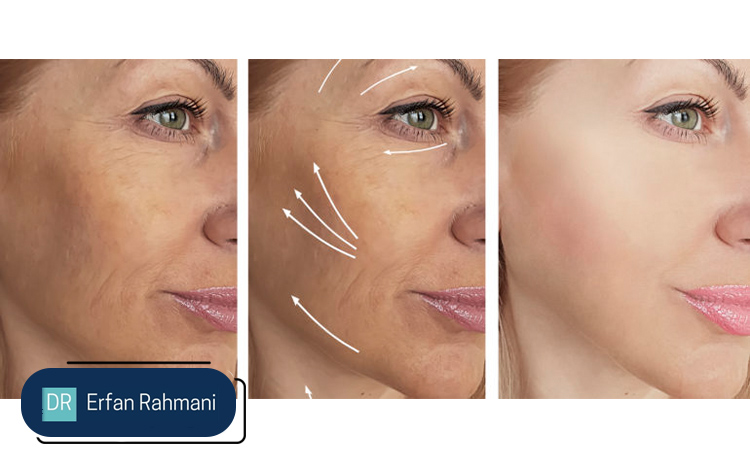
The landscape of aesthetic medicine is undergoing a profound transformation, moving away from the era of "over-correction" and toward a more sophisticated philosophy known as Regenerative Aesthetics. For years, the primary solution for facial aging was simply to add volume—often leading to the "over-filled" look that many modern patients now actively seek to avoid. In a cosmopolitan hub like Abu Dhabi, where patients are increasingly well-versed in global beauty trends, the demand has shifted from temporary "plumping" to long-term skin health.
Modern patients are no longer just looking for a quick fix to hide a wrinkle; they are seeking treatments that work from within to restore the skin’s structural integrity. This is where the concept of biological regeneration becomes essential. Instead of merely placing a substance under the skin to take up space, regenerative treatments focus on revitalizing the body’s own cellular processes. By prioritizing natural skin collagen production, these advanced procedures ensure that the skin doesn't just look younger—it actually behaves younger.
At the clinic of Dr. Erfan Rahmani, we recognize that true beauty lies in harmony and subtlety. As we move deeper into this guide, we will explore how the transition from traditional volumizing to bio-regeneration allows us to achieve results that are not only effective but entirely indistinguishable from nature. This shift represents the future of facial rejuvenation: a future where your own biology is the most powerful tool for restoration.
Understanding the Immediate Impact of Dermal Fillers on Facial Symmetry and Volume
To appreciate the nuances of modern aesthetics, one must first understand the foundational role of Dermal Fillers. Predominantly composed of Hyaluronic Acid (HA)—a sugar molecule naturally present in our skin that holds up to 1,000 times its weight in water—these injectables revolutionized the industry by providing a safe, reversible, and highly effective way to manage the visible signs of aging. Unlike regenerative treatments that require a waiting period, the hallmark of HA fillers is their ability to provide instant volume and immediate structural correction. In clinical practice, dermal fillers function essentially as a "physical implant" in a gel form. They are strategically placed to replace lost fat pads or provide support where bone resorption has occurred over time. This makes them the gold standard for correcting deep anatomical folds, such as the nasolabial lines (smile lines) or marionette lines, where a physical "lift" is required to smooth the skin’s surface. Beyond just filling creases, they are masterful tools for facial sculpting; they allow for the precise contouring of the chin to improve a profile, the sharpening of a jawline, or the restoration of youthful fullness to the lips. For the active professional in Abu Dhabi, the appeal of dermal fillers lies in this immediacy. There is no "lag time" between the treatment and the result. Whether it is refining facial symmetry or restoring the "Ogee curve" of the cheeks, fillers provide a predictable and instantaneous refinement. However, as we will explore in the following sections, while fillers excel at providing this immediate physical architecture, they serve a different biological purpose than the newer generation of biostimulators that focus on the skin's internal texture and long-term resilience.The Science of Biostimulators: How They Trigger Long-Term Natural Collagen Synthesis
While fillers provide the architecture, Biostimulators represent the biological engine of skin renewal. The science behind these injectables—such as Poly-L-Lactic Acid (PLLA) and Calcium Hydroxylapatite (CaHA)—is rooted in the body’s innate ability to heal and rebuild itself. Unlike traditional gels that occupy space, biostimulators act as a sophisticated "bio-scaffold." Once injected into the deep dermis or sub-dermal layers, they don't just sit passively; they initiate a microscopic dialogue with your cells, specifically targeting fibroblasts—the cells responsible for skin firmness and elasticity. This process is often described as "Slow-Release" beauty. The primary objective is to trigger natural skin collagen production, specifically focusing on Type I and Type III collagen. Type III (often called "youth collagen") provides the initial framework, which is eventually replaced by the stronger, more resilient Type I collagen that defines youthful, tight skin. As the biostimulatory particles are gradually and safely absorbed by the body over several months, they leave behind a dense, self-sustaining network of your own natural collagen. For patients at Dr. Erfan Rahmani’s clinic, this means the transformation is internal and enduring. You aren't just wearing a product; you are growing a thicker, healthier skin foundation. This mechanism is particularly vital for treating areas where skin has become thin or "crepey" due to environmental stressors or age. Because the results depend on your own biological response, the improvement in skin quality and firmness appears gradually, ensuring that the rejuvenation looks entirely organic and evolves naturally with your facial expressions over time.Speed of Results versus Longevity of Treatment Outcomes
When patients ask, "Is filler better or biostimulator?" the answer almost always depends on their timeline and long-term aesthetic goals. The most significant differentiator between these two classes of injectables is the trade-off between "immediate gratification" and "biological longevity." Understanding this distinction is crucial for managing expectations and planning a successful rejuvenation journey. Dermal fillers are the champions of speed. Because they are physical gels that occupy space, the results are visible the moment the needle is withdrawn. This makes them ideal for patients who have an upcoming event or those looking to correct a specific structural deficit—like a recessed chin or hollow temples—instantly. However, this immediate impact comes with a shorter lifecycle. Since the body naturally breaks down Hyaluronic Acid over time, most fillers maintain their peak effect for 9 to 12 months, requiring regular maintenance sessions to sustain the look. In contrast, biostimulators are an investment in the future. They offer a "delayed gratification" model where the initial volume seen post-injection (often just the sterile water used for suspension) disappears within days, leaving the patient looking much as they did before. The real transformation begins beneath the surface, as the natural skin collagen production process takes hold. While it may take 3 to 6 months to see the full clinical results, the payoff is found in the duration. Because the result is composed of your own living tissue rather than a foreign gel, the effects of biostimulators often remain superior for up to 24 months or longer. Ultimately, the choice isn't about which is "better" in a vacuum, but which timeline aligns with your life. For the busy professional in Abu Dhabi who prefers a "set it and forget it" approach to skin quality, the longevity of a biostimulator is often the winning factor. For those seeking to refine their features for an immediate boost in symmetry, fillers remain the undisputed gold standard.When to Choose Structural Filling over Bio-Regeneration
Selecting the right procedure is not a matter of following a trend; it is a clinical decision based on anatomy, age, and tissue quality. At Dr. Erfan Rahmani’s clinic, every personalized aesthetic treatment begins with a deep assessment of whether the patient requires a "structural fix" or a "biological boost." The ideal candidate for one may be entirely different from the ideal candidate for the other. For younger patients—often in their late 20s to mid-30s—the focus is usually on "Prejuvenation." These individuals typically have good bone structure but are beginning to notice the very first signs of collagen depletion or skin dullness. For them, Biostimulators are often the superior choice. Instead of altering their facial shape, these treatments act as a preventative measure, thickening the dermis and ensuring that the skin remains resilient against the harsh environmental stressors of the UAE. It is about maintaining what you have rather than changing who you are. Conversely, older patients or those with significant volume loss often require the immediate support of Dermal Fillers. As we age, we experience bone resorption and the shifting of deep fat pads, leading to a "sagging" appearance. In these cases, skin tightening alone isn't enough; you need to restore the lost foundation. Fillers are the tool of choice here to recreate the sharp angles of the jawline or the high points of the cheekbones that have diminished over time. In the high-standard clinical environment of Abu Dhabi, we often see a "mixed" profile: patients who have premature skin aging due to sun exposure but still possess strong underlying structures. For these candidates, the decision is nuanced. If the goal is to correct a specific "hollow" (like the tear troughs), fillers are the answer. If the goal is to treat a general loss of elasticity and "crepey" texture across the lower face, we lean toward bio-regeneration. Ultimately, the best outcomes are reserved for those who understand that their face is a dynamic system. Identifying your category—whether you need the instant architecture of a filler or the cellular investment of a biostimulator—is the first step toward a result that looks both youthful and entirely authentic.Conclusion
Navigating the world of advanced injectables can feel overwhelming, but the most important takeaway is that the choice between Biostimulators and Dermal Fillers is rarely a matter of "one versus the other." Instead, the most successful aesthetic outcomes are achieved when the treatment plan is precisely calibrated to the patient's unique anatomy, age, and long-term vision for their skin. In the specialized environment of Dr. Erfan Rahmani’s clinic, we prioritize the long-term health and vitality of your skin over temporary trends. We believe that true rejuvenation is a journey, not a single destination. By understanding the science behind these tools, you are empowered to make decisions that don't just change how you look today, but how you age over the next decade. If you are ready to move beyond basic volumizing and explore a sophisticated, bio-regenerative approach to beauty, we invite you to schedule a personalized consultation at our Abu Dhabi clinic to design the path that is right for you.Frequently Asked Questions (FAQ)
- Why do Biostimulators take longer than Dermal Fillers to show results?
- Can Biostimulators be used in combination with Dermal Fillers in one session?
- Between Dermal Fillers and Biostimulators, which is more effective for deep wrinkles?
- Are there specific lifestyle factors in Abu Dhabi that affect the longevity of these treatments?
- Is the collagen produced by Biostimulators permanent?
Rate this post