

1. What Is Low – Level Laser / Light Therapy ?
Photobiomodulation Uses Low-Energy Red or Near-Infrared Light
LLLT is a non-surgical, energy-based approach that uses low-power light rather than the high-energy settings used for cutting, ablating or resurfacing skin.
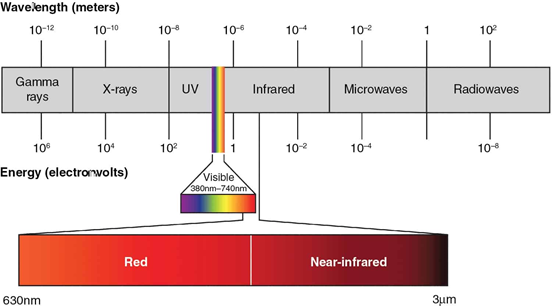
The source chapter describes LLLT as photobiomodulation and notes that devices may use coherent laser diodes, noncoherent light-emitting diodes (LEDs), or a combination of both. The most commonly discussed wavelengths are in the visible red-light range, typically around 640–680 nm in the chapter.
Important Distinction
“Laser” in LLLT does not mean the same thing as a high-energy resurfacing laser. Photobiomodulation uses substantially lower energy to influence cellular activity rather than intentionally creating thermal injury in the scalp.
2. Where Does Red-Light Therapy Sit On The Light Spectrum ?
Most Studied Hair-Growth Devices Use Red-Light Wavelengths
Visible red light and near-infrared radiation occupy a small portion of the electromagnetic spectrum. In hair restoration, LLLT devices generally use wavelengths selected to deliver low-energy light to scalp tissues without the tissue-removal effects of ablative lasers.
Why Wavelength Matters
Different devices use different wavelengths, diode numbers, power outputs and treatment schedules. The source chapter emphasizes that protocols cannot be assumed to be interchangeable across devices.
3. How May LLLT Support Hair Growth ?
The Proposed Effect Is Biological Stimulation—not Mechanical Transplantation
The exact mechanism is not fully established. The chapter describes several proposed pathways, including increased nitric oxide and adenosine triphosphate (ATP), modulation of reactive oxygen species, and vasodilation. These effects may help follicular and perifollicular cells support a shift from the resting telogen phase toward the active anagen growth phase.
| Cellular energy | Increased ATP production is one proposed mechanism for supporting cellular activity. |
| Nitric oxide | May contribute to local signaling and vasodilation. |
| Blood flow | Vasodilation may increase delivery of oxygen and nutrients around the follicle. |
| Hair cycle | The proposed clinical goal is to encourage follicles to re-enter and remain in anagen for longer. |
| Evidence limitation | The source explicitly states that the precise mechanism remains incompletely understood. |
Patient-Friendly Way To Think About It
LLLT is intended to stimulate follicles that are still present and miniaturizing. It cannot create new donor follicles in areas where follicular structures are permanently absent or scarred.
3. Who May Be A Candidate ?
The Strongest Evidence in The Chapter is For Mild-To-Moderate Pattern Hair Loss
The source describes LLLT as a treatment option for androgenetic alopecia in both men and women. It reports use in men with Norwood-Hamilton IIa–V and women with Savin I–II classifications. As with all hair-loss treatments, diagnosis should come before choosing a device because diffuse shedding, scarring alopecia, inflammation, infection and other causes of hair loss require different management.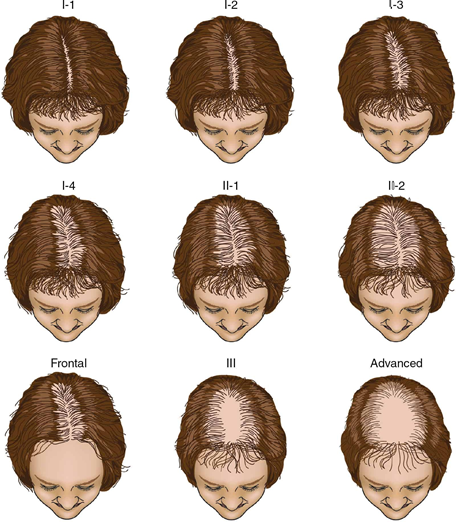
- Patients with mild-to-moderate androgenetic alopecia are the main population discussed in the evidence base.
- LLLT may be considered when a patient prefers a non-surgical option or as part of a multimodal plan.
- The chapter reports FDA-cleared device use in Fitzpatrick skin types I–IV and notes that more research is needed in darker skin types; LLLT is not a substitute for diagnosing the cause of hair loss before treatment begins.
5. Laser VS Led : Is One Clearly Better ?
Both Coherent & Noncoherent Light Have Been Studied
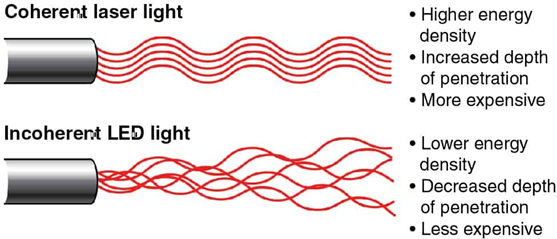
Laser diodes produce coherent light and generally have higher energy density and greater penetration than LEDs. LEDs are less expensive and easier to manufacture. The source notes that clinical studies using LEDs at similar wavelengths have also reported hair regrowth, and it concludes that more research is needed to determine whether one light source is meaningfully superior for androgenetic alopecia.
| Feature | Laser diode | LED |
|---|---|---|
| Light type | Coherent light | Noncoherent light |
| Energy / penetration | Higher energy density and deeper penetration in the source illustration | Lower energy density and less penetration in the source illustration |
| Cost / manufacturing | Generally more expensive | Generally less expensive and easier to manufacture |
| Clinical takeaway | Commonly used in LLLT devices | Also used alone or combined with lasers; superiority is not established |
Do Not Choose By “Number of Diodes” Alone
The chapter highlights meaningful differences among wavelength, power, energy density, exposure time and treatment frequency. Device quality cannot be judged from diode count or marketing claims alone.
6. What About Frctional Laser, Excimer & Nbuvb ?
These Are Different Technologies With A Much Smaller Evidence Base For Pattern Hair Loss
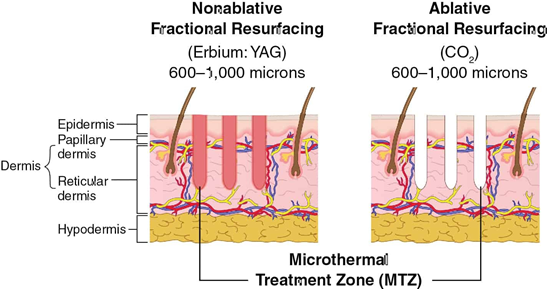
The chapter reviews excimer laser, monochromatic excimer light, narrowband UVB and fractional lasers as other energy-based approaches studied in alopecia. However, most of these modalities have been investigated more extensively for alopecia areata or in small studies, while LLLT remains the best-studied energy-based modality for androgenetic alopecia.
| Excimer / NBUVB | Primarily studied for alopecia areata in the source; evidence for androgenetic alopecia is limited. |
| Nonablative fractional laser | Small studies and case series have reported improvements in some hair-growth measures, but evidence is limited. |
| Ablative fractional laser | Data for hair growth are limited and protocols are not established. |
| Website positioning | These should not be presented as equivalent in evidence to LLLT for pattern hair loss. |
7. What Types Of LLLT Devices Exist ?
Home – Use Devices Come In Several Formats
The chapter describes combs, bands, caps and helmets for portable or home use, as well as overhead hood systems for in-office use. The central practical difference is how much of the scalp is covered at one time and how easily the patient can follow the prescribed schedule.
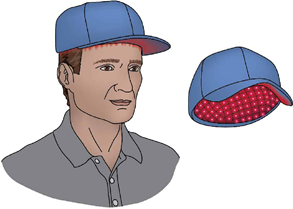
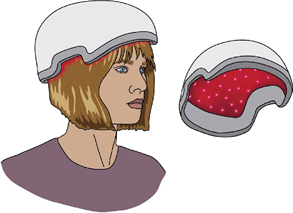
FDA “Cleared” is Not The Same As FDA “Approved”
The source specifically explains that many LLLT hair devices are FDA-cleared through the 510(k) pathway. Clearance and formal FDA approval are different regulatory concepts, so website wording should use the correct term.
8. Combs & Bands : More Targeted Delivery
Some Devices Require The User To Move or Position The Light Over Different Scalp Areas
Handheld combs and bands can deliver light to targeted regions rather than covering the full scalp continuously. This can make sessions shorter with some technologies, but results depend heavily on correct positioning, coverage and adherence to the device-specific protocol.
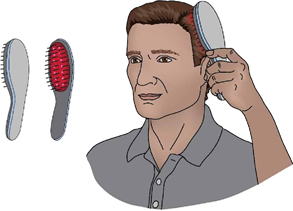
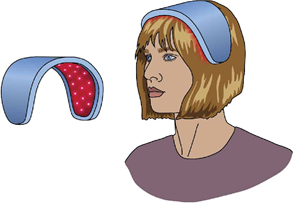
- A cap or helmet may offer broader simultaneous scalp coverage.
- A comb or band may require more deliberate positioning to cover the intended area.
- Treatment duration varies widely by device and should follow manufacturer instructions.
- Consistency over months is more important than occasionally performing an excessively long session.
9. How Often Is LLLT Used ?
There is No Single Universal Schedule
The source chapter shows that protocols vary from brief sessions several times per week to longer sessions performed a few times weekly or daily, depending on the device.
| Comb example in the source | About 8 minutes, three treatments per week. |
| Band examples | Approximately 1.5–3 minutes three times per week, or longer sessions with other band systems. |
| Cap examples | Some devices use short daily sessions; others use 15–30 minutes three times per week. |
| Helmet examples | Protocols in the source include daily sessions or 20–35 minutes two to four times per week. |
| Key rule | The actual schedule depends on the exact device and manufacturer instructions. |
More Treatment is Not Automatically Better
The source reports that shorter total weekly exposure—under 60 minutes per week in one meta-analysis—was associated with greater improvement than longer total weekly treatment. This does not mean every device should be used for less than 60 minutes; device-specific instructions still apply.
10. When Can Results Become Visible ?
Think In Months, Not Days
The chapter states that visible improvement with consistent LLLT use may be expected after at least 3–4 months. Randomized controlled trials and meta-analyses cited in the chapter generally found increased hair density compared with sham treatment, but the magnitude of improvement varies across devices, studies and patients.
| First weeks | Usually too early to judge cosmetic response. Consistency and correct use are the priority. |
| 3–4 months | The source indicates that visible improvement may begin to be noticed after at least this period. |
| 6 months and beyond | A more meaningful assessment can be made with standardized photographs and, when available, objective hair measurements. |
| Long-term | Ongoing use may be required to maintain benefit; the chapter notes that long-term evidence and optimized protocols still need further study. |
Set Realistic Expectations
LLLT should be presented as a potential density-supporting treatment, not a guarantee of full regrowth. Response depends on diagnosis, severity, remaining viable follicles, adherence and the rest of the treatment plan.
11. LLLT With Minoxidil, PRP Or Other Hair Treatments
Combination Therapy May Be More Useful Than Relying on One Modality
The chapter describes topical minoxidil and, for men, finasteride as established first-line therapies for androgenetic alopecia. LLLT and PRP may be considered as adjunctive or alternative options in selected patients. The source also reports that studies combining LLLT with topical minoxidil showed greater improvement than LLLT alone.
| Approach | Role in the source chapter | Practical interpretation |
|---|---|---|
| Topical minoxidil | Established first-line therapy for AGA | Often forms part of the core medical plan when appropriate. |
| Finasteride in men | Established first-line oral therapy for male AGA | Targets the androgen pathway rather than light-based stimulation. |
| LLLT | Alternative / adjunctive photobiomodulation | Can be layered into a broader plan for selected patients. |
| PRP | Another adjunctive option discussed in hair restoration | May be considered when a multimodal approach is desired. |
| Hair transplant | Surgical restoration | LLLT may help support native hair but does not replace transplant when surgery is the appropriate goal. |
Why Combination Matters
Different treatments act through different mechanisms. A plan that preserves existing follicles while supporting growth may create a more meaningful long-term cosmetic result than expecting one device to solve every component of pattern hair loss.
12. Safety, Side Effects & Who Should Avoid LLLT
Most Reported Side Effects Are Mild & Temporary
Clinical trials summarized in the source did not report severe adverse effects from LLLT. Reported reactions were generally mild and self-limited, including scalp irritation or tenderness, headache, redness, acne, itching, mild sensory changes and temporary telogen shedding.
| Usually mild / transient | Important cautions |
|---|---|
| Scalp irritation or tenderness | History of a photosensitizing disorder |
| Headache | Use of photosensitizing medications |
| Erythema / redness | Pregnancy or lactation due to limited safety data in the source |
| Pruritus / itching | Melanocytic nevi or malignant lesions on the scalp are described as relative contraindications |
| Temporary telogen effluvium | Any undiagnosed scalp lesion should be assessed before light treatment |
Safety First
Patients should not start a light-based hair device simply because it is sold for home use. Medication history, scalp examination and the diagnosis of hair loss can change whether treatment is appropriate.
13. How Should A Patient Choose A Device ?
Look Beyond Marketing Claims
The source chapter includes a 2021 table of FDA-cleared devices, illustrating how widely products can differ in format, wavelength and power. Because device availability and regulatory status can change over time, a current device should be checked individually rather than assuming that every “laser cap” or “red-light helmet” has the same evidence.
- Confirm the device is intended for hair growth and check its current regulatory status.
- Review wavelength, treatment schedule and whether the device has been clinically studied.
- Choose a format that you can realistically use consistently for several months.
- Do not increase treatment time beyond manufacturer instructions in an attempt to accelerate results.
- Use standardized photographs to judge change rather than relying only on memory or daily mirror inspection.
- Discuss concurrent medications and scalp conditions before starting therapy.
A Practical Clinical Question
The most important question is not “Which cap has the most lasers?” It is “Is this the right diagnosis, is this patient a reasonable candidate, and can this device be used consistently as part of a sensible hair-loss plan?”
