
Do Hair Supplements Really Help With Hair Loss ?
Hair vitamins and nutraceuticals are widely marketed for thinning hair, but the evidence is more nuanced than advertising often suggests. Some proprietary supplement combinations have shown improvements in hair thickness or density in clinical trials, while evidence for many individual ingredients remains limited.
The most important point is that hair loss has many causes. A supplement cannot correct every form of alopecia, and taking vitamins without knowing whether a deficiency exists may provide little benefit and can sometimes cause side effects or interfere with medical tests.
Key MessageRoutine vitamin and mineral supplementation for every person with androgenetic alopecia or another type of hair loss is not advisable. Supplementation makes the most sense when a deficiency is documented or when the overall clinical assessment supports its use.
Why Pattern Hair Loss Happens : Follicle Miniaturization
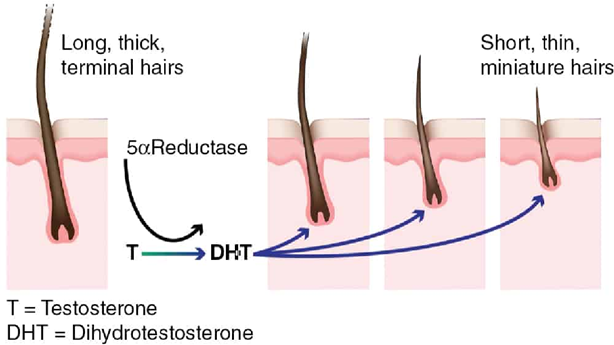
Androgenetic alopecia (AGA), commonly called male-pattern or female-pattern hair loss, develops gradually. Affected terminal hairs become progressively finer and shorter as the follicles miniaturize. Dihydrotestosterone (DHT), formed from testosterone through the enzyme 5-alpha-reductase, is one important driver of this process.
Hair Growth Takes Time Because The Follicle Works In Cycles
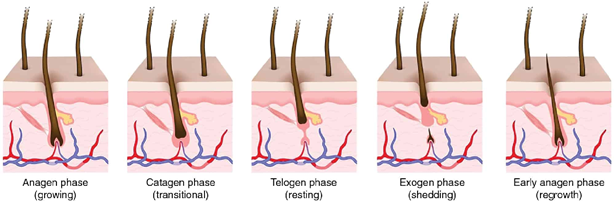
Each hair follicle repeatedly moves through a growth phase (anagen), a transition phase (catagen), a resting phase (telogen), shedding (exogen), and then a new growth phase. This is one reason meaningful changes in hair density are usually assessed over months rather than days or a few weeks.
Hair Loss is Rarely Explained By One Factor Alone
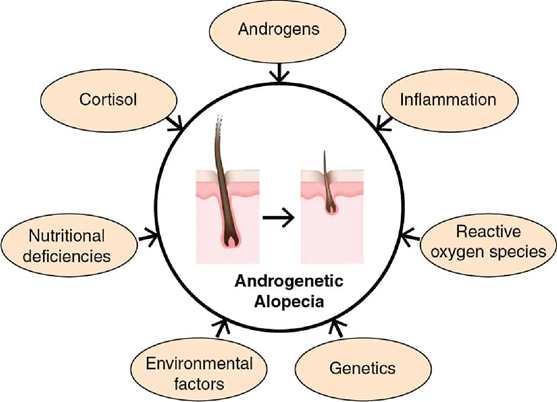
The source chapter describes androgenetic alopecia as a condition influenced by several interacting factors, including genetics, androgen activity, inflammation, oxidative stress, environmental factors, nutritional deficiencies and stress-related pathways. This helps explain why a single supplement is unlikely to be the complete answer for every patient.
When Can Supplements Make Sense ?
Vitamin or mineral supplementation is most clearly indicated when a deficiency has been documented. A careful history can identify people who may be at higher risk of deficiency and who may benefit from targeted laboratory testing.
- Restricted diets, vegetarian or vegan diets, or major changes in food intake.
- Significant recent weight loss or a history of bariatric surgery.
- Conditions that may reduce nutrient absorption, including certain gastrointestinal disorders.
- Ongoing blood loss, heavy menstrual bleeding, pregnancy or other situations associated with iron deficiency.
- Medications that may affect absorption or levels of specific vitamins and minerals.
- Limited sun exposure when vitamin D deficiency is clinically suspected.
There is no single laboratory panel that every patient with pattern hair loss must have. Testing should be guided by the history, examination and individual risk factors rather than automatically ordering or taking every possible supplement.
What Does The Evidence Say About Common hair Supplements ?
Biotin
Biotin is a B-complex vitamin and true biotin deficiency can be associated with hair loss. However, the source material notes that there are no randomized controlled trials showing a clear benefit of biotin for androgenetic alopecia or other forms of alopecia when deficiency is not present. This is important because biotin is frequently taken simply because it is marketed as a “hair vitamin.”
Iron
Iron is essential for red-blood-cell production, oxygen transport and many cellular functions. Iron deficiency can contribute to hair shedding, but studies linking ferritin levels to specific hair-loss diagnoses have produced conflicting results. Iron supplementation should therefore be based on clinical assessment and appropriate testing rather than taken automatically.
Vitamin D
Vitamin D has biological links to the hair follicle and hair cycle. However, studies in telogen effluvium and androgenetic alopecia have been small and inconsistent, and the source chapter states that supplementation has not been proven to promote hair growth in people simply because hair loss is present.
Zinc
Zinc is involved in protein synthesis, cell division and follicular biology. Deficiency can cause hair loss and brittle hair, and supplementation can help when deficiency exists. The exact role of zinc in routine treatment of pattern hair loss, however, remains uncertain.
The Practical TakeawayA low or deficient nutrient level may be clinically relevant, but “more” is not automatically better. The goal is correction of a genuine deficiency, not indefinite high-dose supplementation.
Botanical Ingredients: Promising, But Evidence Varies
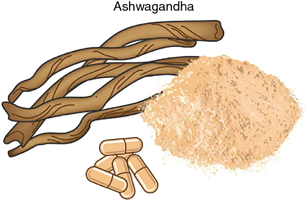
Ashwagandha
Ashwagandha (Withania somnifera) is often described as an adaptogenic botanical and has been studied for its effects on stress pathways, including cortisol. Some trials in stressed adults have reported lower cortisol and improved stress or sleep measures. However, the source chapter notes that no clinical trial has isolated the direct effect of ashwagandha itself on hair growth. It is included in some proprietary hair supplements, but its individual contribution is uncertain.
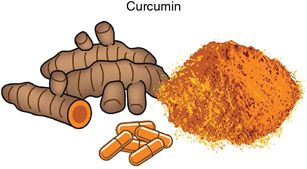
Curcumin
Curcumin is the active component of turmeric and has anti-inflammatory and antioxidant properties. Oral curcumin alone has not been clinically proven to treat hair loss. A topical curcumin extract has been studied in combination with topical minoxidil, where the combination performed better than placebo, while curcumin alone did not show the same improvement. This suggests a possible adjunctive role rather than evidence for curcumin as a stand-alone hair-loss treatment.
Other Nutraceutical Ingredients Used For Hair Support
Equisetum (horsetail) & Silicon
Equisetum, commonly known as horsetail, contains silicon and has been investigated for possible effects on hair strength and thickness. A randomized trial of a bioavailable silicon compound in women with fine hair reported increased hair thickness and tensile strength after several months. The participants, however, were not specifically diagnosed with androgenetic alopecia, so the findings should not be interpreted as proof of treatment for AGA.
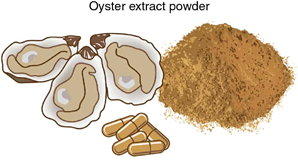
Marine-Protein Complexes
Marine-protein nutraceuticals are used in several proprietary hair formulations. Some randomized trials have reported improvements in hair counts, follicular size or appearance. A major limitation is that these products usually contain multiple ingredients, which makes it difficult to know which component is responsible for the observed effect.

Allergy Consideration
Patients with fish or shellfish allergy should avoid marine-protein supplements unless a clinician has specifically reviewed the product and allergy history.
Pumpkin Seed Oil & Saw Palmetto
Pumpkin Seed Oil
Pumpkin seed oil contains fatty acids, tocopherols, sterols and minerals and has antioxidant and anti-inflammatory properties. In one clinical study of men with androgenetic alopecia, a supplement containing pumpkin seed oil was associated with improved hair counts compared with placebo. Because the product also contained several other botanical ingredients, the study could not determine how much of the effect was due to pumpkin seed oil itself.
Saw Palmetto
Saw palmetto (Serenoa repens) has antiandrogenic activity and can inhibit 5-alpha-reductase, an enzyme involved in DHT formation. Small clinical studies have reported improvement or stabilization in some men with mild-to-moderate androgenetic alopecia. In a direct comparison discussed in the source, finasteride produced greater improvement than saw palmetto. This makes saw palmetto an ingredient of interest, but not an equivalent substitute for established medical therapy.


Why “Natural” Does Not Automatically Mean Risk-Free
Supplements can cause side effects, interact with medications and interfere with laboratory testing. This is especially important when multiple products are combined or when high doses are used for long periods without a clear indication.
Biotin Can Interfere With Blood Tests
High blood levels of biotin can interfere with certain laboratory immunoassays. Depending on the test, results can appear falsely low or falsely high. The source specifically highlights potential interference with thyroid tests and troponin, among others. Patients should tell their doctor and laboratory if they are taking biotin, particularly before important blood testing.
Iron Can Accumulate
The body has limited ability to remove excess absorbed iron. Unnecessary or excessive supplementation can cause gastrointestinal symptoms and, with significant overload, organ damage. Iron can also interfere with the absorption or effectiveness of some medications.
Selenium : Excess Can Paradoxically Cause Hair Loss
Selenium is needed only in small amounts. Excess supplementation can cause toxicity, and hair loss itself is one recognized feature of selenium excess. Nail changes, gastrointestinal symptoms and fatigue may also occur.
Vitamin D, Vitamin E & Zinc Also Have Upper Limits
High-dose vitamin D can cause hypercalcemia and related complications. High-dose vitamin E has been associated with increased bleeding-related risks in large trials. Excess zinc can cause gastrointestinal symptoms and, with chronic use, copper deficiency and neurologic or hematologic problems.
Important Safety PointOver-supplementation can sometimes worsen the problem it was intended to solve. A targeted plan based on diagnosis, medication review and relevant laboratory findings is safer than combining multiple high-dose “hair” products.
A practical, Diagnosis-First Approach To Hair Supplements
If a patient is worried about hair shedding or thinning, the first question should not be “Which vitamin should I buy?” but “What type of hair loss is this?” A useful consultation connects the pattern of hair loss with medical history, recent triggers, diet, medications, scalp findings and, when indicated, laboratory testing.
| 1. Identify the pattern | Is the problem gradual pattern thinning, diffuse shedding, patchy loss, breakage, or signs of scalp inflammation? |
| 2. Review diet and risk factors | Look for restrictive diets, major weight change, gastrointestinal disease, bariatric surgery, pregnancy, blood loss or other deficiency risks. |
| 3. Review medications and supplements | Some medicines affect nutrient levels, while supplements themselves can interact with treatment or laboratory tests. |
| 4. Examine the scalp | Clinical examination and, when appropriate, dermoscopy help determine whether pattern hair loss or another diagnosis is more likely. |
| 5. Order targeted tests when indicated | Testing is selected according to the history and examination rather than as a universal panel for every patient. |
| 6. Build a combined plan | Correct documented deficiencies and consider evidence-based medical or procedural treatments when appropriate; supplements are an adjunct, not automatically the main treatment. |
