
Medical Treatment For Pattern Hair Loss : What Patients Should know
Androgenetic alopecia (AGA), often called male-pattern or female-pattern hair loss, is the most common form of hair loss in adults. The goal of treatment is not to promise complete regrowth. Instead, treatment is usually focused on slowing further thinning, stabilizing the condition and improving the thickness or number of hairs that can still respond.
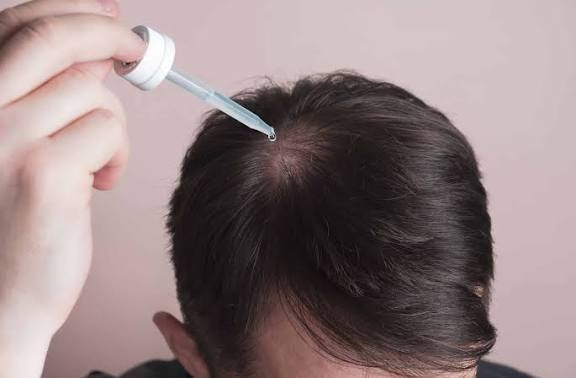
Minoxidil, finasteride and dutasteride target different parts of the biology of pattern hair loss. Minoxidil acts directly on the hair-growth environment, while finasteride and dutasteride reduce the action of dihydrotestosterone (DHT), one of the major hormonal drivers of follicle miniaturization in androgenetic alopecia.
Key Message
Hair-loss medication works best when the diagnosis is correct and treatment is maintained consistently. Visible improvement usually takes months, and stopping an effective therapy often allows the underlying pattern hair loss to progress again.
Why DHT Matters in Androgenetic Alopecia
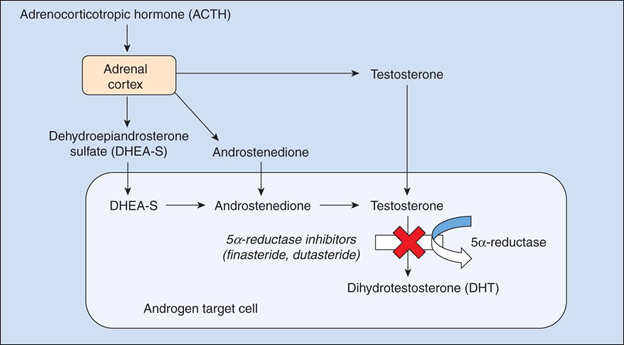
The enzyme 5-alpha-reductase converts testosterone into dihydrotestosterone (DHT). In genetically susceptible scalp follicles, DHT contributes to progressive miniaturization: thick terminal hairs gradually become finer, shorter and less visible. Finasteride and dutasteride work by inhibiting this enzyme and reducing DHT exposure.
Finasteride mainly inhibits type II 5-alpha-reductase, while dutasteride inhibits both type I and type II. This is why dutasteride suppresses DHT more strongly, although its regulatory status and place in treatment differ from finasteride.
What This Means in Practical Terms
Antiandrogen treatment does not “create” new follicles. Its value is mainly in protecting miniaturizing follicles that are still present and giving them a better chance to maintain or improve hair caliber over time.
Topical Minoxidil : The Most Established First-Line Option
Topical minoxidil is an established first-line treatment for androgenetic alopecia in both men and women. The source chapter reviews 2% and 5% topical formulations and notes that the 5% solution or foam generally provides greater efficacy in men. In women, once-daily 5% foam has shown efficacy similar to twice-daily 2% solution in clinical studies.
How Minoxidil Helps
Minoxidil was originally developed as a blood-pressure medication. Increased hair growth was noticed as a side effect, which led to its topical use for pattern hair loss. Its exact mechanism is not fully understood, but it is associated with effects on potassium channels, vascular signaling and the hair-growth cycle.
How Long Does It Take ?
Visible growth with topical minoxidil is usually most apparent after approximately four to six months of continuous treatment, although some patients require longer. Early treatment is generally more useful than waiting until advanced miniaturization has occurred.
Consistency Matters
The benefit of minoxidil is treatment-dependent. If an effective regimen is stopped, hair density can gradually regress as the underlying androgenetic alopecia continues.
Minoxidil Results in Men & Women
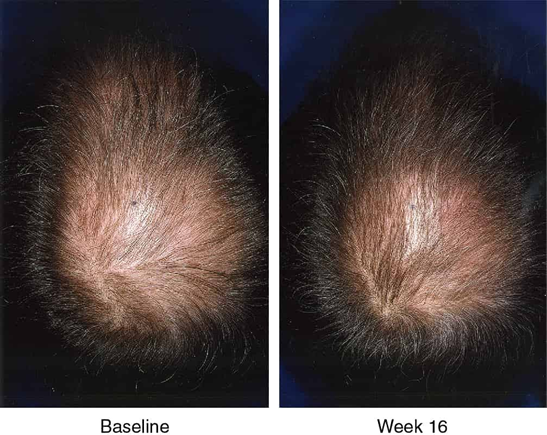
Clinical trials reviewed in the chapter consistently found that topical minoxidil increased total hair counts compared with placebo. Response varies between individuals, and photographs taken under similar lighting and hair positioning are often more useful than relying on day-to-day impressions.

Temporary Shedding Can Happen At The Beginning
Some patients notice increased shedding during the first weeks of topical minoxidil. The source describes this as a transitory effect that can occur as follicles move from the resting phase toward a new growth phase. When the scalp is otherwise tolerating treatment, this early shedding does not automatically mean that the treatment is failing.
Common Topical Side Effects
- Scalp irritation, redness or contact dermatitis
- Unwanted facial hair growth, particularly when the product spreads beyond the scalp
- Temporary increase in shedding during the early phase of treatment
Application Principle
Minoxidil should be applied to the scalp rather than the hair itself. Correct application reduces wastage and helps lower the risk of unwanted facial exposure.
Finasteride For Male Pattern Hair Loss
Oral finasteride is a first-line medical treatment for androgenetic alopecia in men. By inhibiting type II 5-alpha-reductase, it lowers DHT and helps reduce the hormonal signal that drives follicle miniaturization.
What Outcomes Can Be Expected?
The chapter reviews systematic evidence showing that finasteride 1 mg daily increases hair counts compared with placebo in men with androgenetic alopecia. Improvement may begin to become noticeable after about three months, but meaningful assessment is usually made over a longer period.
The most realistic goal is stabilization plus improved density or caliber where follicles remain viable. The source also notes that continued treatment is needed to sustain benefit; after withdrawal, hair loss can gradually return toward the pretreatment state within about one year.
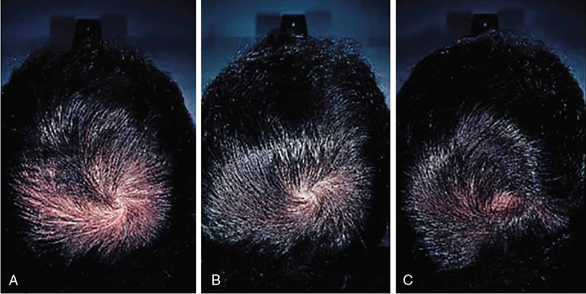
Combination Treatment
Because minoxidil and finasteride work through different mechanisms, they may be used together in appropriate male patients when a broader medical approach is needed.
Why Long-Term Follow-Up is Important With Finasteride
Pattern hair loss is progressive, which means treatment should be judged over time rather than after a few weeks. The photographic examples in the source show that some patients continue to gain visible benefit between 12 and 24 months. This does not mean every patient will respond to the same degree, but it highlights why early discontinuation can make evaluation misleading.
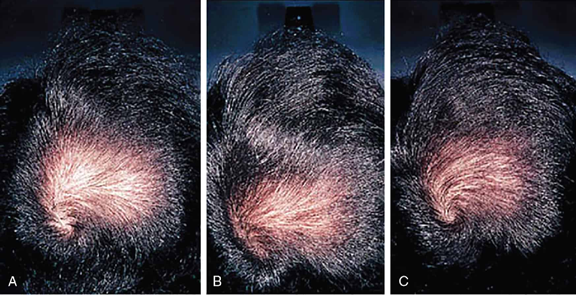
Important Side Effects to Discuss Before Treatment
The most commonly discussed adverse effects of 5-alpha-reductase inhibitors are sexual, including reduced libido, erectile dysfunction and reduced ejaculation volume. Less common postmarketing reactions described in the source include hypersensitivity reactions, breast tenderness or gynecomastia, and depression.
Published case series have described persistent sexual symptoms after finasteride discontinuation, sometimes referred to as post-finasteride syndrome. The source notes that a clear causal relationship has not been established. This is a reason for balanced counseling rather than either dismissing the concern or presenting persistence as inevitable.
Shared Decision-Making
Finasteride should be considered after discussing expected benefit, treatment duration, reproductive considerations and potential adverse effects. A prescription decision should be individualized rather than based on internet comparisons alone
Dutasteride : A Stronger DHT- Blocking Option
Dutasteride inhibits both type I and type II 5-alpha-reductase and therefore reduces DHT more strongly than finasteride. The source chapter describes oral dutasteride as a non-FDA-approved treatment for androgenetic alopecia that may be considered as a second-line option in adult men, particularly when response to finasteride has been inadequate.
How does Dutasteride Compare With Finasteride ?
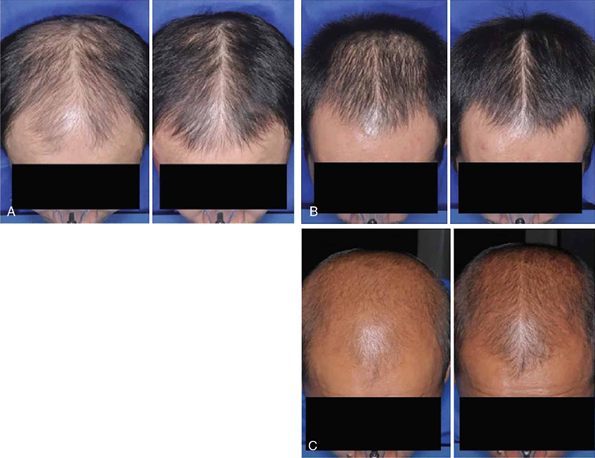
Randomized studies reviewed in the chapter found that dutasteride 0.5 mg daily can produce greater increases in hair count than finasteride 1 mg daily in male androgenetic alopecia. Stronger DHT suppression does not automatically mean it is the right choice for every patient; tolerability, medical history and treatment goals remain important.
Pregnancy & Blood – Donation Precautions
Finasteride and dutasteride are contraindicated in women who are pregnant or may become pregnant because of potential effects on the development of a male fetus. The source also states that men taking these medications should follow blood-donation restrictions: one month after the last finasteride dose and six months after the last dutasteride dose.
Low-Dose Oral Minoxidil & Topical Finasteride
The source also reviews newer or off-label approaches. Low-dose oral minoxidil is not FDA approved for androgenetic alopecia, but clinical studies have reported benefit in both men and women. It may be considered when topical minoxidil is not tolerated, is inconvenient or cannot be used consistently.
Possible o
Oral Minoxidil Adverse Effects
- Generalized or unwanted hair growth (hypertrichosis)
- Lower blood pressure or dizziness
- Changes in heart rate
- Ankle or lower-leg swelling
- Electrocardiogram changes in some patients
Because oral minoxidil is a systemic medication, it requires a different level of medical assessment than topical minoxidil. Dose selection and suitability should be individualized.
Topical Finasteride
Topical finasteride is a promising treatment area. The source describes studies in which topical finasteride reduced DHT with less systemic absorption than oral finasteride, and combination topical finasteride plus minoxidil improved hair density and diameter more than minoxidil alone in one trial. Further study is still needed regarding long-term safety, cost-effectiveness and patient satisfaction.
Off-label does not mean “unproven” or “risk-free”
An off-label treatment may have meaningful clinical evidence, but it has not been specifically approved by the relevant regulator for that indication. Patients should understand both the evidence and the regulatory status before choosing it.
Safety : What Should Be Checked Before Starting Treatment ?
The safest hair-loss plan begins with confirming that androgenetic alopecia is actually the diagnosis. Diffuse shedding, alopecia areata, inflammatory scalp disease and scarring alopecia may require a very different approach. Medical history, current medications, blood pressure, pregnancy potential and other risk factors can change which treatment is appropriate.
Minoxidil-Related Contact Dermatitis
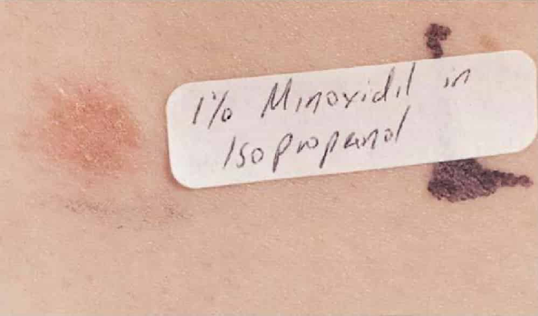
Topical minoxidil can cause irritant or allergic contact dermatitis. The vehicle ingredient propylene glycol is a common culprit in solution formulations, and foam formulations may be better tolerated in some patients because they do not contain propylene glycol. Patch testing can help distinguish allergy when dermatitis is suspected.
PSA considerations With Finasteride & Dutasteride
The source notes that 5-alpha-reductase inhibitors can reduce prostate-specific antigen (PSA) levels by up to approximately 50%. In men undergoing PSA monitoring, the prescribing clinician should know that the patient is taking finasteride or dutasteride so laboratory results can be interpreted appropriately.
Tell Every Clinician What You Are Taking
Hair-loss medication can affect decisions outside dermatology. Keep finasteride, dutasteride, oral minoxidil and other systemic hair treatments on your medication list and mention them during medical reviews and laboratory testing.
Minoxidil vs Finasteride vs Dutasteride : Simple Comparison
| Treatment | Main role | When results are judged | Important considerations |
|---|---|---|---|
| Topical minoxidil | Supports the hair-growth cycle; first-line option for men and women with AGA. | Often 4-6 months for visible change; longer follow-up is useful. | Early shedding, scalp irritation, unwanted facial hair; continuous use is usually needed. |
| Oral finasteride | Reduces DHT by inhibiting type II 5-alpha-reductase; first-line for male AGA. | Some benefit may appear after about 3 months; assess over 6-12+ months. | Sexual adverse effects, breast symptoms, mood concerns, pregnancy precautions; affects PSA interpretation. |
| Oral dutasteride | More complete 5-alpha-reductase inhibition; second-line/off-label option for male AGA in the source. | Clinical studies often assess around 24 weeks and beyond. | Similar class-related precautions; longer blood-donation waiting period after stopping. |
