
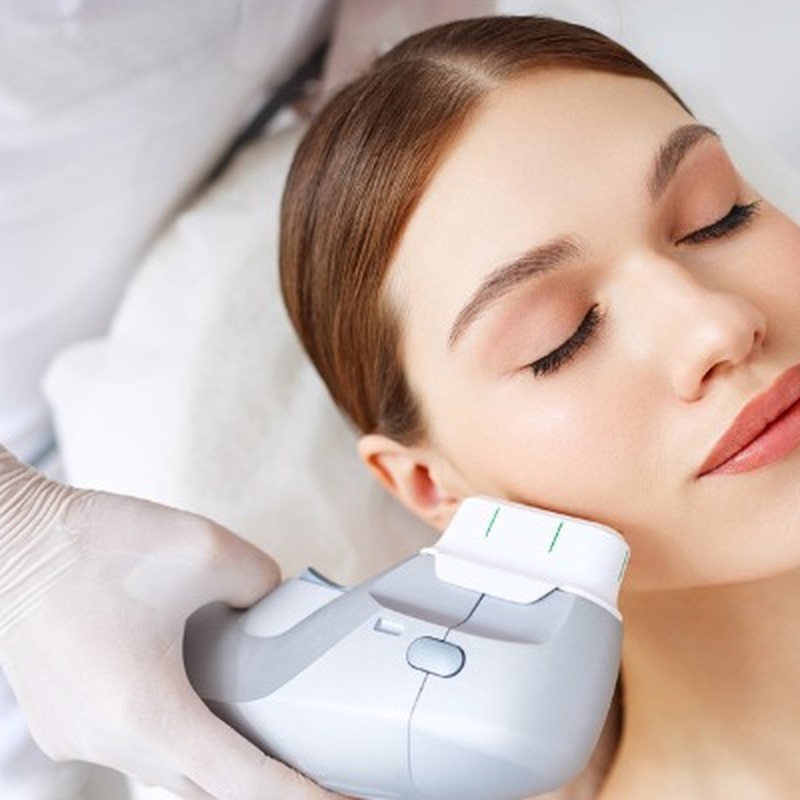
FDA Regulation of HIFU Devices : The Complete Guide to Safety, Approval, Clinical Evidence and Non-Surgical Skin Tightening
Bottom line: HIFU is a technology platform, not a guarantee of efficacy, absence of risk or U.S. clearance. Every assessment must be device-specific, indication-specific and patient-specific.
For anyone considering face or neck tightening, the crucial questions are: Which exact device will be used? What indication is on its labeling? What evidence supports it? How much improvement is realistic for my degree of laxity? What are the risks? And is the device authorized where I will be treated? This guide explains FDA regulation of HIFU devices in plain language, with current primary-source context.
1. What Is High-Intensity Focused Ultrasound (HIFU)?
Ultrasound is mechanical energy that travels through tissue as pressure waves. Diagnostic ultrasound aims to create images with controlled exposure. Therapeutic ultrasound is designed to deliver enough energy to alter tissue. A focused transducer concentrates energy at a designed focal region, where heating and other effects exceed those in surrounding tissue. Acoustic power, frequency, pulse structure, aperture, focusing geometry, coupling, tissue path and dwell time all shape the exposure.
Unlike a surface laser, focused ultrasound can deposit energy beneath the skin without removing the epidermis. But “no incision” does not mean “no biological injury”: treatment works by producing a controlled tissue response, from deliberate ablation to collagen remodeling in a chosen skin layer.
The word HIFU is used for both hospital-based therapeutic systems and consumer-facing facial devices. They may share principles but differ greatly in dose, depth, monitoring, intended population, manufacturing controls and clinical evidence. The FDA does not treat them as one interchangeable category.
HIFU versus microfocused ultrasound with visualization (MFU-V)
Aesthetic microfocused ultrasound (MFU) creates small treatment zones in soft tissue. MFU-V adds real-time ultrasound imaging so the operator can see tissue layers while planning delivery. Exact depths and settings vary by device and area. This is not the same as HIFU used for thermal ablation of internal organs. Do not rebrand a conventional HIFU system as Ultherapy, or cite MFU-V outcomes as proof for every device marketed as HIFU.
2. How Does Focused Ultrasound Produce a Biological Effect?
Acoustic focusing, absorption and heat
A transducer converts electrical energy into ultrasound. The beam passes through a coupling medium and tissue; some energy is reflected or scattered and some is absorbed and converted into heat. The result depends on tissue properties, the acoustic field, treatment time and heat removal by blood flow and conduction. Real devices can generate off-axis energy, sidelobes or prefocal maxima, so measuring and mapping the acoustic field is more meaningful than the depth printed on a cartridge box.
Thermal lesions versus collagen remodeling
Therapeutic ablation intentionally causes tissue necrosis in a defined target. In cosmetic use, controlled microthermal injury can start remodeling involving the extracellular matrix, fibroblasts and collagen. Results that appear over weeks or months fit this biology, but collagen stimulation is not automatic proof of a visibly lifted face, and the same energy cannot be assumed safe in every anatomical region.
3. How Does the FDA Regulate Medical Devices?
The FDA’s Center for Devices and Radiological Health (CDRH) oversees most medical devices, including medical ultrasound. Risk class determines the premarket route: some low-risk devices are exempt, many Class II devices need 510(k) clearance, certain novel moderate-risk devices use De Novo, and high-risk Class III devices generally need PMA.
510(k) clearance: substantial equivalence
A manufacturer generally seeks a determination that its device is substantially equivalent to a legally marketed predicate for the same intended use. The package may include acoustic measurements, software verification, electrical safety, biocompatibility, performance comparisons and clinical data where appropriate. Clearance is not PMA approval, and a cleared indication does not permit advertising every use the hardware could technically perform.
Premarket approval (PMA)
PMA is the rigorous route for Class III devices, requiring independent demonstration of reasonable assurance of safety and effectiveness for specified uses. One device’s PMA does not transfer to another.
De Novo classification
De Novo classifies certain novel low- or moderate-risk devices with no suitable predicate. A granted request creates a new classification that may serve later 510(k) submissions. It is not a synonym for PMA or ordinary product registration.
Registration and listing are not clearance
Establishment registration, device listing and the use of an FDA logo do not mean the FDA cleared or approved a device’s claims. The FDA warns that “FDA registered” and “FDA certified” can mislead consumers.
4. FDA Terminology Compared
| Term | What it generally means | What it does not prove |
|---|---|---|
| FDA 510(k)-cleared | FDA found substantial equivalence for a device and its specified intended use | PMA approval; universal effectiveness; authorization for different treatment areas |
| FDA-approved (PMA) | The device received PMA approval for its approved indication(s) | Approval of every competing device or every cosmetic claim |
| De Novo authorized | FDA granted a new classification through the De Novo route | That future HIFU devices can skip their own review |
| FDA registered/listed | An establishment or device appears in registration/listing systems | FDA clearance or approval of an advertised benefit |
| IEC standard conformity | A claim supported by testing against the named standard and edition | FDA marketing authorization or a specific patient’s outcome |
| CE marking / other international status | A jurisdiction-specific conformity framework | FDA clearance, UAE registration or equivalent clinical indications |
Rule of thumb: any specific product claim should name the manufacturer, complete model, 510(k) number or PMA identifier, cleared indication and source record. Avoid generic “FDA-approved HIFU” statements that imply a whole technology category is approved.
5. FDA Premarket Submissions for Therapeutic HIFU: What Must Be Characterized?
FDA review draws on cross-disciplinary expertise: clinical, acoustic, electrical, thermal, mechanical, software and human-factors. Historical office names such as ODE and OSEL appear in the original slides; treat them as background, not today’s exact organizational chart. HIFU systems intended for shallow soft-tissue ablation have been evaluated differently from other uses, so the class, predicate and route must always be checked in a live FDA record. A premarket evidence package commonly addresses:
- Device description and intended use: hardware, transducer, imaging components, workflow, anatomy, operator requirements and population.
- Acoustic output: power, beam geometry, frequency, focus, spatial distribution, repeatability, calibration and tolerances.
- Thermal effect and modeling: bench, phantom, computational and, where justified, biological evidence of heating and lesion geometry, including worst cases.
- Non-target tissue safety: exposure before and beyond the focus, reflections, bone or air interfaces, sensitive structures and misalignment.
- Targeting and monitoring accuracy: validated imaging, positioning and monitoring; “real-time visualization” must match what the interface truly shows.
- System safety, software and human factors: electrical safety, alarms, accidental-activation prevention, transducer identification, labeling, cleaning, traceability, cybersecurity and training.
6. The Four Testing Pillars — Expanded
Pillar 1: Free-field power and focusing performance
“Free-field” describes specified laboratory conditions. Tests characterize total radiated acoustic power, axial and lateral profiles, focus position, sidelobes and consistency. Electrical power, acoustic power, treatment energy and focal temperature are different quantities; an advertised joule figure alone cannot establish safety or tightening.
Pillar 2: Predictable thermal lesions
In-vitro temperature measurements plus computational modeling should show a reproducible link between device output and intended lesion volume, using credible tissue properties and validated against observed results.
Pillar 3: Safety of proximal and distal tissues
The focus is not a barrier against energy elsewhere. On the face and neck, nerves, vessels, glands and bone may lie close to the treatment path, so labeling and professional assessment determine whether an area is appropriate.
Pillar 4: Accuracy of targeting and monitoring
Where imaging or mapping is claimed, accuracy must be tested. A simulated facial map on a screen does not verify where focal energy is deposited.
These pillars turn the vague phrase “safe ultrasound” into measurable engineering questions that clinicians and purchasing teams can actually investigate.
7. International IEC Standards for High-Intensity Therapeutic Ultrasound
Standards make measurements reproducible but do not replace labeling, clinical data or FDA authorization. The original slides describe IEC TC 87 (Ultrasonics) and TC 62D (Electromedical Equipment) work as proposed documents; they are now published:
IEC 62555:2013 — output power measurement
Covers power measurement for high-intensity therapeutic ultrasound (HITU) transducers and systems. FDA’s recognized-standards listings have included it as recognition number 12-280; recheck the database at publication.
IEC TS 62556:2014 — acoustic field characterization
A technical specification covering parameters and methods for characterizing HITU fields, including focusing, sidelobes and prefocal maxima. Keep the “TS” designation in regulatory writing.
IEC 60601-2-62:2013 — safety and essential performance
Particular requirements for basic safety and essential performance of HITU equipment, listed by FDA under recognition number 12-281. A conformity declaration should name the exact edition and any deviations rather than vaguely claiming “IEC certified.”
Why it matters: common measurement conventions help regulators compare devices, support manufacturer design verification, and let patients and medical directors ask meaningful questions. Compliance with a standard does not make an uncleared aesthetic indication FDA-cleared.
8. Does the FDA Approve HIFU for Face Lifting and Skin Tightening?
Some named aesthetic ultrasound devices hold U.S. marketing clearances for specific indications. That fact must not be generalized to any machine marketed as HIFU. For example, the FDA 510(k) summary for the Ulthera System (K121700) discusses non-invasive lifting of lax submental and neck tissue along with eyebrow lifting. Always confirm the exact authorization and current labeling for the model in question.
This matters for treatments advertised as “HIFU for jowls,” “HIFU for facial fat,” “HIFU for the body,” “HIFU 7D” or “HIFU for eyelids.” A clinic should not imply that the system on its menu shares the indications of a different, cleared device. Ultherapy, Ulthera and generic HIFU are not synonyms, and a screen showing a face is not necessarily diagnostic ultrasound visualization.
9. What Does the Clinical Evidence Say?
A 2024/2025 systematic review and meta-analysis of MFU-V covering 42 studies found that 89% of investigator-assessed patients showed some global aesthetic improvement, with patient-reported results varying by measure. The pooled mean pain score was about 4.85/10, so discomfort should not be dismissed. The authors noted heterogeneity and the need for better trials. These figures do not mean 89% of any clinic’s patients will get a clinically significant lift, and they do not validate all HIFU systems.
A separate review found improvements in selected brow and submental measures, but magnitude varies and durability is not proven for every patient or device. Mild to moderate laxity suits nonsurgical tightening better than substantial redundancy.
Adverse events and long-term safety
Common effects include transient redness, swelling, tenderness, bruising and discomfort. A 2025 systematic review of MFU-V adverse events found severe published events uncommon, yet postmarket reports included fat atrophy, sensory or nerve-related symptoms and scarring. Spontaneous reports cannot establish incidence, but they rule out claims such as “zero chance of nerve injury.”
Does it replace a surgical facelift?
No. Nonsurgical tightening cannot replicate the dissection, repositioning and skin removal of surgery. Compare expected improvement, downtime, risks, cost, longevity and degree of laxity, not marketing terms.
10. Patient Selection: Where Realistic Outcomes Begin
Treatment should follow an examination of anatomy, tissue thickness, adiposity, skin quality, medical history and goals. Localized mild submental laxity differs from a heavy neck, platysmal banding or major redundancy. There is no single age cutoff for good candidates.
Assess pregnancy, infection or open wounds in the area, implanted electrical devices or metal where the labeling requires, prior surgery, nerve symptoms, fillers or other energy treatments, medications and healing conditions. The product’s instructions and the medical director’s judgment take precedence over any generic checklist. Patients with little facial volume should discuss unwanted fat reduction beforehand, and periorbital or other sensitive areas demand device-specific boundaries and specialist expertise.
11. Typical Treatment Journey — With Safety Built In
- Consultation: diagnose the concern, discuss alternatives, take consented baseline photos and confirm the exact device and area. Consent should cover discomfort, redness, rare complications and uncertain durability.
- Treatment planning: verify labeling, transducer identity, calibration, operator credentials and authorized settings. Follow the manufacturer protocol, not an internet “universal HIFU settings” chart.
- During treatment: correct coupling and transducer contact, attention to sensitive regions. Warmth or pressure is expected; unexpected intense pain or neurological symptoms need assessment, not assumption of “collagen stimulation.”
- Follow-up: improvement, if any, evolves over weeks to months. Use consistent photography; session numbers should be individualized, not fixed by sales scripts.
12. HIFU vs Radiofrequency, Laser, Endolift and Surgery
| Treatment family | Main action | Where it may fit | Main limitation |
|---|---|---|---|
| MFU / HIFU for aesthetics | Focused acoustic energy with a planned tissue response | Selected nonsurgical lifting and tightening concerns | Variable results; device-specific approvals and risks |
| Monopolar or other RF tightening | Electric-field-based tissue heating | Laxity and collagen remodeling with a device-specific depth profile | Different energy distribution; not interchangeable with HIFU evidence |
| RF microneedling | Mechanical needle placement plus RF energy | Skin texture, scars and selected tightening indications | Invasive needle component and its own safety profile |
| Nonablative / ablative laser | Light absorption by wavelength and tissue target | Pigment, texture, resurfacing and selected remodeling | Depth and downtime depend strongly on laser type |
| Endolift / subdermal laser | Laser energy delivered by a fiber within tissue | Selected lower-face or body contouring in appropriate hands | Invasive; different risk profile and regulatory claims |
| Surgical facelift / neck lift | Repositioning and removal of redundant tissue | More pronounced laxity needing structural correction | Surgery, anesthesia and recovery |
The useful question is not “Which technology is best?” but “Which treatment matches this patient’s anatomy, goals, downtime tolerance and acceptable risk?”
13. How to Verify a Device’s Actual FDA Status: 8-Step Checklist
- Get the manufacturer, legal product name and exact model, including applicator version.
- Request the FDA 510(k), PMA or De Novo identifier. A registration number alone is not enough.
- Search the official FDA clearance and approval databases, not reseller brochures.
- Read the indications for use line by line, noting treatment areas and population.
- Compare the device and accessories used in the clinic with the cleared configuration.
- Review performance or clinical summaries, labeling, contraindications, adverse-event information and maintenance requirements.
- Outside the U.S. (for example Abu Dhabi), separately verify local marketing, import, facility and professional authorization.
- Recheck if the device, software, applicator, claims or standards change, and record the verification date.
14. HIFU Skin Tightening in Abu Dhabi: UAE Regulatory Context
Patients in Abu Dhabi seeking a non-surgical approach to facial laxity, a double-chin appearance, brow position or neck firmness should expect the consultation to name the exact platform, realistic outcomes, operator qualifications and recovery. FDA status does not license a clinician in the UAE, and U.S. device status does not automatically satisfy every UAE requirement. Confirm the provider’s license and the device’s local authorization with the relevant UAE health authority.
Next step: book a clinician-led skin-laxity assessment to discuss whether ultrasound tightening or another treatment suits your anatomy.
15. Common Myths About FDA and HIFU — Corrected
- “HIFU is FDA-approved.” Authorization applies to named devices and labeled uses, not a broad technology name.
- “An FDA logo proves endorsement.” A logo in a slide or advertisement is not FDA endorsement.
- “A CE mark, IEC test or registration number means FDA clearance.” These are different systems; none substitutes for another.
- “All HIFU works at the same depth.” Focal profiles, transducers, coupling and controls differ.
- “No needles means no complication.” Burns, pain, volume change and rare neurological effects can occur.
- “MFU-V studies prove a generic device works.” Findings belong to the devices and populations studied.
- “510(k) clearance means every promotional claim is true.” Permitted use is specific, and advertising needs supporting evidence.
16. What Clinics Should Document Before Introducing a HIFU Platform
Record the exact make and model, proof of authorized use in the jurisdiction, transducer and consumable traceability, manuals, maintenance and calibration, a training and competency plan, pre-procedure criteria, written contraindications, informed consent, adverse-event escalation and follow-up. Verify imaging quality and depth interpretation yourself rather than relying on brochure screenshots. Match any conformity statement to test reports, model numbers, editions and exceptions. Report adverse events through local and manufacturer channels, and never claim an absence of severe events based on a small series.
17. Frequently Asked Questions
1. Is HIFU FDA-approved?
The FDA does not grant blanket approval to a category called HIFU. It evaluates named devices for stated indications; a system may be 510(k)-cleared, De Novo authorized or PMA-approved. Request the exact model and decision record.
2. What is the difference between FDA-cleared and FDA-approved?
510(k) clearance reflects substantial equivalence for specified uses; PMA approval involves independent evidence for a higher-risk Class III device. The terms are not interchangeable, and neither covers unlisted claims.
3. What does FDA-registered HIFU mean?
It usually means establishment registration or device listing, which does not show FDA review of an advertised cosmetic indication. Verify the actual decision record.
4. What is De Novo authorization?
A pathway that classifies a novel low- or moderate-risk device type when no suitable predicate exists. It is not PMA approval and not an endorsement of similar-sounding equipment.
5. Who regulates HIFU devices in the United States?
The FDA, through CDRH. Classification and route depend on device configuration and intended medical use; clinical HIFU and aesthetic uses can fall under different classifications.
6. Is Ultherapy the same as generic HIFU?
No. Ultherapy/Ulthera is a specific aesthetic ultrasound device family, while HIFU is a broad energy modality. Outcomes and clearances for one brand do not transfer to another.
7. What is microfocused ultrasound with visualization?
MFU-V uses focused ultrasound for selected aesthetic uses and adds imaging to identify tissue layers. Visualization is a specific device feature, not implied by a digital face diagram.
8. Can HIFU lift the jawline and neck?
Properly selected patients may see modest improvement in laxity and contour. Results depend on anatomy, severity, device and plan; significant redundancy may need surgical assessment.
9. Does HIFU permanently remove facial fat?
Permanent fat loss should not be promised. Effects vary with depth and dose, and unwanted volume loss has been reported after some aesthetic ultrasound treatments.
10. How long does it take to see results?
If present, results usually evolve over weeks to months as tissue remodels. Short-term swelling should not be mistaken for durable lift; use consistent follow-up photos.
11. How long do results last?
Durability varies by device, anatomy, age-related change and study follow-up. No exact duration should be guaranteed without device-specific evidence.
12. Is HIFU painful?
It can be uncomfortable. A meta-analysis of MFU-V reported a pooled mean pain score of about 4.85 out of 10, contradicting claims that treatment is always painless.
13. Can ultrasound skin tightening cause nerve injury?
Transient altered sensation has been reported, and postmarket reports include nerve-related concerns. Zero-risk claims are inappropriate; seek prompt assessment for weakness, persistent numbness or severe pain.
14. Can HIFU burn the skin?
Yes, if target, coupling, dose or technique is inappropriate. A noninvasive treatment is not automatically free of burns or deeper injury.
15. What is acoustic coupling?
The transmission interface between transducer and patient, often a gel or device-specific medium. Poor coupling can change how energy enters tissue and affect performance and safety.
16. What is the focal zone?
The region where the ultrasound field is concentrated. Its size, depth and surrounding exposure depend on transducer design and operating conditions, and are best characterized by laboratory field mapping.
17. What is the difference between watts and joules?
Watts express power (energy per unit time); joules express energy. Neither alone describes field distribution, absorption, thermal dose or clinical result, so settings from another device should never be copied.
18. What is the SMAS and why is it mentioned?
The superficial musculoaponeurotic system is part of facial soft-tissue support. Some systems target depths associated with it, but a printed cartridge depth must be clinically matched to the patient’s anatomy.
19. What is IEC 62555?
IEC 62555:2013 addresses output-power measurement for high-intensity therapeutic ultrasound. It is a technical standard, not an FDA authorization or outcome guarantee.
20. What is IEC TS 62556?
IEC TS 62556:2014 describes acoustic-field characterization for high-intensity therapeutic ultrasound. It is a technical specification, so the TS designation and edition should be named in conformity claims.
21. What is IEC 60601-2-62?
IEC 60601-2-62:2013 specifies basic-safety and essential-performance requirements for high-intensity therapeutic ultrasound equipment. It cannot replace verification of labeling, clinical evidence or local authorization.
22. Does IEC compliance mean a device is FDA-cleared?
No. Standards can support a submission, but FDA clearance or approval is a separate decision for a specific device and intended use.
23. Can FDA records be checked online?
Yes. The FDA provides searchable public databases for 510(k) decisions, PMA records, De Novo authorizations, product classification and recognized standards. Open the indications-for-use document rather than trusting search snippets.
24. How do I verify a clinic’s HIFU device?
Ask for manufacturer, model and handpiece details; request the U.S. authorization identifier if advertised; confirm the indication; check training and servicing; and verify local device and clinic requirements.
25. Are all HIFU devices cleared for the eye area?
No. Periorbital treatment has distinct anatomical risks and general facial claims do not establish eye-area authorization. Any visual symptom after treatment needs urgent assessment.
26. Is HIFU suitable for significant loose skin?
Correction may be limited for substantial laxity. A clinician may discuss a surgical facelift or neck lift depending on the change desired.
27. Can HIFU and fillers be combined?
Some plans combine modalities, but timing and suitability depend on the platform, filler location, anatomy and labeling. Avoid routine same-day combinations without a justified clinical plan.
28. Is HIFU safer than radiofrequency?
Neither is universally safer. Risk depends on device, operator, region, exposure and patient factors; comparisons should rely on head-to-head studies.
29. Does HIFU replace a facelift?
No. HIFU may improve selected laxity, while surgery repositions tissue and can remove redundant skin. Expect realistic outcomes, not equivalence.
30. Does FDA clearance apply in Abu Dhabi?
No. FDA authorization and UAE requirements are distinct. U.S. clearance can inform evaluation but does not license a clinician or facility; confirm local status of the equipment and provider.
31. What are the usual short-term effects?
Transient redness, swelling, tenderness and sometimes bruising or altered sensation. Serious or persistent symptoms require evaluation, and aftercare should include a clear route to contact the clinic.
32. Can a 510(k)-cleared device be used on any body area?
No. Authorization relates to stated intended uses. A device cleared for one lifting indication should not be advertised for body contouring, eye treatment or fat destruction without its own labeling.
33. Why are acoustic field measurements important?
They reveal focus size, depth and off-axis exposure, showing whether a transducer behaves predictably and whether non-target tissue may receive significant energy.
34. What is the difference between HIFU ablation and aesthetic HIFU?
Therapeutic HIFU deliberately destroys target tissue, often in hospital settings with specialized planning. Aesthetic ultrasound aims for controlled microzones and collagen remodeling, with different risks, endpoints and regulatory pathways.
35. What should a clinician check when buying a HIFU device?
Legal manufacturer, exact model, authorized intended use, local requirements, transducer specifications, acoustic performance reports, servicing, training, warranty, traceability, consumables and complaint handling.
36. Are before-and-after photos enough to prove effectiveness?
No. Meaningful interpretation needs consistent lighting, position and timing, ideally with blinded evaluation or quantitative endpoints. Selected photos cannot establish average response or safety.
37. How should a reputable clinic describe results online?
Use qualified, device-specific language, cite independent evidence, disclose study populations, and avoid guaranteed lifting, “zero downtime,” blanket FDA-approval claims or permanent fat removal.
38. Can a presentation with the FDA logo prove FDA endorsement?
No. A presentation or graphic may discuss FDA regulation without being an FDA-authored document or regulatory decision.
39. What is the best HIFU clinic in Abu Dhabi?
There is no credible universal ranking. Prioritize a verified licensed clinician, device-specific documentation, careful anatomy assessment, clear complication management and realistic informed consent.
40. Where should I seek help after an unexpected complication?
Contact the treating clinician promptly for unusual, severe or persistent symptoms. Sudden visual change, significant weakness, severe uncontrolled pain or rapidly worsening tissue injury needs urgent medical evaluation.