
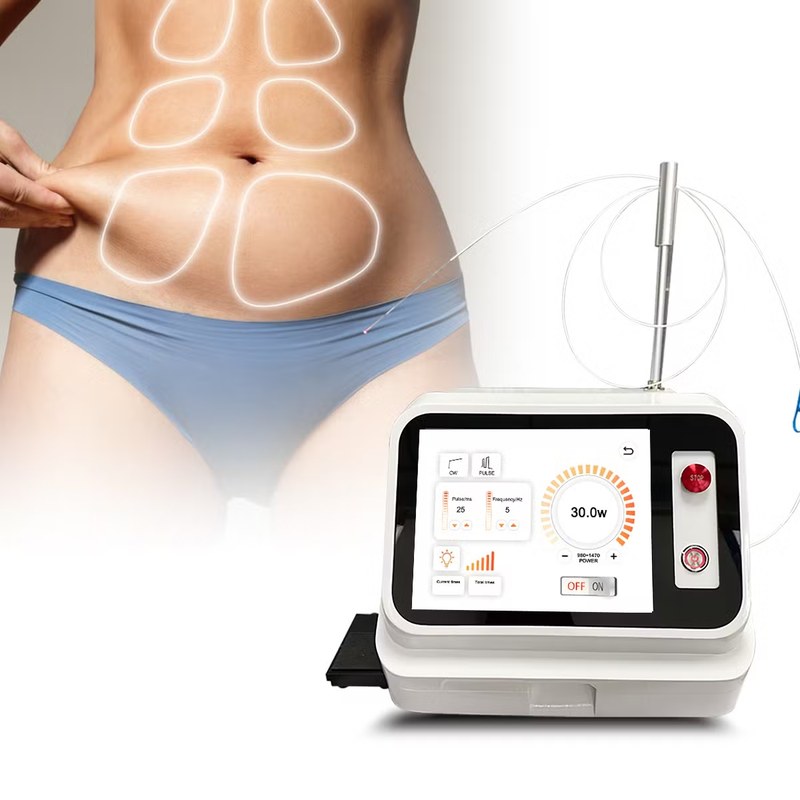
Quick answer: Endolaser (also called Endolift) is a minimally invasive technique that delivers diode-laser energy through a thin optical fiber under the skin to treat localized fat and skin laxity. A 2023 study of 10 patients compared 980 nm and 1470 nm wavelengths on the abdomen. It reported positive short-term results at one month and no observed difference between the two wavelengths. The sample was small, so the findings are early evidence, not guarantees.
What Is Endolaser / Endolift?
Endolaser is a minimally invasive laser technique. Energy travels through an optical fiber into subdermal tissue. The authors describe two goals: creating a thermal effect in fat tissue and stimulating dermal remodeling.
The approach responds to growing demand for treatments without large incisions, visible scars or long downtime. The paper notes that available fibers range from about 200 to 800 micrometers in diameter. This supports treating small anatomic zones precisely, but the article does not offer a standard fiber-selection algorithm for every body region.
Why Localized Fat and Skin Laxity Should Be Considered Together
Localized fat can distort contour. Lax skin can also stop an area from looking smooth or defined, even after volume is reduced. The study targeted patients with abdominal localized fat and dermal flaccidity, a common body-contouring problem in which both volume and structural support matter.
The paper links skin laxity to ageing, major weight loss and pregnancy. It also stresses that anatomy, physiology and carefully chosen parameters are essential for safe treatment.
The Three Laser-Tissue Effects
The authors describe three broad effects of absorbed light: photothermal, photochemical and photomechanical. For body treatment, they focus mainly on photothermal action.
They state that controlled heat stress can affect fat cells and may induce lipolysis and apoptosis after sufficient exposure. Heat is also linked to fibroblast-related dermal remodeling, which is the theoretical basis for improving laxity while treating localized fat.
980 nm vs 1470 nm: What Is the Difference?
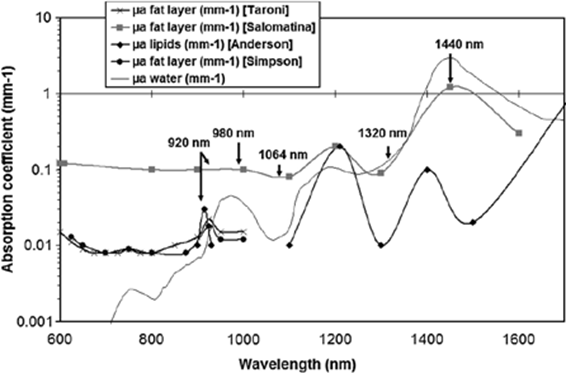
The central comparison in the paper is between two diode-laser wavelengths. According to the source, 980 nm has greater affinity for hemoglobin, while 1470 nm has greater affinity for water. A dual-wavelength platform could allow more deliberate wavelength choice, but each patient in this study received only one wavelength.
Why 1470 nm Is Described as Water-Selective
The authors link 1470 nm's strong water affinity to precise thermal interaction in subdermal tissue. They call it a promising option for localized fat reduction and connective-tissue remodeling. This does not make it automatically superior. In this abdominal study, the authors saw no difference between the two groups.
How 980 nm Is Discussed
The source associates 980 nm with hemoglobin absorption. In the broader laser-lipolysis literature, that can matter for coagulative effects around small blood vessels. The paper reports no distinct clinical advantage for 980 nm in this sample and concludes that both wavelengths were effective.
How the Endolaser Study Was Designed
The authors call it a prospective randomized clinical trial of endolaser in laser-lipolysis and tightening procedures. Ten patients with localized abdominal fat and laxity were recruited, with varied sex, lifestyle and dietary patterns. No additional aesthetic technology was used after treatment, so the effect of the laser itself could be observed.
| Study feature | Source-reported detail |
|---|---|
| Participants | 10 |
| Treatment area | Abdomen |
| Group A | 5 patients, 980 nm |
| Group B | 5 patients, 1470 nm |
| Reassessment | 1 month |
| Primary assessments | Clinical evaluation, photography, adipometry, perimetry |
| Temperature monitoring | Thermographic camera |
| Adjunct technology after treatment | None, to avoid interference |
How the Abdomen Was Measured
Adipometry estimated the thickness of the adipose fold, and perimetry tracked abdominal circumference. Measurement points were taken at five-centimeter intervals around the umbilical, supraumbilical and infraumbilical regions. Treatment direction, watts and total joules were standardized across patients, but the patient-level energy table is not provided, so no values are stated here.
A thermographic camera monitored surface temperature to minimize unnecessary thermal injury.
Tumescent Fluid
A Klein-type tumescent solution was infused, containing saline, epinephrine, sodium bicarbonate and lidocaine. This is a study-specific description, not a patient self-treatment recipe. Concentrations, volumes and anesthetic dosing require clinician judgment and cannot be inferred from this paper.
Treatment Temperature Concept
The paper describes the 980 nm and 1470 nm diode platform as non-ablative, with tissue temperatures around 38–42°C in its framework. The authors connect this heating with oxidative stress in fat cells and fibroblast-related remodeling. The discussion also cites background literature in which external dermal heating near 40°C can correspond to much higher internal temperatures. That comes from cited literature, not from measurements of each participant.
How Laser Lipolysis Works According to the Source
The authors describe selective photohyperthermia. Laser light is converted to heat after tissue absorption, and the heat affects adipocytes, which can swell and rupture under appropriate conditions. Tissue response depends on more than wavelength and power. Tissue thickness, vascularity, water content, fiber position, movement, exposure time and total energy all play a role.
Results: What the Study Reported
Overall Aesthetic Improvement and Satisfaction
All 10 patients showed aesthetic improvement in abdominal fat and laxity on clinical evaluation and before-and-after photographs. The authors describe the response as consistent across differences in age, sex, ethnicity, lifestyle and diet. A 10-patient sample is too small to establish efficacy across all demographic or biological profiles.
The paper reports 100% satisfaction, with patients rating the outcome positive or very positive. This applies only to these 10 patients and is not an expected satisfaction rate for future patients.
Did 980 nm and 1470 nm Perform Differently?
No difference was observed. With five patients per group, the study could not reliably detect modest differences, so the absence of an observed difference is not proof of equivalence.
Temporary Hyperpigmentation: A Reporting Inconsistency
The paper states that "1% of patients" developed temporary hyperpigmentation that resolved over time. In a 10-patient study, one patient would be 10%, so a 1% incidence is mathematically impossible. The paper does not say whether this is a typo or a different denominator. The safest reading is that temporary hyperpigmentation was reported, while the incidence figure is unreliable. Numerical inconsistencies like this reduce confidence in precise complication-rate claims.
Before-and-After Cases at 30 Days
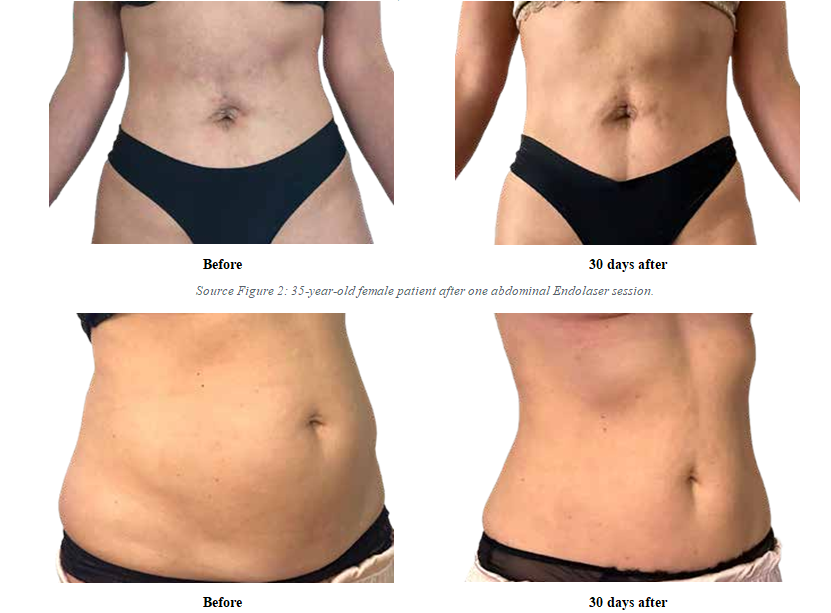
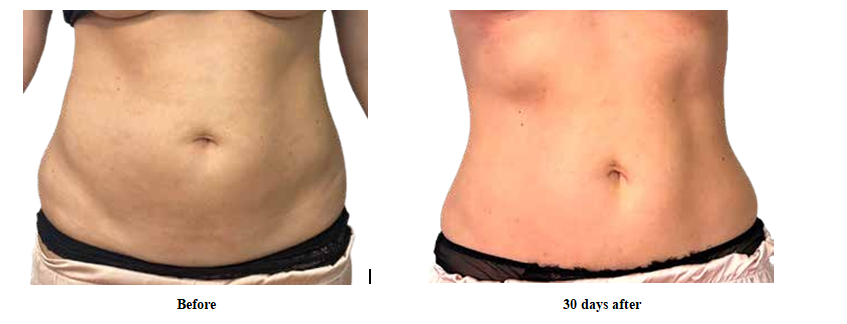
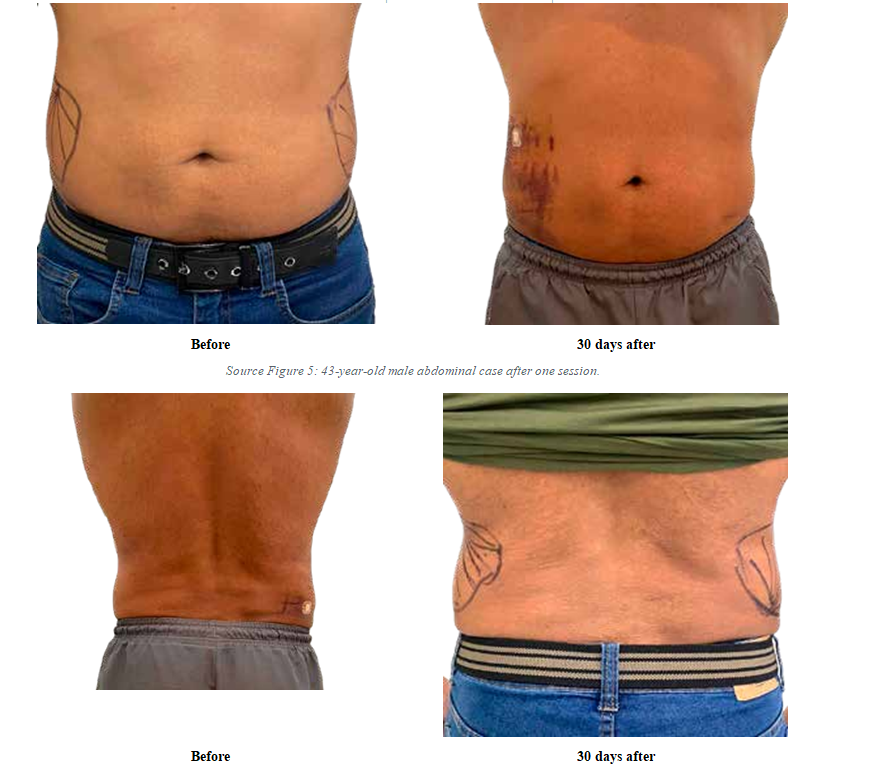
The paper includes abdominal cases photographed before treatment and 30 days after a single Endolaser session. They show female participants aged 35 and 40 and male participants aged 43. The captions do not identify which wavelength each patient received.
What the Images Can and Cannot Prove
Photos document visible change, but they do not quantify fat-cell reduction or prove durability. Lighting, posture, muscle tone, breathing, camera position and hydration all affect how an abdomen looks. The paper does not describe blinded photo grading or image standardization in detail.
Aftercare: Lymphatic Drainage and Compression
The authors say lymphatic drainage may be recommended to support lymphatic clearance, reduce swelling and potentially reduce fibrosis. A shaping or compression garment may also be used for support and tissue remodeling. These are described as options, not universal requirements. Actual aftercare depends on treatment extent, anatomy, clinic protocol and patient response.
Endolaser vs Liposuction and Surgery
The paper emphasizes less trauma, faster recovery and no large surgical scars compared with conventional surgery. However, this study did not compare Endolaser with liposuction or abdominoplasty, so it cannot show that Endolaser is superior or achieves the same degree of correction.
The level of correction needed should drive treatment choice. Small localized fat deposits with mild laxity are a different problem from large-volume adiposity or major redundant skin.
Does Endolaser Tighten Skin?
The article connects thermal effects with fibroblast remodeling and collagen contraction, and cites literature describing both immediate and later tissue retraction. It suggests tightening may keep evolving over several months. This abdominal study followed patients for only one month, so it cannot define the long-term tightening trajectory.
What the Study Supports
- A 10-patient abdominal study reported positive short-term aesthetic outcomes after one treatment.
- Five patients received 980 nm and five received 1470 nm.
- The authors saw no obvious difference between the wavelength groups.
- Photographs showed visible abdominal contour change at 30 days.
- Patient satisfaction was reported as 100% in this small sample.
- Adipometry and perimetry reductions were reported, although the adipometry units and calculation are insufficiently explained.
- Temporary hyperpigmentation was reported, but the stated 1% incidence is incompatible with 10 patients.
- The paper supports the biologic rationale for treating localized fat and dermal laxity through photothermal effects.
What the Study Does Not Prove
- That 980 nm and 1470 nm are clinically equivalent in a large population.
- That every patient loses 3–6 cm of abdominal circumference.
- That Endolaser works equally across every ethnicity, age group, sex or lifestyle.
- That the complication rate is 1%.
- That one session is enough for every patient.
- That results are permanent.
- That Endolaser is superior to liposuction, HIFU, radiofrequency or other body-contouring procedures.
- That the study's anesthesia or technical protocol should be copied universally.
Who May Be a Reasonable Candidate for Consultation?
Based on the study population, consultation may be relevant for adults with localized abdominal fat and associated skin laxity who want a minimally invasive approach. Suitability is individual. The paper does not establish outcomes in severe obesity, major redundant skin, significant abdominal wall laxity, large hernias, active medical disease or patients seeking major surgical-scale volume reduction.
A Practical Consultation Framework in Abu Dhabi
- Clarify whether the main concern is localized fat, skin laxity, contour, or a combination.
- Assess weight stability, recent weight loss, pregnancy history, skin quality and the amount of true redundant skin.
- Document baseline standardized photographs and circumferential measurements.
- Discuss minimally invasive laser remodeling versus surgical fat and skin removal.
- Review medical history, medications, scarring tendency, pigmentary risk and prior procedures.
- Explain that 980 nm and 1470 nm interact with tissue differently, but this small study found no clear clinical winner.
- Set expectations about one-month changes versus later collagen remodeling.
- Use the study's outcome numbers cautiously given the small sample and reporting inconsistencies.
Endolaser / Endolift Body Remodeling in Abu Dhabi with Dr. Erfan Rahmani
For patients researching Endolaser or Endolift body treatment in Abu Dhabi, the key step is deciding whether the goal is modest localized-fat reduction, skin tightening, or a degree of correction better suited to another procedure.
Dr. Erfan Rahmani can assess abdominal skin quality, localized adiposity, weight history, tissue laxity and the expected degree of improvement before deciding whether an Endolaser-based approach is appropriate.
Frequently Asked Questions
What did the 2023 Endolaser study evaluate?
It evaluated abdominal localized fat and skin laxity in 10 patients treated with either a 980 nm or a 1470 nm diode laser, reassessed after one month.
How many patients received each wavelength?
Five patients received 980 nm and five received 1470 nm.
Did one wavelength perform better?
The authors reported no difference and described both as effective. The sample was too small to establish true equivalence.
What was measured?
Clinical assessment, before-and-after photography, adipometry, perimetry and thermographic surface-temperature monitoring.
How many sessions were performed?
The clinical cases were assessed after one Endolaser session.
What did the abdominal photos show?
Visible contour changes at 30 days in female and male participants.
Does 100% satisfaction mean everyone will be satisfied?
No. It reflects 10 patients and cannot be generalized to future patients.
What adipometry reduction was reported?
About 4–5 cm supraumbilically, 3–4 cm at the umbilical region and 4–5 cm infraumbilically. The units and method are unclear, so these should not be treated as guaranteed fat loss.
What perimetry reduction was reported?
About 3–4 cm supraumbilically, 4–6 cm at the umbilical region and 5–6 cm infraumbilically, in a small sample.
Was hyperpigmentation reported?
Yes, temporarily. The stated 1% incidence is inconsistent with a 10-patient study, so the safest conclusion is only that temporary hyperpigmentation occurred.
What is the difference between 980 nm and 1470 nm?
The source states that 980 nm has more affinity for hemoglobin and 1470 nm has more affinity for water.
Does Endolaser tighten skin as well as reduce fat?
The rationale includes both photothermal fat effects and fibroblast-related dermal remodeling, but long-term tightening was not fully characterized in this one-month study.
Is Endolaser the same as liposuction?
No. The source discusses laser lipolysis as a less invasive approach, but the study did not compare it directly with conventional liposuction.
Is lymphatic drainage required?
The paper says it may be recommended to support swelling reduction and lymphatic clearance, but it does not establish it as mandatory.
What is the main weakness of the study?
A very small sample, limited methodological detail, no untreated control group, short follow-up and several numerical and reporting inconsistencies.
Where can I learn more about Endolaser in Abu Dhabi?
Visit www.drerfanrahmani.com for consultation information with Dr. Erfan Rahmani.