
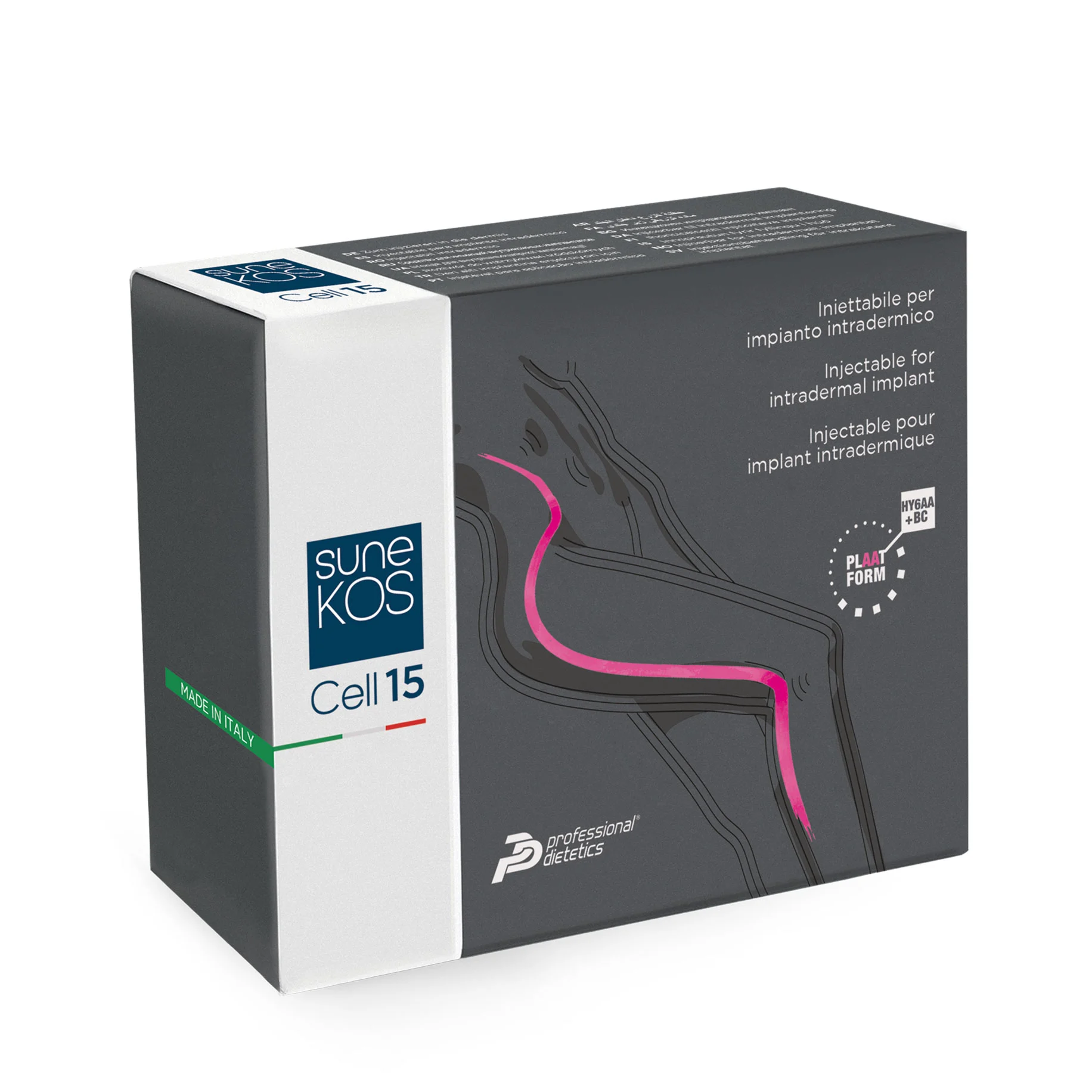
Sunekos Cell 15 is an injectable treatment studied for edematous fibrosclerotic panniculopathy (EFP), commonly called cellulite. Its formulation combines 200 kDa low-molecular-weight hyaluronic acid, six amino acids and a carbonate-bicarbonate alkaline buffer. In a prospective multicenter investigation, 46 women with Stage I to early Stage IV cellulite entered a three-session protocol using a cannula-based Across-Tension-Line Technique (ATLT). Patient-reported improvement was high, objective clinician improvement was seen early and remained present at six months in many participants, and no major adverse events were reported. The strongest signal was in cellulite with a more pronounced fibrotic component, but the evidence is preliminary rather than definitive.
Cellulite is not simply a surface texture issue. The condition can involve the dermis, adipose lobules, fibrous septa, extracellular matrix, microcirculation, lymphatic drainage, low-grade edema and inflammation. A useful treatment plan therefore starts by identifying which of these components is dominant in the individual patient.
What Is Cellulite ? Understanding Edematous Fibrosclerotic Panniculopathy
Edematous fibrosclerotic panniculopathy, abbreviated EFP, is the terminology used for the structural and functional tissue changes commonly recognized as cellulite. It most often appears on the buttocks, thighs and hips as dimpling, depressions or an orange-peel surface.
The underlying tissue changes are multifactorial. The clinical material describes four interacting components: alterations in the fibrous septa and extracellular matrix, inflammatory and low-grade edematous changes, remodeling of adipose lobules and dermal architecture, and biochemical changes within subcutaneous tissue.
Why Fibrous Septa Matter
Fibrous septa are connective-tissue structures that organize and anchor the subcutaneous compartment. When these structures become abnormal, thickened or fibrotic, they can contribute to tethering and visible surface irregularity. Fibrosis can also make the tissue mechanically stiffer and potentially more resistant to treatments that address only edema or superficial skin texture.
Edema, Microcirculation and Low-Grade Inflammation
Impaired microcirculation and lymphatic drainage can promote interstitial fluid accumulation and tissue hypoxia. The described pathophysiology links edema, altered extracellular-matrix proteoglycans, local acidosis and chronic low-grade inflammatory signaling with progressive fibrosclerosis. This helps explain why cellulite can look and behave differently from one patient to another.
What Is Sunekos Cell 15 ?
Sunekos Cell 15 is a Class III injectable medical device evaluated for Stage I to early Stage IV EFP. The formulation is not positioned as a conventional volumizing body filler. Instead, its treatment rationale centers on hydration, extracellular-matrix mechanics and the fibrotic tissue environment.
| Component | Formulation | Proposed Role |
|---|---|---|
| Low-molecular-weight hyaluronic acid | 200 kDa | Hydrates the extracellular space and supports dermal viscoelasticity and ECM mechanical properties. |
| Six amino acids | Glycine, L-proline, L-lysine, L-leucine, L-valine, L-alanine | Support hydration and the tissue microenvironment; the formulation is described as reducing hyaluronic-acid degradation through hyaluronidase inhibition. |
| Carbonate-bicarbonate buffer | Alkaline solution, pH 8.2 | Designed to buffer the acidic microenvironment associated with latent inflammation and extracellular fibrotic pathology. |
Why Use 200 kDa Hyaluronic Acid ?
Hyaluronic acid is an important regulator of extracellular hydration and tissue viscoelasticity. The formulation uses low-molecular-weight HA at 200 kDa with the aim of improving hydration and mechanical behavior within the extracellular matrix rather than creating the projection expected from a traditional crosslinked filler.
Why These Six Amino Acids ?
The formula contains glycine, proline, lysine, leucine, valine and alanine. Within the treatment concept, this amino-acid blend supports hydration, osmolarity and pH regulation and is associated with reduced degradation of hyaluronic acid. Several of these amino acids are also biologically relevant to connective-tissue metabolism.
Why Is the Solution Alkaline ?
The product uses a carbonate-bicarbonate buffer at approximately pH 8.2. The stated rationale is to help counter the acidic microenvironment associated with low-grade inflammation and fibrotic tissue. This should be understood as part of a broader matrix-remodeling strategy rather than as proof that pH correction alone treats cellulite.
Which Types of Cellulite Were Evaluated ?
Women aged 18 to 40 with Curri Stage I, II, III or early Stage IV cellulite were eligible. Late Stage IV disease, described as advanced, nearly completely sclerotic and irreversible, was excluded. Obesity was also an exclusion criterion, so the results should not be generalized automatically to every body type or severity pattern.
Who May Be a Reasonable Candidate ?
- Visible cellulite over the gluteal, trochanteric or thigh regions with a clinically meaningful fibrotic component.
- Stage II, Stage III or early Stage IV patterns in which connective-tissue fibrosis contributes to the appearance.
- Patients seeking a minimally invasive injectable option rather than a more mechanically traumatic procedure.
- Patients able to complete a three-session treatment course and attend follow-up.
- Patients with realistic expectations that improvement, rather than complete elimination of cellulite, is the appropriate endpoint.
Who Needs a Different or More Cautious Plan ?
- Active inflammatory or infectious disease in the treatment area, including dermatitis, fungal infection, herpes or bacterial infection.
- Known sensitivity to product components.
- Current anti-inflammatory or anticoagulant therapy within the study exclusion framework.
- Autoimmune disease affecting soft tissue, active cancer treatment or major systemic disease.
- Predisposition to keloid formation.
- Obesity, which was excluded from the clinical investigation.
- Late Stage IV cellulite with near-complete sclerosis.
- Unrealistic expectations or a cellulite pattern dominated by a different mechanism that may require another modality.
Body perception was also measured using the Objectified Body Consciousness scale, including body surveillance, body shame and appearance-control beliefs.
Did Age Influence the Response ?
Exploratory regression analysis suggested that participants older than 30 reported greater short-term improvement, especially at the three-month visit. This apparent age-related advantage diminished by the six-month follow-up.
The interpretation proposed in the clinical discussion is that older participants in this cohort may have had a more fibrotic form of cellulite, while younger participants may have had a more edematous pattern. The sample was too small to establish age as an independent treatment-selection rule.
Clinical Before-and-After Examples : Stage II and Stage III
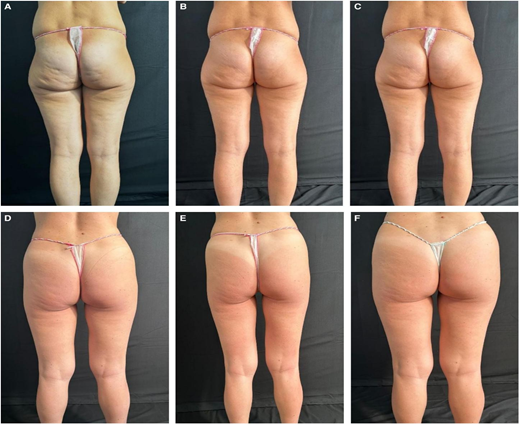
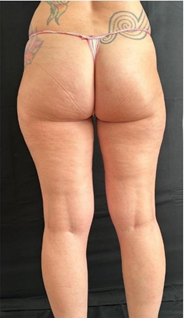
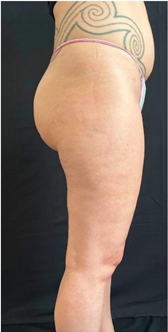
The photographic series includes Stage III and Stage II cases photographed at baseline, three months and six months. The visible response includes smoothing of surface irregularity and improvement in the contour of dimpled areas.
These examples illustrate possible outcomes in selected patients. They should not be interpreted as a promise that every patient will achieve the same degree of change.
Clinical Example : Early Stage IV Fibrotic Cellulite
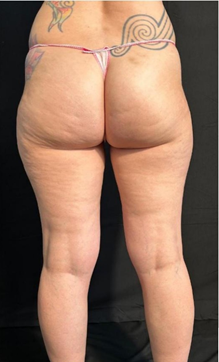
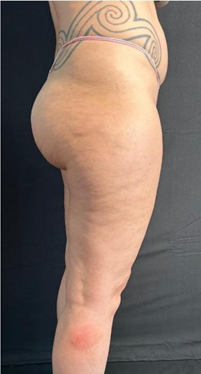
An early Stage IV case is shown in frontal and lateral views at baseline and six months. This is relevant because the treatment signal appeared strongest when a fibrotic component was more prominent.
Cellulite Improvement and Body Perception
The investigation also assessed how participants experienced their bodies. Body-surveillance and body-shame scores decreased significantly from baseline to three months, with a small partial increase at six months. Appearance-control beliefs increased slightly and then remained relatively stable.
These measures should not be interpreted as proof that an aesthetic procedure treats psychological distress. They show that visible improvement in a body concern can influence how some participants monitor and judge their appearance.
Safety, Side Effects and Downtime
No major adverse events were reported. Minor bruising was the principal expected treatment-related reaction described in the investigation.
As with any cannula-based injectable procedure, temporary bruising, tenderness, swelling or entry-point discomfort may occur. The clinical investigation did not report major treatment-related complications during its follow-up period.
When Should a Patient Contact the Clinic ?
- Increasing pain, redness or warmth rather than gradual improvement.
- Marked or expanding swelling.
- Fever, drainage or other signs of infection.
- Persistent skin discoloration or tissue change that is not resolving.
- Any symptom that is substantially more severe than routine post-injection bruising or tenderness.
Why Might Fibrotic Cellulite Respond Better ?
The most clinically interesting finding is that moderate to more advanced fibrotic cellulite appeared to respond better than very early cellulite. This is consistent with the proposed treatment target: extracellular-matrix mechanics and fibrosis.
Very early cellulite may be driven more by fluid retention and microcirculatory alteration. If fibrosis is not yet a dominant feature, a matrix-focused injectable may not address the main biological driver as strongly.
Could Maintenance Treatment Be Needed ?
Some objective improvement declined by six months, especially in the more fibrotic older subgroup. The clinical discussion therefore proposed that an additional cycle at around three months or a maintenance protocol might be useful for selected patients.
This should be viewed as a proposed strategy, not a universally validated maintenance schedule. The optimal interval and long-term durability remain to be established.
Sunekos Cell 15 vs. Subcision
Subcision mechanically releases focal fibrous tethering. Sunekos Cell 15 uses a different strategy: it does not cut septa, but instead aims to influence the extracellular tissue environment and fibrosis through injectable matrix support. Deep focal tethering and diffuse fibrosclerotic change are not identical problems, so these approaches should not be presented as direct substitutes in every patient.
Sunekos Cell 15 vs. Energy-Based Cellulite Treatments
Radiofrequency, laser and acoustic technologies rely on heat or mechanical energy. Sunekos Cell 15 is an injectable treatment, so its delivery, tissue interaction and recovery profile are different. The choice should depend on whether the dominant concern is fibrosis, skin laxity, localized fat, edema, surface texture, deep tethering or a combination.
Sunekos Cell 15 vs. Body Filler
The treatment should not be described as a standard body filler. The protocol does not rely on placing crosslinked filler beneath each depression to add structural volume. Its intended role is broader tissue remodeling, hydration and modification of the extracellular environment across a treatment field.
Sunekos Cell 15 for Cellulite in Abu Dhabi : What to Ask Before Treatment
For patients researching cellulite treatment in Abu Dhabi, a useful consultation should identify the cellulite phenotype before choosing a device or injectable. The study data do not establish local availability; this section is a practical treatment-planning guide for patients comparing options.
- Is my cellulite mainly edematous, fibrotic, tethered, associated with laxity, or a combination ?
- Which severity stage best matches my clinical pattern ?
- Is an injectable matrix-remodeling approach appropriate, or would subcision or an energy-based treatment target my main problem more directly ?
- How many areas and entry sites will be treated, and how much product is planned ?
- Will a cannula-based ATLT approach be used ?
- How many sessions are recommended and when should the result be assessed ?
- What is the maintenance strategy if improvement begins to fade after several months ?
A realistic endpoint is improvement in dimpling, surface irregularity and tissue quality. Complete elimination of cellulite is not a realistic promise for a multifactorial condition.
Treatment and Recovery Timeline
Treatment day : Cannula-based fan injections are performed through selected gluteal, trochanteric and/or thigh entry sites.
First several days : Bruising, tenderness or mild swelling may be visible around entry points and treated tissue.
14-21 days : The next session is performed in the three-session protocol.
After session 3 : The initial treatment cycle is complete.
3 months : Formal follow-up showed strong patient-perceived improvement and clinically visible improvement in many participants.
6 months : A high proportion of participants continued to report improvement, while some objective treatment effect showed partial decline.
How Strong Is the Evidence ?
The investigation provides prospective human data, but it remains preliminary. The evidence level is reported as Level 4 therapeutic evidence, and several design features limit how broadly the results can be generalized.
- The study was prospective and multicenter, but not randomized and did not include a placebo or untreated control group.
- The initial sample was 46 women and the efficacy set was smaller after loss to follow-up.
- Formal follow-up was limited to six months.
- Participants were 18-40 years old and obese patients were excluded.
- Smoking and alcohol consumption were not incorporated into the outcome analysis.
- The age-response analysis was exploratory and based on a small sample.
- The research was funded by Professional Dietetics S.p.A.; two authors disclosed professional relationships with the company.
- Longer-term comparative trials are needed to define durability and relative effectiveness versus other cellulite treatments.
What the Evidence Does Support
The findings support that the investigated three-session protocol was feasible, generally well tolerated and associated with visible and patient-perceived improvement in a substantial proportion of women with Stage I to early Stage IV cellulite. The treatment signal appeared most favorable when fibrosis was a meaningful component.
