
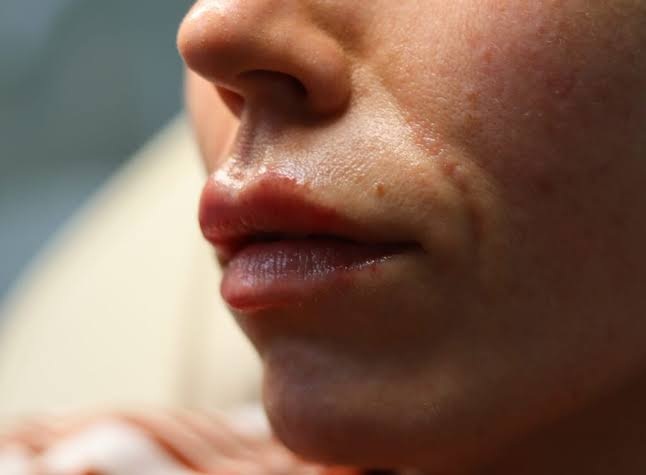
Lip Filler Complications: What Can Happen Immediately — or Years Later?
Hyaluronic acid lip filler is reversible and generally well tolerated, but the published case literature shows adverse reactions that can surface minutes after injection or more than a decade afterwards.
Lip Filler Is Popular — But It Is Still a Medical Procedure
Lip augmentation with dermal filler has become one of the most recognizable procedures in modern aesthetic medicine. Hyaluronic acid (HA) fillers are especially popular because they can enhance lip volume, improve contour and proportion, correct selected asymmetries, and — unlike many permanent fillers — can be dissolved with hyaluronidase when clinically appropriate.
That reversibility, combined with relatively short downtime and predictable aesthetic effects, has contributed to the perception that lip filler is a simple beauty treatment. But the lips are highly vascular, mobile, immunologically active tissues. Introducing any filler material into them can produce immediate injection-related reactions, inflammatory complications, infection, hypersensitivity, nodules, vascular compromise, or delayed immune-mediated responses.
What Were the Most Common Reported Lip Filler Reactions?
| Adverse reaction | Cases | Proportion |
|---|---|---|
| Granulomatous foreign body reaction | 23/30 | 76.6% |
| Angioedema | 2/30 | 6.7% |
| Lipogranuloma | 2/30 | 6.7% |
| Melanosis | 1/30 | 3.3% |
| Abscess | 1/30 | 3.3% |
| Lymphangioma | 1/30 | 3.3% |
The dominant complication in the published cases was granulomatous foreign body reaction. In one granulomatous case, Pseudomonas superinfection was also reported.
This pattern is clinically important because granulomatous reactions may be delayed, nonspecific, and difficult to recognize. A patient may present with swelling, pain, induration, or nodules long after the original injection has been forgotten. Angioedema was less common in the review but is particularly important because acute swelling can threaten the upper airway.
Early vs Delayed Lip Filler Reactions
Early Reactions
Early adverse effects can develop within minutes, hours, or days. Examples discussed in the review and cited literature include edema, pain, erythema, itching, bruising, hypersensitivity reactions, infection, surface irregularities, nodules, and vascular occlusion. In the systematic review, the clearest early reaction was angioedema, and the two reported cases developed within minutes of — or essentially at the time of — HA injection.
Delayed Reactions
Delayed complications can occur weeks, months, or years after filler injection. The most important delayed reaction in the review was granulomatous foreign body reaction.
How Long After Lip Filler Can a Granuloma Appear?
| Filler group | Mean onset | Median | Reported range |
|---|---|---|---|
| All granulomatous reactions with data | 57.9 ± 54 months | 24 months | — |
| Hyaluronic acid (HA) | 41.4 ± 50.8 months | 24 months | 1–144 months |
| Other fillers (PLLA, silicone, collagen, PMMA) | 72.8 ± 52.5 months | 72 months | 12–168 months |
This is one of the strongest practical messages from the review: an apparently uncomplicated treatment and a satisfactory early result do not completely exclude the possibility of a delayed inflammatory reaction.
What Is a Foreign Body Granulomatous Reaction?
A granulomatous foreign body reaction is a chronic inflammatory response that develops when the immune system is unable to fully degrade or clear injected material.
Clinically, the presentation can be nonspecific. Patients may develop persistent or intermittent swelling, pain, firmness, or nodules. Because onset may be delayed for years, the relationship with prior filler can be missed unless the clinician specifically asks about remote cosmetic procedures.
The review notes that even highly purified HA products may contain trace contaminants, and that delayed immune-mediated reactions can occur despite the generally favorable biocompatibility of HA. It also discusses persistent intermittent delayed swelling (PIDS), a concept used for late recurrent edema around residual HA, sometimes triggered by systemic infection or dental procedures.
The review cites prior literature estimating granulomatous foreign body reactions after HA filler at approximately 0.02% to 0.4%. This estimate comes from previously published literature — not from the 30-case systematic-review sample itself.
Common Temporary Effects Are Different From True Delayed Reactions
The article also cites a prior meta-analysis of HA lip augmentation showing that transient local reactions are far more common than granulomas or angioedema.
| Effect | Patients affected | Clinical character |
|---|---|---|
| Tenderness | 88.8% | Expected short-term treatment effect |
| Injection-site swelling | 74.3% | Expected short-term treatment effect |
| Bruising | 39.5% | Expected short-term treatment effect |
| Granulomatous reaction, herpes labialis, angioedema | Far less frequent | True adverse drug reactions |
Swelling and bruising in the first days after injection are common expected treatment effects. A persistent, progressive, recurrent, painful, infected, ischemic, or late-onset reaction deserves medical evaluation rather than being dismissed as routine post-filler swelling.
Angioedema: Rare but Potentially Dangerous
- Angioedema is acute swelling caused by increased vascular permeability, and may involve skin or mucosal tissues.
- In the reviewed lip-filler cases, angioedema developed within minutes of HA injection.
- The major concern is airway involvement. Swelling of the upper aerodigestive tract can become life-threatening.
- The source article describes systemic corticosteroid therapy as a typical management approach in the reported cases, but any suspected airway compromise requires urgent emergency assessment.
Infection, Abscess and Superinfection After Filler
Infection can occur after filler injection, although it was uncommon among the published cases included in this review. One silicone case developed an abscess approximately 12 months after treatment, and one granulomatous reaction was complicated by Pseudomonas superinfection. The broader literature discussed by the authors also recognizes herpes simplex reactivation, cellulitis or abscess, and atypical infections among possible filler complications.
Other Unusual Reactions Reported
- Lipogranuloma: reported in two patients after vitamin E injection, with onset around one month.
- Melanosis: one reported case involving the lower lip.
- Lymphangioma: one reported case after HA lip augmentation, with onset around 12 months.
- Filler migration and oral or buccal mucosal manifestations: reported in some delayed granulomatous cases, emphasizing that complications may not remain confined to the exact visible injection site.
Why Long-Term Follow-Up Matters After Lip Filler
The authors emphasize that adverse reactions may develop long after an apparently successful aesthetic procedure. They specifically highlight the importance of follow-up extending for at least two years, because the median onset of granulomatous reactions after HA lip filler in the included reports was 24 months.
Long-term follow-up is particularly important when a patient develops delayed swelling or nodules, because the link to filler may otherwise be overlooked. It also creates an opportunity to identify delayed reactions early, document them properly, and coordinate specialist referral, imaging, biopsy, or treatment when needed.
What Should Be Checked Before Lip Filler?
The review argues that cosmetic procedures deserve the same careful patient assessment as other medical or elective interventions. A responsible pre-treatment consultation should include:
- Full medical and surgical history.
- Current medications and supplements.
- Known allergies and previous hypersensitivity reactions.
- History of herpes labialis or recurrent oral infections.
- Previous dermal fillers, including product type, anatomical area, timing, and any prior complications.
- Previous cosmetic procedures or energy-based treatments.
- Current dental or oral problems, when clinically relevant.
- Clear discussion of expected benefits, limitations, common side effects, rare complications, alternatives, and the importance of follow-up.
Informed Consent Should Include Delayed Complications
Consent for lip filler should not focus only on swelling and bruising. Patients should understand that uncommon adverse reactions can emerge months or years later. The review emphasizes that informed consent should explain the potential benefits and risks of treatment and should improve patient awareness of delayed adverse drug reactions.
Patients should also be advised to tell future clinicians and dentists about previous filler if unexplained swelling, nodules, pain, or mucosal changes develop.
A good result at two weeks does not close the medical record forever. Patients should know what late warning signs look like and where to seek help if they occur.
When Should a Patient Seek Medical Review?
Medical assessment is appropriate when a patient develops any concerning or unexpected reaction after filler, particularly:
- Rapidly increasing swelling, especially involving the mouth, tongue, throat, breathing, or swallowing.
- Severe or disproportionate pain.
- Persistent blanching, mottling, dusky discoloration, or other signs concerning for vascular compromise.
- Fever, pus, increasing redness, or signs of infection.
- Persistent or recurrent swelling after the expected recovery period.
- Firm nodules or lumps appearing weeks, months, or years later.
- Chronic lip pain, induration, or unexplained mucosal changes.
- Reactions triggered after systemic infection or dental treatment in a previously filled area.
A Major Finding: Adverse Reactions Were Not Reported to Regulators
One of the most important findings was not a specific complication — it was a reporting failure. None of the 19 included studies specified that the adverse reaction had been reported to a regulatory authority.
The authors argue that underreporting weakens pharmacovigilance and makes it harder to understand the true safety profile of aesthetic medical devices. Reporting suspected adverse reactions supports patient safety, signal detection, and better regulatory decision-making.
If complications are treated but never reported, the medical community may underestimate how often they occur, which products are involved, and which patterns deserve investigation.
What This Means for Modern Aesthetic Practice
Lip filler remains a commonly performed and generally well-tolerated aesthetic procedure when appropriate products, technique, anatomy, patient selection, consent, and complication preparedness are in place. However, describing filler as "completely safe" is not evidence-based. No injectable biomaterial is completely free from adverse reactions.
The most useful clinical lesson is not to create unnecessary fear, but to recognize the full timeline of risk: immediate, early, delayed, and very delayed. Patients benefit when injectors prioritize conservative treatment planning, anatomical knowledge, sterile technique, appropriate product selection, emergency preparedness, careful documentation, and long-term accessibility for follow-up.
Frequently Asked Questions About Lip Filler Complications
Is hyaluronic acid lip filler safe?
HA is widely used and has the advantage of being biodegradable and reversible with hyaluronidase. However, the systematic review shows that HA is not free of adverse reactions, including immediate hypersensitivity and delayed granulomatous reactions.
Can lip filler complications happen years later?
Yes. In the reviewed granulomatous cases, the median onset was 24 months overall. Some HA-associated cases were reported as late as 144 months, while other filler types were reported up to 168 months after injection.
What was the most common adverse reaction in the systematic review?
Granulomatous foreign body reaction was the most common published reaction, accounting for 23 of 30 adverse-event patients analysed. This does not mean 76.6% of all lip-filler patients develop granulomas; it describes the composition of the adverse-event case sample.
How common are granulomas after HA filler?
The review cites prior literature estimating foreign-body granuloma after HA filler at approximately 0.02% to 0.4%. The exact risk depends on product, technique, patient factors, definitions, follow-up, and reporting quality.
What are the common short-term effects after lip filler?
Temporary tenderness, swelling, and bruising are common. The article cites a prior meta-analysis reporting tenderness in 88.8%, swelling in 74.3%, and bruising in 39.5% after HA lip augmentation.
What is the most dangerous immediate reaction discussed?
Angioedema is particularly important because severe swelling can compromise the upper airway. Any breathing or swallowing difficulty after injection requires urgent emergency evaluation.
Can dental treatment trigger a delayed filler reaction?
The review discusses literature describing delayed intermittent swelling around residual HA that may be triggered by systemic infection or dental procedures in some patients.
Should patients have long-term follow-up after lip filler?
The authors argue for both short- and long-term follow-up, and highlight the importance of monitoring for at least two years because some delayed reactions occur long after the initial procedure.
Can lip filler complications be dissolved?
Some HA-related problems may respond to hyaluronidase when appropriate, but not every complication is simply dissolvable. Infection, inflammatory reactions, granulomas, vascular events, and complications from non-HA materials require diagnosis-specific management.
Why is reporting complications important?
Adverse-event reporting helps regulators and clinicians recognize safety signals. The review found that none of the included studies specified reporting the adverse reaction to regulatory authorities.
Does this systematic review prove lip filler is unsafe?
No. The review was specifically designed to collect adverse-reaction cases. It shows what types of complications can occur and how delayed some may be, but it does not calculate the overall complication rate among all treated patients.
What is the main takeaway for patients?
Choose a qualified medical injector, understand the risks and alternatives, keep a record of the product used, attend follow-up when advised, and seek assessment for any persistent, severe, recurrent, or delayed reaction.
This article summarises published case-report and systematic-review data for general education. It is not a substitute for individual medical assessment. Anyone with a suspected complication after dermal filler should contact a qualified medical practitioner, and anyone with swelling affecting breathing or swallowing should seek emergency care immediately.