
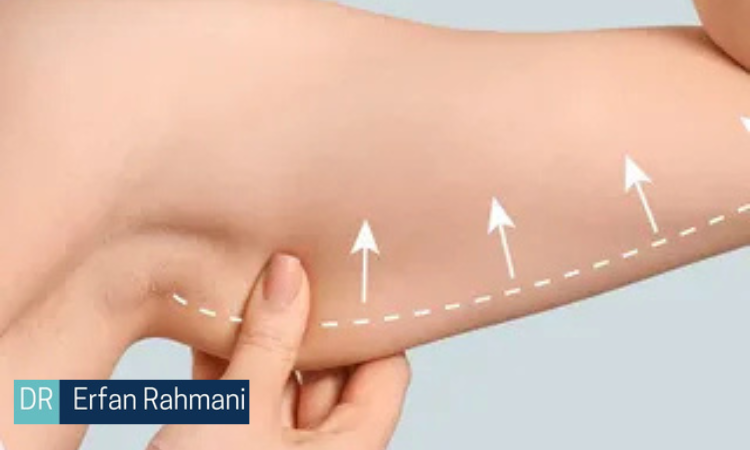
When people think about Endolift, they often associate the treatment with facial tightening, jawline contouring, or double-chin reduction. However, Endolift technology can also be used for selected areas of the body where localized fat and skin laxity occur.
One particularly interesting application is the treatment of the upper arms and lower abdomen.
A clinical study published in the Journal of Cosmetic Dermatology investigated Endolift specifically for reducing localized fat and circumference in these areas.
So, what did the researchers find—and who may benefit from this type of treatment?
What Is Endolift Body Contouring?
Endolift is a minimally invasive laser-based treatment in which a very thin optical fiber is introduced beneath the skin. Unlike traditional surgical body-contouring procedures, the treatment is designed to work within the subcutaneous tissue without large incisions or general anesthesia. For body treatments, the objective may include two important components:- Localized fat reduction Laser energy interacts with the subcutaneous tissue and can contribute to remodeling of localized fatty tissue.
- Skin tightening and remodeling The thermal effect of the laser can also affect dermal structures and collagen, making Endolift particularly interesting when localized fat is accompanied by some degree of skin laxity.
What Does the Research Say About Endolift for the Body?
A 2023 study published in the Journal of Cosmetic Dermatology evaluated Endolift for arm and lower-abdominal fat reduction. The study included 10 male and female patients between 25 and 55 years old. Researchers measured the circumference of the treated areas before treatment and again at 2 and 3 months. The results were encouraging.Endolift Results for the Arms
At the two-month assessment: 70% of patients achieved a reduction of at least 1.5 cm in arm circumference. By three months: 80% of treated patients showed approximately a 2 cm reduction in arm circumference. Importantly, the study demonstrated that the reduction continued between the second and third months. This is relevant because Endolift results should not necessarily be judged immediately after treatment. Tissue remodeling can continue progressively following the procedure.Endolift Results for the Lower Abdomen
The results for the lower abdominal area were also significant. At two months: 80% of patients achieved at least a 2 cm reduction in lower-abdominal circumference. At three months: 80% of patients showed approximately a 3 cm reduction in lower-abdominal circumference. The study found statistically significant reductions between baseline and two months, as well as further improvement between months two and three. This suggests that the final contouring effect may develop gradually rather than appearing immediately after treatment.Why Can Results Continue to Improve for Several Months?
One of the important concepts with laser-based tissue remodeling is that treatment is not necessarily finished when the procedure itself ends. The biological response following controlled laser energy can continue over the following weeks and months. Histological findings discussed in the scientific literature include changes such as:- Adipocyte disruption
- Coagulation of small vessels
- Collagen changes
- Remodeling of the reticular dermis
What About Skin Tightening?
This is an important distinction between simply reducing weight and performing body contouring. A patient may have relatively little localized fat but still be concerned about loose or lax skin. The scientific literature discussed in the study indicates that laser-based treatment can influence collagen and dermal remodeling in addition to its effect on adipose tissue. This makes Endolift potentially useful in carefully selected patients where the objective is not simply reducing volume, but improving the overall contour and firmness of the treated area.Patient Satisfaction in the Study
The researchers didn't evaluate circumference alone. They also assessed how patients felt about their results. For both the arms and lower abdomen:- 70% were classified as well satisfied after 2 months
- 80% were well satisfied after 3 months
- No participants were classified as dissatisfied
Is Endolift the Same as Liposuction?
No. This is one of the most important points to understand before considering Endolift body treatment. Liposuction is a surgical fat-removal procedure. Endolift is a less invasive laser-based contouring procedure and should not automatically be considered a replacement for liposuction. For patients with a large amount of excess fat, significant skin excess, or those seeking major changes in body size, surgical treatment may provide a more appropriate result. Endolift may be more interesting for selected patients looking for localized contour improvement with less invasive treatment. The correct choice depends on anatomy, fat thickness, skin quality, expectations, and the degree of correction required.Who May Be a Good Candidate for Endolift Body Treatment?
Potential candidates may include patients with:- Localized stubborn fat
- Mild-to-moderate skin laxity
- Upper-arm fullness
- Lower-abdominal localized fat
- Areas requiring additional contour refinement
- Preference for a less invasive procedure
- Realistic expectations regarding the degree of improvement
Can Endolift Be Used After Liposuction?
Interestingly, the authors of the study also discussed the potential use of Endolift in areas that have previously undergone liposuction and require additional sculpting. This may be relevant in selected patients who have already reduced a significant amount of fat but are left with minor contour irregularities or residual laxity. However, previous liposuction changes the anatomy of the subcutaneous tissue, so these cases require careful assessment before treatment.What Is the Downtime?
One of the reasons minimally invasive body-contouring procedures have become increasingly popular is the desire to avoid the recovery associated with surgery. In the published study, Endolift was performed without general anesthesia. The authors highlighted minimal recovery time and good patient tolerance as potential advantages of the procedure. Nevertheless, patients should understand that minimally invasive does not mean completely free of temporary effects. Depending on the treatment area and intensity, temporary swelling, tenderness, bruising, or inflammation can occur.How Many Endolift Sessions Are Needed?
This depends heavily on the individual patient. The study describes treatment ranging between one and three sessions, depending on factors such as:- Amount of adipose tissue
- Cellulite
- Patient age
- Treatment area
When Should You Expect the Final Result?
One of the most interesting findings from this research was the continued improvement between two and three months. For both the arms and abdomen, circumference continued to decrease during this period. Therefore, Endolift should be viewed as a treatment with progressive results. Initial changes may become visible earlier, but tissue remodeling can continue over the following months.Is Endolift Body Treatment Safe?
In this particular study, no adverse effects were reported by the treated patients. However, this finding needs to be interpreted appropriately. The study included only 10 participants, which the researchers themselves identified as an important limitation. A small clinical study cannot establish that a procedure has zero risk. As with any energy-based or minimally invasive procedure, appropriate patient selection, anatomical knowledge, treatment technique, and post-treatment monitoring remain essential.Endolift for Body Contouring in Abu Dhabi
Endolift can provide another option for patients looking for non-surgical or minimally invasive body contouring in Abu Dhabi, particularly when localized fat is combined with some degree of skin laxity. Areas that may potentially be considered for body contouring include the:- Upper arms
- Lower abdomen
- Selected localized fat deposits
Personalized Endolift Assessment with Dr. Erfan Rahmani
During consultation, factors such as fat thickness, skin laxity, previous weight loss, previous liposuction, body composition and treatment expectations can be assessed before deciding on an appropriate treatment plan. The goal should not simply be to perform a procedure, but to select the treatment most likely to provide a natural and proportionate improvement.
Rate this post