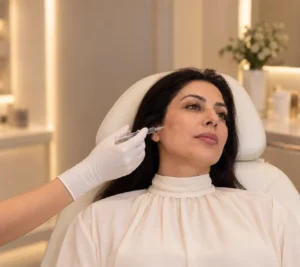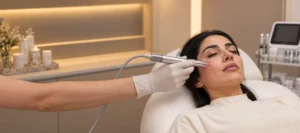

Looking for a non-surgical way to firm the cheeks, soften folds and sharpen the jawline? Focused radiofrequency face tightening in Abu Dhabi uses controlled heat to tighten and remodel facial tissue without incisions. This guide explains how the treatment works, who it suits, what results are realistic, and the questions to ask before you book.
What Is Focused Radiofrequency Facial Rejuvenation?
Focused radiofrequency is an energy-based treatment that creates controlled heat within selected facial tissue layers. Unlike light-based technologies that depend on a chromophore such as melanin or hemoglobin, RF relies on the electrical properties of tissue to generate heat.
It is therefore used when the main objective is collagen contraction, dermal remodeling and soft-tissue tightening rather than pigment removal.
How Radiofrequency Tightens Tissue
Collagen has a three-dimensional helical structure. Controlled thermal exposure changes that structure and can create an immediate contraction response. Afterward, the tissue enters a remodeling phase that can stimulate new collagen organization.
The visible result is usually more subtle than surgical lifting. The goal is progressive tightening, a smoother transition between facial zones and better support of the skin envelope.
Immediate Contraction vs Progressive Remodeling
Some patients notice an early sense of firmness because collagen can contract during controlled heating. Longer-term improvement depends on the biologic repair response, so the final result should not be judged in the first hours or days.
Why RF Does Not Need a Pigment Target
Laser and intense-pulsed-light systems often work by targeting chromophores. Radiofrequency does not. This makes RF useful when the desired endpoint is tightening rather than selective destruction of pigment or vascular color.
What Makes a Focused RF Device Different?
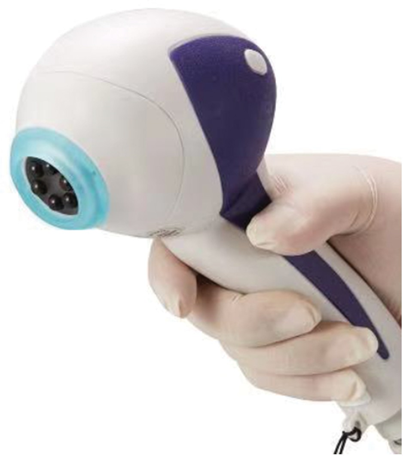
Focused RF systems concentrate energy within a defined treatment field rather than allowing uncontrolled heating across a large area. The treatment head, contact pattern, pressure, cooling and energy delivery all influence how heat is distributed.
Focused Energy
A focused system compresses and concentrates RF energy so treatment can be directed toward selected soft-tissue layers. This matters in facial rejuvenation, where a superficial treatment may suit one area while deeper heating is preferred in another.
Negative Pressure and Tissue Contact
Vacuum or negative-pressure assistance draws tissue into the treatment tip. This improves contact and can make the target layer more accessible to the energy field. It may also add a mechanical stimulus to the treated connective tissue.
Layer Selection
Focused RF can be configured to work at different treatment levels. Superficial settings suit surface-oriented tightening, while medium and deeper settings can reach thicker cheek or mandibular tissue.
| Treatment level | Approximate target concept | Potential goal | Planning caution |
|---|---|---|---|
| Superficial | More superficial dermal / subdermal tissue | Texture, fine wrinkles, early tightening | Thin skin requires conservative energy. |
| Medium | Deeper dermis / superficial soft tissue | Firmness and contour transition | Depth varies by facial zone and tissue thickness. |
| Deep | Deeper soft-tissue support layer | Lower-face tightening and selected contouring | Deeper is not automatically better, especially in thin faces. |
Cooling Protects the Skin Surface
Effective RF needs enough heat in the target layer to create a biologic response while avoiding excessive surface injury. Integrated cooling helps protect the epidermis during deeper thermal delivery.
Why the Middle and Lower Face Are Important RF Targets
The middle and lower face contain the cheek, nasolabial region, marionette area, jowl transition and mandibular contour. These areas can show a mix of wrinkles, soft-tissue laxity, loss of firmness and blurred facial boundaries. Focused RF is particularly relevant when these changes are mild to moderate and the patient wants tightening without surgery or structural filling.
Cheeks
Cheek laxity can make the midface look heavier and exaggerate the transition toward the nasolabial fold. RF can improve skin and soft-tissue firmness when the problem is laxity rather than true volume deficiency.
Nasolabial Folds
Nasolabial folds are not caused by one structure. They reflect facial anatomy, midface volume, tissue descent and skin quality. RF may soften the fold when laxity contributes, but deep structural folds may still need volume restoration or another approach.
Marionette Lines
Marionette lines are influenced by skin laxity, soft-tissue descent, chin support and dynamic muscle activity. Tightening the surrounding tissue can improve the contour, but it is not a universal replacement for filler or neuromodulation.
Jawline and Jowls
A less-defined mandibular border can result from jowling, subcutaneous fullness, skin laxity or skeletal anatomy. Focused RF is most useful when the dominant problem is soft-tissue laxity rather than a large structural deficit.
How the Middle and Lower Face Should Be Assessed
Good RF treatment begins with identifying what is actually changing. A wider-looking lower face may reflect tissue descent, fat distribution, skeletal shape or muscle bulk. A deeper nasolabial fold may come from midface support loss rather than the fold itself.
Assessment should include frontal and oblique views, facial width, fold depth, marionette transition, cheek contour, jawline definition and skin quality.

Why Standardized Photography Matters
Subtle tightening is hard to judge from casual phone photos. Lighting, expression, head angle and camera distance can make the face look narrower or smoother even when nothing has changed. Standardized frontal and oblique imaging makes small changes in contour, folds and skin quality easier to evaluate honestly.
What a Contour Map Can Show
Mapping the face by region separates changes in facial width, nasolabial folds, marionette lines and cheek contour instead of treating “lifting” as one vague endpoint.

Focused RF Is Not Only About Lifting
Thermal remodeling can also influence wrinkles and overall skin quality. Depending on the treatment design, patients may notice smoother fine lines, improved texture, smaller-looking pores and a more even appearance of redness.
Wrinkles
RF is most relevant to wrinkles associated with skin quality and tissue laxity. Dynamic expression lines driven mainly by muscle movement may need neuromodulator treatment instead.
Skin Texture
Dermal remodeling can improve visual smoothness. Texture should still be separated from pigment: skin can look smoother while brown spots remain unchanged.
Pores
Pores may look smaller when the surrounding dermal structure becomes firmer and smoother. RF should not be sold as a pore-erasing procedure, but pore appearance can be one of several skin-quality endpoints.
Redness and Telangiectatic Appearance
Some patients notice improvement in generalized redness, but focused RF is not a vascular laser. Persistent telangiectasia or a specific vascular disorder still needs a dedicated vascular assessment.
Brown Spots and UV Damage
Focused RF does not specifically target melanin. Brown spots, UV spots and many pigmentation concerns should be treated with a modality designed for pigment.
What a Natural Focused RF Result Should Look Like
A natural result does not require dramatic change in every feature. The usual goal is a slightly cleaner jawline, softer folds, firmer cheek tissue and improved skin quality while keeping your normal facial proportions.

Subtle Improvement Can Be the Correct Improvement
Non-surgical tightening should not be judged by whether you suddenly look surgically lifted. In the right candidate, a mild or moderate improvement that preserves identity is often more appropriate than aggressive overtreatment.
Who May Be a Good Candidate?
- Mild-to-moderate middle- or lower-face laxity
- Early jowling or reduced jawline definition
- Nasolabial or marionette lines with a laxity component
- Cheek skin that feels or looks less firm
- Fine wrinkles and textural aging
- Patients seeking a non-surgical approach with relatively limited recovery
- Patients who understand that device-based tightening produces a different magnitude of change from surgery
Who May Need a Different Treatment Strategy?
- Severe skin redundancy or advanced facial descent
- Major midface volume loss requiring structural restoration
- A primary pigmentation disorder such as melasma
- Prominent muscle-driven lower-face widening, where masseter treatment may be more relevant
- Deep structural folds that remain even when the surrounding tissue is manually lifted
- Patients expecting a dramatic, surgical-level lift from a non-invasive device
- Patients with a contraindication to RF treatment
Thin Faces vs Fuller Lower Faces
| Feature | Thin / volume-deficient face | Fuller / heavier lower face |
|---|---|---|
| Primary priority | Tighten without creating additional hollowing | Improve laxity and selected heaviness |
| Depth strategy | More conservative deep heating | Deeper treatment may have a larger role in thick tissue |
| Cheek treatment | Protect structural fullness | Assess whether fullness is fat, descent or both |
| Jawline | Focus on skin and support | May combine tightening with contour-focused treatment |
| Main mistake | Over-treating a face that already lacks volume | Using only superficial treatment when the problem is deeper |
Can RF Make the Face Look Too Thin?
The goal of focused RF is controlled remodeling, not indiscriminate volume reduction. In a naturally thin face, treatment should be planned conservatively so desirable cheek and lateral facial support is not unnecessarily reduced.
Focused RF vs Other Radiofrequency Treatments
| RF type | Energy delivery concept | Potential strength | Important limitation |
|---|---|---|---|
| Focused / unipolar RF | Concentrated non-invasive thermal delivery, sometimes with vacuum assistance | Broad middle/lower-face tightening and layer selection | Device-specific settings and tissue thickness matter |
| Monopolar RF | Current passes through tissue toward a return path | Volumetric heating | Depth and comfort depend strongly on platform and protocol |
| Bipolar / multipolar RF | Current passes between closely positioned electrodes | Controlled local heating | Penetration is generally more limited by electrode geometry |
| Microneedle RF | Needles deliver RF directly into the skin | Direct dermal treatment and textural remodeling | Needles, microbleeding and recovery differentiate it from non-invasive RF |
Focused RF vs Other Facial Treatments
Focused RF vs RF Microneedling
The main difference is how energy reaches the tissue. Focused RF heats tissue from the surface without needle penetration, while RF microneedling places needles into the skin before delivering energy. The better choice depends on whether your main goal is non-invasive tightening, dermal textural remodeling, acne-scar treatment or a combination.
Focused RF vs HIFU
RF and focused ultrasound both aim to stimulate tightening, but they use different energy and interact with tissue differently. Neither should automatically be described as universally stronger. Selection should consider facial thickness, pain tolerance, target layer, desired downtime and whether you need skin-quality improvement, contour tightening or deeper focal treatment.
Focused RF vs Filler
RF tightens and remodels tissue; filler restores or reshapes volume. A patient with loose tissue and good facial volume may benefit from tightening, while a patient with structural deflation may need volume restoration.
Focused RF vs Botox
Botulinum toxin targets selected muscle activity and is most useful for dynamic, expression-related concerns. RF targets tissue quality and laxity. They are complementary, not interchangeable.
Focused RF vs Facelift
A facelift surgically repositions deeper facial tissues and removes or redrapes excess skin. Focused RF can improve mild-to-moderate laxity without surgery but cannot reproduce the magnitude of repositioning possible with an operation.
Safety and Expected Treatment Sensations
During treatment, the intended sensation is controlled warmth rather than severe pain. The skin can become mildly red or swollen as heat accumulates in the target tissue. A well-planned treatment balances enough thermal exposure to trigger remodeling with skin-surface protection and comfort.
Expected Temporary Reactions
- Warmth during and shortly after treatment
- Temporary erythema or flushing
- Mild edema or puffiness
- Temporary tenderness or sensitivity
When to Contact the Clinic
- Blistering or skin breakdown
- Persistent or worsening pain
- Unexpected prolonged swelling
- Darkening or lightening of the skin that persists
- Scarring or an unusual textural change
- Any symptom that feels disproportionate to the expected short recovery
Who Should Be Assessed Carefully Before RF Treatment?
- Active dermatologic disease in the treatment area
- Implanted electronic devices
- Pregnancy or breastfeeding
- A significant history of hypertrophic scarring or keloids
- A recent facial rejuvenation procedure
- Medical conditions that could alter healing or make energy-based treatment unsafe
This is not a complete list of contraindications. Device-specific guidance and individual medical assessment remain necessary.
Downtime and Aftercare
Focused non-invasive RF is generally planned as a low-downtime procedure. Temporary warmth and redness are more typical than open wounds or crusting.
- Use a gentle moisturizer while the skin feels warm or sensitive.
- Use broad-spectrum sunscreen consistently, which matters in the UAE climate.
- Avoid unnecessary sun exposure during early recovery.
- Delay strong exfoliating or irritating products until sensitivity has settled.
- Follow the clinic’s instructions on exercise, heat exposure and timing of other facial treatments.
How Many Sessions Are Needed?
There is no universal number. Some patients with early laxity may be satisfied after a limited course, while others may benefit from repeated treatments or a different modality. The plan should be based on the degree of laxity, tissue thickness, treatment response and whether your goal is realistic for non-surgical RF.
When Should Results Be Judged?
Immediate post-treatment appearance can include transient redness or swelling and is not the final result. Collagen remodeling develops gradually, so meaningful evaluation requires standardized follow-up rather than same-day comparison.
Why More Energy Is Not Automatically Better
The purpose is controlled thermal remodeling, not maximum heat. Excessive energy can increase discomfort and risk without guaranteeing a more natural or durable result.
Focused RF in Abu Dhabi: What a Good Consultation Should Clarify
Before starting focused RF face tightening in Abu Dhabi, make sure your consultation answers these questions:
- Is my main concern laxity, volume loss, fat, muscle bulk, wrinkles or pigmentation?
- Would tightening alone improve my nasolabial fold or marionette line, or is structural support also missing?
- Is my jawline blurred by jowling, submental fullness or skeletal shape?
- Which facial zones will be treated, and at what tissue depth?
- How will my existing cheek volume be protected if my face is naturally thin?
- What temperature and comfort endpoints are used during treatment?
- How does the device protect the skin surface while heating deeper tissue?
- Would RF microneedling, HIFU, filler, Botox or surgery address any of my concerns more directly?
- How many sessions should be planned before reassessment?
- What degree of improvement is realistic without surgery?
- How will standardized photos be used to judge subtle contour change?
- What symptoms after treatment should prompt an urgent review?
Frequently Asked Questions About Focused RF Face Tightening
What is focused radiofrequency facial tightening?
It is a non-surgical treatment that concentrates RF energy into selected facial tissue layers to create controlled heating, collagen contraction and progressive remodeling.
How does RF tighten the face?
Heat changes collagen structure and triggers a repair response that can improve firmness and soft-tissue support over time.
What areas can focused RF treat?
It is particularly relevant to the middle and lower face, including the cheeks, nasolabial regions, marionette areas, jowls and mandibular contour.
Can focused RF tighten the jawline?
Yes, when reduced definition is caused mainly by mild-to-moderate soft-tissue laxity.
Can RF treat jowls?
It can improve early jowling related to laxity, but advanced jowls may need structural volume restoration, deeper contouring or surgery.
Can RF improve nasolabial folds?
It may soften folds when laxity contributes, but deep folds caused by volume loss or skeletal structure may require another treatment.
Can RF improve marionette lines?
It can improve surrounding tissue quality and laxity, but marionette lines can also involve chin support and muscle activity.
Does RF improve wrinkles?
It can improve wrinkles related to skin quality and laxity. Dynamic muscle-driven lines may require neuromodulator treatment.
Does RF improve skin texture?
Dermal remodeling may make the skin look smoother and firmer.
Can RF reduce pore appearance?
Pores can look smaller when the surrounding skin becomes firmer, although RF does not permanently erase pores.
Does RF treat redness?
Some generalized redness may improve, but RF is not a dedicated vascular laser.
Does RF treat pigmentation?
Not specifically. Brown spots, melasma and UV-related pigment usually need pigment-targeted treatment.
Is RF suitable for darker skin tones?
Because RF does not depend on a melanin target, it can be useful across a range of skin tones, but individual device settings and skin assessment still matter.
What is the difference between focused RF and monopolar RF?
Both use radiofrequency heating, but focused RF refers to a design that concentrates energy into selected treatment layers or zones. Device architecture varies.
What is the difference between RF and RF microneedling?
Non-invasive RF delivers energy through the skin surface; RF microneedling uses needles to deliver energy within the skin.
What is the difference between RF and HIFU?
RF uses electromagnetic energy while HIFU uses focused ultrasound. They behave differently in tissue and use different depth-selection strategies.
Can RF replace filler?
No. RF tightens tissue while filler restores or reshapes volume.
Can RF replace Botox?
No. Botox modifies muscle activity; RF targets tissue laxity and dermal remodeling.
Can RF replace a facelift?
It can improve mild-to-moderate laxity but cannot reproduce major surgical tissue repositioning.
Will RF make my face thinner?
The goal is tightening and contour improvement. In a thin face, energy and depth should be planned conservatively to preserve desirable volume.
Does focused RF hurt?
The intended sensation is controlled warmth. Comfort varies with facial zone, energy level, depth and individual sensitivity.
Is anesthesia always needed?
Not necessarily for non-invasive RF. The comfort strategy depends on the device and treatment protocol.
What is the downtime?
Temporary redness, warmth or mild swelling can occur, but focused non-invasive RF is generally a low-downtime treatment.
How many sessions do I need?
There is no universal number. The plan depends on laxity, tissue thickness, response and the treatment goal.
When do RF results appear?
Some firmness can be noticed earlier, while collagen remodeling develops gradually over the following period.
Can I combine RF with filler?
Yes, if both laxity and structural volume loss are present, but timing and sequence should be planned individually.
Can RF be combined with Botox?
Yes, when both muscle activity and tissue laxity contribute to the concern.
Can RF be combined with laser?
Yes, but the treatments target different problems and should be sequenced according to skin condition and recovery.
Who is the best candidate for focused RF?
A patient with mild-to-moderate facial laxity who wants non-surgical tightening and has realistic expectations.
What is the biggest mistake with RF facial tightening?
Using one generic treatment map for every patient instead of adapting depth, energy and treatment zones to facial thickness, volume and the actual cause of aging.
Final Thoughts
Focused radiofrequency face tightening in Abu Dhabi can be an effective, low-downtime option for mild-to-moderate laxity in the cheeks, folds and jawline, provided the treatment is matched to your anatomy and your expectations are realistic. A thorough assessment, conservative energy planning and standardized photography are what separate a natural result from an over-treated one. Book a consultation to find out whether focused RF, or a combination with other treatments, fits your goals.
Medical disclaimer: This article is for general education and is not a substitute for individual medical advice. Results vary by patient, device and protocol.