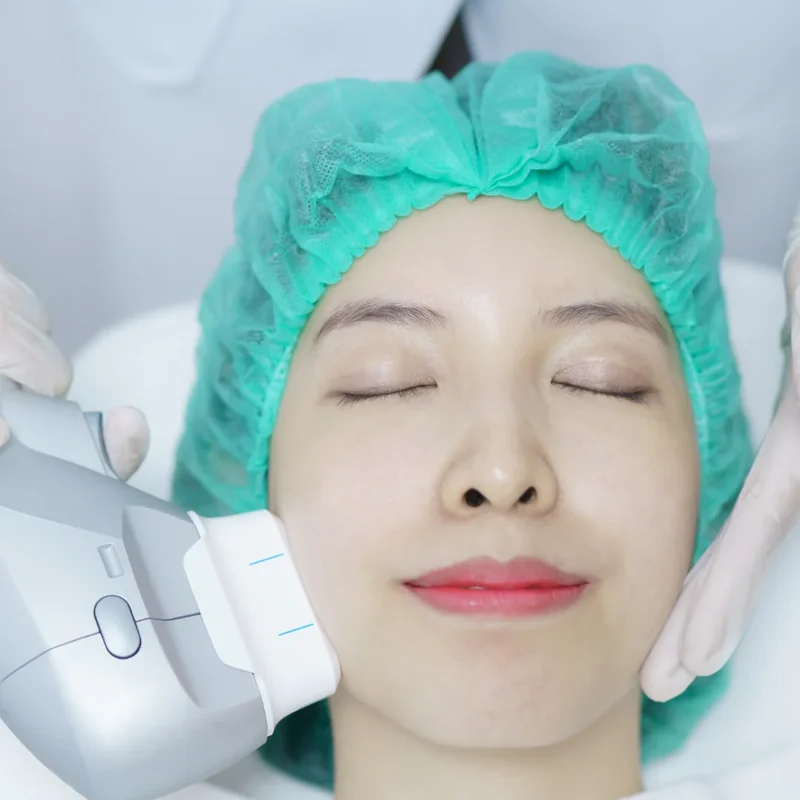
HIFU skin tightening in Abu Dhabi is one of the most searched non-surgical options for early sagging, a softening jawline and mild body laxity. This guide explains how high-intensity focused ultrasound works, what the research actually shows, the risks, who is a good candidate, and how to evaluate a clinic, without exaggerated claims.
1. What Is HIFU and Why Is It Used in Aesthetic Medicine?
HIFU stands for high-intensity focused ultrasound. Instead of heating a broad skin surface, a focused ultrasound system concentrates acoustic energy within a defined tissue volume. At sufficiently high local intensity, this energy can produce small zones of controlled thermal change while tissues outside the focal region receive a different level of exposure. The biological effect depends on frequency, energy, focal depth, treatment density, pulse structure, coupling, tissue characteristics and device design.
The term HIFU spans very different medical applications. Therapeutic high-intensity ultrasound used to ablate pathological tissue is not identical to microfocused ultrasound used for non-invasive cosmetic tightening, and not all aesthetic handpieces are interchangeable. A responsible consultation starts by naming the device, verifying its indication and deciding what tissue change is actually intended: tightening, localized contouring or another outcome.
This guide builds on the Polish article Gorące ultradźwięki — Technologia HIFU (“Hot Ultrasound — HIFU Technology”), a historical overview of thermal and mechanical effects, treatment depths, indications, contraindications and device choice, and updates its claims against contemporary literature.
2. How Does Focused Ultrasound Tighten Skin?
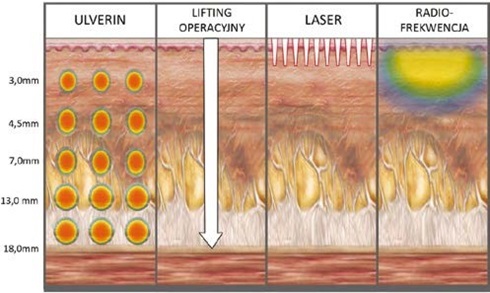
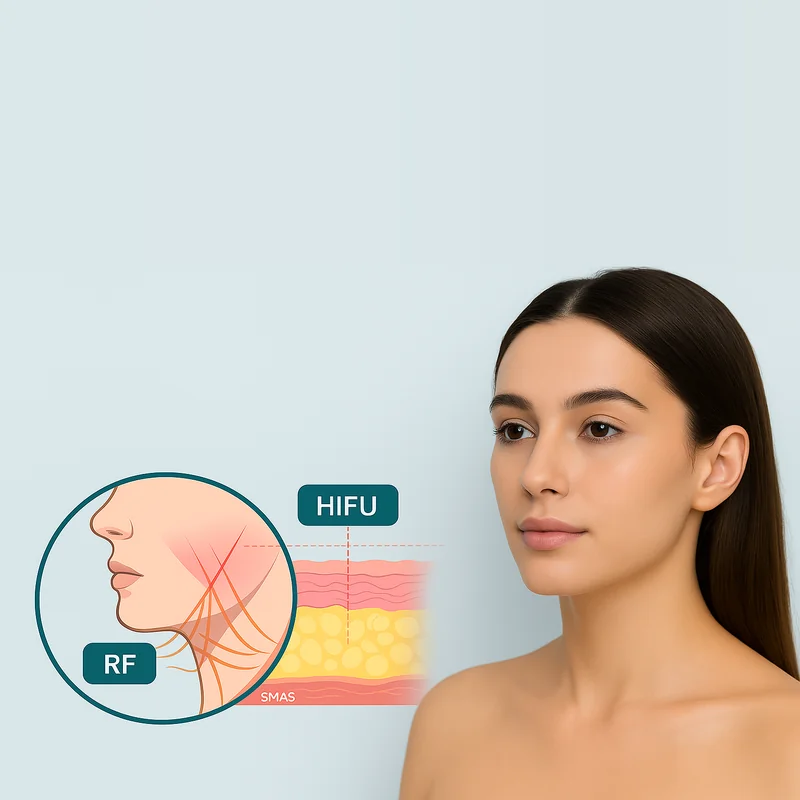
The skin is not a simple covering. The epidermis protects the surface; the dermis contains collagen, elastin, extracellular matrix and supporting cells; the subcutaneous compartment includes adipose tissue separated by connective septa; deeper structures include fascia and, in relevant regions, the superficial musculoaponeurotic system (SMAS). Aging and weight changes can affect several levels at once, and no single energy-based treatment reverses every component.
Focused ultrasound delivers energy to selected internal points, which may create thermal coagulation points and subsequent repair signalling. Over weeks and months, remodeling may improve perceived firmness and modestly change contours. The process is gradual and variable. In aesthetic MFU/MFU-V studies, the more consistent benefits are in laxity, texture and patient-rated improvement rather than dramatic repositioning of heavy tissue.
The original source separately describes thermal effects (absorption, heat and tissue coagulation) and mechanical effects (acoustic forces and pressure-related interaction). Clinical efficacy should not be attributed to one simplistic mechanism. An intended focal effect is not proof that superficial burns, unwanted fat loss or nerve injury are impossible.
Collagen contraction versus new collagen formation
An early tightening sensation can follow a procedure, but it should not be confused with a completed collagen response. Remodeling takes time; visible improvement is commonly judged around two to six months, consistent with American Academy of Dermatology patient guidance. Immediate before-and-after photos may also reflect temporary swelling, lighting, expression and camera angle.
Why skin thickness and the fat layer matter
A lean midface with limited volume has a different risk-benefit balance from a heavy lower face with visible skin redundancy. Treating a patient who already has hollow temples or cheeks may make unwanted volume reduction a particular concern. Conversely, a patient with substantial redundant skin after major weight loss may not get enough lift from a non-invasive procedure. Planning therefore assesses volume, laxity, dermal thickness and anatomical sensitivity independently.
3. What Is SMAS, and Can HIFU Really Lift It?
The superficial musculoaponeurotic system is part of the supportive architecture of the face and is relevant to surgical facial rejuvenation. Some aesthetic transducers are designed to focus at depths that can include fascial or fibromuscular tissue in particular sites. That design rationale helps explain their role in non-invasive lifting, but a numerical depth such as 4.5 mm is not a universal guarantee that the focal point lies within SMAS in every person or region.
Facial layers vary with age, body habitus and location, and the brow, cheek, jawline, neck and submental region each have different anatomy and risk structures. Imaging-capable platforms may let a trained clinician view tissue depth and coupling, but a preview does not remove operator responsibility. The practical question is not “Does this machine reach SMAS?” but whether the chosen focal configuration is appropriate for this patient, this area and this goal.
HIFU is not a deep-plane facelift. Surgery can release and reposition retaining structures, remove excess skin and reposition descended tissue. Focused ultrasound may tighten selected layers but cannot reproduce that mechanical repositioning. Patients expecting surgical-scale correction should be assessed for surgical alternatives.
4. What Do 1.5 mm, 3.0 mm and 4.5 mm Treatment Depths Mean?
Aesthetic ultrasound systems frequently advertise multiple focal depths, including approximately 1.5, 3.0 and 4.5 mm, with deeper cartridges on some body-focused platforms. These are nominal focal specifications, not ready-made universal prescriptions.
| Nominal focal depth | General anatomical intention in some devices | Important qualification |
|---|---|---|
| ~1.5 mm | Relatively superficial dermal remodeling | Thin regions may be especially vulnerable; follow the specific device labeling |
| ~3.0 mm | Deeper dermal or adjacent subdermal targets | Tissue thickness varies greatly among facial regions |
| ~4.5 mm | Deeper support-layer targeting in selected facial/neck areas | SMAS proximity is patient- and site-dependent, not assured |
| 6 mm and deeper | Certain device-specific body or subcutaneous applications | Cannot be assumed equivalent to facial MFU; dedicated validation is needed |
Frequency, pulse pattern, acoustic power and visualization are not interchangeable just because two cartridges share a nominal depth. A 4.5-mm head on one platform is not scientifically identical to a 4.5-mm head on another. The same warning applies to claims that longer lines, more shots or maximum energy will necessarily deliver better lifting.
5. How Effective Is HIFU for the Face and Neck?
The strongest accessible synthesis concerns microfocused ultrasound with visualization (MFU-V), not every generically labeled HIFU device. A systematic review and meta-analysis in Aesthetic Surgery Journal analyzed 42 studies. Among participants in pooled aesthetic-improvement measures, about 89% were rated by investigators as having some improvement and 84% reported improvement themselves. Satisfaction varied with how neutral responses were handled, and the authors cautioned about heterogeneity, bias and the need for stronger research. These figures are not the likelihood of a dramatic lift.
A separate systematic review of 16 studies concluded that microfocused ultrasound can modestly tighten mild-to-moderately lax facial skin, while evidence for long-term durability and diverse patient groups remains limited. Average brow changes were measured in millimeters, so realistic results may be meaningful yet subtle.
A broader 2025 review of 45 studies of HIFU for skin tightening and body contouring described improvements across selected facial and body outcomes but emphasized a lack of standardized protocols. Device types, endpoints, sites and follow-up varied, so a result from one product cannot be applied to all competing systems.
How to interpret improvement percentages
An “89% improvement rate” usually means evaluators saw any improvement on a grading scale, not that tissue tightened by 89%. Likewise, an average reduction in circumference does not establish how much abdominal fat an individual will lose. Ask which endpoint was used: investigator scale, blinded photo assessment, ultrasound measurement, skin elasticity, patient satisfaction or circumference.
Jawline definition and early jowling
Changes in mandibular fat compartments, jaw support, skin quality and lower-face soft tissue can blunt the jawline and create early jowls. Focused ultrasound may improve firmness and the look of a mildly softened jawline when tissue quality and laxity are suitable. It is less effective where the main issue is severe tissue descent, a large submental fat pad or marked skin redundancy. A thoughtful assessment separates the jawline, jowls and submental region; whether the answer is ultrasound, RF, fat reduction, fillers or surgery depends on anatomy, not marketing terminology.
Double chin: tightening is not fat removal
A double chin may result from superficial fat, deeper fat, lax skin, platysmal activity, a retrusive chin or a combination. Tightening-focused ultrasound should not be presented as a guaranteed fat-dissolving device. Some HIFU body-contouring technologies deliberately target fat at greater depths, but a system used to lift submental skin may have different indications and risks. In a thin patient, excessive fat reduction may worsen facial hollowing; in a patient with substantial laxity, removing fat without addressing the skin may make excess tissue more apparent.
Neck tightening and lower-face rejuvenation
The neck may show crepey skin, transverse lines, platysmal bands, submental fat and skin redundancy, each with a different mechanism. Ultrasound may modestly improve certain superficial neck laxity but does not reliably correct large platysmal bands or remove significant redundant skin. Nerves, vessels, glands and airway-related structures lie in this region, so zones, coupling, depth and exclusions must follow actual anatomy and manufacturer instructions. A pronounced “turkey neck” may be better served by discussing surgical options.
Brow, forehead and periocular treatments
Some systems have documented indications for eyebrow lifting. A small elevation can make the eyes look more open, but the amount varies and is not equivalent to a surgical brow lift or blepharoplasty. A heavy brow, upper-eyelid skin excess and true ptosis are different diagnoses. The periocular region carries specific safety concerns: thin tissue, orbital anatomy and critical ocular structures make device approval, training and region-specific exclusions essential. New visual symptoms after any aesthetic procedure warrant urgent assessment.
6. Body HIFU: Abdomen, Thighs, Arms and Knees
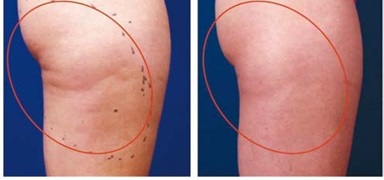
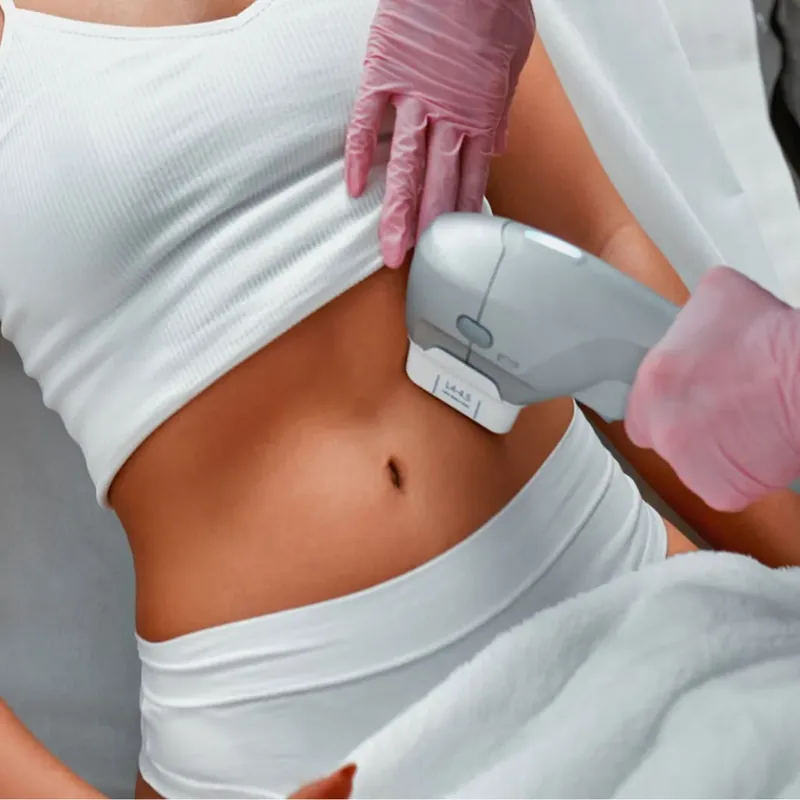
The original article lists the abdomen, thighs, arms, knees and other body sites as potential applications and features before-and-after images. These are historical source material, not controlled evidence: lighting, pose, time interval, weight change, other treatments and selection of successful cases are often unknown.
Body applications require separate evidence and device labeling. The systematic review of HIFU skin tightening and body contouring reported circumference changes in some studies, particularly for the abdomen and thighs, though heterogeneity limits how well averages predict an individual result.
Post-pregnancy laxity, skin looseness after weight change and localized fat deposits need distinct plans. Non-invasive ultrasound is not a substitute for abdominoplasty when there is substantial skin excess, abdominal muscle separation or a major pannus.
Can focused ultrasound treat cellulite?
Cellulite is not simply excess fat. It involves subcutaneous fibrous septa, fat lobules, dermal properties and local tissue structure. A technology that reduces fat or modestly tightens skin does not automatically release tethering septa or sustainably resolve dimples. Claims that a specific HIFU platform treats cellulite need direct, high-quality, device-specific evidence and standardized grading, not statements like “eliminates cellulite permanently.”
Stretch marks and skin after pregnancy or weight loss
Stretch marks are dermal scars linked to stretching and changes in collagen and elastin. Although the Polish source lists them as a possible indication, this does not establish that every HIFU device significantly improves striae, and other dermatologic procedures may have stronger rationale. After major weight loss, a non-invasive treatment may be reasonable for mild laxity but cannot remove folds or replace reconstructive body-contouring surgery.
7. Results Timeline, Pain and Recovery
When can you see results?
Some patients feel short-term tightness soon after treatment. More substantial change, when it occurs, generally emerges over about two to six months as tissue remodels. Durability varies with age, baseline laxity, sun exposure, weight change, lifestyle and platform. Studies often follow participants for six to twelve months, and robust long-term comparative data are limited, so claims of an automatic five-year result deserve skepticism. Clinical photos should use the same distance, angle, lighting, expression and follow-up interval.
Does HIFU hurt?
Non-invasive does not mean painless. In the 2025 MFU-V meta-analysis, pooled patient-reported pain averaged about 4.85 on a 0-10 scale with substantial variability. Patients describe deep warmth, intermittent stinging or tenderness. Many resume everyday activities fairly soon, but transient redness, swelling, bruising and tenderness are possible, so “zero downtime” is an oversimplification.
8. Safety, Complications and Candidacy
What informed consent must include
Common temporary effects include redness, swelling, tenderness and discomfort. Less frequent but important issues include burns, pigment changes, altered sensation, focal nerve symptoms, contour irregularity and unwanted soft-tissue or fat changes. Risk depends on technology, anatomy, technique and operator.
A 2025 systematic review of MFU-V adverse events identified 19 articles covering 506 patients. Serious events were uncommon in those publications, but device adverse-event database reports included lipoatrophy, neurologic symptoms and scarring. Passive reports cannot establish incidence or causation, but they are useful safety signals.
Seek prompt medical evaluation for disproportionate or worsening pain, blistering or skin discoloration, persistent numbness, facial weakness, unexpected asymmetry or any eye symptoms.
Can HIFU cause facial fat loss?
Unwanted facial fat loss is an important consent topic, particularly for slender faces or reduced age-related volume. Subcutaneous atrophy has appeared in the published safety literature, and lipoatrophy has been reported in device safety databases. A “more powerful” or deeper setting is not necessarily safer or better, and prior hollowing, asymmetry and plans for fillers or surgery should inform treatment selection.
Who is a good candidate?
Ideal candidates are adults with realistic expectations, mild-to-moderate laxity, a compatible anatomical target and willingness to accept subtle, gradual change. The evidence is stronger for selected face and neck indications than for many broad body promises. A clinician should assess pregnancy or lactation, active skin infection or open wounds, implants or devices near the field, altered sensation, significant systemic illness, previous procedures, abnormal scarring tendency and medication history. Some categorical exclusions in the original source (all previous cancers, all anti-inflammatory use, any recent botulinum toxin) are too broad for a modern universal checklist and should instead trigger device-specific risk assessment.
High BMI, severe laxity, pronounced excess skin and a wish for surgical-type lifting can predict dissatisfaction. In people with very low facial fat, the possibility of hollowing deserves explicit discussion.
What if you have significant loose skin?
Heavy jowls, substantial loose neck skin, a large abdominal skin fold or major post-weight-loss redundancy may need surgical evaluation. Repeated energy treatments chasing a surgical result add cost and risk without addressing the problem. An ethical clinician explains the likely ceiling of improvement and may decline treatment if the expected benefit is too small.
9. HIFU After Fillers, Botox or Other Injectables
The Polish article advised avoiding HIFU after recent hyaluronic acid fillers and botulinum toxin. That caution is historically valid, but there is no sound basis for one mandatory waiting period for every filler, site and device. Relevant factors include whether product lies within the acoustic field, filler type, depth, elapsed time, prior complications and the planned procedure. Published combination protocols offer some reassurance in selected settings but do not remove concerns about altered filler volume, unintended volume loss, inflammation or interactions. Individualized sequencing is more defensible than a blanket interval. Combining calcium hydroxylapatite, poly-L-lactic acid, polynucleotides, toxin or lasers does not guarantee synergy; the rationale, order, spacing and safety plan should be clear first.
10. HIFU vs Ultherapy, Ultraformer, Liftera, XERF and RF Microneedling
Devices can share marketing terms while operating very differently. Compare physical mechanism, tissue target, evidence, indication and procedural burden rather than brand labels.
| Treatment | Main principle | Potential role | Key limitation |
|---|---|---|---|
| Aesthetic HIFU / MFU | Focused ultrasound energy at selected depths | Selected facial/neck skin laxity; some device-specific body uses | Outcomes cannot be generalized across manufacturers |
| Ultherapy / MFU-V | Microfocused ultrasound with tissue visualization | Non-invasive lifting and improvement in specified labeled areas | Improvements usually modest; check exact model and indication |
| Ultraformer / Liftera | Device-specific ultrasound delivery | Laxity and/or contouring under the relevant device protocol | Different handpieces, evidence and authorization from Ultherapy |
| XERF monopolar RF | Radiofrequency-mediated tissue heating | Skin firmness and texture as labeling permits | Different thermal distribution and study population |
| RF microneedling | Needles plus RF energy | Texture, selected scars and remodeling | Needle-related downtime and possible unwanted fat effects |
| Endolift / subdermal laser | Invasive optical fiber energy delivery | Selected subdermal tightening or contouring | More invasive, distinct risks and evidence base |
| Surgical facelift / neck lift | Anatomical release, repositioning and excess-skin correction | Marked tissue descent or major redundancy | Surgical risks and recovery |
No technology is universally “best.” A patient wanting mild improvement with minimal interruption may value a non-invasive option, while someone seeking dramatic correction of heavy jowls and neck folds may be better matched with surgery.
Tightening or fat reduction?
The decision begins with phenotype: skin-only concern, fat-volume concern, bone-support issue or muscular issue. A heavier submental contour needs a different approach from thin, crepey submental skin, and the right depth for one problem may be undesirable for the other. Ultrasound imaging (where appropriate), standardized photographs and physical examination are fundamental, alongside skin color, comfort, asymmetry, scar history and previous injectables or surgeries.
11. Choosing a HIFU Clinic in Abu Dhabi
What a good consultation includes
A high-quality consultation establishes your primary goal, explains what is achievable without surgery, identifies the dominant anatomical mechanism and documents your medical history. It should verify the device’s identity and intended use, discuss realistic results and risks, and agree on follow-up.
For patients in Abu Dhabi, also ask: Is the technology actually available at this facility? Is the treating professional appropriately licensed and privileged for the service? Which device and handpiece will be used, and is that specific use authorized locally? Cost and the number of sessions depend on area, anatomy, product and plan; be cautious of any clinic quoting a fixed price or mandatory session count before assessing you.
Why the device matters more than the HIFU label
The Polish article compared Ulthera, SonoQueen, Ultraformer III and Ulverin, including focal depths, line lengths, spacing, price and training. Specifications and availability change, so treat those descriptions as historical. Before treatment, evaluate the exact manufacturer and model; cleared indications in relevant jurisdictions; published human evidence; acoustic output and calibration; visualization; maintenance standards; operator training; postmarketing safety; and clarity of consent. Never infer “FDA approval” from a CE mark or a website badge.
The U.S. FDA K243035 indications for the Ulthera System cover specified uses, including the brow, lax submental/neck tissue, décolleté lines and skin laxity of the abdomen and arms. This does not establish the same indications for all HIFU machines, and local UAE/Abu Dhabi authorization must be evaluated separately.
Patient satisfaction: read the numbers carefully
In the 2025 meta-analysis, 84% reported some satisfaction in pooled data, but this fell to 62% when neutral responses were allowed. Question wording and rating scales shape impressive-looking percentages, so satisfaction should be read alongside objective assessment.
Aftercare and protecting results
Follow the specific device and clinic instructions. Gentle skin care, sun protection and avoiding irritants are commonly advised. Do not apply aggressive massage, topical medication or repeat energy treatment to a suspicious reaction without evaluation. Photographs taken at a later remodeling milestone give a fairer basis for discussion. Stable weight, skin care and photoprotection may help preserve results but cannot stop aging.
How to interpret before-and-after photos
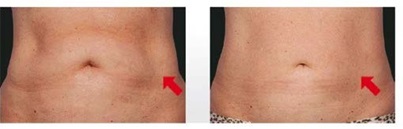
Ask: Are the viewing angles identical? Are lighting, position and expression comparable? How many weeks or months separate the images? Were there concurrent treatments or weight changes? Has the photo been edited? Was consent for commercial use obtained? Without that context, images are illustrative rather than quantitative evidence.
12. The Evidence Hierarchy: What We Know and What We Still Need
- Better supported: certain studied MFU/MFU-V platforms can produce modest improvements in facial and neck laxity for appropriate candidates, typically with gradual results and mostly transient side effects.
- Promising but heterogeneous: some focused-ultrasound body-contouring treatments change measurements in selected patients, but results depend heavily on device, region, population and endpoint.
- Not established as universal claims: that all HIFU devices eliminate cellulite, that one treatment replaces surgery, that all skin tones and regions can be treated without risk, that results always last for years, or that deeper or more intense treatment always performs better.
Research priorities include blinded controlled studies, consistent device reporting, standardized endpoints, longer safety follow-up, and more representative data across genders and skin types, with transparent conflict-of-interest reporting.
Frequently Asked Questions About HIFU in Abu Dhabi
What is HIFU skin tightening?
HIFU is focused ultrasound designed to create controlled energy effects at selected tissue depths. Certain aesthetic systems can stimulate remodeling and produce modest improvements in laxity over time.
Is HIFU the same as Ultherapy?
No. Ultherapy is a branded MFU-V platform with specific capabilities and indications. “HIFU” is a broad category and does not imply identical imaging, performance or clearance.
Is HIFU an alternative to a surgical facelift?
It can be a non-surgical option for selected mild-to-moderate laxity, but it cannot replicate skin excision, tissue release or the lifting power of surgery.
Can HIFU improve jowls?
Selected patients with early lower-face laxity may see a modest improvement. Severe jowling generally requires other options.
Does HIFU tighten the neck?
Some devices and protocols are studied for neck laxity. Results depend on anatomy, and substantial excess neck skin is less likely to respond well.
Does HIFU remove a double chin?
Not always. A double chin may involve fat, skin, muscle and skeletal support, and a tightening-focused treatment is not necessarily a fat-reduction treatment.
Does HIFU cause fat loss in the face?
Unwanted subcutaneous fat change is a recognized safety concern, though the exact incidence for a given platform is uncertain. Lean patients deserve particular assessment.
Is HIFU painful?
It may be uncomfortable. MFU-V studies report average moderate pain, but perception varies with anatomy and device.
Is there downtime after HIFU?
Many patients resume normal activities promptly, yet redness, swelling, bruising or tenderness may occur. “No downtime for everyone” is inaccurate.
When does HIFU start working?
Some tightness may be felt early, while more meaningful remodeling typically develops over two to six months.
How long do HIFU results last?
Duration varies. Long-term comparative evidence is limited, so a fixed multi-year promise cannot be made for every device or patient.
How many HIFU sessions will I need?
There is no universal number. It depends on the platform, indication, anatomy, response and the clinician’s plan.
Can HIFU help a sagging jawline after weight loss?
Possibly for modest laxity. If excess skin is substantial, non-invasive tightening may fall short.
Can HIFU be used around the eyes?
Only within the permitted regions for the exact platform and a trained operator. Do not assume every HIFU device is suitable for the eyelids.
Can HIFU lift eyebrows?
Some specific systems are indicated for eyebrow lifting. The change is usually more subtle than a surgical brow lift.
Can HIFU improve an abdominal pouch?
Mild laxity or a selected contouring target may improve with an appropriate device, but muscle separation and major skin excess need different assessment.
Does HIFU permanently destroy body fat?
Fat-targeting ultrasound platforms can produce adipose effects under specified conditions, but permanence and magnitude should never be generalized across every HIFU machine.
Is HIFU effective for cellulite?
Evidence is device- and outcome-specific. Cellulite is structurally different from simple fat accumulation and is not reliably cured by generic skin-tightening HIFU.
Is HIFU effective for stretch marks?
Evidence is less established than for selected facial tightening. Other dermatologic methods may be more suitable.
Is HIFU safe for darker skin tones?
Because treatment does not depend on the same epidermal pigment interaction as many lasers, certain ultrasound platforms may be useful across skin tones. Device suitability and risk still require assessment.
Can HIFU be combined with dermal fillers?
Sometimes, with individualized sequencing and consideration of filler depth, product and device. There is no universal waiting period.
Can I have HIFU after Botox?
It depends on timing, location and platform. Ask your clinician to coordinate the plan rather than relying on an arbitrary interval online.
Is Ultherapy FDA-approved?
Regulatory language matters. Check the exact product record and its FDA-cleared indications rather than equating marketing use of “approved” with every possible purpose.
Are all HIFU machines FDA-cleared?
No. Authorization applies to specified devices and indications, not to the technology category as a whole.
Can HIFU be done during pregnancy?
Elective aesthetic procedures are generally deferred during pregnancy. Use actual device labeling and medical evaluation for contraindications.
Are burns possible with HIFU?
Yes. Uncommon but potentially important thermal injuries have been described, so device-specific training and careful tissue selection are essential.
What is the difference between HIFU and RF?
HIFU focuses acoustic energy; RF heats tissue through radiofrequency electrical energy. Heating patterns, indications and evidence differ.
Which is better: HIFU or Endolift?
Neither is universally better. Endolift uses a subdermal optical fiber, while aesthetic HIFU is generally non-invasive. Suitability depends on anatomy and acceptable risk.
Can HIFU prevent aging?
No procedure stops aging. It may improve the appearance of some laxity; photoprotection and realistic expectations remain important.
What age is best for HIFU?
There is no ideal birthday. Degree of laxity, tissue quality, medical history and goals matter more than age.
How should I compare HIFU clinics in Abu Dhabi?
Ask for the exact device model, indication, clinician qualifications, realistic outcomes, complication planning, cost transparency and a medically sound consultation.
Will HIFU work on very loose skin?
Benefits are limited in marked redundancy. Surgical consultation or another plan may be more appropriate.
Can HIFU change facial asymmetry?
It may improve some appearance-related factors but is not a reliable correction for skeletal, muscular or major structural asymmetry.
What warning signs need medical attention after treatment?
Severe or progressive pain, burns or blisters, persistent weakness, worsening sensory changes, unusual discoloration or visual symptoms warrant prompt evaluation.
Are HIFU before-and-after pictures reliable?
Only when capture conditions, timing, other treatments and consent are documented. Photographs alone are not proof of controlled efficacy.
Does more energy mean better results?
No. Excess exposure can increase risk without proportional benefit. Device instructions and anatomy-based planning take priority.
Final Thoughts
HIFU can be a reasonable non-surgical option for mild-to-moderate laxity when the device, anatomy and expectations are well matched. Results are usually modest and gradual, and risks are real. If you are considering HIFU skin tightening in Abu Dhabi, book a consultation with a licensed professional who names the exact device, explains its authorized indications and is honest about what it can and cannot do.