Quick answer: what are next-generation dermal fillers?
Next-generation dermal fillers are injectable materials engineered not only to soften wrinkles but also to restore facial structure, refine contours, integrate with moving tissues or stimulate collagen production. The phrase refers to evolving material technology rather than one official product class. The main families discussed in modern facial rejuvenation are hyaluronic acid (HA) gels, which can differ markedly in crosslinking and physical behavior; calcium hydroxyapatite (CaHA), which can provide structure and biostimulation; and poly-L-lactic acid (PLLA), which produces gradual collagen-associated volume restoration. Other materials have a much narrower or historical role.
The most appropriate injectable is not automatically the newest, longest-lasting or highest-priced. It is the product whose material properties, evidence, reversibility and approved use match the patient’s anatomy and intended result. For some concerns, the better answer is not a filler at all: facial muscle relaxation, skin resurfacing, energy-based treatment, surgery or observation may be more suitable. An evidence-based consultation should make that distinction before selecting a brand.
Why revisit a filler review published in 2012?
The source article by Andrew D. Breithaupt, Trent Custis and Frederick Beddingfield captured a particular turning point in aesthetic medicine. The market was moving beyond bovine and human collagen fillers toward HA gels formulated for structural support and toward synthetic materials intended to last longer or stimulate tissue change. It defined an ideal filler as easily injectable, well tolerated, predictable, affordable, long-lasting and—importantly—reversible. It also emphasized that no available material met every requirement. That central observation remains useful.
However, the paper is a historical review, not a current formulary. Its FDA approval table describes the US market as understood in 2012, and products then described as ‘under review’ are not necessarily pending today. Some have been renamed, reformulated, discontinued, replaced or restricted to different indications. A 2026 discussion must therefore distinguish what the original authors reported from contemporary studies and official authorization. Brand availability in the UAE must not be inferred from US approvals, old European CE marking or a manufacturer’s promotional claim.
A further critical point is disclosure: the 2012 source lists Dr. Beddingfield as an Allergan employee and shareholder. This does not invalidate its chemistry discussion, but it matters when weighing promotional assertions and comparative product claims. This guide retains the useful historical account while applying a more neutral, material-first approach.
The real reasons faces age: volume loss is only one component
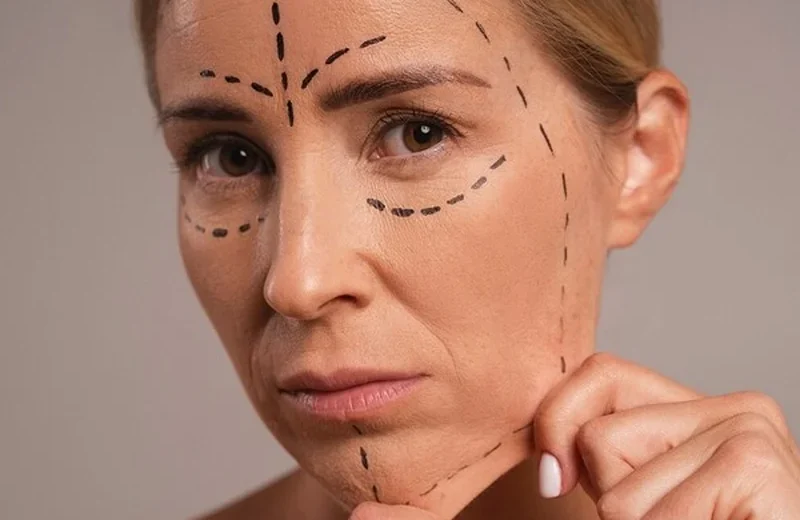
Facial aging is a layered biological process. Skin gradually changes in collagen organization, elasticity, texture and pigmentation. Superficial and deep fat compartments may lose or redistribute volume. Facial retaining ligaments, muscular forces and bone remodeling modify the relationship among cheeks, eyes, nose, lips and jaw. A nasolabial fold, hollow cheek or blurred lower-face contour may therefore arise from several interacting mechanisms rather than a simple local lack of filler.
This explains the transition from the old ‘fill the fold’ philosophy to three-dimensional facial assessment. Restoring carefully selected deep support can sometimes affect the appearance of an adjacent fold without depositing excessive material directly into that fold. Conversely, adding volume into already heavy lower-face tissues may make fullness and jowling more visible. Facial shape must be assessed at rest, during expression and from lateral and oblique views.
A well-designed plan should distinguish (1) true volume depletion, (2) tissue descent or laxity, (3) loss of skeletal projection, (4) muscular hypertrophy or dynamic wrinkling, and (5) skin texture or pigmentation. Injectable volumizers can help with some but not all these changes. Using more syringes cannot substitute for this diagnosis.
How HA fillers work: a natural molecule redesigned as a medical gel
Hyaluronic acid is a naturally occurring glycosaminoglycan with substantial water-binding capacity. Native HA is degraded relatively rapidly in tissue. Filler manufacturers alter its network through crosslinking and formulation so that injected material retains space and mechanical behavior for a longer period. As the 2012 article explained, changes in polymer chain size, concentration, crosslinking efficiency, particle processing and gel consistency can generate very different products from the same basic molecule.
Crosslinking refers to bridges between HA chains that create a three-dimensional network. Different technologies can affect resilience, water uptake, consistency, tissue integration and degradation. More crosslinking should not automatically be interpreted as a universally better or safer gel. Nor can one predict clinical persistence from HA concentration or a single laboratory value alone. The newer physicochemical framework described in 2025 emphasizes both dynamic properties and measures such as extrusion force, swelling and particle size.
HA fillers are attractive because they can deliver an immediate contouring effect and, in suitable circumstances, may be reduced using hyaluronidase. This is meaningful but not absolute reversibility: response depends on product type, time in tissue, anatomy, total amount and the clinical problem. Hyaluronidase is a medical treatment with its own adverse-effect profile and must not be presented as a guaranteed instant reset.
The language of filler science: G-prime, viscosity, cohesivity and flexibility
A major reason that different HA gels cannot be treated as interchangeable is rheology, the study of how they behave under force and deformation. An HA product intended to provide deeper structural projection often needs different performance characteristics from a formulation intended for soft, dynamic lip correction or superficial wrinkles.
Elastic modulus (G′) describes the elastic component of response to deformation. A higher G′ can be helpful where a gel needs to resist deformation and maintain shape, but it is not the only determinant of lift. Viscous response (G″ and complex viscosity) reflects flow-related behavior. Cohesivity describes the tendency of gel material to remain associated rather than fragment or disperse; published laboratory measurements can vary with the test method. Flexibility and stretch recovery matter in zones that move repeatedly. Hydration or swelling behavior affects the likelihood that a treated area will look puffy after placement.
No single G′ ranking is sufficient to choose an injectable. Tissue plane, filler volume, shear conditions, placement, anatomy, injector technique and the patient’s own tissue resistance all interact. A soft gel may not provide sufficient structure for a depleted chin; an overly firm or hydrophilic gel may be undesirable in delicate tissue. Even products within one manufacturer family may have different indications and performance.
From collagen to modern HA: the historical timeline
Before HA dominated facial aesthetics, early injectable collagen products were used to address fine creases and scars. The original source recounts bovine collagen products such as Zyderm and Zyplast, followed by human-derived Cosmoderm and Cosmoplast. Bovine collagen required allergy testing and results were comparatively short-lived. The later expansion of HA reduced dependence on those older products and broadened the range of contouring indications.
The authors observed that an HA gel may provide visible correction for many months, while the exact duration differs by anatomy and formulation. They also recognized a tradeoff between durability and certain physical or inflammatory properties. With time, the field increasingly separated surface correction, dynamic soft-tissue enhancement and structural volumization, instead of trying to accomplish all three with the same material.
An important historical caution: the paper’s list of FDA-approved fillers from April 2012 should be read as a snapshot from that date. It is not evidence that each listed brand is presently sold, approved for any specific region, or suitable for every patient. The current FDA maintains separate records of products and approved uses; local UAE authorization and labeling require independent checking.
Juvéderm Voluma: from a 2012 ‘new volumizer’ to an established material category
The source presents Juvéderm Voluma as a highly cohesive HA volumizer and, at the time, a candidate for future US approval. Its discussion contrasts volumizing facial contour products with older wrinkle-focused formulations. It reports that preliminary studies in age-related facial volume loss and HIV-associated lipoatrophy showed clinically meaningful correction, while also emphasizing the need to monitor long-term behavior and complications.
The enduring lesson is the concept of purpose-built structural HA: not every region benefits from a gel designed for shallow folds. Facial contouring requires consideration of the overlying tissue, movement, depth and how the correction relates to adjacent features. In the midface, a suitable product may restore projection and facial transitions; in the lower face, indiscriminate placement may create heaviness rather than definition.
The original paper includes one before-and-after facial profile example (pictured below). It is a published historical illustrative case, not a result from Dr. Erfan Rahmani. The two source photographs are preserved in this review draft for clinical discussion; commercial reuse depends on permission from the rights holder and any required patient consent.
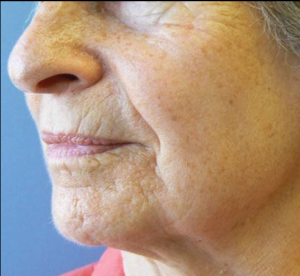
Figure 1A. Pre-treatment side profile from the 2012 published Juvéderm Voluma example. Archival source image — not Dr. Erfan Rahmani’s patient.
What the source photograph can and cannot establish
Side-view photographs can help visualize a change in facial contour and apparent fullness, but they cannot independently prove how much filler persisted or whether the outcome was superior to another product. Lighting, facial expression, head position and camera distance can change visual impressions. There is no standardized quantitative measurement or matched control in the photograph itself. The image therefore illustrates a treatment goal, not a guarantee.
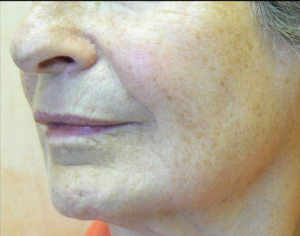
Figure 1B. Post-treatment side profile from the same 2012 source example. For private review only; publication rights must be cleared.
Emervel: a historical example of a family engineered for different depths
The 2012 review describes Emervel Classic, Deep, Touch, Lips and Volume as HA gels sharing a nominal concentration but varying in gel calibration and crosslinking. This demonstrates a fundamental product-design principle: identical HA concentration does not mean identical clinical behavior. Gels can be tailored toward superficial correction, deeper folds, lip enhancement or volumization, and they may differ in local tissue response despite similar headline chemistry.
The source mentions early comparative European studies of Emervel Classic versus Restylane and Emervel Deep versus Perlane, as well as preliminary US comparison data. Those comparisons were about the specific products and endpoints studied at the time; they should not be turned into a universal ranking of manufacturer families in 2026. Patients should not assume that every product mentioned in a decade-old article is still available under the same name.
The clinically relevant takeaway is the need to match gel behavior and approved indication with the target tissue rather than selecting based on a popular brand alone. This principle also applies to present-day HA families containing separate products for lips, cheeks, chin, dynamic folds and other anatomically distinct areas.
Restylane SubQ: what large-particle filler studies taught the field
The source calls Restylane SubQ a stabilized, large-particle HA gel developed for facial contouring, with fewer gel particles per milliliter than an older Restylane formulation. It cites small studies in which some patients maintained improvement after a year, but also describes migration, persistent lumps and uneven outcomes in subsets of treated participants. This is a useful case study in the limits of equating bigger particles or greater cohesivity with superior longevity or performance.
An injectable designed to restore deep facial volume still requires an appropriate placement plane, product quantity, tissue support and follow-up. Migration and palpability are not merely cosmetic inconveniences: they can complicate future treatment and may require imaging or specialist assessment. Outcomes from the source’s small studies should be understood as product- and technique-specific, not direct evidence about any current Restylane gel with a similar name.
Today, a patient asking for ‘long-lasting cheek filler needs an assessment of whether a durable structural HA, biostimulator, fat graft or alternative treatment best fits the problem. The historical name SubQ is not a substitute for checking a present product label.
Atlean: promising laboratory concepts do not guarantee clinical success
Atlean is described in the source as a combination of HA and beta-tricalcium phosphate (β-TCP). The proposed concept was to combine an early HA volumizing effect with collagen-related tissue change induced by the particulate phase. Yet the authors explicitly reported that supportive published clinical studies were not available and that development had become uncertain.
This distinction remains especially important in the modern market for ‘regenerative fillers’. A plausible biological mechanism, in-vitro collagen data, favorable before-and-after photographs or manufacturer language such as ‘stimulates collagen’ are not substitutes for controlled clinical outcomes, safety surveillance and appropriate authorization. A product should be assessed for local reactions, migration, nodules, predictability, actual benefits and how easily complications can be treated.
The responsible 2026 interpretation of Atlean is historical research and product-development context, not a treatment recommendation or an indication that the product is currently offered in Abu Dhabi.
Belotero: why homogeneous tissue integration matters
The source examines Belotero formulations using what it describes as a monophasic, polydensified cohesive matrix. It discusses studies comparing gel distribution with other HA structures and points to the potential importance of even tissue integration for smooth correction. In selected contexts, that can matter where superficial irregularities are particularly visible.
However, the early source’s broad classifications of monophasic versus biphasic products are simplifications of complex contemporary manufacturing processes. Crosslink density, swelling, cohesivity and dynamic behavior may not be captured by one label. The clinical question is not ‘Which category is scientifically best?’ but ‘Which authorized formulation and treatment plane best fit this patient’s tissue and objective?’
The modern evidence base also cautions against ranking fillers from studies using different populations, doses, measurement scales and anatomical indications. Better intradermal spread in a histologic sample does not automatically mean better midface projection, longer persistence or a lower incidence of vascular events.
Teosyal: why formulation portfolios matter more than a single product name
The 2012 authors describe a range of Teosyal HA gels varying in nominal concentration, intended depth and target indication, and they reference a small comparative study against a Restylane-family gel for nasolabial folds. The main medical point is not that one family wins all comparisons. It is that a manufacturer may produce distinctly different gels for facial reshaping, fold correction and delicate regions.
When counseling patients, using a single umbrella label such as ‘Teosyal filler’ or ‘Juvéderm filler’ is insufficient. It should be possible to identify the exact product, its sterile batch information, intended anatomical use, expiry date and whether that use is authorized where treatment is taking place. Similar-looking packaging does not make formulations interchangeable.
Published duration estimates are also highly contextual. A result that lasts many months in a relatively stationary region cannot simply be transferred to highly dynamic lips or a patient with a different baseline anatomy.
Revanesse and ReDexis: distinguishing HA from added particulate technologies
The source discusses Revanesse as an HA-family concept and ReDexis as HA combined with charged dextranomer particles. It reports claims that such particles could recruit collagen-associated tissue responses and extend the visible effect. These claims were connected to historical manufacturer information and early comparative work; they should not be presented as proven treatment outcomes across all contemporary formulations.
This is a useful example of why the phrase ‘HA filler’ does not fully describe a complex combination product. An added particulate component can change the inflammatory, degradation and reversibility profile. Hyaluronidase can break down HA but is not a universal dissolution agent for every added non-HA component. Patients should receive clear information about exact composition, not just a shorthand brand name.
When a patient has previously received an unknown filler, do not assume that future injection or dissolution will behave predictably. Historical treatment records and, in selected circumstances, high-frequency ultrasound may help clarify the material and its location.
Aquamid and permanent fillers: durability comes with a different risk tradeoff
In 2012, Aquamid, a non-resorbable polyacrylamide hydrogel, was described as a potentially enduring option. The article also acknowledged adverse reactions such as edema, lumps, gel accumulation and infection, including events during longer follow-up. The attraction of a permanent result needs to be balanced against the possibility of complications that are difficult to reverse, especially when the patient’s face and aesthetic preferences change with time.
Permanent soft-tissue fillers are fundamentally different from temporary HA. A non-HA material generally cannot be dissolved with hyaluronidase, and management of nodules, infection or migration may be prolonged or invasive. Modern consultation should be explicit about the exit strategy, not simply advertise durability. The FDA has not authorized cosmetic injectable silicone for tissue enlargement or wrinkle correction, and it warns against unapproved large-volume body enhancement with injectable fillers.
This section describes historical experience rather than recommending Aquamid. Local marketing authorization, suitability and availability should never be inferred from the source’s 2012 status, and patients with unknown permanent products may need specialist assessment before further procedures.
Puragen and Prevelle Lift: early attempts to improve HA persistence
The source presents Puragen and Prevelle Lift as HA formulations designed with particular crosslinking approaches to resist degradation and target deeper folds. It describes trials comparing them with older HA products, with several findings suggesting comparable or longer correction in specific endpoints. Those reports were small, time-limited and based on products and formulation generations available then.
The clinical lesson is that simply ‘lasting longer’ can be a poor endpoint if product behavior, tissue comfort, edema, natural movement or complication management are not considered. Modern fillers should be evaluated across a broader package of evidence: controlled clinical performance, validated outcome measurements, imaging when relevant, follow-up, adverse-event reporting and the approved anatomical indication.
Do not assume that a discontinued, renamed or region-specific historical filler is an appropriate option today. Product names should always be checked against current local labeling.
Historical comparison table: what the 2012 source actually described
| Historical material / family | 2012 article’s key concept | Important modern interpretation |
| Juvéderm Voluma | Structural, highly cohesive HA volumizer | Illustrates purpose-built volumization; verify the exact current product and indication |
| Emervel | Multiple HA formulations for different tissues | Concentration alone does not predict performance; brand status may have evolved |
| Restylane SubQ | Large-particle HA for contour support | Historical efficacy plus reports of migration and lumps; not a proxy for newer formulations |
| Atlean | HA combined with β-TCP | Proposed biostimulation; source described insufficient published efficacy evidence |
| Belotero | HA gel design intended for even distribution | Integration is one dimension of suitability, not a universal product ranking |
| Teosyal | Range of HA products differentiated by intended depth | Identify the exact current formulation and approved anatomical site |
| Revanesse / ReDexis | HA alone or HA plus dextranomer technology | Added components can change tissue response and reversibility |
| Aquamid | Permanent polyacrylamide hydrogel | Prolonged persistence and difficult-to-manage risks; historical context, not a recommendation |
| Puragen / Prevelle Lift | Crosslinking strategies for greater persistence | Evidence was product- and time-specific; current marketing status requires verification |
Modern material comparison: HA, CaHA, PLLA and permanent options
| Material class | Principal treatment logic | Time course | Reversal and caution |
| HA gel | Immediate soft-tissue filling, shaping, hydration-related effects | Immediate change with settling; persistence varies | Hyaluronidase can reduce HA, but response and emergencies require clinical judgment |
| CaHA (e.g., Radiesse family) | Carrier-supported volume with collagen-associated remodeling; dilution changes treatment goal | Early support plus progressive tissue effect | Not dissolved with hyaluronidase; nodules and vascular events remain possible |
| PLLA (e.g., Sculptra family) | Gradual collagen-associated restoration | Weeks to months; often staged | Not directly dissolvable with hyaluronidase; poor placement can be hard to correct |
| Permanent / nonabsorbable fillers | Durable structural presence | Long-term | Potentially difficult or invasive complication management; highly restricted indications |
This table is for explaining material differences, not selecting a dose, injection plane or product by itself. The suitability and legal indication of each formulation must be verified case by case.
Calcium hydroxyapatite: a structural filler and collagen biostimulator
CaHA fillers consist of suspended calcium hydroxyapatite microspheres in a carrier. Conventional formulations can supply early support while tissue remodeling develops over time. Diluted or hyperdiluted approaches shift the objective from sharply localized volume to more diffuse skin-quality or collagen-associated effects, but they are not interchangeable with unmodified structural correction. The 2012 source already recognized CaHA as a distinct non-HA category; subsequent work has expanded its clinical evidence.
A systematic review published online in 2025 and indexed in a 2026 journal issue found meaningful facial rejuvenation effects with CaHA and PLLA but called for additional long-term standardized studies. The review reported durability ranges under particular study conditions; these should not be turned into a promise for an individual patient. Product-specific labels, anatomical suitability and local licensing still govern use.
A critical distinction is non-reversibility with hyaluronidase. CaHA is not an HA gel. Where there is thin, highly mobile tissue, inappropriate placement can produce palpable or visible nodules, and direct lip augmentation is not a routine use to extrapolate from facial structural indications. For a patient prioritizing reversible refinement, a suitably selected HA product may be a more logical discussion.
Poly-L-lactic acid: gradual correction rather than instant gel filling
PLLA stimulates a tissue response that can promote new collagen formation over a series of weeks or months. It is useful to explain its effect as gradual biostimulation rather than immediately equivalent to a syringe of HA gel. Treatment plans are often staged, and the eventual result depends on baseline volume loss, anatomy, number of sessions and individual response.
PLLA can be relevant when diffuse volume depletion and facial support loss are prominent. It is usually a poor tool for someone wanting a tiny, instantly adjustable change in a very delicate or highly mobile area. Patients should understand that product selection is not simply a choice between ‘natural’ and ‘artificial’ results. Both HA and PLLA can produce appropriate or inappropriate appearances depending on indication, planning and technique.
PLLA has no routine hyaluronidase reversal. Nodules or inflammatory reactions may be difficult to manage, and the ability to recognize complications matters before injection. The precise authorized indications for Sculptra or any other PLLA formulation must be checked locally rather than inferred from a review or another country’s labels.
The newest category: combined HA–CaHA and material hybrids
A 2026 expert review describes formulated HA–CaHA hybrid injectables, which aim to blend immediate HA-related support and hydration with CaHA-mediated biostimulation. This reflects the field’s continuing interest in combining predictable early effects with gradual tissue remodeling. Such products must be assessed as distinct formulations, however, rather than assuming that the benefits or reversibility of each component transfer unchanged to the combined product.
In particular, the presence of HA does not mean a hybrid can be completely dissolved with hyaluronidase: residual CaHA material may remain. Nor should a hybrid be promoted as equivalent to simply mixing unrelated fillers in a clinic. Preparation, formulation stability, authorized labeling and clinical evidence matter. A consensus panel offers expert recommendations, but consensus is not proof of superiority over established alternatives.
For patients in Abu Dhabi, the relevant questions are whether the exact hybrid is locally authorized, suitable for the intended region, supported by adequate evidence and managed within a clinic equipped for complications and follow-up.
Skin boosters are not automatically volumizing fillers
A skin booster treatment commonly targets hydration, elasticity, texture or superficial quality, rather than major structural projection. Some approaches use noncrosslinked or lightly structured HA; others involve different injectable or device-assisted materials. A 2026 review emphasizes that definitions and evidence remain heterogeneous, so the word ‘booster’ by itself does not specify an indication, composition or depth of effect.
A patient with dehydration or fine superficial texture changes may gain little from a large-volume contouring filler. Equally, superficial microinjections cannot replace missing cheek or chin support. Distinguishing skin quality, tissue support and facial proportions helps avoid over-treatment and unnecessary expense. The clinic should also be explicit about products that are merely marketed for ‘regeneration’ without rigorous trials.
Ultrasound: one of the most meaningful changes since 2012
The original review could not discuss routine modern high-frequency ultrasound workflows in the way current practitioners can. In 2026, a review in the Journal of Ultrasound describes applications before, during and after aesthetic injections: vascular mapping, recognition of anatomical variation, improved targeting, localization of existing filler and assessment of nodules or other complications. Ultrasound can increase precision, but it does not eliminate risk or replace clinical skill.
For someone who has received multiple products or cannot remember what was injected, ultrasound may provide additional information. HA, CaHA, PLLA and other materials may produce distinct sonographic patterns. Ultrasound can also help a clinician avoid treating what appears to be a new hollow when the area actually contains old filler and edema. Such situations should be managed by appropriately trained professionals using suitable equipment.
No universal scanning protocol covers all patients and procedures. Imaging is an adjunct, and its value depends on the anatomy, risk profile, availability and quality of interpretation. A statement that ultrasound always makes filler injection ‘safe’ would be misleading.
How a consultation should select a filler for the correct facial layer
A strong facial consultation starts with the concern the patient wants to correct. Is it a fold, a shadow, a loss of projection, asymmetry, thinning of the skin or tissue descent? Photographs in consistent lighting and movement assessment help distinguish these mechanisms. The second step is a history of previous procedures, including unknown fillers, biostimulators, surgery, infection and inflammatory episodes.
Next comes material selection. Tissue that is thin and mobile may need softer behavior than tissues requiring deeper structural support. A clinician should discuss both the immediate effect and the degree of change expected over time, including persistence, swelling and whether the procedure may need to be staged. Anatomical danger zones influence not just the choice of filler but whether a particular injectable procedure should be attempted at all.
Finally, informed consent must include realistic limitations. An injectable does not stop aging, cannot reliably create surgical lifting in the presence of major laxity and does not guarantee symmetry. When the proposed amount of filler becomes very large, the clinician should revisit whether a different method would be more appropriate.
Planning by facial region: cheeks, chin, jaw, lips and hands
Cheeks and midface. Consider the pattern of deep and superficial volume loss, projection, under-eye support and existing fullness. A structural product may be relevant for selected deep deficits, while superficial overcorrection can worsen puffiness. A tired appearance is not always caused by insufficient cheek volume.
Chin and jawline. Define whether the goal is improving profile projection, length, asymmetry or mandibular continuity. Greater lateral width does not automatically create a slimmer face. HA may be preferred when reversible adjustment is valuable; CaHA or PLLA may be discussed for selected indications, with a clear explanation of their non-HA properties.
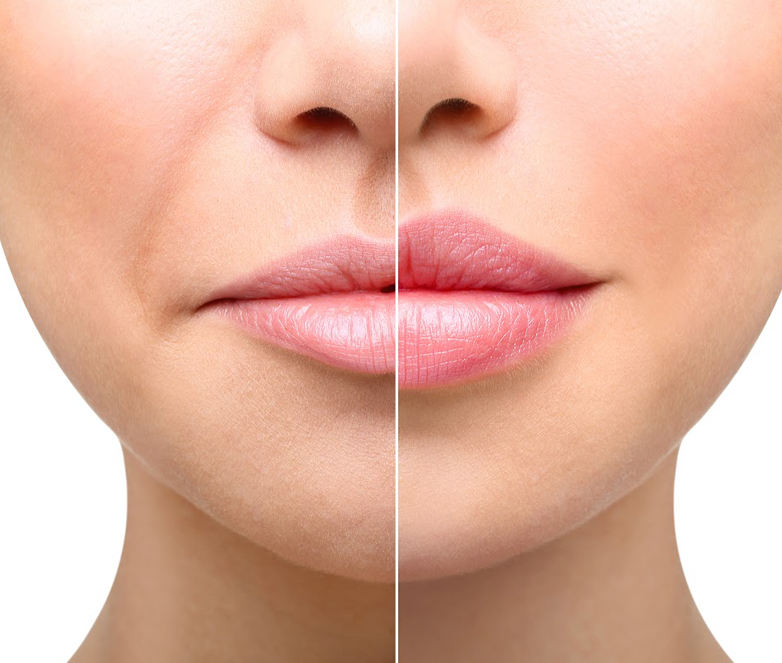
Lips and perioral region. High mobility and thin tissues make flexibility, swelling and nodule prevention particularly important. HA products with suitable lip indications differ from biostimulators used for larger structural facial regions. The aim is harmonious contour, not volume at any cost.
Dorsal hands. Loss of subcutaneous coverage may expose veins and tendons. Filler options and depth differ from those used in the face. Only formulations with appropriate local authorization and clinical suitability should be considered. Patients should not assume any filler can be injected into any body part.
Why nose, forehead and periocular filler demand exceptional caution
The upper and central face contain vascular connections that can carry injected material toward ocular or cerebral circulation. The FDA warns against filler injection into regions including the nose, forehead, glabella and periorbital area because these are not approved uses in the United States. Where local practice considers high-risk off-label interventions, the patient should receive explicit counseling, and treatment should never be framed as risk-free or guaranteed by the use of a cannula.
A rare intravascular event can cause skin ischemia, tissue necrosis, visual loss or stroke. Critical warning signs include pain out of proportion, evolving blanching or mottling and changes in vision. These are urgent medical problems, not routine post-injection bruising. Suspected vascular compromise requires immediate examination and an established emergency response pathway; visual symptoms demand emergency ophthalmologic and hospital assessment.
The CMAC guidance on HA-related vascular occlusion discusses early recognition and prompt targeted use of hyaluronidase for appropriate cutaneous ischemic events. Such guidance is for trained healthcare professionals with emergency readiness. Neither high-pressure injection, aspiration, ultrasound nor a needle/cannula choice makes an injection categorically safe.
The difference between ordinary swelling and serious complications
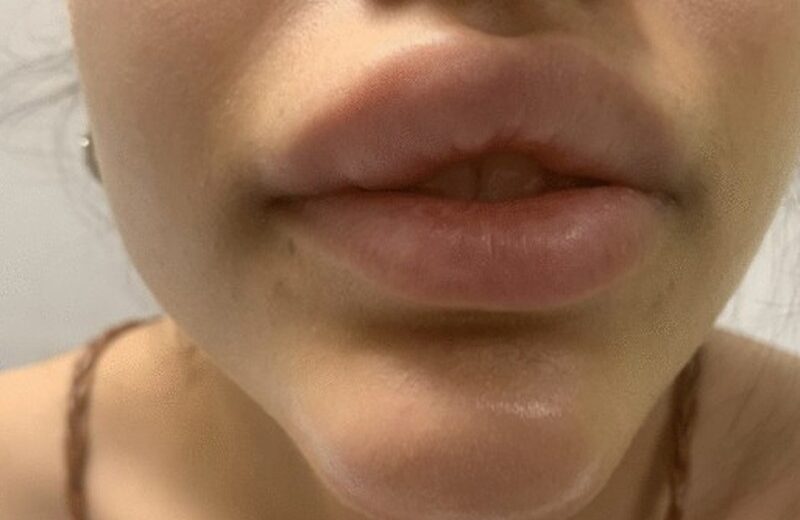
Expected local effects after an injectable may include transient tenderness, redness, swelling and bruising. These generally improve over time and should be explained before treatment. A small early asymmetry can reflect swelling rather than unequal permanent volume. However, symptoms that are severe, progressive, unusual in color or accompanied by fever, significant pain, visual symptoms or widespread skin changes need prompt medical attention.
Delayed problems may include persistent edema, inflammatory or non-inflammatory nodules, infection, granulomatous reactions and unwanted filler position. HA-related nodules are not all alike: a product deposit, an inflammatory reaction and an infection require different assessment. Patients should not be encouraged to self-massage persistent or painful nodules or to use antibiotics or steroids without diagnosis. Imaging, cultures or specialist evaluation may be warranted.
Long-term planning matters especially with permanent fillers and biostimulators. If the material cannot be routinely dissolved, prevention and correct diagnosis become even more important. The patient should know the product’s full name and retain the treatment record.
How long do modern fillers last?
Longevity depends on the product, anatomy, treatment volume, depth, facial movement, individual physiology and the outcome being measured. ‘Detectable filler’ on imaging is not the same thing as a patient-perceived cosmetic benefit. Some HA gels produce clinically useful correction for months and sometimes longer, but this should not be converted into a fixed promise. Structural fillers, mobile lip fillers and skin-quality treatments are measured differently.
CaHA and PLLA can be associated with tissue remodeling that evolves gradually and may persist beyond the early carrier or injection period. A recent systematic review found results with differing durability ranges in study populations but urged better standardization. Permanent materials may last far longer, yet extended persistence is not always an advantage if complications occur or facial aesthetics change.
An ethical treatment plan includes the likely maintenance burden and a realistic reassessment schedule. The best product is not necessarily the one that remains present for the greatest number of years.
What should patients in Abu Dhabi ask before booking?
A sensible consultation should establish the exact injectable product, its authorized use, the experience of the clinician with the anatomical region and the alternatives available. Ask whether the aim is replacement of lost volume, correction of a particular fold, support of a facial contour or improvement of skin quality. The cost should reflect a proposed plan rather than the assumption that a fixed number of syringes is always required.
Patients should also ask whether the material is temporary, biostimulatory or permanent; whether hyaluronidase can act on it; what a normal recovery may look like; what the clinic’s emergency arrangements are; and when follow-up is recommended. Where a surgeon or other specialist is more appropriate, a referral is better than inappropriate filler use.
Medical assessment in Abu Dhabi should follow current local regulations and the actual product label. The cited US FDA resources are used as a reference point for material categories and safety warnings, not as an assertion that US authorizations automatically apply in the UAE.
A balanced clinical perspective from Dr. Erfan Rahmani’s editorial guide
In aesthetic medicine, a natural result is not defined by a specific brand or a universal formula. It means a treatment plan that respects baseline facial identity, supports rather than exaggerates proportion and adapts to how the face moves. Good practice also involves declining an injection when the anatomy, requested outcome, product or risk profile makes the benefit uncertain.
This article is prepared under the Medical Editorial name of Dr. Erfan Rahmani for the educational resources at www.drerfanrahmani.com. It is an evidence-informed overview of material science and patient selection, not a statement that every historic or investigational product discussed is available or administered by the doctor. Final clinical endorsement and product-specific accuracy should be reviewed before publication.
Medical editorial summary
The enduring message of the 2012 review is that filler innovation should be judged by more than a new brand name. Composition, crosslinking, physical behavior, clinical evidence, safety, reversibility and anatomical suitability all matter. Since 2012, advances in HA formulation, biomaterial design, ultrasound assessment and complication awareness have strengthened clinical decision-making, but they have not produced a risk-free or universally superior filler.
For patients in Abu Dhabi, the preferred approach is individualized: diagnose the real structural or skin-quality concern, choose a locally authorized product for the intended use, explain tradeoffs and plan for follow-up. A patient deserves to understand why a particular injectable is being recommended—not simply which brand is on the syringe.
Questions Patients Ask: 51 Evidence-Based FAQs
1. What are next-generation dermal fillers?
They are a broad group of newer or improved injectable products designed for specific tasks such as volume restoration, contour shaping, soft-tissue integration or collagen stimulation. The label is descriptive marketing and scientific language, not a formal guarantee of superior safety or duration.
2. What is the best dermal filler in Abu Dhabi?
There is no universally best material. A responsible recommendation depends on anatomical assessment, the treatment goal, desired reversibility, product labeling and local authorization. A soft lip gel may be inappropriate for structural jawline support, and vice versa.
3. Are all dermal fillers made from hyaluronic acid?
No. Many are HA-based, but calcium hydroxyapatite and poly-L-lactic acid are different materials with distinct mechanisms. Some historical fillers contain nonabsorbable polymers or other particles. Each class has different evidence, reversibility and complication considerations.
4. Is Juvéderm one single filler?
No. Juvéderm is a product family. Different formulations are engineered for different rheological and clinical roles. The exact syringe and indication matter more than the umbrella brand, and regional labels should be checked before making clinical claims.
5. Is Restylane one type of gel?
No. The Restylane family has included multiple formulations over time. A 2012 mention of Restylane SubQ or an older gel does not imply that it is identical to a present-day product with Restylane branding.
6. Can HA filler be dissolved?
Hyaluronidase can degrade HA and is used in selected correction and emergency situations. It does not guarantee that every aesthetic effect reverses immediately, nor does it remove non-HA particles. A clinician must assess the indication, dose strategy and adverse-effect risks.
7. Can Sculptra be dissolved with hyaluronidase?
No. Sculptra is a PLLA collagen biostimulator rather than an HA gel. Correct patient selection, technique and realistic expectations are particularly important because there is no simple HA-style dissolution approach for the PLLA material.
8. Can Radiesse be dissolved with hyaluronidase?
No. Radiesse contains calcium hydroxyapatite rather than HA as its active particulate filler material. Strategies for managing an unwanted CaHA result are not equivalent to HA reversal and require specialist assessment.
9. What is the difference between a volumizer and a traditional wrinkle filler?
A volumizer is generally intended to restore three-dimensional support or projection, whereas a fold or wrinkle formulation may be optimized for softer, more superficial correction. These are functional descriptions, not rigid universally standardized product classes.
10. What does G-prime mean?
G-prime, written G′, is the elastic storage modulus used to characterize how a gel stores energy and resists deformation under specified test conditions. It can help explain product behavior, but it does not single-handedly predict lifting, safety or duration in tissue.
11. Does a higher G-prime always mean a better filler?
No. A higher elastic response may support projection in selected tissues while being unsuitable for another region. Gel cohesivity, flexibility, swelling, anatomy, placement and the treatment goal must be considered together.
12. What is filler cohesivity?
Cohesivity concerns how strongly a gel behaves as a connected mass under particular forces. It can influence distribution, shape maintenance and tissue integration, but it is not measured identically across every manufacturer or published study.
13. What is filler viscosity?
Viscosity describes resistance to flow. In a filler it can affect injection behavior and response to movement. It is related to but different from elasticity and cohesivity, and the full gel formulation matters more than a single descriptor.
14. What is HA crosslinking?
Crosslinking creates connections among hyaluronic-acid chains, slowing rapid breakdown and changing the gel’s physical properties. More crosslinking is not automatically better: the degree and chemistry must support both desired performance and an acceptable safety profile.
15. Does HA concentration predict longevity?
Not reliably by itself. Two products with similar milligrams per milliliter can differ because of crosslinking, gel architecture, swelling behavior and intended tissue location. Headline concentration is only one part of filler selection.
16. Why are some fillers firmer than others?
Manufacturers use different polymer networks, gel structures, crosslinking approaches and processing methods. A firmer product may be useful for selected deep contours, while a softer one may better accommodate dynamic regions such as lips.
17. Can fillers stimulate collagen?
Certain non-HA materials, especially CaHA and PLLA, are used for collagen-associated remodeling. Some hybrid technologies attempt to combine early gel support with a later response. The strength of evidence and actual effect vary across products and patient groups.
18. How is Sculptra different from HA?
HA typically provides immediate gel-related correction. PLLA is primarily discussed as a gradual collagen biostimulator, with results developing over time and often requiring staged treatment. Their reversibility, maintenance and patient counseling are different.
19. How is Radiesse different from Sculptra?
CaHA commonly has an early carrier-supported structural effect along with biostimulation, while PLLA is typically framed as a gradual tissue-response treatment. Both require product-specific selection, and neither is simply interchangeable with HA.
20. What is hyperdilute Radiesse?
It is an approach using diluted CaHA material with the objective of distributing biostimulation over a broader area rather than creating sharply localized volume. Suitability depends on the exact formulation, intended region, anatomy and permitted clinical use.
21. What are HA–CaHA hybrid fillers?
They are specifically formulated injectables combining HA gel with calcium hydroxyapatite particles. A hybrid is not necessarily equivalent to mixing independent fillers. Because CaHA remains a non-HA component, full hyaluronidase reversibility should not be promised.
22. What are skin boosters compared with fillers?
Skin boosters generally aim to improve skin hydration, texture or elasticity rather than substantial structural projection. Their compositions and evidence vary. Some patients need skin-quality treatment rather than more volume; others need support that a booster cannot provide.
23. Do biostimulators work immediately?
Their collagen-associated effects develop gradually. CaHA may offer an initial carrier effect, but PLLA’s intended durable change is more gradual. Timing and expected outcome should be explained for the exact treatment rather than borrowed from another material.
24. Are permanent fillers better because they last longer?
Not necessarily. Permanent materials can remain after facial preferences and anatomy change and may present difficult complications. Long persistence is only advantageous if safety, tissue response and correction remain satisfactory over time.
25. Is Aquamid recommended as a current filler option?
This document includes Aquamid because it appears in the 2012 source’s historical review. Its inclusion is not an endorsement, proof of present UAE authorization or an indication that Dr. Erfan Rahmani offers it.
26. What happened to Emervel and Restylane SubQ?
They are discussed using their historical names and the 2012 evidence available to the original authors. Specific modern names, marketing status and registrations may differ. Only current manufacturer and regulatory records can establish a present option.
27. Why does the article discuss Atlean?
Atlean illustrates a proposed HA plus β-tricalcium-phosphate technology from the earlier era. The source itself emphasized insufficient published efficacy data, making it a useful lesson in separating biological concepts from clinically validated treatments.
28. What does tissue integration mean in filler treatment?
It describes how a material distributes and interacts with surrounding tissue while supporting a smooth contour. It can be studied by imaging, histology and rheology, but better spread in one experiment does not prove superior outcomes for every clinical region.
29. Can fillers treat severe skin laxity?
Only to a limited degree. Filler can restore volume or support selected contours but cannot replicate the tissue repositioning of surgery. Excessive product may make heavy tissues look overfilled. Other modalities or no treatment may be more appropriate.
30. Can cheek filler improve nasolabial folds?
Sometimes, when midface volume depletion or contour changes contribute to the appearance. A careful assessment is necessary because not every fold is driven by the cheek and placing more cheek volume is not always helpful.
31. Is filler good for tear trough hollows?
Only in selected candidates. Periocular anatomy and swelling risk make this a particularly sensitive region, and the FDA identifies periorbital filler injection as an unapproved use in the United States. Non-filler alternatives may be better.
32. Can dermal filler be used in the nose?
Nasal injection can carry catastrophic vascular risks and is not an FDA-approved filler indication in the United States. Any local consideration must be grounded in applicable regulations, specialized risk counseling and the clinician’s judgment; it must never be portrayed as routine or risk-free.
33. Does a blunt cannula eliminate vascular occlusion risk?
No. Cannulas may change some injury risks but can still enter or damage vessels. Anatomical knowledge, cautious technique and readiness to diagnose emergencies are essential regardless of device type.
34. Does ultrasound make filler injection completely safe?
No. Ultrasound can reveal existing material and vessels and may improve planning and targeting, but operator skill, interpretation and clinical judgment remain critical. It is a valuable safety adjunct, not a guarantee.
35. Why might ultrasound be useful before repeat fillers?
Old filler may persist in unexpected locations, and a visible hollow could reflect anatomy, edema or tissue redistribution. Ultrasound may help identify material location and guide the discussion before adding more product.
36. How are filler complications identified on ultrasound?
Experienced operators interpret patterns consistent with different materials and assess nodules, fluid collections and vascular relationships. The examination can guide treatment planning, but it should be correlated with the history and a clinical examination.
37. What signs after filler require urgent medical care?
Disproportionate or escalating pain, blanching, mottled or dusky skin, rapidly evolving abnormalities, visual changes or neurological symptoms demand urgent assessment. Visual or neurological symptoms require emergency hospital evaluation, not routine follow-up.
38. What is vascular occlusion from a filler?
It is interruption of normal blood supply, often associated with material entering or compressing a vessel. It can cause ischemia, tissue injury and, in high-risk facial anatomy, potentially visual or cerebral complications. Recognition and response must be immediate.
39. Can filler injections cause blindness?
Rarely, yes. Intravascular filler can reach ocular circulation through connected facial vessels. Visual symptoms after a cosmetic injection constitute a medical emergency, and the risk should be covered in informed consent for relevant procedures.
40. Can fillers cause delayed lumps months later?
Yes. A lump may represent a product deposit, migration, inflammation, infection or another process. Treatment differs by cause. Diagnosis should precede massage, dissolving or prescribing medication, especially when the original product is uncertain.
41. What is the difference between granuloma and a simple nodule?
A nodule describes a palpable or visible lesion; granuloma refers to a specific inflammatory tissue reaction. Not every lump is a granuloma. Examination, timing, imaging and occasionally microbiology or pathology help distinguish them.
42. How long should swelling after HA filler last?
Mild swelling is common in the early period and should improve, but the duration differs by product and anatomy. Worsening pain, unusual skin color, fever or visual symptoms should not be dismissed as ordinary swelling.
43. Do fillers last longer if more material is injected?
Not in any reliable or desirable way. More product can increase bulk, swelling and the risk of unnatural contour without solving the underlying aging mechanism. The treatment amount should follow anatomical need rather than a promise of prolonged duration.
44. Can men benefit from volumizers?
Yes, with individualized goals for chin projection, jawline proportions, cheek support or age-related depletion. Facial assessment should avoid applying a single masculine or feminine template to every patient.
45. Can fillers be combined with Botox?
In selected cases, yes. HA or other fillers address volume and contour, while botulinum toxin modifies muscle activity. A combination is not inherently superior; sequencing and indications should follow a full-face evaluation.
46. Can fillers be combined with Endolift or energy-based treatment?
They can form parts of an individualized plan, but tissue effects, inflammation, timing and indication must be considered. A device that targets laxity or fat is not equivalent to a volumizer, and treatment scheduling should be set by the responsible clinician.
47. Is the most expensive brand always the safest?
No. Price does not substitute for evidence, sterile supply, suitability, approved indication or injector competence. Product quality, the patient’s anatomy and a clinic’s emergency preparedness are more meaningful questions.
48. How can a patient check which filler was injected?
Ask for the full product name, manufacturer, batch or lot, quantity and treatment location in the medical record. Keeping this information is useful for future consultations, follow-up and assessing an unexpected reaction.
49. Are the fillers listed in a 2012 paper still approved today?
Not necessarily. Approval, naming and commercialization change. The source is used to explain historical development; current US authorization can be checked in FDA records, and current UAE status requires appropriate local verification.
50. What is the main advantage of an HA filler for first-time patients?
For suitable goals, HA offers a broad clinical history, an immediate effect and the potential for enzymatic reduction. That does not make it risk-free, but reversibility can be a significant counseling consideration compared with materials that cannot be dissolved.
51. What is the most important question before booking a filler appointment?
Ask: What anatomical problem are we treating, and why is this exact product the right option? A credible answer should explain expected benefit, alternatives, reversibility, risks, follow-up and whether not treating would be reasonable.