
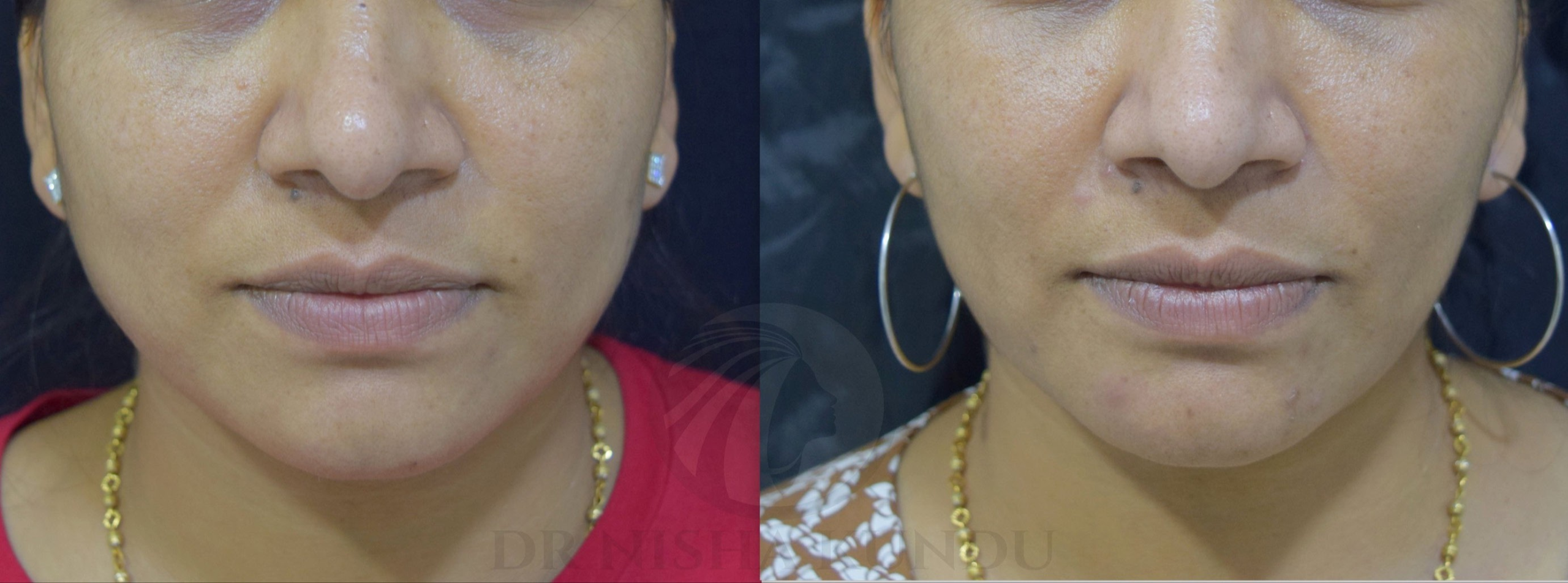
Masseter Botox has become an important non-surgical option for patients who want to reduce a broad or square lower face when enlarged masseter muscles are a major contributor. Rather than adding volume, botulinum toxin type A reduces excessive masseter activity and can gradually decrease muscle bulk, creating a softer and slimmer lower-face contour. This guide explains how the treatment works, who may benefit, what the scientific literature reports about results and duration, and why anatomy-based patient selection matters.
What is Masseter Botox?
The masseter is one of the main muscles of mastication and is responsible for powerful jaw elevation during biting and chewing. The supplied review notes that its volume and width can be influenced by biting force, chewing habits, diet, teeth clenching, bruxism and temporomandibular-joint-related problems. When the muscle becomes enlarged, the lower face can take on a wider or more square appearance. Masseter Botox refers to injection of botulinum toxin type A into this muscle. By inhibiting acetylcholine release at the neuromuscular junction, the treatment temporarily reduces muscle contraction. With reduced activity, temporary muscle atrophy can occur, which may decrease lower-face width and improve contour over time.Why can the lower face look wide or square?
Lower-face shape is not determined by the masseter alone. The review identifies three major structural contributors: the size of the bony mandible, the mass of the masseter muscle and the volume of subcutaneous facial fat. This distinction is essential. A patient whose width is mainly muscular may respond well to Masseter Botox, whereas prominent mandibular bone or excess facial fat will not be corrected by relaxing the masseter.Who may benefit from Masseter Botox?
The ideal aesthetic candidate is a patient with a broad or square lower face caused substantially by an overdeveloped masseter and with realistic expectations. Clinical examination includes observing and palpating the masseter at rest and during clenching. The source also notes that imaging such as ultrasound, MRI or CT may be useful in selected diagnostic situations. Patient selection is particularly important when there is pre-existing jowling, skin laxity, very prominent cheekbones or substantial facial fat. Reducing masseter volume can sometimes make existing laxity or cheek prominence more noticeable, so jaw slimming should be planned as part of the whole facial structure rather than as an isolated injection.How does jaw slimming develop after treatment?
Masseter Botox does not reshape the face immediately. Muscle activity decreases first, followed by a gradual reduction in muscle bulk. Across the studies summarized in the review, the maximum effect after a single session was commonly observed at approximately three months. Reported studies showed measurable changes in muscle thickness, volume and lower-face width. Examples in the review include reductions of about 19.5%, 25%, 30.5%, 31%, 33% and 35.4% in different study populations and assessment methods. These are research findings, not guaranteed individual outcomes; the visible result depends on baseline anatomy, toxin preparation, dose, injection placement, muscle strength and follow-up.What does the published evidence show?
The review evaluated 40 publications and summarized 14 studies with sample sizes of at least 10 patients. It concluded that botulinum toxin type A is a non-invasive, safe and effective treatment for masseter muscle hypertrophy. However, it also emphasized that a single universal optimum dose could not be established because studies differed substantially in toxin type, dose, ethnicity, muscle size and severity of hypertrophy. One large study summarized in the review followed 383 patients for more than three months after treatment with abobotulinumtoxin A and reported a 31% reduction in muscle thickness, with maximum reduction in muscle strength at 10–12 weeks. Another study using onabotulinumtoxin A found its maximum effect at three months. The review's overall conclusion was that the maximum effect is usually seen at around three months and may persist approximately 6–12 months.How long does Masseter Botox last?
The literature summarized in the review shows variation in longevity. Several studies reported effects in the range of approximately 6–12 months, while some repeated-treatment protocols showed longer-term changes. Because the nerve terminals regenerate and muscle activity gradually returns, repeat sessions may be required to maintain the effect. The timing should be individualized rather than based on a rigid schedule.Masseter Botox for jaw clenching and bruxism
Masseter hypertrophy may coexist with teeth clenching, bruxism, muscular stress, headache or TMJ-related symptoms. The review reports that botulinum toxin treatment can decrease muscle bulk while also improving pain, grinding and clenching symptoms in some patients. However, cosmetic Masseter Botox is not a substitute for a full dental or TMJ assessment when symptoms are persistent, severe or suggest another underlying condition.Injection technique and the importance of the safety zone
The source describes multiple published injection patterns, including two-, three-, four- and five-point approaches and ultrasound-guided techniques. The key principle is not that one pattern is universally best, but that injections should remain well within the anatomical boundaries of the masseter. This reduces the risk of toxin diffusion into nearby facial-expression muscles. Figure from the supplied review article showing different published Masseter Botox injection-point patterns and anatomical safety concepts. This is an educational illustration and is not a patient-specific injection map. The review also discusses ultrasound guidance. Direct visualization can help identify the muscle and deep inferior tendon and may reduce certain problems such as paradoxical masseter bulging in selected cases. Regardless of technique, treatment should be tailored to the patient's anatomy and muscle pattern.Why the dose must be individualized
There is no scientifically supported 'one dose fits all' number of units for every Masseter Botox patient. The studies reviewed used different botulinum toxin formulations and a wide range of doses, which cannot be compared as if all products were identical. The paper therefore concludes that both the total number of units and injection technique should be individualized. In clinical planning, factors such as masseter thickness, strength during clenching, facial width, asymmetry, sex, facial proportions, treatment history and the specific toxin formulation all matter. A conservative anatomical approach is especially important because excessive weakening may increase functional side effects without necessarily producing a better aesthetic result.Potential side effects and limitations
Reported adverse effects are generally temporary but can include reduced bite or chewing strength, muscle fatigue, injection-site pain, bruising, headache, transient muscle bulging, smile limitation or asymmetry, altered facial expression and sunken-cheek appearance. The review links several unwanted effects to excessive dosing or inaccurate placement and stresses keeping injections within the masseter boundaries. Another aesthetic consideration is jowling. If the masseter is providing substantial lateral support to a face that already has laxity, reducing its volume may make an incipient jowl more visible. This is why a complete lower-face assessment is more important than simply deciding to 'slim the jaw.'Masseter Botox vs jawline filler
These treatments solve different problems. Masseter Botox reduces muscular width when an enlarged masseter contributes to a square lower face. Jawline filler adds structural volume and definition. A patient with a bulky lower face may not benefit from adding more lateral volume, while a patient with a narrow or poorly defined mandibular border may need a different contouring strategy. Treatment choice should follow diagnosis of the underlying anatomy.Masseter Botox vs facial fat reduction
If lower-face fullness is predominantly due to subcutaneous fat, reducing the masseter may produce limited visible change. The review specifically notes that patients with excess facial fatty tissue may not appreciate a substantial difference after masseter reduction. Assessment should therefore distinguish muscle hypertrophy from fat-related fullness and skeletal width.What happens during an assessment in Abu Dhabi?
Before Masseter Botox, the lower face should be evaluated from the front and oblique views, both relaxed and during forceful clenching. The aim is to determine how much of the width is muscular, whether there is asymmetry, and whether skin laxity, cheek prominence, facial fat or mandibular shape could influence the final result. For patients considering Masseter Botox in Abu Dhabi, this anatomy-first approach helps determine whether jaw slimming with botulinum toxin is appropriate or whether another treatment strategy would better match the desired facial proportions.Frequently Asked Questions
Can Masseter Botox make my face look V-shaped?
It may create a slimmer or more tapered lower face when masseter hypertrophy is a major cause of width. The final shape still depends on the mandible, facial fat, cheekbones and skin quality.When is the maximum result?
The review concludes that the maximum effect after a single session is usually seen at around three months.How long can the result last?
The review reports that the effect may commonly last around 6–12 months, although duration varies between studies and patients.Will Masseter Botox change my smile?
It should not be the goal, but diffusion into nearby muscles can cause temporary smile limitation or asymmetry. Precise anatomical placement is therefore important.Can it help jaw clenching?
The reviewed literature reports improvement in clenching, grinding and pain in some patients, but persistent symptoms may require dental or TMJ evaluation.Is everyone with a square face a candidate?
No. A square lower face may result from bone, muscle, fat or a combination. Masseter Botox specifically targets the muscular component.Can it worsen jowls?
In patients with existing skin laxity or incipient jowling, loss of masseter volume can make laxity more visible. This should be assessed before treatment.Do I need repeat treatment?
Possibly. The review states that multiple sessions may be required to maintain a long-term effect. The interval should be individualized.Masseter Botox in Abu Dhabi - Dr. Erfan Rahmani
If you are searching for Masseter Botox in Abu Dhabi, jaw slimming Botox, treatment for a square lower face or non-surgical lower-face contouring, consultation should begin with an assessment of the actual cause of facial width. Dr. Erfan Rahmani's approach focuses on patient selection, facial proportions, muscle activity and natural-looking contouring rather than treating every wide jaw with the same injection plan. WhatsApp / Booking: 0556889410 Website: drerfanrahmani.com Location: Abu Dhabi, UAE
Rate this post