
Lower-Face Rejuvenation in Abu Dhabi : A Complete Guide to Lips, Chin, Jawline & Masseter
Lower face rejuvenation in Abu Dhabi works best when the lips, perioral skin, chin, jawline, masseter and neck transition are assessed as one connected system, not as separate injection points.
Why the Lower Face Matters So Much
The lower face includes the lips and perioral area, the chin, the mandibular border, the jaw angle and the soft-tissue transition into the neck. These structures determine whether the face looks tapered, square, oval, heavy, delicate, projected or retruded.
A change in one part of this system can alter the perception of another. A retruded chin can make the lips appear more prominent. A wide masseter can make the chin look narrow. A weak jawline can make a small amount of submental fullness look more obvious. Treating the lower face well therefore requires full-face context rather than a collection of isolated injection points.
The “Triangle of Youth”: Useful Concept, Not a Rule
A younger female face is often described as having more width in the upper or midface and a narrower lower face, creating an inverted-triangle impression. With age, soft-tissue descent and lower-face widening can shift this balance. Male faces are often naturally broader through the lower third, so the same amount of jaw width may be attractive in one face and excessive in another.
This concept is useful for understanding proportion, but it should never override the patient’s baseline anatomy, gender expression, ethnicity, personal style or desired result.

How the Lower Face Ages as a System
| Area | Common age-related change | What the patient may notice | Treatment question |
|---|---|---|---|
| Lips | Thinning, flattening, retrusion, vermilion inversion | Less definition, less show, more lipstick bleeding | Is support lost in the lip itself, the pyriform region, dentition or chin? |
| Perioral skin | Elasticity loss + repeated muscle action | Vertical lines, texture change, downturned corners | Does the problem need filler, neuromodulator, resurfacing or combination treatment? |
| Chin | Visual shortening, retrusion, soft-tissue descent, mentalis overactivity | Peau d’orange, deeper labiomental crease, less projection | Is the issue shape, projection, vertical length, muscle activity or skeletal support? |
| Jawline | Mandibular remodeling, fat redistribution, ligament change, tissue descent | Blurred border, prejowl sulcus, jowls | Is more definition needed, or would adding volume create heaviness? |
| Masseter | Size and activity vary widely | Square lower face or strong lateral width | Would slimming improve proportion or remove useful support? |
| Neck transition | Platysma pull, submental fullness and laxity | Jawline blends into neck | Is the dominant issue skin, muscle, fat, skeletal shape or a combination? |
Lip Aging: More Than Loss of Volume
Aging lips can become flatter, less projected and more inverted. The visible red lip may decrease, the Cupid’s bow can lose definition, and the upper cutaneous lip may look longer. Repeated orbicularis activity and declining skin elasticity contribute to vertical perioral lines.
The important point is that not every aging lip needs more filler inside the lip body. Structural support around the pyriform aperture, chin and oral commissures can sometimes improve lip presentation without creating extra bulk.
Dentition and Maxillary Support Are Easy to Miss
Teeth and the supporting maxillary framework influence lip projection. Dental loss, orthodontic changes and cosmetic dental work can all alter how the lips sit. A lip consultation that ignores dentition may miss an important part of the anatomy.
There Is No Universal “Perfect Lip Ratio”
Classic aesthetic ratios are useful reference points, but they should not be treated as formulas. Modern preferences are diverse, and a balanced upper-to-lower-lip relationship may differ by baseline anatomy, facial shape, ethnicity, age and personal preference.
The goal should be harmony with the nose, chin, teeth and lower-face proportions rather than forcing every patient into the same lip template.
Why can lip filler look unnatural? Lip filler can look unnatural when the lip is treated without considering the surrounding support structures. If the chin is retruded, the pyriform region is deficient, the oral commissures are descending or the cutaneous upper lip is long, simply adding more lip volume can exaggerate imbalance instead of correcting it.
Lip Enhancement vs Lip Restoration
A younger patient may want more definition or a change in shape, while an older patient may primarily want to restore lost vermilion, soften perioral atrophy or return the lip closer to a previous appearance. These are different goals and should not use the same injection pattern by default.
Perioral Lines and “Barcode” Lines
Fine vertical lines around the mouth reflect both skin-quality change and repeated muscle activity. HA filler can soften selected lines, but resurfacing may be more appropriate when texture and photodamage are dominant. Very superficial overfilling can make the upper lip look heavy without truly correcting the skin.
Downturned Mouth Corners and the DAO
The depressor anguli oris (DAO) can contribute to a downward pull at the oral commissures. In selected patients, a carefully planned neuromodulator strategy can reduce this pull. Volume support may also be needed when marionette folds or adjacent structural deficiency contribute to the appearance.
The Chin: Projection, Length, Width and Surface
The chin should be evaluated in four dimensions: forward projection, vertical length, transverse width and soft-tissue surface quality. A patient can have adequate projection but insufficient vertical length, or a long chin that still lacks anterior support.
This is why “chin filler” is not one treatment. Placement for projection differs from placement for elongation, contour rounding, widening or smoothing the labiomental transition.
Chin Projection vs Chin Elongation
When the goal is projection, treatment is focused anteriorly toward the pogonion region. When the goal is elongation, inferior support closer to the mentum or gnathion changes the vertical dimension. Combining both without a clear plan can make the chin look disproportionately large.
Mentalis Hyperactivity and “Peau d’Orange” Chin
An overactive mentalis can create dimpling or an orange-peel texture across the chin. Neuromodulator treatment can reduce excessive muscle contraction in selected patients, while structural filler may be needed if the chin itself is retruded or deficient.
The Labiomental Crease
The crease between the lower lip and chin can deepen with aging, chin retrusion or altered muscle mechanics. It should be evaluated together with the lower lip, mentalis and chin projection rather than filled reflexively.
Why the Jawline Loses Definition
Loss of jawline definition is usually multifactorial. Mandibular remodeling can reduce bony support, fat compartments can atrophy or accumulate, soft tissues can descend anterior to ligament lines, and the platysma and DAO can exert a downward pull on the lower face.
This is why a “jawline filler” plan that ignores jowls, chin projection, masseter width and neck anatomy can produce a wider but not necessarily younger-looking lower face.
Prejowl Sulcus vs Jowl: Do Not Confuse Them
The prejowl sulcus is the depression immediately in front of the jowl. Strategic support in this depressed zone can create a smoother mandibular contour. The jowl itself is descended tissue; simply filling the jowl can make it heavier.
In women especially, excessive filling across the anterior jaw can widen the chin and lower face, which may move the result away from the intended aesthetic.
Jawline Filler Needs More Than a Sharp Angle
A natural jawline is a continuous transition from chin to mandibular body to angle and posterior ramus. Treating only the angle can create an isolated corner. Treating only the anterior jaw can create width without structure. Full lower-face planning determines where support is actually missing.
Masseter Botox: Slimming Is Not Always Rejuvenation
Reducing masseter activity can narrow a wide lower face and soften a square jaw appearance. This can be particularly effective in patients whose lower-face width is driven by muscle rather than bone or fat.
However, aggressive masseter reduction can remove lateral support. In a patient with laxity, limited midface support or early jowling, the lower face may look longer, more ovoid or more saggy after excessive muscle reduction.
Can masseter Botox make jowls worse? It can in selected patients. If masseter bulk is providing useful lateral support, aggressive reduction may reveal or accentuate soft-tissue descent. The cheek, chin, jawline and baseline laxity should be assessed before deciding how much slimming is appropriate.
Profile Analysis: The Nose, Lips and Chin Must Balance
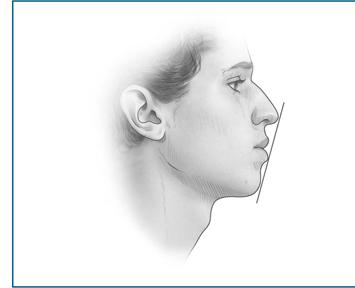
The lower face is not only assessed from the front. Profile analysis helps determine whether the lips are truly overprojected or whether the chin is retruded. A weak chin can make normal lips appear too prominent, and a strong chin can make the same lips appear relatively smaller.
Reference lines such as the Ricketts line can help organize profile assessment, but they are guides rather than universal standards. Natural facial morphology varies, and some populations have baseline proportions that do not fit a single profile formula.
Ethnicity, Heritage and Aesthetic Preference: Use Context, Not Stereotypes
Lower-face morphology varies widely both between and within ethnic groups. Region of origin, ancestry, sex, age, dentition, body composition and individual facial genetics all matter. Cultural trends can also influence what a patient considers attractive.
The safest clinical approach is to use population patterns as prompts for better questions, never as assumptions. The patient should define what they want to preserve, restore or change.
Ethnic morphology can inform assessment, but it should never dictate the endpoint. The treatment goal should remain authentic to the patient’s own face, identity and preference.
Patients of African and Afro-Caribbean Descent
Many patients may have naturally full lips and strong perioral projection, although morphology varies substantially by regional ancestry. With aging, the goal may be restoration of previous lip volume rather than creation of new fullness. Jowling can occur even when skin laxity is less pronounced, because skeletal and soft-tissue changes still alter lower-face support.
Perioral pigmentation and post-inflammatory hyperpigmentation risk should also be considered when choosing resurfacing or repeated needle-entry techniques.
Patients of East Asian Descent
A wider mandible, stronger masseters and greater subcutaneous facial fullness are common patterns in some East Asian populations, but lower-face shape varies substantially by region of origin. A slim or tapered lower face and a delicate chin may be preferred by some patients, while others want to preserve a broader natural jaw.
When masseter slimming is part of the plan, cheek structure and chin support should be evaluated so that narrowing the lower face does not create disproportion or reveal laxity.
Patients of South Asian Descent
South Asian faces are highly diverse. Full lips and buccal fullness may provide strong soft-tissue support in some patients, while a smaller bony chin or congenital retrusion may be important in others. Perioral pigmentation, downward oral commissures and prejowl change can be meaningful concerns.
Treatment should distinguish pigmentation from volume loss and should avoid assuming that a full lower face automatically needs slimming.
Patients of Latin American, Central American, Mexican and Puerto Rican Descent
Prominent lips and a strong preference for lip definition can be common, but chin projection varies with ancestry. With aging, lip deflation, marionette change, jowling and loss of jawline contour may become prominent, sometimes in combination with submental fullness.
The lower face should be balanced rather than simply enlarged: chin support can be important when naturally full lips make a retruded chin more noticeable.
Patients of Middle Eastern Descent
Middle Eastern populations are highly heterogeneous. Lip thickness, chin shape and jawline width can vary significantly by ancestry. In many patients, lower-face concerns center on maintaining a well-defined jawline, managing jowling or heavier soft tissue, balancing the lips with the nose and preserving expressive facial movement.
Perioral hyperpigmentation can also be relevant, which means lower-face rejuvenation may need both structural and skin-quality treatment rather than filler alone.
Patients of European Descent
More deeply etched perioral lines, progressive loss of vermilion show and obvious upper-lip lengthening can be prominent aging concerns in lighter skin. Jowls may be driven strongly by skin laxity and downward muscle pull, while lip restoration may focus on replacing lost structure rather than creating a new shape.
Plan the Midface, Chin and Jawline Together
Treat the Midface Before You Over-Treat the Lower Face
Midface support changes how the lower face hangs. Restoring or refining the cheek can improve the transition toward the nasolabial fold and lower face, reducing the temptation to place excessive filler into marionette lines, jowls or the jawline.
This does not mean every patient needs cheek filler. It means the midface must be assessed first so the clinician knows whether the lower-face problem is truly local.
Chin and Jawline Should Be Planned Together
A projected chin with an unsupported jawline can look disconnected. A sharp jawline with a retruded chin can still look unbalanced. Integrated planning creates a continuous mandibular contour rather than a collection of isolated enhancements.
Lower-Face Treatment Options
Hyaluronic Acid Filler for the Lower Face
HA filler can reshape the chin, support the prejowl transition, improve jawline continuity and restore selected perioral structure. More structural products are generally chosen where projection and contour support are required, while softer products may be preferred for mobile or superficial zones.
Treatment plane matters. Depending on the zone and objective, lower-face filler may be placed in subdermal or supraperiosteal planes. Facial-artery anatomy and product behavior must be considered in any injection plan.
Biostimulators for Lower-Face Support
Biostimulators such as poly-L-lactic acid or calcium hydroxyapatite can be incorporated when the goal includes broader tissue support and collagen remodeling rather than only precise local volumization. They can complement HA filler when both structure and tissue quality need improvement.
Neuromodulators in the Lower Face
Neuromodulators can modify muscle-driven shape and expression. Common lower-face targets include the masseter, mentalis and depressor anguli oris. Because these muscles influence both facial shape and soft-tissue support, dose and patient selection are particularly important.
Resurfacing for Perioral Texture
When fine lines and texture are dominant, resurfacing can be more anatomically appropriate than adding volume. Laser or other resurfacing approaches can be combined with injectables when structural support and skin quality both require treatment.
Why Combination Treatment Often Looks More Natural
Using one product to solve every lower-face problem can lead to overtreatment. A more balanced plan may use a small amount of HA for structure, neuromodulator for excessive muscle pull, biostimulation for tissue quality and resurfacing for fine lines.
The point of combination treatment is not to perform more procedures. It is to use less of each modality by assigning each treatment to the problem it is best suited to solve.
Clinical Concept: Lip Support Can Improve Without Lip Filler
Aging around the lips can reflect loss of support from the pyriform region, chin and adjacent lower-face structures. Restoring that support can evert or better present the lip, meaning some patients do not need direct lip augmentation even if they initially feel their lips look smaller.

Clinical Concept: Balance Lower-Face Slimming With Cheek and Chin Structure
When the masseters project more laterally than the cheekbones, narrowing the lower face can change overall facial shape dramatically. If the midface or chin lacks support, slimming the masseter alone may lengthen the face or make sagging more noticeable.
This is why cheek structure, chin shape and lower-face width should be reviewed together before masseter reduction.

Skin of Color: Injection Strategy and Pigment Risk
In richly pigmented skin, post-inflammatory hyperpigmentation and scarring risk deserve additional attention. A treatment plan that creates many unnecessary punctures can create avoidable inflammation.
Where appropriate, cannula-based threading or fanning can reduce the number of skin entry points. Resurfacing intensity should also be selected with the patient’s pigment response and healing history in mind.
Common Lower-Face Treatment Mistakes
- Treating the lips before checking chin projection and pyriform support.
- Using a universal lip ratio instead of adapting to the patient’s face.
- Filling the jowl instead of correcting the prejowl transition or underlying support problem.
- Overfilling the anterior jawline and unintentionally widening the lower face.
- Reducing the masseter aggressively in a patient who already has laxity or limited cheek support.
- Treating marionette lines without assessing DAO pull and chin/jawline structure.
- Ignoring dentition in an aging-lip consultation.
- Assuming ethnicity predicts the patient’s preferred aesthetic endpoint.
- Using filler to compensate for a true surgical lifting problem.
- Ignoring pigmentation and skin-quality concerns because the structural contour looks good.
How to Match the Treatment to the Lower-Face Problem
| Main concern | Likely contributor(s) | Treatment family to consider | Common mistake |
|---|---|---|---|
| Thin / inverted lips | Lip atrophy, maxillary/dental support, pyriform deficiency | Structural support ± lip HA filler | Injecting only the lip body |
| Perioral vertical lines | Skin aging + orbicularis activity | Resurfacing ± very selective filler | Overfilling superficial lip tissue |
| Downturned corners | DAO pull + volume/support change | Neuromodulator ± structural support | Filling the corner alone |
| Chin dimpling | Mentalis hyperactivity ± chin retrusion | Neuromodulator ± chin filler | Treating texture without assessing projection |
| Retruded chin | Skeletal / soft-tissue deficiency | Structural HA filler or other structural strategy | Making lips smaller to compensate |
| Prejowl sulcus | Local depression + mandibular change | Targeted structural support | Filling the jowl itself |
| Wide lower face | Masseter, bone, fat or combination | Cause-specific slimming/contouring | Assuming the masseter is always the cause |
| Jowls | Descent, laxity, ligament/bone/fat change | Support + tightening; surgery if advanced | Adding large amounts of filler |
| Poor jawline definition | Chin, jaw, jowl, submental or neck factors | Integrated chin-jaw-neck plan | Treating only the gonial angle |
| Perioral pigmentation | Pigment biology / inflammation | Pigment-focused skin treatment | Trying to correct color with filler |
Lower-Face Rejuvenation in Abu Dhabi: What a Good Consultation Should Clarify
Before any treatment, these are the questions a thorough consultation should answer:
- What do I want to preserve about my natural lips, chin and jawline?
- Is my main concern shape, aging, symmetry, pigmentation, muscle activity or volume loss?
- How do my lips relate to my nose and chin in profile?
- Is my chin retruded, short, narrow, wide or simply under-supported by surrounding tissue?
- Is my lower-face width caused mainly by masseter muscle, bone, subcutaneous fat or soft-tissue descent?
- Would masseter slimming improve my proportions or reveal more laxity?
- Is my jowl a true descent problem, a prejowl depression, a jawline support issue or a neck problem?
- Does my midface need correction before the lower face is treated?
- Would direct lip filler help, or would surrounding structural support improve lip presentation first?
- Do I need filler, a biostimulator, neuromodulator, resurfacing, a device, surgery or a combination?
- How will the plan respect my facial heritage and personal aesthetic rather than applying a generic template?
- What is the safest treatment sequence if I want several procedures?
Frequently Asked Questions About Lower-Face Rejuvenation
What is lower-face rejuvenation?
Lower-face rejuvenation is a personalized plan for the lips, perioral area, chin, jawline, jowls, masseter and neck transition. It can involve injectables, devices, skin treatments or surgery depending on the cause of the concern.
Why should the lips, chin and jawline be assessed together?
Because changing one alters the visual balance of the others. A retruded chin can make the lips appear more prominent, while a wide jaw can make the chin look narrow.
What happens to the lips with age?
Lips can thin, flatten, retrude and roll inward. The cutaneous upper lip may lengthen and vertical perioral lines may become more visible.
Do all aging lips need filler?
No. Some lips look smaller because surrounding structural support has changed. Restoring the pyriform region, chin or other support may improve lip presentation without large amounts of direct lip filler.
What is the best lip ratio?
There is no universal ideal. Lip proportions should be balanced with the nose, chin, dentition, facial shape and the patient’s own preference.
What causes vertical lip lines?
They are usually caused by a combination of skin aging, elasticity loss, photodamage and repeated orbicularis muscle activity.
Can filler treat barcode lines?
Selective HA filler can soften some lines, but resurfacing may be more appropriate when skin texture is the dominant problem.
Why do mouth corners turn down?
Downturned corners can result from DAO muscle pull, soft-tissue descent, adjacent volume change and aging of the perioral region.
Can Botox lift the mouth corners?
In selected patients, careful neuromodulator treatment of the DAO can reduce downward pull. Structural support may also be required.
What causes chin dimpling?
An overactive mentalis can produce an orange-peel or dimpled chin surface. Chin shape and projection should also be assessed.
What is chin projection?
Projection is how far the chin extends forward in profile. It is different from vertical chin length and width.
Can chin filler make the face look slimmer?
In selected patients, increasing chin projection or length can improve lower-face proportions and create a more tapered appearance without widening the jaw.
What is the prejowl sulcus?
It is the depression immediately in front of the jowl. Supporting this hollow can help create a smoother mandibular line.
Can filler remove jowls?
Filler can improve structural deficits around the jowl but does not remove descended tissue. Significant laxity may require tightening or surgical treatment.
Why does the jawline become less defined with age?
Mandibular remodeling, fat-compartment change, soft-tissue descent, ligament support, skin laxity, platysma pull and DAO activity can all contribute.
What does masseter Botox do?
It reduces masseter activity and can decrease muscular lower-face width, creating a slimmer or more tapered shape in appropriate patients.
Can masseter Botox make the face sag?
It can accentuate laxity in selected patients if masseter bulk was providing lateral support. Full-face assessment is important before aggressive slimming.
Can masseter Botox reduce bone width?
No. It reduces muscle bulk, not mandibular bone prominence.
Can jawline filler make the face wider?
Yes. Structural filler can improve definition, but excessive product, especially anteriorly, can widen the lower face.
Should cheek filler be done before jawline filler?
Not automatically, but the midface should be assessed first. In some patients, restoring cheek support improves lower-face balance and reduces the amount of lower-face treatment needed.
What type of filler is used for the chin and jawline?
More structural HA fillers are often considered when projection and contour support are required. Product choice should depend on the target plane, anatomy and treatment goal.
What is a biostimulator for the lower face?
Injectables such as PLLA or CaHA can support collagen remodeling and broader tissue quality, sometimes in combination with HA filler.
Can filler and Botox be combined in the lower face?
Yes. Combination treatment can address structure and muscle activity at the same time and may reduce the need to overuse either modality.
Can lower-face treatments be customized by ethnicity?
They should be customized by individual anatomy, heritage and preference, but ethnicity should never be used as a rigid treatment template.
Why is ethnicity relevant at all?
Population patterns can influence baseline morphology, skin behavior and cultural aesthetic preferences. The purpose is to ask better questions, not make assumptions.
Is lower-face pigmentation treated with filler?
No. Pigmentation is a skin-quality concern and requires a pigment-focused strategy rather than volumization.
What is the Ricketts line?
It is a profile reference line drawn from the nasal tip toward the chin and used to think about the relationship of the lips to the nose and chin. It is not a universal beauty standard.
Can lower-face filler create “duck lips”?
Overprojecting the lips without correcting surrounding support or considering the chin and nose can create an unbalanced appearance.
When is surgery better than injectables?
Surgery becomes more relevant when the main problem is significant soft-tissue descent, excess skin or a lifting goal that cannot be achieved by adding volume.
What is the biggest mistake in lower-face rejuvenation?
Treating one visible feature without understanding the full lower-face system. Natural results come from balancing lips, chin, jawline, muscle activity, skin quality and facial proportions.