Lip Tenting Technique in Abu Dhabi: A Complete Medical Guide to Vertical Lip Filler, Natural Shape, Evidence and Safety
At a Glance: What Is Lip Tenting?
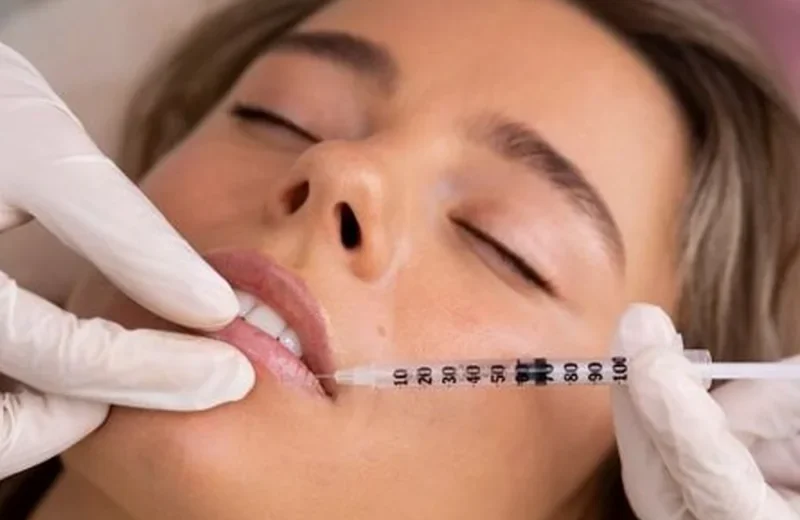
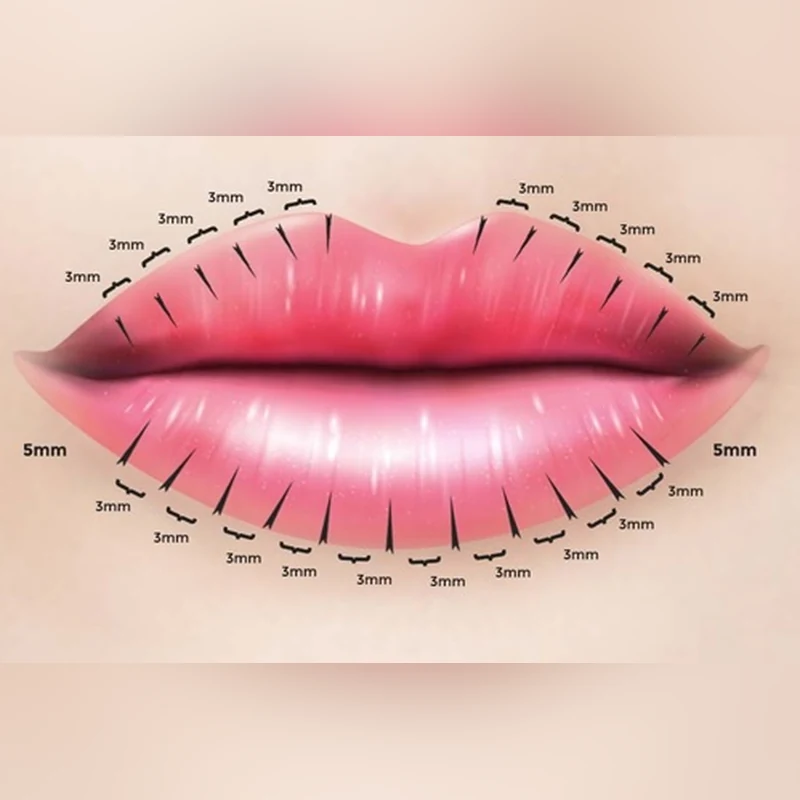
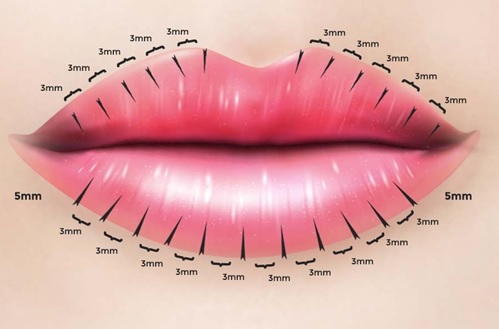
Lip tenting is a vertical-vector hyaluronic acid (HA) lip filler approach designed to influence lip height, border definition, eversion and projection with multiple strategically positioned deposits. Instead of relying entirely on horizontal passes along the length of the lip, the technique works with predominantly vertical paths. Its name reflects the proposed effect of building small internal supports that can tent the lip tissue and reveal more vermilion.
The important distinction is between what the technique intends and what clinical evidence has actually proved. A small 2020 prospective case series reported high satisfaction in 20 treated women, but its size, absence of a comparison group and frequent transient reactions do not establish superiority or freedom from vascular risk. Furthermore, a 2026 ultrasound study raised relevant concerns about deeper deposition and tissue changes associated with vertical injection patterns. For anyone considering lip tenting in Abu Dhabi, the best decision is individualized medical assessment, not selection based only on an attractive technique name.
Why This Article Is Different From a General Lip Filler Guide
People searching “lip tenting in Abu Dhabi,” “vertical lip filler technique,” or “lip tenting versus Russian lips” often have a precise question: what does the vertical technique do, what evidence supports it, and can it create natural-looking lips without overfilling? This article addresses that specific concern. For a broader overview of product selection, candidacy and lip filler treatment in Abu Dhabi, see the main lip filler service page. The two pages should link to each other without competing for the same primary search intent.
The discussion follows the original study’s scientific structure—anatomy, evaluation, treatment concept, results and interpretation—then expands it with later clinical data, particularly on vascular safety, ultrasound anatomy, results assessment and patient counseling. When a statement comes from the 2020 series, it is explicitly described as a finding within that particular study, not an outcome promised by a clinic in Abu Dhabi.
1. Understanding the Vertical Lip Tenting Concept
The technique was described by Braun, Braun and van Eijk in 2010 and subsequently evaluated in a small prospective interventional series reported by Dias and colleagues in Surgical & Cosmetic Dermatology in 2020. Conventional horizontal filling often attempts to enlarge a lip by depositing product along the long axis of its vermilion. By contrast, vertical lip tenting distributes material through multiple upright trajectories from the vermilion border toward the inner part of the lip, with the intention of improving both volume and perceived height.
The clinical goals are not interchangeable. Volume describes overall fullness. Projection describes how far the lip extends forward in profile. Eversion is outward turning and visibility of the pink vermilion. Definition refers to the crispness and shape of the lip border and Cupid’s bow. A patient may want any one of these effects, or a measured combination. Extra projection can look artificial when the real problem is loss of vermilion show. Likewise, adding more filler to a naturally prominent upper lip can impair facial balance.
The source authors proposed that multiple limited vertical deposits create small internal supports rather than one broad horizontal collection. This is a conceptual explanation of the aesthetic endpoint, not a demonstrated description of how all product behaves in living tissues. More recent imaging shows that HA may spread into muscle-related compartments even when an injector intends to place it superficially. Therefore the injection direction should never be marketed as a guarantee of its final tissue location.
What lip tenting is not
It is not a surgery, a particular filler brand, a fixed quantity in milliliters, or an assurance that bruising will not occur. It also does not create a universally ideal upper-to-lower lip ratio. The phrase “Russian lips” is frequently used online for high-visibility vertical augmentation, but it is not a single standardized clinical protocol. The labels overlap in popular descriptions; their actual trajectories, placement planes, needle versus cannula choices, and aesthetic endpoints can differ substantially.
Why conservatism matters
Lip tissue is mobile, vascular, anatomically variable and visible from many angles. A small geometric change can have an outsized effect on expression and facial identity. A sensible approach distinguishes a subtle correction from an exaggerated social-media template and allows time for early edema to subside before making aesthetic judgments. There is no evidence that every patient needs a fixed number of punctures, a mandated milliliter amount or perfect bilateral symmetry in one visit.
2. Lip Anatomy: The Foundation of Any Injection Strategy
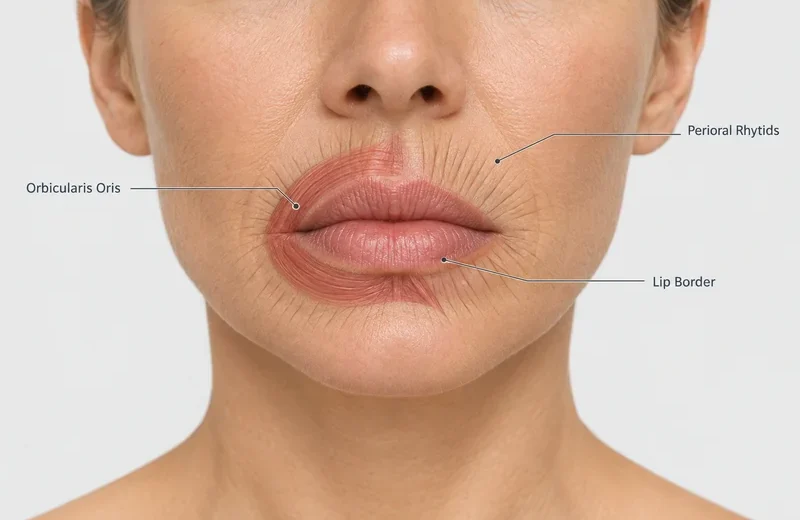
The vermilion is the visible colored region of the lip. Its outer border separates it from the surrounding cutaneous upper or lower lip, and the subtle elevated reflection near the junction is often called the white roll. The Cupid’s bow forms the central double-peak contour of the upper lip; the philtrum and philtral columns rise toward the base of the nose. The oral commissures form the corners of the mouth. The wet-dry junction distinguishes more external vermilion from the inner mucosal surface. The orbicularis oris and neighboring muscles influence lip movement during speech, smiling and kissing.
These landmarks matter aesthetically because “lip fullness” can be altered by quite different anatomical interventions. Stronger Cupid’s bow definition is not the same as broad enlargement. A thin upper lip caused partly by a long cutaneous upper lip and reduced tooth show should not necessarily be managed by simply injecting greater volume. A heavy or poorly defined lip contour may become less natural with excessive border treatment.
Upper-to-lower lip balance is not a universal formula
The 2020 paper discusses traditional European facial metrics and references upper/lower lip relationships, yet it also recognizes the role of individual anatomy. A ratio around 1:1.6 appears in historical aesthetic literature, but modern aesthetic planning does not treat it as an immutable rule. Facial ethnicity, age, dentition, skeletal support, lip width, nose and chin projection, sex-linked anatomy, and most importantly the patient’s goals change the appropriate endpoint. Pursuing a strict numerical ideal can paradoxically produce a result that looks less balanced.
Profile, teeth and chin relationship
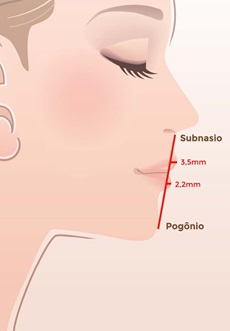
Lip projection should be assessed from the side, not just in a frontal selfie. A patient with little tooth show or a long upper lip may perceive thinness even if the lip contains adequate volume. The patient may instead need a discussion of upper lip length, dental support, skin and muscle balance, or a surgical lip-lift consultation. Not every request for “more lip volume” has an injectable solution.
3. The Superior and Inferior Labial Arteries: Why There Is No Zero-Risk Injection Plane
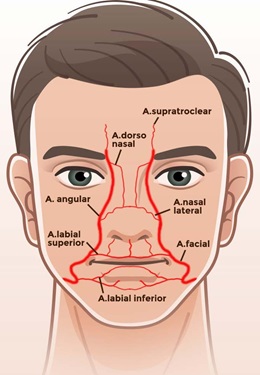
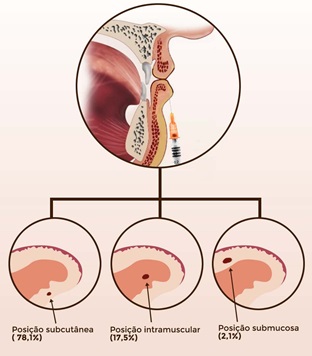
The lips receive an important vascular supply from the superior and inferior labial arteries, usually arising from branches of the facial arteries. These vessels form complex connections around the mouth. Their course and depth vary not only between patients but also across different parts of the same lip. An average depth measured in anatomical studies cannot prove that a particular millimeter is safe in an individual patient.
The 2020 article quotes prior anatomical research describing approximately 78.1% submucosal, 17.5% intramuscular, and 2.1% subcutaneous arterial positions. These are findings from anatomical samples and should not be interpreted as universal probabilities for a specific injection track. The small diagram in the source also contains inconsistent labels or percentage order in its printed caption; the manuscript’s explanatory prose and primary anatomical study should take precedence over that visual discrepancy.
Understanding this is crucial for vertical techniques. The path of a needle may cross more than one tissue layer. The lip’s relatively thin connective-tissue compartments mean that a nominally shallow plan may not predict final filler location. This is particularly relevant when the lip has been injected previously, contains scar tissue or has altered anatomy.
What ultrasound adds in modern practice
High-frequency ultrasound can help clinicians visualize existing filler, anatomical layers, and, when appropriately applied with Doppler, blood vessels. It is particularly relevant in selected complex or previously treated lips, unexplained lumps, suspected migration and complications. It is an adjunct to skill and clinical assessment, not a universal guarantee of safety.
A 2026 cross-sectional ultrasound study of 126 participants by Harris and colleagues reported that vertical lip filler techniques were associated with deeper or multilayered deposition, hypervascularity and evidence of migration compared with the horizontal techniques evaluated. Because it was observational, the study does not prove that vertical tenting always causes migration or that every horizontal procedure is preferable. However, it materially challenges the simplistic marketing claim that vertical technique automatically means a superficial, anatomically safer placement. The right interpretation is caution, individualized planning and avoidance of technique-based safety promises.
4. What the 2020 Lip Tenting Clinical Study Actually Evaluated
Dias and colleagues conducted a prospective interventional case series in a dermatology setting in Guarulhos, Brazil. The study recruited 20 women, with eligibility defined as ages 18 to 60 years and an interest in enhancing lip volume, contour or asymmetry. The treated cohort was reported as ages 18–58 years in the results. It excluded several categories of patients, including previous lip filler recipients, pregnant patients, those with certain uncontrolled systemic conditions or immunosuppression and patients with unrealistic expectations. The investigators obtained pre-procedure, immediate post-procedure and 30-day photographs; patient interviews and assessment were conducted at baseline and approximately 30 days after treatment.
The study used hyaluronic acid filler and described approximately 1 mL in each participant, with multiple small vertical deposits. The original publication contains detailed procedural choices, including equipment, preparation and local anesthetic approach. Those details describe what researchers did; they are not automatically an endorsed clinical protocol for every present-day product, anatomy or regulatory setting. An experienced clinician must plan according to product labeling, current guidance, anatomy and professional training.
Study design and its limits
| Study feature | What the 2020 source reports | How to interpret it |
|---|---|---|
| Design | Prospective interventional case series | Useful experience report, not a randomized comparison |
| Population | 20 female patients; treated ages 18–58 | Small selected group, limited generalizability |
| Product | Hyaluronic acid; 1 mL reported per patient | Specific experience, not a universal treatment dose |
| Assessment | Immediate photos and approximately 30-day follow-up | Early outcome, insufficient for long-term durability |
| Patient satisfaction | All patients described a high degree of satisfaction | Subjective result, not a controlled comparative endpoint |
| Vascular occlusion | No episode observed in 20 patients | Cannot establish zero risk or technique superiority |
| Early reactions | Frequent redness, swelling and bruising | Meaningful counseling points, not minor details to hide |
Why a 20-person study cannot prove safety superiority
Even if there are zero reported occlusions in a study of 20, the occurrence of rare complications is too infrequent for that sample to reliably exclude them. Likewise, a high level of satisfaction with no control group cannot show that lip tenting outperforms other injection techniques or that its aesthetic result is superior to a conservative horizontal or combination approach. The result may be influenced by selection, injector experience, product properties, photography timing, the patient’s expectations and the natural early swelling that immediately alters lip shape.
5. Results: Satisfaction, Swelling, Bruising and the Meaning of “Natural”
The following numbers belong to the published 2020 series and must not be used as a treatment guarantee or clinic-wide performance claim.
| Reported outcome | Finding in the 20-patient series | Important qualification |
|---|---|---|
| High satisfaction | 20 of 20 (100%) | No comparator; subjective assessment |
| Swelling, redness and discomfort | Observed to some degree in 100% during the first two days | Typical transient reactions may alter immediate appearance |
| Bruising | 16 of 20 (80%) had ecchymosis at an entry site | Resolved within seven days in the reported cohort |
| Discomfort during anesthetic block | 12 of 20 (60%) reported mild discomfort/pain | Reflects the study’s specific anesthesia method |
| Observed vascular occlusion | None reported | Small sample cannot exclude a rare, serious event |
| Long-term outcomes | Not established by the 30-day review | No evidence here about 12-month maintenance or migration |
These findings are informative because they make the trade-offs visible. A technique can yield a pleasing early contour while still causing frequent short-lived swelling and bruising. The result is not a contradiction: adverse reactions and patient satisfaction measure different things. Choosing “lip tenting” on the assumption of less bruising than any alternative would not be supported by this particular study.
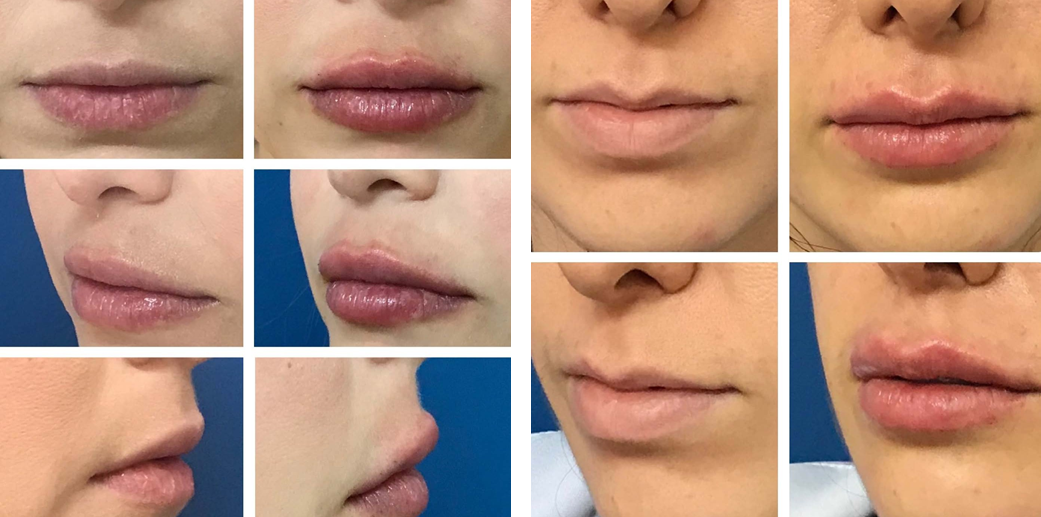
Clinical image series: immediate results are not final results
The published article presents four selected before-and-immediately-after clinical cases. Each has multiple views, showing changes to contour, fullness and profile. The “after” images capture an early postoperative moment. Such photographs are useful for discussing design intent but cannot establish how much of the initial effect is filler versus swelling, how the result moves during speech, or what remains after six or twelve months. The source images were not taken by Dr. Erfan Rahmani and are not presented as his clinical portfolio.
Aesthetically, the first panel draws attention to how increased upper and lower vermilion visibility affects the overall lip silhouette. But comparing images made at different moments may also reveal changes in expression, lighting, tension and tissue edema. A publication-quality gallery should standardize neutral expression, head position, lighting and camera distance and ideally include a later time point after swelling resolves.
For a patient with naturally thin lips, the question is not merely “How much larger do they appear?” It is also whether Cupid’s bow, lower-lip support, closure at rest and speech remain harmonious. An exaggerated central upper lip can look balanced in a closely cropped photograph yet appear disproportionate in full-face profile. For clinical consultation, photographs should therefore include the entire lower face and, when appropriate, standardized dynamic assessment.
6. How to Assess Candidacy for Lip Tenting in Abu Dhabi
A proper consultation begins with an aesthetic diagnosis rather than an injection template. The clinician should identify the baseline lip structure, degree and location of any volume deficit, position of the white roll and Cupid’s bow, tooth and gingival display, perioral lines, asymmetry at rest and in motion, and potential effects of prior filler or previous surgery. A patient’s preferred photograph is useful for understanding goals but should never replace assessment of the real face.
Potential candidates may include adults who want subtle vermilion eversion, modest vertical height enhancement, clarification of the lip outline or correction of selected volume differences. Nevertheless, a vertical approach is not obligatory for those goals. The safest and most natural result in an individual case may be achieved by a different configuration of limited filler, a combination of methods or no filler at all.
Situations requiring additional consideration
A history of a previous filler product of unknown type, persistent firmness, recent inflammation, recurrent herpes labialis, active infection, scarring, previous lip surgery, pronounced asymmetry from a structural cause, dental or skeletal problems, or unrealistic demands should prompt additional evaluation. Pregnancy or breastfeeding, current systemic illness and medicines that influence bleeding also require a clinician-led discussion. Medicine should not be stopped independently simply to pursue a cosmetic procedure.
An individual who wants an extreme, stereotyped “Russian” or “doll” appearance needs to understand the difference between a requested digital aesthetic and what that shape may look like in profile or during expression. Consultation includes the possibility of advising against injection or discussing alternatives such as a surgical lip lift when upper lip length, rather than lack of filler volume, dominates the appearance.
Consultation questions worth asking
Ask what part of the lip requires change; why the planned HA product has the desired rheological properties; whether the treatment is staged; what the earliest realistic review date is; how baseline asymmetry is documented; and how vascular complications are recognized and escalated. Patients seeking lip filler in Abu Dhabi should expect clear informed consent, use of appropriately supplied products and an emergency pathway rather than a promise of “zero pain,” “zero downtime,” or “completely risk-free filler.”
7. Product Selection: HA Rheology Matters More Than a Trend Name
Hyaluronic acid remains a standard category for injectable lip augmentation because approved products offer a range of mechanical properties, integrate with tissue to varying degrees and may be reduced with hyaluronidase when clinically indicated. The broad category does not make individual products interchangeable. Products differ in cross-linking, elasticity, cohesivity, water-binding, swelling behavior, placement indications and duration in particular tissues.
A softly deformable formulation may be preferable for a mobile, delicate area needing subtle correction. A product with more structure can create different support or projection but may also be more visible if misplaced. Neither “soft” nor “firm” can replace anatomical judgment. Restylane was the HA brand used by Dias and colleagues in their specific series, but that does not establish it as universally superior to all other HA lip fillers or determine which product should be used for an individual patient in the UAE.
Direct implantation of calcium hydroxylapatite (CaHA/Radiesse), poly-L-lactic acid (PLLA/Sculptra) or permanent silicone into the body of the lips is generally inappropriate for routine lip augmentation because of product-specific risks and difficulty reversing some complications. These material distinctions should be explained before consent, not hidden beneath a generic term such as “filler.” Product indications and authorization should be checked for the precise brand and jurisdiction.
| Decision factor | Practical implication for individualized lip treatment |
|---|---|
| Desired contour | Sharp border, gentle eversion and broad volume are different endpoints |
| Mechanical behavior | Elasticity, viscosity, cohesivity and hydration influence how a gel behaves |
| Lip mobility | Material must remain aesthetically acceptable in movement, not only at rest |
| Previous filler | Existing deposits may change available space and the way new product distributes |
| Reversibility | HA often offers a management option with hyaluronidase, though dissolution is itself a medical procedure |
| Local authorization | FDA labeling is not identical to UAE authorization or a facility’s privileges |
| Follow-up plan | Staged correction can reduce the temptation to overfill an edematous lip |
8. Lip Tenting, Russian Lips and Horizontal Filling: A Balanced Comparison
“Russian lips” is widely used as a marketing term for a vertically emphasized, flatter-profile or centrally elevated appearance. However, the phrase is not an exact anatomical or clinical specification. Some clinics use it to mean vertical threads along the vermilion; others emphasize central height and a relatively restrained forward projection. Lip tenting is a named technique with a specific historical description, but practitioners may substantially modify it.
Horizontal methods run more parallel to the lip’s long axis and may be used for support, volume or border work. The vertical/horizontal distinction is informative, but not a substitute for documenting the precise treatment depth, tool, filler and anatomy. It is entirely possible for a hybrid plan to use different directions for different anatomical goals. No one direction solves every shape problem.
| Approach | General concept | Potential aesthetic goal | Evidence-based caution |
|---|---|---|---|
| Lip tenting | Multiple substantially vertical vectors | Eversion, height and contour | Older small series; ultrasound concerns warrant careful interpretation |
| “Russian lips” | Broad popular label for height-focused reshaping | Defined, elevated upper lip | No single standardized protocol; risk of exaggerated or irregular result |
| Horizontal filling | Deposits along the lip’s long axis | Selected contour or volumizing effects | Can also overproject or cause lumps if inappropriate |
| Four-point approach | Fewer entry points with directional distribution | More even access to parts of the lip | Published retrospective data do not prove superiority |
| No-Touch approach | Avoids direct violation of lip mucosa in its original description | Profile, projection and augmentation | “No-Touch” does not mean needle-free or risk-free |
| Step-by-step Phi | Geometric measurement and gradual sessions | Staged proportional enhancement | Golden ratios are guides, not universal biological laws |
| Multi-Vector technique | Multiple anatomical vectors customized by zone | Multi-dimensional shaping and rejuvenation | Retrospective results, no randomized head-to-head proof |
For someone who has already read the site’s main Lip Filler page and is comparing named methods, the reasonable conclusion is that the preferred technique should follow the patient’s anatomy and target change, not the other way around. The physician should be prepared to explain both why a particular technique is being used and why other strategies may not suit the case.
9. What 2026 Ultrasound Evidence Changes About Vertical Techniques
This is an especially important update because the source article and the classic lip tenting literature predate modern detailed high-frequency ultrasound imaging. The 2026 Harris et al. study assessed lip tissue layers and filler distribution in 126 participants at London and Amsterdam clinics. Researchers found that the subcutaneous lip layer averaged less than 1 mm, and HA deposits were often present in intramuscular or multilayered compartments even when clinical intent had been superficial placement. They also reported an association between vertical techniques and deeper distribution, hypervascularity and signs of migration.
This is not proof that every vertical lip injection produces harm or that all patients with older tenting treatment will develop migration. It is cross-sectional evidence, subject to confounding and variability in injector technique, product, time since treatment and incomplete procedure records. Still, it is more directly informative about where filler actually resides than visual satisfaction scores alone. It supports avoiding unqualified statements such as “the tenting pattern stays only in a safe superficial layer,” “vertical is always safer,” or “there is no migration with this method.”
A separate cohort study published in JAMA Dermatology investigated more than 1.7 million filler syringes reported by 370 dermatologists and found lower observed vascular occlusion rates with cannulas than needles across facial filler injections. This does not specifically settle the debate for vertical lip tenting versus every alternative, but it shows that tool choice and practitioner experience may matter and that anatomy-specific decisions are necessary. Neither needles nor cannulas eliminate occlusion risk.
10. How to Recognize Expected Recovery Versus Danger Signs
Temporary swelling, tenderness, mild redness, a bruised entry point and a sense of tightness can occur after lip injections. They may be more apparent in the highly vascular and mobile lip than in some other facial areas. The 2020 series reported transient swelling and bruising frequently. Patients should therefore plan around work, photography and important social events rather than treating the procedure as invisibly reversible by the next morning.
Urgent warning signs: Unusual or escalating pain, blanching, mottled or dusky discoloration, cool tissue, a rapidly changing appearance, or visual or neurological symptoms during or after filler treatment require immediate medical assessment. Sudden visual changes or stroke-like symptoms are a medical emergency. Do not interpret these signs as ordinary bruising or wait for a routine two-week appointment.
If vascular compromise is suspected during an HA injection, the procedure must be stopped and the clinician should immediately enact an established, current complication-management pathway. Hyaluronidase is an important element of professional management for HA-related vascular occlusion, but a patient’s online article should not present a generalized dose as a replacement for training, access to emergency medicines, vascular assessment or ophthalmology/emergency referral where appropriate. Modern CMAC guidance and newer expert-informed literature emphasize prompt action and discourage routine reliance on unsupported interventions such as nitroglycerin paste.
Recovery timeline: what a patient can reasonably expect
| Time period | Common observations | What not to ignore |
|---|---|---|
| First hours | Tenderness, changing fullness, immediate edema | Marked pain, sudden pallor, visual symptoms |
| First 24–48 hours | Swelling or redness may be more obvious | Mottled skin, progressively severe pain or evolving discoloration |
| Days 3–7 | Bruising and swelling may gradually improve | Increasing warmth, pus, fever or worsening instead of improvement |
| About 10–14 days | Shape easier to reassess as edema reduces | Persistent significant lumps, functional issues or asymmetry merit review |
| Later weeks/months | HA result and movement can be evaluated | Delayed nodules or recurrent swelling warrant professional assessment |
This timeline is an explanatory framework, not a promise of a specific recovery duration. Follow the treating clinic’s individualized written instructions and seek review whenever the pattern is atypical.
11. Before-and-After Photography: How to Interpret Realistic Results
Good documentation should use standardized lighting, camera angles and distance, including frontal, oblique, profile and, where relevant, smiling images. Immediate “after” photographs show the appearance at a time when some swelling is expected. They should not be described as the final result. A 2020 study panel demonstrates whether contour change is plausible but not whether the aesthetic improvement remains stable at 12 months, changes with expression or involves long-term migration.
Before deciding that lip tenting or any other technique is successful for you, look for subtlety during speech and smiling, harmony with the chin and nose, preservation of natural Cupid’s bow and absence of excessive fullness at the skin–vermilion junction. Recognize that cases selected for publication may not reflect the entire range of results and that photography is susceptible to differences in expression, head position and lighting.
12. Preventing an Overfilled or Unnatural Lip
The aim is not simply to avoid an extreme result; it is to avoid treating the wrong anatomical problem. A lip may look overly large because too much HA was deposited, because the product is inappropriate for the location, because swelling is being mistaken for the permanent endpoint, or because prior products remain in tissue. Uneven product placement and changes in motion can make a lip look artificial even when the total volume is modest.
A conservative plan often begins with clearly defined priorities: perhaps balancing an asymmetric side, restoring the central tubercle, improving the transition at the oral commissure or enhancing the contour without dominating the face. It then waits until edema has settled before considering more filler. Routine touch-up should address a documented objective, not chase hypothetical mathematical perfection.
Persistent fullness above the vermilion, blurring of the white roll, a shelf-like upper lip, unusual firmness, multiple palpable deposits or chronic asymmetry should be assessed clinically rather than automatically corrected with additional filler. Depending on the cause and product, observation, diagnostic ultrasound, hyaluronidase or other physician-directed management may be reasonable. Self-massage or treatment with a non-medical injector is not an adequate solution to suspected complications.
13. Treatment Planning for Different Lip Profiles
Naturally thin lips
For someone with inherently thin lips, the priority may be to increase vermilion visibility while preserving a soft central-to-lateral transition. The clinician should decide whether adding height is truly desirable, whether the upper lip already projects enough, and whether the lower lip needs support for overall balance. It may be more natural to stage modest improvements than to seek a large change in one appointment.
Aged lips and perioral rejuvenation
Aging can reduce vermilion show, blur the white roll, lengthen the upper lip, flatten the philtral columns and deepen perioral lines. Volume deficiency is only one component. Dynamic muscle effects, skin photodamage and dental or skeletal support may require different treatment modalities. In mature lips, aggressive height-focused augmentation may expose functional and esthetic limitations rather than restore a youthful shape. Some patients benefit more from targeted filler plus skin treatment, and some need specialist advice about surgical options.
Asymmetrical lips
Asymmetry often exists before filler. One side may sit higher at rest, one philtral column may be more distinct, or a muscle imbalance may change the smile. Selective restoration should not assume that injecting the same volume in both halves will create symmetry. Photographic comparison at rest and while smiling can help identify whether the difference is mainly volume, contour or movement-related.
Previously filled lips
A patient with earlier HA, unknown injectable material, a palpable ridge or a history of dissolved filler should not be treated as a blank anatomical canvas. Existing deposits may obscure tissue planes, alter appearance or change how a new product distributes. Ultrasound can be useful in some such cases to support an informed plan. The best treatment may begin with observation or assessment rather than immediate reinjection.
Male lip enhancement
Male patients may seek subtle restoration after aging, correction of asymmetry or improved hydration-associated lip appearance. The desired proportions, lip-to-chin relationship and preferred visibility of the vermilion need individualized discussion. One should not extrapolate a small study of 20 women to claim identical results or optimal treatment patterns in men.
14. Needle Versus Cannula: An Individualized Choice
Lip tenting is classically described using multiple vertical needle entries. A cannula can access some lip areas with fewer cutaneous entry sites and may, in certain contexts, reduce bruising and intravascular entry risk. Conversely, some fine contour corrections are performed with precise needle techniques. The appropriate tool depends on the desired endpoint, product, anatomical risks, existing filler and clinician expertise; treating the choice as a contest with one universally safe winner is scientifically unsound.
The JAMA Dermatology cohort comparing needles and microcannulas across multiple facial regions is valuable but not a head-to-head randomized trial of lip tenting. It reports associations in experienced injector practices. These data inform risk counseling, not a guarantee. A physician choosing a particular instrument should also understand that negative aspiration cannot reliably rule out vascular placement and that no single technique can remove the need for emergency readiness.
15. Lip Tenting and the Broader Non-Surgical Rejuvenation Plan
In selected patients, lip appearance is influenced by dynamic orbicularis oris contraction, skin texture, sun-related fine lines, loss of facial support and downturn of the mouth corners. HA lip filler addresses some of these problems but not all. A botulinum-toxin lip flip can change muscular expression or eversion in selected cases, but it is different from filler and can affect speech, drinking or lip function if poorly chosen. Resurfacing techniques may address vertical perioral lines that filler alone cannot adequately correct. Surgical lip lift or other reconstructive options may be relevant when structural upper lip length is the dominant issue.
Combination treatments are not automatically preferable. Every additional procedure creates its own indications, downtime and risks. The sequence and need should be based on examination rather than upselling. A good clinician may recommend fewer interventions than a patient initially requests when the face already looks balanced.
16. A Stepwise Patient Journey at a Licensed Abu Dhabi Clinic
A professional visit begins with medical history, cosmetic goals, discussion of previous fillers and review of medicines, allergies and relevant infections. The clinical evaluation may include frontal and lateral lip photographs and observation during normal smiling and speech. The patient and clinician then agree whether more volume, eversion, definition or asymmetry correction is genuinely indicated, and they discuss material, expected course, risk and alternatives.
A medically supervised injection visit includes aseptic preparation, suitable pain control, product traceability, informed consent and readiness to respond to adverse events. Following treatment, the patient should receive written aftercare and explicit emergency contact instructions. A routine review after early swelling has declined can distinguish expected healing from a meaningful correction need. This sequence is applicable whether the chosen injection design is tenting, horizontal, multi-vector or another technique; the standard of care does not depend on a branded aesthetic label.
Helpful questions for the treating physician
- What precise anatomical concern are we correcting—height, contour, profile, volume or movement?
- What makes vertical tenting suitable, and what alternatives are reasonable?
- Is any existing filler or scar tissue altering the plan?
- Which approved HA formulation is appropriate for my lips, and why?
- How will we assess the result after swelling settles rather than immediately?
- What is the plan if I develop unexpected severe pain, discoloration or visual symptoms?
- Are the clinical before-and-after images from the treating clinician, and when were they taken?
17. What Patients in Abu Dhabi Should Know About Cost, Longevity and Retreatment
Cost depends on the product used, amount genuinely required, physician assessment, complexity and clinic policies. A low headline price should not outweigh product authenticity, professional assessment, emergency readiness or a realistic follow-up plan. The original 2020 lip tenting series was not designed to establish prices, economic value in the UAE or a precise average HA lifespan.
Lip filler longevity varies with product, placement, tissue dynamics, previous treatment and an individual’s biology. Published figures commonly range across months rather than representing one fixed promise. Cross-linked HA deposits can sometimes remain detectable beyond the period of obvious visual benefit, which is why a yearly appointment should not automatically mean another full syringe. The indication for retreatment should be reassessed, not scheduled solely by calendar.
18. Clinical Evidence: What We Know, What We Do Not
The main benefit of the 2020 series is that it provides a detailed clinical illustration of an established lip-tenting concept with early documented satisfaction and transient reaction rates. It has important weaknesses: a very small sample, one treatment cohort, no randomized comparator, only women, a subjective outcome assessment, a brief follow-up and limited power to detect rare adverse events.
Other publications describe different techniques with their own cohorts. The 2018 four-point case series involved 50 female patients; the 2021 Phi method described 833 patients; a 2025 Multi-Vector retrospective study involved 253 women. These studies can be useful to understand design choices and patient selection, but comparing their satisfaction percentages without matching populations, products, endpoints and follow-up periods does not establish which technique is best. The 2026 ultrasound evidence should also be weighed separately as anatomical observation rather than a direct aesthetic satisfaction trial.
Evidence synthesis: Lip tenting is a valid published technique concept, but the evidence does not justify absolute safety claims, a universally ideal lip ratio, predictable absence of migration, or guaranteed superiority over other injection strategies. The more defensible approach is a conservative, anatomically informed plan led by a licensed clinician who can select or decline the technique case by case.
19. Final Clinical Perspective: A Natural Lip Is an Individualized Lip
The clearest lesson from both historical and newer evidence is that the outcome matters more than the name of a technique. Some patients want discreet fullness; others want better upper-lip height, restored Cupid’s bow or correction of one side. The same injection map should not be reproduced mechanically on every face. Respect for vascular anatomy, existing tissue structure, personal proportions, prior treatments and the dynamic smile is essential.
Lip tenting may be one useful tool within a broader skill set. It should not be presented as the single safest, most natural or most modern way to fill the lips. In Abu Dhabi, the consultation should focus on clinical suitability, genuine product quality, realistic expectations, complication preparedness and preserving the patient’s distinctive facial identity.
Frequently Asked Questions: Lip Tenting and Vertical Lip Fillers
1. What is lip tenting in simple terms?
Lip tenting is a professional lip filler technique that uses substantially vertical injection paths to shape and reveal the pink part of the lips. The intended effects may include eversion, contour definition and carefully controlled fullness. It is a technique concept rather than a product or guaranteed outcome.
2. Is lip tenting the same as Russian lips?
Not exactly. Russian lips is a broad commercial label with variable interpretations, while lip tenting is a published vertical-vector approach. There may be overlapping treatment goals, but the exact trajectories, target tissues and amount of filler can differ.
3. Is lip tenting better than traditional filler?
There is no reliable head-to-head evidence proving that lip tenting is universally better. The best approach depends on the patient’s anatomy, desired changes, previous filler and the experience of the physician.
4. Can lip tenting create a natural appearance?
It may create natural-looking results in appropriately selected patients, but it can also create an artificial shape if overused or poorly matched to the face. Naturalness depends on projection, movement, proportion and conservative product selection, not the name of the technique alone.
5. Is lip tenting always safer than horizontal injection?
No. The 2020 case series was too small to establish a safety advantage. Newer ultrasound findings raise questions about deeper deposition and migration associations for some vertical techniques. No vector or injection depth is universally free of vascular risk.
6. Does lip tenting always use a needle?
Classic descriptions often use vertical needle entries. Other lip enhancement approaches may use cannulas or combinations of instruments. The physician’s choice should be guided by anatomical goals and risk assessment rather than a fixed marketing rule.
7. Does lip tenting hurt?
Discomfort is possible during anesthesia and injection. In the 20-patient published series, 60% reported mild pain or discomfort during the anesthetic block. Comfort strategies and patient experiences vary.
8. Does the procedure involve multiple punctures?
The historical technique uses repeated vertical entries rather than relying on one horizontal pass. The number of punctures in an individual treatment should not be dictated by a promotional template; it depends on the treatment plan and safety considerations.
9. How much filler is needed for lip tenting?
The 2020 researchers reported using 1 mL per participant. This is a description of their method, not a standard dose for all lips. Some patients need less; others need staged treatment or may not benefit from further filler at all.
10. Can lip tenting increase visible upper-lip height?
That is one of its intended aesthetic effects. However, whether increased upper-lip height improves the patient’s appearance depends on the existing upper lip, lower lip, facial profile and smile.
11. Does lip tenting prevent a duck-lip appearance?
No technique prevents overprojection or an artificial contour by definition. Conservative planning and avoidance of unnecessary product are more important than the technique label.
12. Can it improve Cupid’s bow definition?
Selected HA treatment may enhance Cupid’s bow definition. Whether vertical tenting is needed depends on the exact deficiency; in some cases border or structural refinement with another strategy is more appropriate.
13. Does lip tenting correct asymmetric lips?
It may help with volume-related asymmetry, but a complete evaluation must distinguish anatomical volume differences from muscular, skeletal, dental or scar-related causes. Perfect symmetry is not a realistic guarantee.
14. Can thin lips be treated with lip tenting?
Sometimes. Naturally thin lips may benefit from carefully staged eversion or volume correction, but the amount and technique must reflect soft-tissue capacity and the desired natural result.
15. Is lip tenting suitable for mature lips?
It is not automatically the best choice. Mature lips may have reduced volume alongside lengthening of the upper lip, skin texture changes and less dental support, requiring a broader rejuvenation assessment.
16. Are the results immediate?
A change is usually visible after filler placement, but the immediate appearance includes swelling and is not the settled endpoint. Judging final symmetry or fullness too early can result in unnecessary additional treatment.
17. How long does swelling last?
Swelling varies by patient and treatment. In the source study early swelling occurred commonly, especially over the first 48 hours. Some swelling may take longer to settle; worsening or atypical symptoms require medical advice.
18. Will my lips bruise?
Bruising is possible and cannot be excluded. In the 20-person 2020 case series, 80% developed bruising at an injection entry site, resolving within seven days in that cohort.
19. Does everyone experience side effects?
Not necessarily in wider clinical practice, but every intervention has potential reactions. All 20 patients in the 2020 report experienced some early swelling, redness and pain, and many had ecchymosis. Another patient population could have different rates.
20. Is lip tenting risk-free if no occlusions occurred in the study?
No. Rare serious events cannot be ruled out by 20 patients. Every HA filler injection has a potential vascular complication risk, regardless of how carefully a small published series performed.
21. What are the signs of vascular occlusion?
Unusual severe pain, rapidly developing blanching, dusky or mottled color, poor tissue perfusion and progressive tissue changes are concerning. Visual symptoms or neurological signs require immediate emergency action. Patients should receive clear instructions before treatment.
22. Can HA lip filler be dissolved?
In many circumstances HA can be treated with hyaluronidase, but dissolution is a clinician-managed intervention with its own risks and assessment requirements. Not every lump should automatically be dissolved and not every filler material is HA.
23. Does ultrasound make filler treatment completely safe?
No. Ultrasound can help visualize anatomy and existing filler in selected situations, but it does not replace clinical experience, sterile practice, a valid treatment indication or a complication response plan.
24. Can lip tenting cause filler migration?
Migration is possible with HA lip filler. A 2026 observational ultrasound study found associations between vertical techniques and deeper deposition or evidence of migration, but did not establish that every individual vertical treatment will migrate.
25. How long do lip tenting results last?
There is no technique-specific guaranteed duration. The 2020 series did not establish long-term longevity. HA lifespan depends on the product, treatment location, existing filler and individual tissue behavior.
26. When should I consider a touch-up?
Only after a clinician has reassessed the settled result and identified a specific need. Early swelling can make a lip appear fuller or less symmetric than it will be later, so automatic early reinjection may be unwise.
27. Can I exercise immediately after lip filler?
Follow the treating physician’s written aftercare. Many clinics recommend temporarily avoiding strenuous exercise, heat and activities that increase swelling, but instructions should reflect the product and clinical situation.
28. Can I wear lipstick immediately afterward?
The clinician should advise when lip products may be used without irritating injection sites or raising contamination concerns. Do not apply makeup over open entry sites immediately without professional guidance.
29. Can I undergo lip filler when I have a cold sore?
Active herpes labialis is an important reason for clinical assessment and often postponing cosmetic injection. Patients with recurrent outbreaks should discuss preventive strategies with the physician before booking.
30. Does lip tenting help a gummy smile?
The 2020 authors discussed changes in lip eversion and tooth/gum display, but their series was not designed as a controlled gummy-smile trial. Dental anatomy, upper lip mobility and muscle activity should be assessed before choosing any treatment.
31. Can it shorten a long upper lip?
Filler may change the appearance of the upper lip in selected patients, but it does not surgically shorten the cutaneous upper lip. A true structural length problem may require a different consultation.
32. Is a lip flip an alternative?
A lip flip uses botulinum toxin to influence upper-lip muscle activity; it does not add HA volume and may have different functional side effects. Whether it is preferable depends on the anatomical goal.
33. Is Restylane the only filler used for tenting?
No. Restylane was the HA product described in the 2020 series. Other HA formulations may be appropriate under their authorized indications and the treating clinician’s judgment; the source does not compare brands.
34. Can I request one syringe for both lips?
You can discuss your preference, but quantity should be selected after examination. The important issue is the required anatomical correction and safe treatment plan, not an automatic “one syringe” commercial package.
35. Does the 100% satisfaction reported in 2020 mean I will be satisfied?
No. It means all 20 selected participants reported high satisfaction under that study’s conditions. This is not a prediction for a new patient or proof that the method is superior to alternatives.
36. Can men have lip tenting?
They may be candidates for lip filler depending on their goals, but the published 2020 tenting series only studied women. Male anatomy, proportions and preferred endpoints need individualized assessment.
37. Can lip filler make my smile look unnatural?
Yes, an inappropriate distribution of product or excessive volume may influence appearance during speech and smiling. Dynamic assessment before and after treatment is important, not merely static close-up photography.
38. What if I already have filler and want tenting?
A prior filler history can alter tissue behavior and aesthetic planning. In selected situations, ultrasound or medical records may help identify existing products or deposits before further treatment.
39. Is it better to dissolve old filler before a new style?
Not always. Dissolving should be based on a clinical indication such as inappropriate contour, complications or a plan that cannot be achieved with existing material, not solely because a technique trend has changed.
40. How do I choose a lip filler doctor in Abu Dhabi?
Look for appropriate licensing, detailed aesthetic and medical assessment, authentic product supply, informed consent, documented before-and-after images, realistic promises and a clear complication-management plan. Experience and judgment matter more than any technique’s online name.
41. What should I do if I see skin whitening or severe pain after treatment?
Contact the treating provider for immediate assessment and seek urgent medical care without delay. If there are visual changes or stroke-like symptoms, emergency services are indicated. Do not wait for routine aftercare review.
42. Can lip filler also help smoker’s lines?
It may improve selected fine static lines, but perioral wrinkles have multiple causes including photodamage and muscle motion. Resurfacing, neuromodulation or other modalities may be better suited for some cases.
43. Does the clinic have to use the exact 2020 method to call it lip tenting?
A clinical use of the name should be described transparently. Modifications in vector, plane, filler or instrument can change the procedure substantially, so patients should ask what is actually planned rather than relying on the label.
44. Where can I learn about lip filler consultations in Abu Dhabi?
See Dr. Erfan Rahmani’s Lip Filler service page for the broader treatment overview. This article is a focused scientific discussion of lip tenting, rather than a treatment booking guarantee.