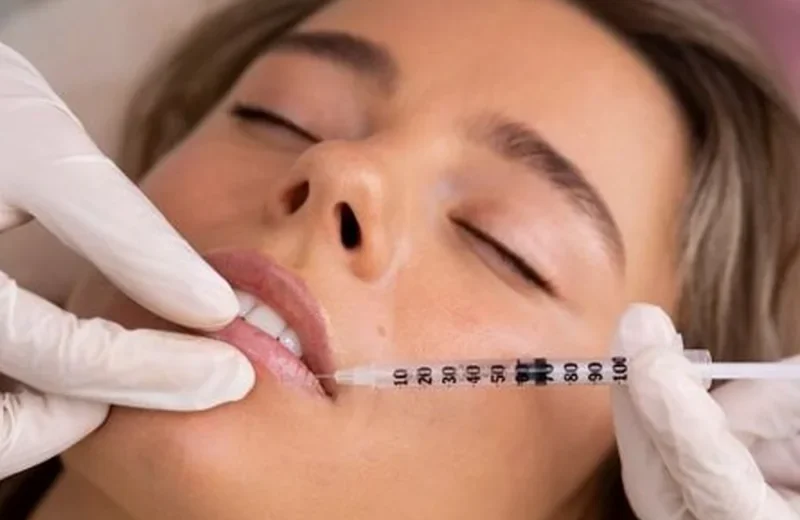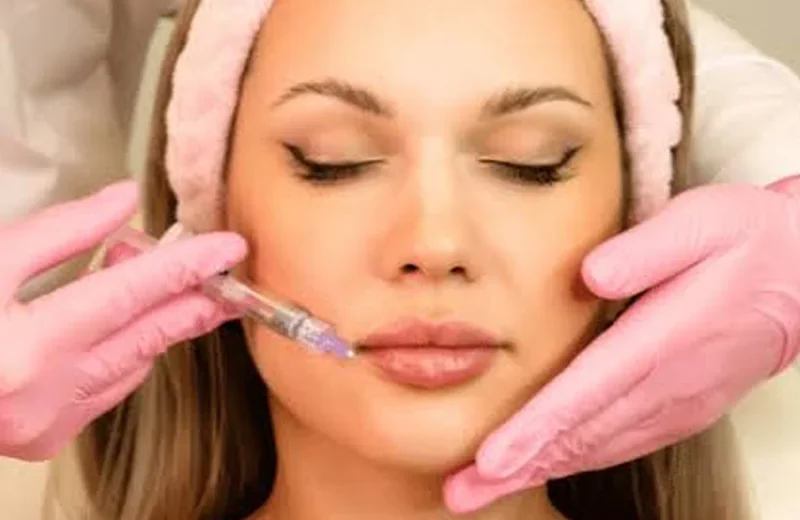
Quick answer: can RHA Redensity improve smoker’s lines without making lips bigger?
Yes, a suitably selected resilient hyaluronic acid filler can improve some moderate-to-severe dynamic perioral lines without pursuing the volume changes associated with lip augmentation. RHA Redensity is formulated for fine wrinkles in mobile areas, and a randomized trial of 202 adults found an 80.7% week-eight responder rate on the Perioral Rhytids Severity Rating Scale compared with 7.8% among untreated controls. This describes the tested population and endpoint, not a promise for every person. Some patients need resurfacing, carefully selected neuromodulation, skin care, a combination plan, or no injection. [1]
The essential clinical distinction is between adding volume inside the vermilion lip and placing appropriately selected material to improve lines in the surrounding cutaneous skin. Those goals require different evaluation, product selection, depth considerations and consent. The lower face remains highly mobile; lip competence, speaking, drinking and natural facial expression matter as much as a smooth photograph.
Why a line around the mouth is not always a ‘lip filler problem’
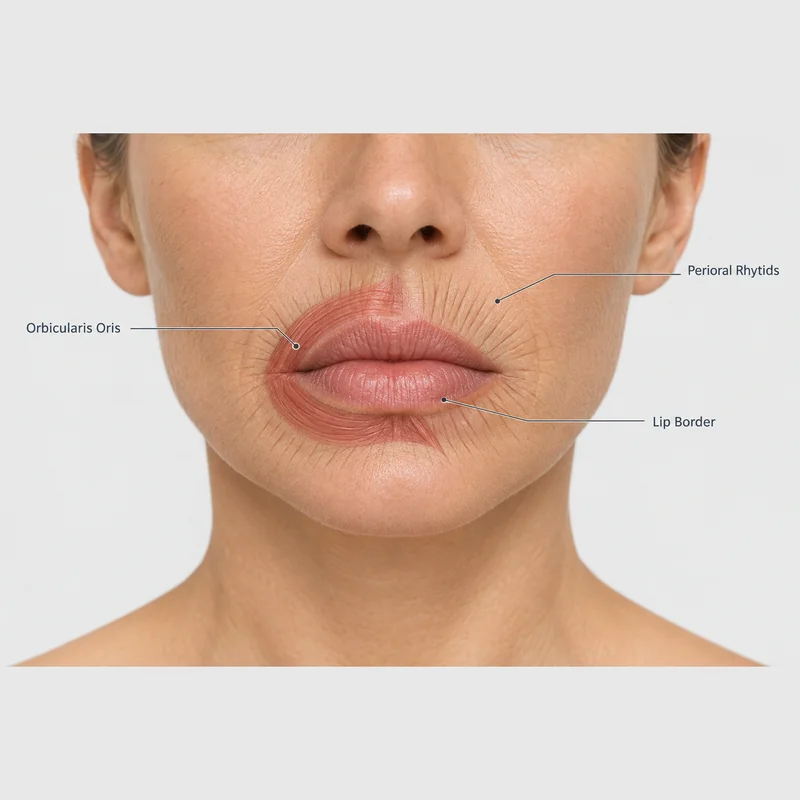
Patients often describe every crease above the upper lip as a smoker’s line. But vertical upper-lip lines, lower-lip creases, marionette folds, philtral changes and fine textural wrinkles may have different causes. The orbicularis oris muscle repeatedly moves skin during speech, smiling, pursing, drinking and kissing. With age, dermal collagen and elastin decline, lip tissues become thinner, the bony and dental support of the perioral unit may change, and cumulative sun exposure alters the skin. Repeated movement may make a line visible with expression before it becomes visible at rest. [1, 4]
A purely dynamic line is most evident with movement and may be barely noticeable when the face is relaxed. An etched static line remains visible without motion. Many people have mixed lines: the skin has already developed a permanent crease that deepens with contraction. Filler may improve the structural component, while Botox-style neuromodulation may reduce selected muscular contributions; fractional resurfacing may be more appropriate when photodamage and surface texture dominate. No single syringe solves every mechanism.
The five questions worth answering before treatment
- Is the line visible only with movement or also at rest?
- Is the chief problem a narrow lip, a change in projection, superficial etched texture or a downturned corner?
- Does the patient have thin fragile skin, advanced photodamage or a history of herpes, prior filler, dental work or scarring?
- Could altering the mouth change functional movements, the smile or speech?
- Is the patient’s target a natural reduction in shadowing rather than an unrealistically line-free mouth?
These questions are more valuable than assuming every vertical crease needs the same brand, number of milliliters or injection pattern.
The anatomy of perioral aging: skin, muscle, fat, teeth and bone
The perioral unit spans more than the pink portion of the lips. It includes the cutaneous upper and lower lips, vermilion border, white roll, Cupid’s bow, philtral columns, oral commissures, nasolabial fold transition, modiolus, chin and underlying dental structures. This complex system is constantly active. Skin moves over the orbicularis oris, which interacts with the elevators and depressors of the mouth. [1, 4]
The upper cutaneous lip can lengthen with age, while the visible red lip becomes less pronounced. Vertical creases increase with repeated puckering and skin thinning. Teeth and maxillary support influence the silhouette; missing or worn teeth can exaggerate a folded, unsupported appearance. At the lower lip, chin activity may contribute to a separate set of creases that should not be mistaken for vertical upper-lip wrinkles. Smoking is a risk factor, but people who have never smoked also develop these lines. Sun exposure, genetics, hormonal changes and phototype influence how early they appear.
The facial and labial arteries have substantial individual variation. A superficial-looking wrinkle does not mean that filler injection is risk-free. The medical goal is to select an appropriate treatment after individual assessment rather than to treat a presumed universal ‘safe plane.’ Vascular compromise is uncommon but can cause tissue ischemia and, in certain facial vascular territories, visual impairment or other serious events. [5]
How clinicians grade perioral rhytides
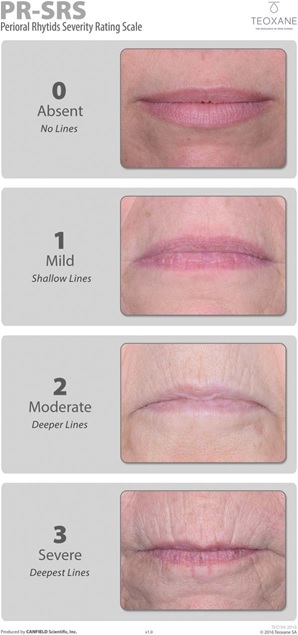
The source trial used the proprietary Perioral Rhytids Severity Rating Scale (PR-SRS), a four-grade assessment from 0 (absent) to 3 (severe). The target group consisted of adults aged 22 years or older with grade 2 or 3 dynamic perioral rhytides. A responder was defined as someone improving by at least one grade. This definition is critical: a ‘responder’ is not necessarily someone whose wrinkles disappeared completely. [1]
What exactly is RHA Redensity?
Resilient Hyaluronic Acid Redensity (RHA Redensity) is a cross-linked HA dermal filler investigated for dynamic perioral lines. The 2022 study described a 15 mg/mL HA concentration with 0.3% lidocaine and a low stated degree of modification using the manufacturer’s Preserved Network Technology. The stated degree of modification was approximately 2% in that formulation; this is a product-manufacturing characteristic, not a guarantee of clinical safety or superiority over every other filler. [1]
In rheology, resilience describes the ability of a gel to recover its shape after movement, stretching, compression or bending. In a highly mobile area, flexibility and tissue integration can matter just as much as sheer projection. Different HA gels have different concentrations, cross-linking approaches, elastic properties and water-binding behavior, so products designed to add cheek projection are not necessarily suitable for the delicate cutaneous perioral region.
Is RHA Redensity the same as RHA 2, RHA 3, RHA 4 or Redensity Eye?
No. Names within the same manufacturer’s family can refer to different formulations, strengths, anesthetic combinations and approved uses. RHA Redensity for dynamic perioral rhytides should not be conflated with RHA 3 used for certain facial folds or lips, or newer RHA Redensity Eye products for infraorbital volume deficiency. Label-specific indications, product packaging and local regulatory requirements must be checked before any clinical use. [2, 3]
The clinical trial: what was actually tested?
The trial registered as NCT03092219 was prospective, randomized, multicenter, evaluator-blinded and included 202 adults at eight North American study centers. The treatment and no-treatment groups were allocated in a 3:1 ratio: 150 to active treatment and 52 to control. The untreated group was offered the treatment after the week-eight primary comparison. Evaluations continued through week 52, with early repeat treatments permitted under defined conditions. [1]
The average age of treated participants was about 61.6 years; 98% of enrolled participants were female, and approximately 27% had Fitzpatrick phototypes IV–VI. This makes the sample clinically relevant to age-related lines while limiting certainty for younger patients, men and specific underrepresented phototypes. The study was funded by TEOXANE, and multiple investigators disclosed study-related remuneration. Sponsorship does not invalidate the findings but is a necessary part of transparent interpretation.
Why a randomized control matters in aesthetic medicine
Many filler publications rely on testimonials or selected before-and-after photographs. Those can illustrate an outcome, but they do not answer the key comparison question: what would have happened to a similar person without the treatment during the same period? Randomization helps balance observed and unobserved differences between groups, while an evaluator who does not know the group allocation can reduce some assessment bias. The RHA Redensity trial is therefore stronger evidence of short-term efficacy than an uncontrolled series. Nevertheless, it is not a head-to-head comparison against another active treatment.
The study used a no-treatment control rather than a sham needle procedure. Participants therefore knew whether they had received an intervention, which can influence patient-rated satisfaction or FACE-Q reporting. The primary endpoint relied on a blinded live evaluator, which strengthens the comparison for the graded wrinkle score. The two perspectives must be read together rather than treated as interchangeable evidence. A clinician should distinguish statistical significance from clinical meaning: a reliably higher responder rate can be useful without implying that every patient will see a dramatic change.
The investigators also defined a precise clinical entry point. Enrolled participants had at least moderate dynamic perioral rhytides by a specific scoring method. That is not the same as someone seeking a preventative treatment for nearly invisible fine lines, a teenager requesting fuller lips, or a patient whose main concern is facial laxity. In an evidence-based consultation, applicability to the individual is at least as important as the headline percentage.
| Study feature | What the publication reports | Why it matters |
|---|---|---|
| Population | 202 adults with PR-SRS grade 2–3 lines | Results do not directly measure prevention or very mild lines |
| Allocation | 150 active, 52 untreated | Meaningful controlled comparison to week 8 |
| Sites | Eight centers in United States and Canada | Multiple clinicians and sites, not one practitioner’s series |
| Blinding | Blinded live evaluators | Helps reduce observer bias, though patients were not blinded to no treatment |
| Initial treatment | Mean 2.0 ± 1.2 mL | Trial average is not a suggested dose for a patient |
| Touch-up | 68% received one; mean 1.2 ± 1.1 mL | Many results involved more than one injection visit |
| Control | No treatment through week 8 | Does not establish superiority to every alternative product or procedure |
| Follow-up | Assessments through 52 weeks | Durability partly includes allowed repeat treatments |
The publication reports some relatively high cumulative volumes in patients with deep perioral furrows. Such numbers are descriptions of the clinical protocol, not a cosmetic ‘recipe’ for fine lines or an instruction for practitioners to inject a similar amount.
The primary result: 80.7% versus 7.8% at eight weeks
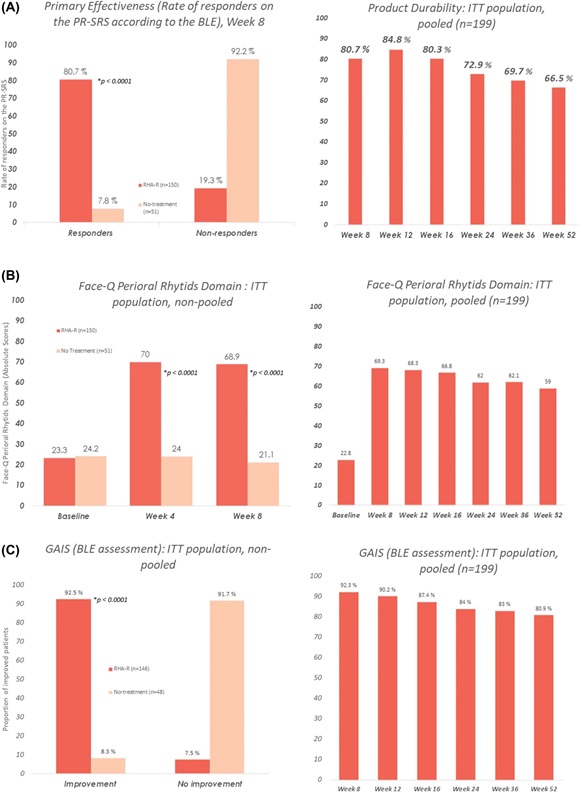
At the prespecified week-eight endpoint, 80.7% of the RHA Redensity group versus 7.8% of the no-treatment control group achieved at least a one-grade improvement on the PR-SRS, with p < 0.0001. This is a large controlled difference for the measured endpoint. Independent evaluator ratings of overall aesthetic improvement were also higher with treatment: 92.5% versus 8.3% at week eight. FACE-Q scores for the perioral rhytides domain increased substantially after treatment. [1]
The main conclusion should therefore be precise: in the trial population, RHA Redensity improved graded moderate-to-severe dynamic perioral wrinkles more often than no treatment eight weeks after the protocol’s initial correction period. The study did not demonstrate that RHA Redensity is superior to fractional laser, microneedling, neuromodulators, all other HA formulations or carefully planned combination care.
Reading the trial graphs correctly: denominator, timing and outcome
Figure 2 presents three related, but distinct, views of benefit. Panel A shows the percentage crossing the PR-SRS responder threshold at week eight and the proportion who maintained that threshold during longer follow-up. Panel B shows FACE-Q patient-reported scores, which address how patients felt about the appearance of their perioral lines. Panel C shows evaluator-rated global aesthetic improvement. None of these alone is equivalent to a measurement of exact milliliters of filler remaining in tissue.
These graphs should not be flattened into a single ‘one-year success rate.’ Different panels use different endpoints; the early comparison is between treatment and no treatment, while the later results describe a pooled treated population. Importantly, participants could receive touch-up treatment and selected repeat treatments. People who only remember the 80.7% and 66% figures may miss why those numbers cannot be directly compared as a simple percentage of product retained from the first session.
For the same reason, independent clinical practice should not promise the exact percentage response observed in a multicenter trial. Differences in baseline severity, skin photodamage, previous injection history, technique, the treatment environment and patient priorities can influence how clinically meaningful the improvement feels. Strong medical communication gives the numerical endpoint, names the group and time point, explains allowable additional treatment and then describes what remains uncertain.
Four interpretive safeguards before quoting the study on a clinic website
First: use the proper denominator. The paper randomized 202 people, but individual statistical panels use their defined analysis populations and sometimes slightly different denominators. It is good practice to identify whether a number refers to all randomized participants, the treated safety group, the intent-to-treat population, or a subset with evaluable follow-up. A graph showing a high responder percentage without describing its population may unintentionally overstate the precision of the estimate.
Second: keep the three success measures separate. The PR-SRS reflects a blinded evaluator’s judgment of wrinkle severity. GAIS captures broader aesthetic improvement, while FACE-Q concerns patients’ perception of their own appearance. They overlap but are not identical. A treatment may look successful to an evaluator yet leave a patient dissatisfied, or the reverse. An informative article reports the instruments honestly rather than merging them into a vague figure such as ‘95% effective.’
Third: distinguish initial response from maintenance. Later follow-up may include optional corrections and additional injections. In real practice, the cost, number of visits and cumulative product exposure may matter greatly to a patient deciding between filler, toxin, resurfacing and no procedure. A 52-week graph is useful when paired with the retreatment rules, not when used alone as a blanket promise of 12-month permanence.
Fourth: do not use patient images as stand-alone advertisements. Standardized photographs can help explain what the endpoint looks like, but a single well-performing case is neither the median nor the full range of outcomes. For a clinic website, the photograph must preserve its original attribution, date and treatment context. It should never imply that the medical editor treated the source patient or that the observed change will predict the result of a future patient.
What did ‘durability at 52 weeks’ mean?
Approximately 66% of participants in the pooled, treated population were still responders at week 52. This must not be translated into ‘66% of patients remain unchanged for one full year after one syringe.’ The protocol permitted an optional day-14 touch-up, and 17.6% of participants received earlier repeat treatment later in follow-up. The source reports that 68% received a two-week touch-up. Some measured durability therefore reflects the allowed treatment journey, not necessarily a single intervention. [1]
Similarly, satisfaction of 88.3% at week 52 is a group-reported survey result, not a guarantee that a specific patient will remain satisfied, nor evidence that visible filler persists at an identical concentration for a full year. FACE-Q scores, evaluator photographs and patient preferences each measure related but distinct outcomes.
The before-and-after case: what the photographs show—and what they cannot prove
The original article’s Figure 3 shows a 69-year-old woman with moderate perioral rhytides at baseline and improvement to mild lines at week eight. The accompanying caption reports injections in both upper and lower perioral rhytides, followed by a touch-up. This is a genuine example from the published multicenter trial, not a case treated by Dr. Erfan Rahmani. It should be viewed in the context of the full sample rather than as proof of a guaranteed personal result. [1]
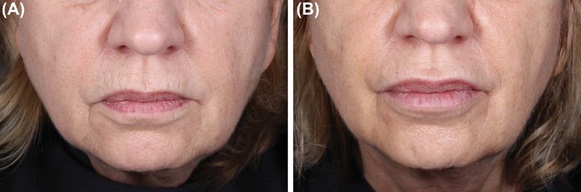
The photographs help readers see a clinically meaningful reduction in some fine lines without a conspicuous enlargement of the vermilion lip. However, lighting, expression, follow-up interval and photographic standardization can affect perceived improvement. The source image documents an individual and must not be reused as website marketing imagery without proper attribution and checking applicable image and patient permissions.
The difference between RHA Redensity and ordinary lip filler
Lip filler is a broad patient-facing term. It often refers to HA placed to increase the volume or definition of the pink lips. The treatment investigated here targeted perioral wrinkles in the skin around the mouth. A patient whose chief complaint is thin lips may need another plan; a patient with good lip volume and fine vertical cutaneous wrinkles does not necessarily benefit from making the lips larger. The wrong choice can add prominence while leaving the etched wrinkle untreated.
| Treatment goal | Main target | Expected type of change | Key limitation |
|---|---|---|---|
| RHA Redensity-type wrinkle correction | Cutaneous perioral lines | Softer etched and dynamic crease appearance | May not correct substantial laxity or volume deficiency |
| Lip augmentation with suitable HA | Vermilion volume and contour | Fuller lip body, projection or border definition | Unwanted bulk or migration if overdone |
| Conservative neuromodulator approach | Selected muscular contribution | Less forceful contraction | Excessive relaxation can affect speech, smiling, drinking or lip competence |
| Fractional laser resurfacing | Texture, photodamage, collagen remodeling | Surface improvement over healing period | Downtime, pigment risk and variable response |
| RF microneedling | Texture and dermal remodeling in selected cases | Gradual remodeling | Device-dependent safety, caution near delicate tissue |
| Surgery or other structural treatment | Advanced tissue or anatomical change | Structural change beyond what filler can deliver | Procedure-specific risks and downtime |
A line-by-line treatment approach must be integrated with surrounding volume, skin condition and muscle motion. Combining treatments is not automatically better; the sequence, safety and clinical need must justify every step.
Choosing treatment for vertical upper-lip lines
A consultation starts by observing the mouth at rest and during ordinary movement. The clinician can ask the patient to pronounce words, smile and purse the lips, while examining symmetry, skin thickness, degree of photodamage, vermilion show and any previous filler. A patient with mild dynamic lines and healthy surface texture may reasonably begin with prevention, photoprotection and a discussion of minimal intervention. Someone with deeply etched static rhytides may require targeted resurfacing or a carefully staged combined plan rather than escalating filler volumes.
A patient with extensive upper-lip elongation, severe skin laxity, deep fold formation or marked loss of dental support should not be promised surgical-level correction from injectable gel. Equally, reducing orbicularis function too aggressively can create functional problems out of proportion to the aesthetic benefit. Good planning considers facial identity and preserves normal mouth function.
Does the term ‘smoker’s lines’ mean the person smoked?
No. The label is imperfect and often stigmatizing. Repeated lip contraction is one contributor, but never-smokers can develop perioral rhytides because of age, sun exposure, genetic anatomy and collagen changes. A medical conversation is more useful when it discusses vertical perioral lines or perioral rhytides rather than guessing the patient’s smoking history.
Clinical meaning of filler rheology in a moving face
The most relevant concept is matching a gel’s mechanical behavior to the target tissue. Elasticity, cohesivity, flexibility, degree of cross-linking and water affinity influence how a material interacts with skin. A strong projecting filler may be useful for certain structural deficits but unsuitable for fine, mobile cutaneous wrinkles if it creates visible papules or stiffness. A highly mobile perioral site presents additional constraints: the product must integrate without impairing expression. [1, 4]
This does not establish a universal hierarchy where low G′ always means safe or where RHA is necessarily better than every non-RHA product. Rheology is measured under specific laboratory conditions, and in vivo outcome depends on patient anatomy, injection technique, tissue behavior and volume. Manufacturers’ descriptions such as ‘natural,’ ‘resilient’ and ‘dynamic’ should be weighed against clinical trials, approvals and practitioner experience rather than treated as guarantees.
Safety: common effects, uncommon complications and why follow-up matters
The trial recorded local reactions using 14-day diaries as well as investigator-reported adverse events. No serious treatment-related adverse events, no treatment-related vascular compromise and no late-onset treatment-related nodules were observed in this study population during its follow-up. That is reassuring for the study, but it cannot demonstrate a zero risk in larger or different populations. [1]
About 31.1% of the safety population had at least one event classified as treatment-related. Reported examples included palpable lumps or contour irregularities (17%), firmness (11%) and injection-site bruising (10.5%). Events were described as mild to moderate and resolved. One participant described temporary difficulty puckering to whistle, which resolved within one day. The source also reported an oral herpes event. These findings support thorough consent even when a treatment is promoted as subtle or minimally invasive.
The warning signs that should not be dismissed as routine swelling
After any facial filler treatment, disproportionate or progressively severe pain, sudden blanching or unusual mottled skin color, a cold or dusky area, worsening skin changes, new visual symptoms, marked swelling with breathing difficulty, or new neurological symptoms require immediate urgent assessment. Vascular compromise is time-sensitive; injection must stop and an established emergency plan should be activated. Suspected visual loss or stroke warrants emergency specialist transfer without delay. [5]
A dedicated, documented protocol should be held by the treating facility, with emergency supplies and trained staff. Although hyaluronidase is an important tool in managing HA-related vascular compromise, its use depends on the clinical emergency, specialist pathways and accepted professional guidance. A public educational article is not a substitute for a locally approved emergency management protocol.
Delayed inflammatory reactions: a separate problem from vascular occlusion
Delayed swelling, tender nodules or fluctuating inflammation can occur after HA filler, sometimes in association with illness, infection, dental procedures or other triggers. Not all lumps are granulomas; some reflect product placement, temporary edema or another benign cause. Likewise, a red warm area is not automatically ‘allergy’ rather than infection. The distinction matters because management pathways differ materially. [5]
Clinical assessment may include the location and timing of prior injections, product history, palpation, photographs and—when available and indicated—ultrasound. A clinician should not automatically inject steroid, hyaluronidase or antibiotics into every nodule without assessing its likely mechanism. Active infection, prior immune reactions, autoimmune disease, pregnancy, breastfeeding, severe allergies and medicine history warrant individualized risk assessment; blanket assumptions are inappropriate.
Skin phototypes, ethnicity and evidence transparency
The study intentionally included patients with diverse Fitzpatrick phototypes, with approximately 27% in groups IV to VI. Rates of treatment-related adverse events were not significantly different between broader lower- and higher-phototype categories in this trial. However, only three participants had phototype VI, and four participants were male. These small subgroups limit the confidence of sweeping claims such as ‘the same outcomes for every skin type and all men.’ [1]
For Abu Dhabi, whose population includes people with widely differing phototypes, ancestry, cosmetic goals and sun exposure patterns, a patient-specific evaluation is more useful than imposing one phototype-based aesthetic template. In patients considering resurfacing, pigmentation risks and the clinician’s experience with skin of color deserve particular attention.
When a combined approach may be more appropriate
For persistent perioral lines, one treatment may address movement while another addresses surface texture or structural deficiency. A practical approach distinguishes (a) dynamic muscle-driven creasing, (b) fine intradermal texture change, (c) deep static furrows, (d) surrounding volume loss, and (e) advanced laxity. If two mechanisms are present, a combination may be discussed, but each additional procedure increases complexity and may introduce recovery or safety considerations. [4, 6]
Low-dose neuromodulator treatment around the mouth is technically sensitive and may affect lip seal, drinking from a straw, speech and emotional expression if overdone. Resurfacing may help photodamaged lines but can involve downtime, post-inflammatory pigmentation or herpes reactivation in predisposed individuals. Skin boosters may improve hydration and texture in selected contexts but should not be assumed equivalent to a filler studied in a randomized trial for grade 2–3 rhytides. No universal sequence is best.
RHA Redensity versus fractional laser versus Botox for perioral lines
These options address partly overlapping problems, not identical endpoints. Filler mainly offers physical support to selected skin creases. Neuromodulators temporarily alter muscular force. Fractional laser aims to remodel damaged superficial tissue over healing and follow-up. A patient with deep etched lines and photodamage might obtain limited improvement from filler alone; one with mainly motion-related lines may not need an aggressive resurfacing procedure. For all options, the strength of evidence, planned device settings, practitioner qualifications and risks must be discussed individually.
Pre-treatment consultation in Abu Dhabi: a useful decision pathway
A thoughtful consultation should document the patient’s goals in their own words before selecting a brand. Examine the lips both at rest and during expression; check for prior injections, active lesions, cold-sore history, dental changes and scar tissue. Assess whether the upper-lip skin or the vermilion is the genuine target, and whether the patient expects a modest, natural softening or complete elimination of movement lines.
The next decision is whether a treatment is indicated at all. A physician may recommend conservative skin care, photoprotection, another modality, staged treatments or referral rather than filler. If HA treatment is considered, informed consent should cover expected degree of improvement, possible repeat visits, bruising, lumps, altered appearance, rare vascular problems and the limits of reversibility. Product authenticity, permitted indication and emergency arrangements should be independently verified.
In Abu Dhabi, do not infer that a filler is available or locally approved simply because it has FDA approval or appears in a published US study. The brand’s UAE registration, facility stock and clinician privileges should be checked at the time of treatment. This guide provides scientific context and does not advertise availability of RHA Redensity at Dr. Erfan Rahmani’s current practice.
Aftercare and follow-up: what patients should realistically expect
Immediately after injection, temporary needle marks, redness, tenderness, bruising or mild swelling may occur. Some changes settle quickly, whereas deeper bruising or local fullness may take longer. The clinic should give individualized written instructions tailored to the product and the patient’s risks, rather than a generic promise of ‘zero downtime.’ Patients should not independently massage or manipulate filler deposits unless their treating clinician specifically advises it for their case.
The initial outcome should be interpreted after temporary swelling has settled. Because the trial frequently used a day-14 touch-up, a structured reassessment can be useful for discussing residual lines or apparent asymmetry, but no patient should assume that an additional syringe is required. Follow-up should also include the ability to speak, purse, smile and eat normally. Any unexpected worsening, abnormal color, severe pain, vision change or neurological symptom overrides routine review and requires urgent medical evaluation.
What the 2022 study does not tell us
It does not prove superiority over other RHA products, other HA fillers, laser, toxin, microneedling or surgery because those were not randomized comparators. It does not establish a universal ideal injection quantity: high variation in severity and treatment volume was reported. It does not provide strong subgroup evidence for men, those underrepresented in phototype VI, or patients with very mild fine lines. It does not establish that all participants maintained benefit for 52 weeks after a single injection without touch-up or retreatment. The research was manufacturer-funded, and the severity scale was proprietary, although it had undergone photo-validation described in the paper. [1]
There is also an important distinction between efficacy under a defined research protocol and effectiveness in ordinary practice. A patient may combine facial rejuvenation with skin care or other procedures, have older fillers of unknown composition, have more severe photodamage, or prioritize preserving expression over maximum grade improvement. These factors can make real-world outcomes differ from published statistics.
Editorial perspective: a natural-looking lower face is more than a wrinkle score
A good result respects the person’s lip shape, smile, tooth show, pigmentation, skin texture and natural speech. Improving a graded wrinkle by one level may be meaningful, but not if it creates stiffness, overcorrection or a disproportionate mouth. The purpose of an evidence-based consultation is to match the intervention to the anatomy and the patient’s actual concern, explain what improvement is plausible and decline interventions with an unfavorable benefit-to-risk ratio.
At Dr. Erfan Rahmani’s Abu Dhabi aesthetic practice, patients can explore broader non-surgical treatment categories and review educational resources on fillers, Botox and skin rejuvenation. This article does not claim he participated in the source study, treated its illustrated patients, or stocks the study formulation.
Evidence summary: the figures readers should remember
| Endpoint | Published finding | Careful interpretation |
|---|---|---|
| Total randomized | 202 adults | Multicenter trial; heavily female, older sample |
| Week 8 PR-SRS response | 80.7% treated vs 7.8% untreated | Improvement of ≥1 grade, not complete wrinkle elimination |
| Week 8 GAIS improvement | 92.5% treated vs 8.3% untreated | Blinded evaluator aesthetic improvement |
| 52-week PR-SRS response | ~66% pooled subjects | Touch-ups and repeat treatments were permitted |
| Patient satisfaction at 52 weeks | 88.3% | Subject-reported satisfaction, not a durability guarantee |
| Natural look/feel score ≥7/10 at 52 weeks | 87.2% | Patient perception within the trial |
| Early repeat treatment after initial period | 17.6% | Maintenance patterns differ across patients |
| Treatment-related AEs | 31.1% experienced ≥1 | Events described as mild/moderate and resolved |
| Serious treatment-related AEs | None observed in trial | Does not mean zero real-world risk |
The practical takeaway for patients looking for perioral wrinkle treatment in Abu Dhabi
RHA Redensity has randomized evidence for improving selected moderate-to-severe dynamic perioral rhytides. The study shows a meaningful benefit against no treatment at eight weeks and ongoing results for many participants during a protocol that allowed follow-up injections. Its distinction from conventional lip-volume treatment is important: a softening of the surrounding cutaneous wrinkles need not be accompanied by a much larger pink lip.
The best plan still begins with diagnosis. Skin aging, photodamage, muscular movement, surrounding volume loss and previous treatments often overlap. Patients should seek individualized advice from a qualified clinician who will explain the likely result, product status, complication planning and alternative options. Natural appearance, functional preservation and safety should remain more important than chasing complete elimination of every crease.
Frequently asked questions about vertical lip lines, perioral fillers and RHA Redensity
What are perioral rhytides?
Perioral rhytides are lines and creases in the skin surrounding the mouth. They may be dynamic, becoming visible during speech or pursing, or static, remaining visible when the face is relaxed. They are different from a naturally narrow lip or a loss of pink-lip volume.
Are smoker’s lines always caused by smoking?
No. Smoking can accelerate the formation of perioral lines, but sun exposure, natural aging, repetitive expression, skin thickness and genetic anatomy contribute. Non-smokers can develop pronounced vertical wrinkles. The more accurate medical term is perioral rhytides or vertical upper-lip lines.
Can RHA Redensity improve vertical lip lines?
A randomized study found that this formulation improved moderate-to-severe dynamic perioral lines more often than no treatment at eight weeks. It does not follow that all types of vertical wrinkles respond equally or that a patient will achieve smooth skin without any additional treatment.
Does RHA Redensity enlarge the lips?
Its studied indication is correction of dynamic wrinkles in the skin around the mouth, not necessarily volumization of the pink vermilion. Although any filler can alter local tissue shape, a treatment plan for cutaneous lines is distinct from a plan designed to produce fuller lips.
What is the difference between RHA Redensity and traditional lip filler?
Traditional lip augmentation often targets fullness, contour or projection of the pink lip. The published RHA Redensity trial targeted cutaneous perioral lines. Products, goals and aesthetic endpoints therefore differ, even though both fall within the broader family of hyaluronic acid fillers.
What does resilient hyaluronic acid mean?
Resilience refers to a gel’s mechanical ability to recover after forces such as compression or stretching. That property is relevant to a moving region, but it is only one aspect of performance. Anatomy, product selection and clinical technique remain central to safety and results.
How does RHA Redensity work?
As a cross-linked hyaluronic acid gel, it provides local support within selected tissue planes and interacts with surrounding tissue and water. The study formulation was designed with mechanical properties appropriate for superficial dynamic facial lines. Its effects are not equivalent to permanently removing a wrinkle or replacing damaged skin.
How many people were studied?
The pivotal study enrolled 202 adults at eight sites in the United States and Canada. There were 150 participants assigned to active treatment and 52 to the initial no-treatment control group. The controlled comparison ended at week eight, after which untreated controls could receive treatment.
What does the 80.7% success rate actually mean?
It means 80.7% of treated subjects met the trial’s responder definition at week eight: improvement by at least one grade on the PR-SRS. It does not mean 80.7% wrinkle elimination, patient satisfaction, or a guaranteed individual result. The untreated response rate was 7.8%.
Did the study prove RHA is better than Botox?
No. The comparator was no treatment, not botulinum toxin. Botox reduces selected muscular activity, whereas filler supports tissue lines. Some patients may benefit more from one approach, another, or a carefully justified combination depending on their anatomy and functional priorities.
Did it prove RHA Redensity is superior to fractional laser?
No head-to-head laser comparison was included. Resurfacing targets skin texture and photodamage, while the RHA trial examined a filler intervention for graded dynamic perioral wrinkles. The choice depends on the dominant problem and tolerance for downtime, pigmentation risk and injection risk.
Does 52-week efficacy mean one syringe lasts a year?
Not necessarily. The protocol permitted touch-up at approximately two weeks and later repeat treatment under defined circumstances. About 68% received a touch-up and 17.6% received an early repeat treatment. The 52-week response therefore describes outcomes under the study pathway.
How long do results usually last in everyday practice?
Durability varies with the exact product, location, prior treatments, degree of movement and individual response. The source study reports meaningful outcomes through week 52 in many participants, but patients should receive an individualized estimate rather than a guaranteed duration drawn from a group statistic.
Is the treatment FDA-approved?
RHA Redensity received an FDA indication on 22 December 2021 for moderate-to-severe dynamic perioral rhytides in adults aged 22 or older. That US approval must not be confused with the status of a different formulation or with regulatory authorization in the United Arab Emirates.
Is RHA Redensity available at Dr. Erfan Rahmani’s clinic?
This educational guide does not establish stock or availability at any specific clinic. Patients should confirm the exact product, local regulatory registration, intended indication and appointment options directly with the provider before assuming it is offered.
Is RHA Redensity suitable for people under 22?
The FDA indication and cited randomized trial relate to adults aged 22 years and older. Those data should not be extrapolated to younger people. Cosmetic treatment decisions must reflect product labeling, local regulations, clinical assessment and reasonable expectations.
Can it treat wrinkles around the lower lip?
The trial protocol included upper and lower perioral rhytides. Suitability depends on whether the lower-lip concern involves skin texture, chin-muscle activity, a marionette fold or another structure. Those problems should not all be treated with the same superficial filler plan.
Can it treat nasolabial folds or marionette lines?
The specific evidence reviewed here concerns dynamic perioral rhytides. A nasolabial fold or deep marionette line is a different anatomical indication and may require another approach or product. The RHA product family contains distinct formulations with different approved uses.
Can it correct a long philtrum?
It does not surgically shorten the distance between the nose and upper lip. If the chief concern is age-related elongation of the cutaneous upper lip or reduced tooth show, simply adding filler may not solve it. Structural or surgical options require an appropriately qualified specialist assessment.
What about deep, permanently etched smoker’s lines?
Deep static lines can have substantial photodamage and dermal remodeling. Filler alone may provide incomplete improvement. The clinician may discuss resurfacing, graded HA treatment or other modalities after checking skin condition, medical risks and the trade-off between benefit and downtime.
Does RHA Redensity feel natural?
In the study, 87.2% of subjects scored natural look and feel at least 7 of 10 at week 52. This is a patient-reported group result, not a universal guarantee. Poor product selection or inappropriate placement can cause palpable fullness even with a flexible gel.
Will I look ‘overfilled’?
Overfilling is not an inevitable result, but it is a risk whenever injectable volume exceeds what the anatomy requires. A natural plan focuses on the actual line and surrounding facial balance rather than automatically adding more product to the entire upper lip or oral commissure.
How much product did the clinical trial use?
The initial mean was approximately 2.0 mL, and a majority of subjects subsequently received touch-up treatment. Some patients with severe perioral furrows required substantially more than others. Those research volumes must not be copied as recommendations for a new patient.
Will the procedure hurt?
Needle-based aesthetic procedures can cause temporary discomfort. In the trial the average pain score fell substantially within 15 minutes after treatment. Individual pain sensitivity varies, and topical or local anesthesia choices should be discussed with the qualified clinician along with relevant allergies.
Is there downtime?
Redness, bruising, tenderness, temporary swelling or palpable irregularities can occur. Most patients do not require surgical recovery, but it would be misleading to promise no visible reaction. Individual timing should be discussed before photography, important events or travel.
When should the outcome be assessed?
Early swelling can distort the first impression. A follow-up after the initial settling period can help determine whether the clinical target was reached, whether further treatment is justified, and whether mouth movements remain normal. Unexpected severe symptoms should never wait for a routine review.
Is a two-week top-up always required?
No. Although touch-ups were permitted and frequent in the research protocol, clinical treatment should be individualized. Patients should not assume that two or three visits or a fixed amount of gel is mandatory without a clear reason and updated assessment.
Can I receive filler if I previously had lip filler?
Prior filler does not automatically exclude treatment, but the product history, residual volume, migration, fibrosis, contour irregularities and previous complications matter. When material is uncertain or there is a concern about an old deposit, additional evaluation and sometimes imaging may be useful.
Can ultrasound help with planning?
In selected patients, high-frequency ultrasound can assist with locating existing HA deposits or relevant vascular structures and evaluating certain complications. It does not substitute for clinical anatomy training or automatically make every injection safe. Its usefulness depends on practitioner skill and available equipment.
Is using a cannula completely safe?
No. Neither a blunt cannula nor a sharp needle eliminates vascular injury, bruising or placement problems. Equipment choice should follow individual anatomy, indication and practitioner competence. Promoting a device as ‘zero risk’ is medically inaccurate.
Can fillers cause vascular occlusion in the mouth region?
Yes, although serious vascular complications are uncommon. Accidental entry into a vessel or compromise to blood flow can produce ischemia and tissue injury. Immediate recognition, cessation of injection and an established emergency pathway are essential. Rare serious complications cannot be ruled out by an uneventful clinical trial.
What symptoms after filler require urgent help?
Severe or escalating pain, unusual white or dusky discoloration, mottling, cold skin, unexpected visual disturbance or neurological symptoms require immediate urgent medical assessment. Airway symptoms or rapid generalized swelling also warrant emergency attention. Such symptoms should not be dismissed as normal post-injection bruising.
Does hyaluronidase make HA treatment completely reversible?
Hyaluronidase can break down HA material and is important in certain complication pathways, but this does not guarantee complete reversal of tissue injury or restoration of lost vision. It may carry its own risks, and some filler-related complications require additional specialist treatment.
What are the common adverse reactions in the RHA study?
The report described temporary lumps or contour irregularities, firmness, bruising and other local effects. About 31.1% experienced at least one treatment-related adverse event under the study reporting criteria. All those events were described as mild to moderate and resolved during observation.
Were any vascular occlusions seen in the study?
No treatment-related vascular compromise event was observed in that trial. The result should be reported exactly as a study observation, not as evidence that the product or a certain approach cannot cause an occlusion in routine clinical practice.
Is RHA Redensity safe for darker skin tones?
Participants with Fitzpatrick phototypes IV–VI were included, and the study did not find a major safety difference between grouped phototypes. However, the very small number of participants with phototype VI limits certainty. Skin-related risks should be assessed individually, especially when combining treatment with resurfacing.
Is it safe for men?
Only four participants in the published study were male. The treatment’s biology is not restricted by sex, but the study alone does not strongly quantify outcomes for men. Different lip anatomy, movement and aesthetic preferences should be considered in consultation.
Can I get treatment while pregnant or breastfeeding?
Elective cosmetic filler injections are generally deferred in pregnancy, and suitability during breastfeeding requires discussion of limited product-specific safety evidence and local guidance. Do not interpret the trial’s outcomes in nonpregnant participants as establishing safety for pregnancy or lactation.
What if I have cold sores?
A history of recurrent herpes labialis matters because procedures around the lips can trigger outbreaks. The clinician may decide whether treatment should be deferred or whether individualized preventive measures are appropriate. Active oral herpes is a reason to postpone elective injection until resolved.
What if I have autoimmune disease or previous filler nodules?
Such conditions require individualized review rather than an automatic yes or no. The severity and stability of the underlying condition, immunosuppressive medications, prior reactions and product history may change the risk-benefit balance. Sometimes consultation with another treating specialist is appropriate.
Can I combine RHA Redensity with Botox?
Combination treatment can be discussed when both dynamic muscle activity and static structural lines contribute. But treatment near the orbicularis oris must be conservative because excessive muscle relaxation can affect speech, drinking, smiling or lip competence. Combined use was not the comparator tested in the pivotal study.
Can I combine treatment with Fotona or fractional laser?
An integrated plan may be appropriate for patients with both static fine lines and photodamaged texture, but clinical sequencing and skin recovery require assessment. A laser is not automatically safer or more effective, and patients with higher pigmentation risk require careful counseling and suitable settings.
Are skin boosters interchangeable with RHA Redensity?
Not necessarily. Products grouped as skin boosters may be intended primarily for hydration or skin quality, and evidence for grade 2–3 dynamic perioral wrinkle correction cannot simply be transferred from one formulation to another. The exact product and clinical endpoint matter.
Does sunscreen prevent perioral wrinkles?
Regular photoprotection helps limit ultraviolet-driven collagen damage, a major contributor to wrinkles, but it cannot prevent all age-related or movement-related changes. Gentle skin care and avoiding tobacco are sensible foundations before, during and after considering procedural interventions.
Is more filler always better for deeper wrinkles?
No. Higher volumes may create swelling, a heavy appearance or palpable irregularities while failing to address surface photodamage or repetitive muscle movement. The most appropriate response to an inadequate initial result can be reassessment or a different modality rather than simply increasing volume.
Does the treatment remove all wrinkles permanently?
No. The endpoint in the randomized study was at least one-grade improvement, not complete disappearance. Aging and facial motion continue after treatment, and hyaluronic acid is biodegradable. Expectations should emphasize realistic softening rather than permanent eradication.
Can the corners of my mouth be lifted at the same time?
Downturned oral commissures can be caused by skeletal support, soft-tissue loss and activity of muscles such as the depressor anguli oris. They are distinct from vertical perioral lines. A separate assessment may lead to a different filler approach, neuromodulation or another intervention.
What is the difference between perioral rejuvenation and a lip lift?
Perioral rejuvenation is an umbrella concept that can involve skin treatments, filler and movement modulation. A surgical lip lift shortens or repositions selected upper-lip tissue and changes the relationship of the lip to the nose and teeth. It does not provide the same treatment as superficial wrinkle filling.
How should I choose a practitioner in Abu Dhabi?
Look for an appropriately licensed clinician experienced with perioral anatomy, product assessment, informed consent, complication recognition and emergency management. Ask about the chosen formulation, local authorization, realistic goals, alternative treatments, follow-up and what happens if unexpected symptoms develop.
What is the main lesson from the randomized study?
For adults with moderate-to-severe dynamic perioral rhytides, the studied RHA Redensity formulation provided significantly more measured improvement than no treatment at week eight, with outcomes persisting for many participants under a protocol that allowed further injections. This is meaningful evidence, not a universal cure or product ranking.
What questions should I ask before signing consent?
Ask which problem is being treated, whether the chosen material is indicated and locally authorized, what change is realistically expected, why injection is favored over a different modality, how complications are recognized, whether hyaluronidase and emergency referral pathways exist, and when you will be reassessed.
How can a patient book a perioral wrinkle consultation in Abu Dhabi?
Use the verified contact options on Dr. Erfan Rahmani’s official website, https://www.drerfanrahmani.com, and explain whether the concern is vertical skin creases, lip volume, mouth corners, or wider facial aging. A consultation can determine appropriate options; this article does not confirm availability of a particular branded filler.