Lip Lift vs Lip Filler in Abu Dhabi: Upper Lip Length, Tooth Show, Smile Design and Natural Rejuvenation
Executive answer: what does a lip lift change?
A surgical upper-lip lift primarily shortens the visible skin between the base of the nose and the red upper lip, often called the philtrum or cutaneous upper lip. The altered position may increase upper-incisor display when the lips are relaxed and may expose more of the pink vermilion without adding an injectable gel. Lip filler changes volume, contour, hydration-related appearance and selected asymmetries; it cannot reliably replace surgical shortening of an anatomically long upper lip. Dental treatment changes the teeth and their position or proportions; it cannot by itself correct a long, low-hanging upper lip. The most natural result starts with identifying which structure is responsible for the patient’s concern rather than choosing a fashionable procedure first. [1,2,3]
For patients in Abu Dhabi asking whether to choose lip filler or lip-lift surgery, the decision often turns on four examination findings: cutaneous upper-lip length, red-lip show, visibility of the upper front teeth at rest, and appearance during smiling and speech. Age-related change, facial expression, tooth position, jaw relationships, skin characteristics, previous treatments and personal preferences also matter. A lip lift is a surgical intervention performed by an appropriately qualified surgeon. This article provides medical education and comparative assessment; it does not imply that every option is performed by the medical editor. [1,2]
Clinical perspective: A thin-looking upper lip may be caused by genuinely low vermilion volume, upper-lip elongation, an inward-curving lip, dental retrusion, a low smile line or several interacting factors. Adding filler to all of these scenarios is not anatomically interchangeable with correcting their underlying causes.
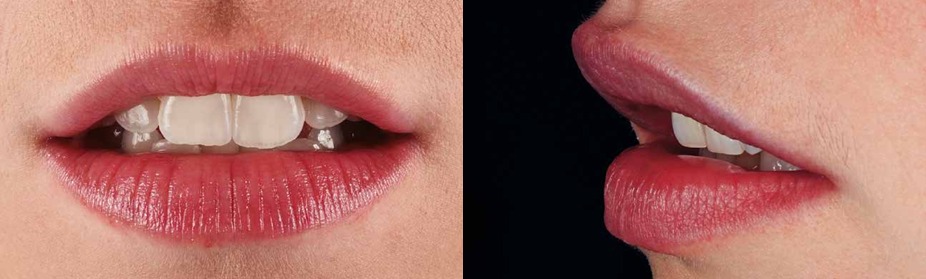
1. Why the upper lip can hide a beautiful smile
Aesthetic dentistry traditionally evaluates tooth color, shape, proportions, alignment, gingival display and the relationship between incisors and the smile line. The 2017 article Lip Lifting: Unveiling Dental Beauty by Stanley and colleagues highlighted a frequently neglected element: even well-designed anterior restorations may become less visible when the overlying upper lip has elongated or descends over the teeth. Smile design therefore has a moving soft-tissue frame; teeth are not evaluated in isolation. [1]
The article’s core proposition was interdisciplinary rather than purely surgical: a dentist, restorative specialist and plastic or maxillofacial surgeon may need to evaluate different parts of the same complaint. Patients who say, “My upper teeth do not show,” might have a dental issue, an upper-lip issue or both. Lengthening veneers solely to increase tooth display can alter tooth proportions and occlusion, while adding lip filler to an elongated upper lip may not achieve the intended incisor exposure. Neither approach should be chosen without a combined assessment. [1]
The visible red lip and dental show are related but distinct outcomes. A treatment can make the upper vermilion appear fuller without exposing substantially more teeth, or make teeth more visible while producing only modest apparent volumization. Patients should state which change matters most: lip shape, upper teeth at rest, smile dynamics, symmetry, or a combination of these.
2. The anatomy: philtrum, vermilion, white roll and incisor show
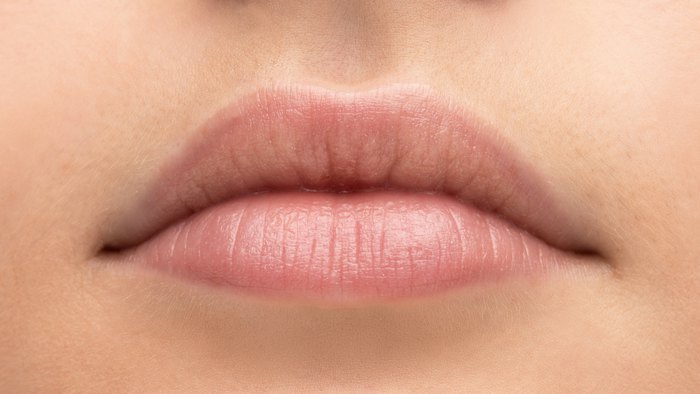
The cutaneous upper lip is the skin-bearing region from the nasal base to the vermilion border. The philtral columns are the paired vertical ridges bordering the central groove; the Cupid’s bow is the central double curve of the upper vermilion border. The vermilion is the visibly pink or red portion of the lip, while the white roll denotes its subtle cutaneous transition. Beneath the soft tissues, orbicularis oris and surrounding elevators and depressors influence resting posture, speech, lip competence and smile expression.
A measured philtral length is useful, but it is not a diagnosis. The apparent length may change with camera angle, lip tension, mandibular position and the extent to which teeth support the upper lip. A patient with a short philtrum and adequate incisor exposure may be harmed cosmetically by excessive shortening, even if a generic numerical target seems attractive. A person with a long philtrum and limited upper incisor show may be a different candidate, subject to detailed examination and surgical assessment. [2]
Incisor show at rest means the millimeters of upper central incisors visible when the lips are naturally parted or relaxed, not when consciously forced open. Smile display is evaluated separately because smile strength, lip elevators, dental arch position and gingival display alter the result. Lip competence refers to the ability to close the lips comfortably without excessive muscular effort. These functional concepts are as important as photographs of the red lip.
The frequently quoted one-size-fits-all rules for millimeters or a “golden ratio” should be treated as historical reference points, not universal beauty laws. Facial proportions vary with age, sex, ethnicity, skeletal anatomy, dental position and aesthetic identity. A measured change should be discussed in the context of the whole face, not presented as automatically desirable. [1,2]
3. What happens to the lips and smile with aging?
Upper-lip aging is multidimensional. Skin elasticity and connective-tissue support can decline, the cutaneous upper lip may become longer, the red lip can roll inward or show less vermilion, and upper incisors may become less visible in repose. Tooth wear, altered vertical dental dimension, changing alveolar support and skeletal remodeling can contribute. Smoking-related photoaging, environmental exposures and repetitive perioral activity may deepen lines but are not sole explanations for lip length. [1]
The 2017 dental article organized incisor-display determinants around the acronym LARS: lip length, age, race and sex. Citing earlier observational work, it described illustrative upper-incisor display ranges of approximately 3.0–3.5 mm at age 30 and 1.0–1.5 mm at age 50, with potentially little upper-tooth display by older age. Those figures come from historical population observations rather than a surgical candidacy threshold, and they should not be turned into a rule that everyone at a particular age requires lip lifting. Cross-sectional averages cannot predict what an individual patient “should” look like or demonstrate that surgery is the correct intervention. [1]
In some patients, well-planned conservative filler corrects volume loss and restores the contour of the red lip. In others, the skin portion is the dominant issue; placing increasing volumes of gel may create a projecting or heavy-appearing upper lip while leaving the skin length largely unchanged. Patients with substantial dental wear or tooth-position issues may need restorative or orthodontic analysis before any aesthetic lip procedure.
4. Facial assessment: the four-part lip–tooth–smile examination
An effective consultation starts with standardized frontal, three-quarter and profile photographs at rest and during a natural smile. Repeated speech and smile movements reveal asymmetry and functional patterns that static portraits can miss. Under consistent lighting and lens distance, the clinician considers the cutaneous upper-lip length, red-lip height, side-to-side contour, nasolabial angle, incisal display, dental midline, tooth wear, gingival show and lip seal. [1,2]
First, establish the chief complaint. Does the patient want fuller lips, more upper teeth visible at rest, a younger-looking smile, less philtral length, less upper-gum show or improvement in downturned oral corners? These are not synonyms. Second, locate the anatomical contributor. Determine whether a soft-tissue, dental, skeletal or dynamic muscle component predominates. Third, assess risk and suitability. Scar history, prior nasal surgery, current facial filler, dental interventions, active disease, medications and healing factors affect plans. Fourth, align expectations. A patient may prefer reversible gradual changes even when surgery is anatomically plausible, or may prioritize tooth display over added volume.
Where a complex dental relationship exists, cooperation with an aesthetic dentist, orthodontist or prosthodontist is appropriate. Where surgical shortening is being considered, only a qualified surgical specialist can determine whether the patient is a candidate and discuss the specific procedure, anesthesia and risks. Facial assessment is the service an aesthetic physician can provide without claiming to perform every possible treatment.
5. What is a subnasal or bullhorn lip lift?
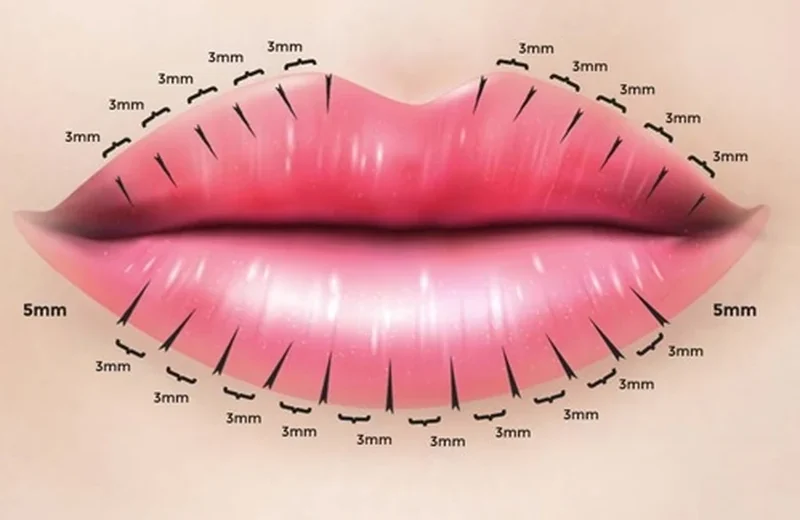
A subnasal lip lift is an operation in which a surgeon removes a carefully planned strip of skin below the nose and repositions the upper-lip tissues. The commonly used “bullhorn” name describes the shape of the external excision and closure. The intention is to shorten the skin-bearing upper lip, reveal more vermilion and, in suitable patients, improve resting upper-tooth visibility. Technique variants may differ in the width and distribution of tissue removal, soft-tissue support and tension management. [1,2,4]
The incision usually lies close to the nostril and columellar base, where its location may help conceal it, but concealment is not the same as having no scar. Scars can become red, raised, widened or asymmetric; their visibility depends on surgical technique, healing, skin characteristics, tension, and follow-up. Upper-lip shortening is not simply “putting filler in a different place”: it is a structural and potentially lasting surgical change. [1,2,3]
A lip lift can improve certain measured proportions, but its effect on a patient’s social smile and long-term satisfaction varies. It may not correct every type of thin lip, prominent gum display, downward corners or dental issue. Over-shortening, poor scar outcomes, asymmetry, nasal-base changes, wound-healing problems and altered lip feel or function are meaningful consent topics. The surgeon must judge both achievable benefit and the prospect of irreversible disappointment.
6. The “no-scar” lip lift: why the label needs qualification
Stanley and colleagues referred to a previously described internal suspension or “no-scar” lip-lift method, contrasted with the external excision-based approach. The term describes an attempt to avoid a conspicuous external cutaneous scar, not an absence of incisions, tissue healing or complications. The 2017 article explicitly described surgical work involving an internal nasal incision and a suspension mechanism; it also noted that surgeons often favored more predictable external excision for longer-term results. [1]
Modern technique comparisons remain limited. An internal suspension approach should not be presented online as universally equivalent in lift magnitude, duration, repeatability or suitability to a standard bullhorn operation. Its candidacy depends on the patient and the surgical method, and any longevity claim should be linked to outcomes from that specific technique rather than transferred from a different lip-lift series. [2]
Other terms seen online—central lip lift, deep-plane lift, vermilion advancement, corner lift and modified bullhorn—do not describe identical operations. They vary in target anatomy, scar location, effect on the white upper lip and intended distribution of lift. Avoid accepting a fashionable name as proof of safety or superiority.
7. Before-and-after clinical example: a 50-year-old patient’s treatment goals
The original 2017 article showed a 50-year-old patient who wished to increase visible upper teeth at rest, shorten the upper lip and show more pink lip. The preoperative images are best read as evidence of the starting anatomy and requested changes, not as a numerical baseline for a modern surgical trial. [1]
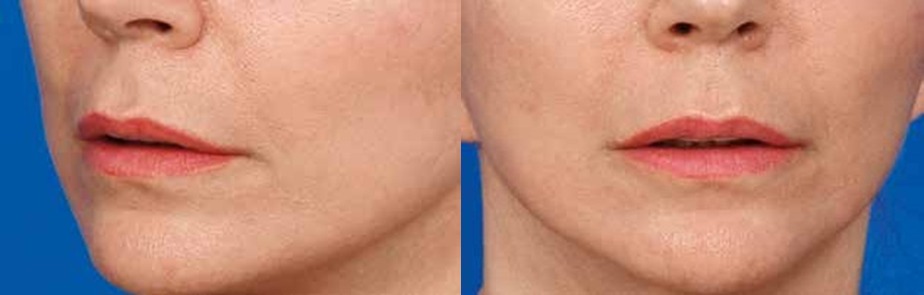
In the same published article, six-month photographs after an external lip lift illustrate a change in upper-lip position and greater visibility of the upper incisor region in the posed clinical views. This is a visual case illustration; a photo set cannot establish average success rates, complication probabilities, or that the result would be reproduced in patients with different anatomy. The images were created by the source authors and are not before-and-after photographs from Dr. Erfan Rahmani’s practice. [1]
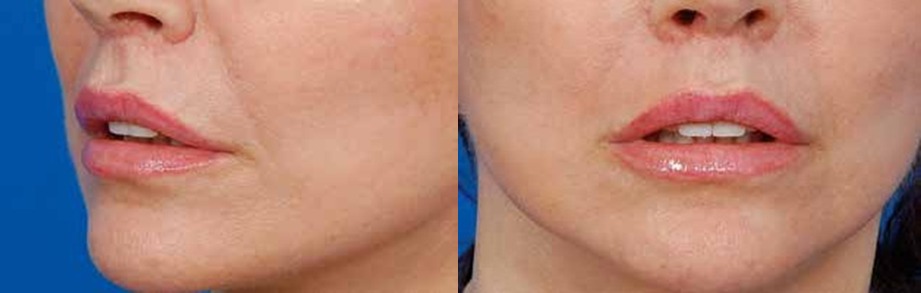
A useful clinical interpretation is that the presenting problem was not simply “insufficient filler volume.” It involved the upper lip as a moving frame for a smile. The result also underscores why dental tooth show should be assessed with the lip at rest and in motion, not inferred solely from a still image of the mouth.
8. Before-and-after clinical example: early scar visibility in a younger patient
The original report also showed a 25-year-old patient before surgery and one week after an external lip lift, with the discussion directed toward incision-line visibility beneath the nasal base. One-week photographs capture early healing, when redness and tissue swelling can exaggerate scar appearance. They do not establish the mature scar result at six or twelve months. [1]
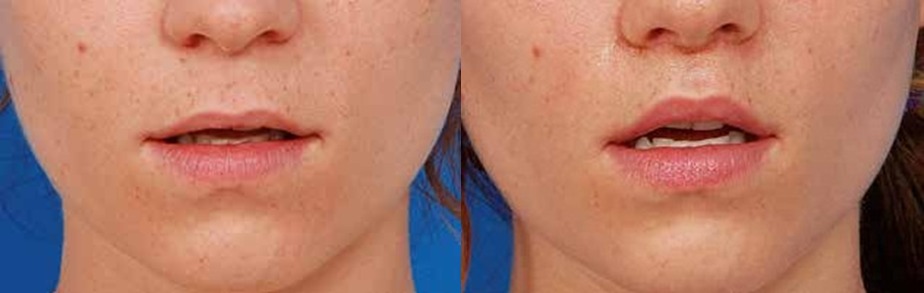
This case is important in counseling because “the incision is hidden beneath the nose” is not synonymous with “the incision cannot be seen.” Younger patients should not automatically assume they will scar better or worse based on age alone. Prior scars, skin tension, pigment risk, healing history and the anticipated incision location should all be reviewed with the operating surgeon. Silicone-based scar care, sun protection and any laser or injection treatment are discussed after surgery according to the surgeon’s assessment; they are not an advance guarantee of invisible healing.
9. What did the 2026 systematic review add?
A systematic review first published on 23 February 2026 synthesized seven studies including 1,754 patients treated with different upper-lip lifting approaches. Across reported groups, subnasal techniques and their modifications were associated with average measurements showing shorter philtral length, greater vermilion exposure and more upper-incisor display. Examples in the review included reductions in philtral length from approximately 14.0–14.5 mm to 10.8–12.0 mm, increases in vermilion height from 5.0–6.0 mm to 7.0–9.0 mm, and improvement in incisor show from 1.5–2.0 mm to 3.5–5.0 mm. These are aggregated figures from selected reports, not expected results for every patient. [2]
The review also described generally favorable reported satisfaction, while revision rates in studies reporting this outcome ranged from 0.6% to 6.7%. Quality of evidence was limited by small nonrandomized cohorts for some methods, inconsistent measurement, mixed surgical variations and variable follow-up. No statistically justified ranking of every technique for every facial pattern was possible. A pooled mean should never be converted into a personal promise such as “every patient gets 3 mm more tooth show.” [2]
A separate 2021 longevity cohort of 52 patients observed persistent increases in vermilion show across follow-up, with some decline over longer periods. It supports the idea of sustained effect in selected cases but does not mean all surgical lip lifts are literally permanent in appearance as normal facial aging continues. [5]
A 2025 comparative surgical report on a modified deep-plane Tri-Lift procedure described 193 treated women and compared their outcomes with 50 women receiving a traditional bullhorn approach. Its reported satisfaction differences are encouraging but do not replace independently replicated, adequately controlled trials. Patients should avoid assuming that a branded surgical technique is categorically superior on the basis of one group’s report. [4]
10. Lip lift versus hyaluronic acid filler: they solve different problems
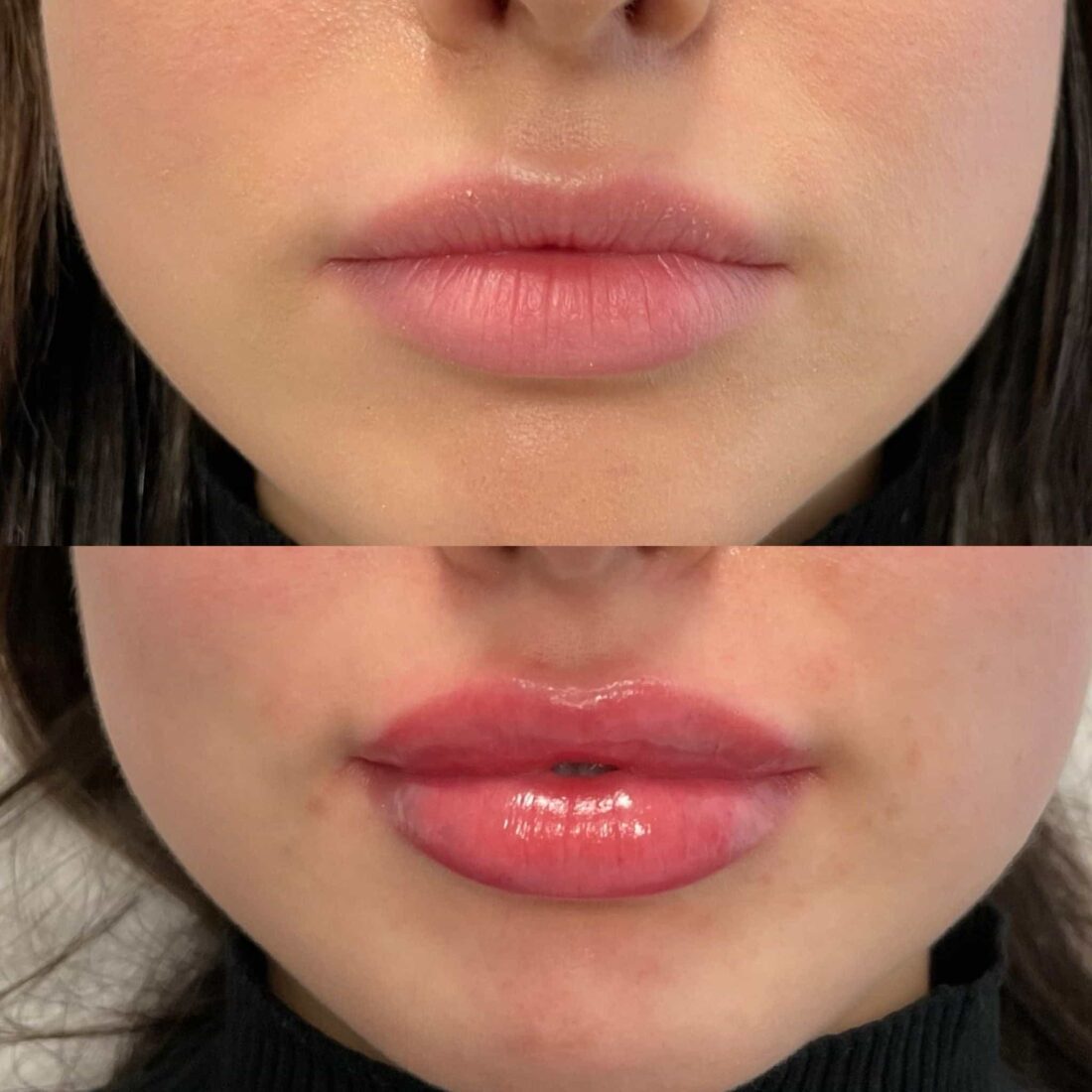
Hyaluronic acid (HA) filler is generally used to modify lip volume, contour, projection and symmetry. In appropriately selected patients it can produce a natural, conservative enhancement without removing skin. Its effect is typically temporary and can sometimes be adjusted with hyaluronidase, though reversal is neither perfectly predictable nor risk-free. A surgical lip lift is designed to change upper-lip length and position and may influence dental show; it requires incision and healing, and its structural change cannot be dissolved. [2,3]
If the patient’s upper-lip skin is proportionate, upper teeth show naturally and the red lip is small, a modest filler treatment may better align with their goal. If cutaneous lip elongation and low tooth display dominate, repeated filler treatment may not address the anatomical issue. If the patient wants better tooth display because their incisors are worn, short or positioned posteriorly, aesthetic dentistry may be more important than either filler or lifting.
An additional subtlety is that HA filler can sometimes modify the visual height of vermilion or lip eversion; this does not establish consistent shortening of the white upper lip or increased tooth show. Likewise, a lip lift can create an apparently fuller upper lip without adding gel, but does not replace filler when the patient seeks additional localized vermilion volume. Combined treatment is possible in selected patients after healing and specialist review, but it is not mandatory and can increase complexity.
11. Quick comparison table
| Feature | HA lip filler | Surgical subnasal lip lift | Aesthetic dental assessment/treatment |
|---|---|---|---|
| Main purpose | Volume, contour and selective shape changes | Shorten cutaneous upper lip, reveal vermilion and potentially improve tooth show | Address tooth shape, position, display and occlusion |
| Changes upper-lip skin length? | No predictable anatomical shortening | Yes, intended primary change | No |
| Incision or surgical scar | No surgical excision; injection punctures | Yes, visible scar risk even in a subnasal crease | Depends on dental treatment; no lip-lift scar |
| Reversible? | HA can sometimes be reduced with hyaluronidase | Not simply reversible | Varies by procedure |
| Timing and recovery | Usually brief procedural recovery, swelling/bruising possible | Wound healing, swelling and later scar maturation | Varies greatly |
| Important limitations | Vascular occlusion, migration, edema, nodules, overfilling | Scarring, asymmetry, over-shortening, functional concerns | Cannot directly reposition a long upper lip |
| Appropriate specialist | Trained and licensed medical injector | Qualified plastic or maxillofacial surgeon | Qualified restorative dentist/orthodontist |
12. Can lip filler make an already long upper lip look longer?
It may, in certain patients, alter the visual balance unfavorably. If the dominant problem is a long cutaneous upper lip, adding an appreciable volume of filler may increase projection while leaving the nose-to-vermilion distance essentially unchanged. Depending on anatomy and filler location, the lip may look heavy or overfilled relative to the lower face. The 2017 dental paper argued strongly against treating every loss of visible tooth show by adding HA alone. That is a clinically useful warning, but it should not be overgeneralized to mean filler always makes the philtrum physically longer. [1]
The appropriate response to an elongated upper lip is first measurement and examination, not an absolute prohibition on filler. Some patients have both an elongated cutaneous lip and genuine volume deficiency. A conservative staged approach may still have a role. The priority is choosing the change desired rather than trying to fix an anatomical length problem by indiscriminate volumization.
13. What is a Botox lip flip, and does it lift the upper lip?
A lip flip uses small doses of a botulinum toxin formulation to relax selected fibers of the orbicularis oris, which may allow a little more of the upper vermilion to roll outward in some patients. It does not surgically shorten the cutaneous upper lip and does not add filler volume. Its cosmetic effect is temporary, variable and commonly much subtler than social-media photos suggest. It may also cause temporary difficulty with certain speech sounds, drinking from a straw, lip seal or other mouth movements, depending on the treatment and individual response.
A lip flip should not be sold as a substitute for a surgical lift when the goal is clearly increased resting incisor show because of a long philtrum. Nor should it be assumed to fix a gummy smile, for which assessment of the precise elevator muscle pattern and dental gingival relationships is needed. An assessment of existing lip competence and perioral function is particularly important before neuromodulation.
14. A gummy smile is not the same as poor tooth display
The phrases gummy smile, limited incisor show at rest and long upper lip describe different findings. A gummy smile refers to gingiva displayed during smiling. Some causes include hyperactive upper-lip elevators, altered passive eruption, a short clinical crown, dentoalveolar extrusion or vertical maxillary excess. A long upper lip may actually hide upper teeth at rest. Surgical lip lifting could worsen excessive gingival show in an unsuitable patient and must not be selected without smile analysis.
Appropriate pathways vary: dentistry for tooth and gum position, orthodontics for occlusal relationships, selected neuromodulation for muscular components, or facial surgery when anatomical repositioning is indicated. The goal is to preserve a natural smile in motion, not to impose a universal ideal quantity of exposed gum or tooth.
15. The role of dental veneers, orthodontics and tooth wear
Restorative dentistry can change color, tooth length, form and surface morphology, but its decisions must respect functional occlusion and tooth conservation. A patient with worn incisors may reasonably require dental rehabilitation; this should be differentiated from a patient with normal tooth length whose upper lip increasingly covers the incisors. The Stanley article cautioned that artificially lengthening teeth merely to compensate for an aged lip may produce disproportionate restorations and an altered occlusal scheme. [1]
The reverse also matters: a patient may have dental retrusion or reduced dental support, making the lip appear different despite normal skin length. In such circumstances surgical lip shortening might not be the first choice. A joint smile-design approach uses photographs, dental records, occlusal analysis and facial observation to identify whether treatment should change teeth, soft tissues, or both. The wording “unveiling dental beauty” captures this principle without implying that all patients need surgery.
16. When a surgical referral is more appropriate than another syringe
Referral is worth discussing when a patient consistently requests more upper front tooth visibility at rest, has documented skin-lip elongation, adequate pre-existing red-lip volume, and does not wish to create extra projection simply to change dental display. Patients who have repeatedly used filler without achieving their primary goal may also benefit from re-assessment rather than escalating volume. This is not a diagnostic shortcut: the surgical specialist still evaluates lip competence, scars, dental and nasal anatomy, realistic expectations and medical suitability.
Referral becomes particularly important when upper-lip anatomy is affected by prior surgery, trauma or substantial asymmetry, or when a patient requests dramatic shortening. A clinician’s responsibility is not to persuade a patient to undergo surgery but to accurately describe which tools may and may not achieve the desired outcome. Clear consent should include realistic dissatisfaction and revision scenarios.
17. Who may not be an appropriate lip-lift candidate?
A patient with an already short upper lip, marked upper gingival show, inadequate lip closure or a strong tendency toward visible scarring may be less suited to a standard subnasal lift. Active infection, poor wound-healing circumstances, unrealistic aesthetic demands, certain prior operations, unmanaged medical issues or unfavorable scar history require specialist assessment and may lead to deferral. The precise contraindications depend on surgical technique and the patient’s examination. [2,3]
Previous lip filler is not automatically an exclusion, but its location, persistence and degree of distortion may complicate evaluation. Similarly, previous rhinoplasty may alter nasal-base anatomy and scar position; combined surgical planning can become more complex. No online checklist can determine the safe amount of skin removal. That decision is operative planning by the treating surgeon, not something a patient should calculate from a generic target millimeter.
18. Risks, complications and honest counseling
Surgical risks include bleeding, infection, wound separation, unsatisfactory scar, asymmetry, changes to nasal-base appearance, under- or overcorrection, altered sensation, prolonged swelling, unpleasant tightness and possible revision. Published lip-lift series often report mostly minor problems, but observational studies can undercount rare events, especially when follow-up is short. The 2026 review’s reported revision range of 0.6%–6.7% is useful context, not a clinic-specific guarantee. [2]
For filler, common risks are swelling, pain, bruising, tenderness and irregularity; less common but important problems include delayed inflammation, nodules, infection, migration and accidental intravascular injection. The latter can cause tissue necrosis and potentially severe injury. The FDA advises that fillers be administered by trained medical professionals who can explain risks and recognize complications. HA filler is not “risk-free because reversible.” [3]
For any intervention, informed consent must cover how much change is realistically achievable, photographs that fairly represent results, what would be done if the result is unsatisfactory, and whether the practitioner or facility can manage or refer complications. Patients should be told that surgical wound healing unfolds over months, while filler may evolve over days to weeks as early edema settles.
19. Recovery and scar maturation after lip lifting
Early healing often involves swelling, a visible incision line and temporary tightness or bruising. The actual recovery plan—including wound cleaning, prescribed medication, activity limitations, suture management and scar-care timing—belongs to the surgeon. A one-week photograph is too early to predict a final scar; redness and contour can continue to change during maturation. A consultation should distinguish “return to normal daily tasks” from “the scar and lip have reached their final appearance.”
Avoid a universal return-to-exercise promise or an advertised “zero downtime” for a surgical lip lift. The surgeon may adapt restrictions according to wound closure and healing. Patients should seek prompt surgical evaluation if there is increasing pain, spreading redness, fever, bleeding, wound opening, increasing asymmetric swelling or compromised ability to close the lips. Scar treatment, if needed, must follow a diagnosis rather than unplanned use of topical products or devices.
20. Does a lip lift last forever?
The excised skin is not expected to regrow in the same way a temporary gel resorbs, so surgical alteration of length may persist. However, the surrounding tissues continue to age, and long-term appearance can change. The published 2021 cohort showed preservation of increased vermilion display across several years in selected patients, with gradual reduction in some measurements. This supports long-lasting anatomical change, not permanent facial youth or guaranteed appearance. [5]
Patients should also understand that an enduring structural change can be a disadvantage if the aesthetic plan is unsuitable. A filler treatment may be more adaptable; it can be adjusted over time as facial preferences and anatomy change. Long-term reversibility, not just duration, belongs in a balanced consultation.
21. What can the pictures prove—and what can they not prove?
A photographic case can show the relationship between the upper lip and teeth under certain conditions. It cannot reliably tell the reader how much of the change came from surgery, camera pose, smile effort, dental position or early postoperative swelling unless those factors were standardized and measured. The original 2017 report illustrated a conceptual relationship between lip lifting and dental show; it did not provide a randomized comparison against HA fillers or aesthetic dentistry. [1]
The more recent 2026 evidence synthesis included quantitative measures, but the authors stressed nonstandardized outcomes and heterogeneous studies. A responsible blog should show images with captions naming their source, time point and limitations, and must not imply that archive cases are patients of the medical editor. For public posting, obtain the legal right to reproduce the photographs and ensure relevant patient consent requirements are satisfied.
22. A coordinated facial aesthetic plan in Abu Dhabi
A thoughtful consultation may begin with a licensed aesthetic physician, restorative dentist, orthodontist or surgeon, depending on the chief concern. For a patient who wants a gentle change in lip contour without altering skin length, the physician can discuss whether an HA filler is an appropriate reversible option. For a patient whose dominant concern is disproportionate upper-lip skin length and low incisor show, a qualified plastic or maxillofacial surgeon can determine whether a lip-lift consultation is warranted. Patients needing tooth repositioning or restorations benefit from dental expertise.
This cross-specialty approach avoids assuming that “more filler” is the answer to every perioral complaint. Dr. Erfan Rahmani’s website provides information about non-surgical aesthetic treatments in Abu Dhabi. This blog discusses lip-lift surgery for education and comparison, not as a representation that surgical lip lifting is offered by Dr. Rahmani. Patients considering surgery should consult an independently qualified operating specialist and confirm facility licensing and procedure-specific privileges.
22A. Six real consultation scenarios: which structure should be treated?
Scenario A — “My lips are small, but my teeth show normally.” The patient has acceptable philtral length, comfortable lip seal, harmonious tooth display and a mild red-lip volume deficiency. A conservative HA filler consultation may be more relevant than a surgical lip lift. Baseline proportions and dynamic lip movement should guide any product selection, and deciding not to treat is also reasonable. Attempting to create a dramatically lifted upper lip without an anatomical indication can introduce unnecessary scarring and imbalance.
Scenario B — “My upper lip covers my teeth, even when I am relaxed.” The patient has a longer-looking upper cutaneous lip with limited incisor show and sufficient vermilion volume. This pattern warrants examination of upper-lip length, dental incisor position, vertical dimension and smile dynamics. If skin-lip elongation is a dominant contributor, a surgical consultation may be more useful than injecting additional volume. A qualified surgeon can discuss whether shortening would produce acceptable tooth show without causing unwanted gingival display or lip incompetence.
Scenario C — “I had veneers, but my teeth still barely show.” The appropriate next step is not automatically longer veneers or bigger lips. A restorative dentist should reassess crown length, occlusion, tooth position, tooth wear and smile line, and the patient may also need upper-lip assessment. The 2017 source paper explicitly raised this interdisciplinary problem. The objective is a balanced functional smile, not a predetermined number of visible incisor millimeters achieved at the expense of healthy tooth structure. [1]
Scenario D — “I want my upper lip shortened, but I show a lot of gum when I smile.” Here the risk of creating excess tooth and gum show deserves special attention. A smile examination should document whether the upper lip elevates excessively during a full smile and whether dental or skeletal contributors exist. The safest choice may be a non-surgical approach, targeted dental treatment, no intervention, or specialist review rather than subnasal skin excision. Resting appearance and smiling appearance should be assessed together.
Scenario E — “I had filler several times, and my upper lip now looks heavy.” Not every heavy upper lip is due to a long philtrum: volume accumulation, migration, tissue position, natural aging and photography effects can all contribute. The original product, dates and injection zones should be reviewed and ultrasound assessment may be useful in selected complex filler cases. Blindly adding more gel or immediately scheduling surgery is premature until the dominant cause of the appearance has been identified. If existing HA contributes significantly, the treating clinician may consider an individualized adjustment plan.
Scenario F — “I want a completely invisible result and absolutely no scar.” Surgery cannot meet a literal zero-scar guarantee, and injected filler cannot guarantee zero swelling or zero complications. This statement may reveal a mismatch between patient expectations and any proposed intervention. A careful consultation can clarify what level of visible change or procedural risk the patient would consider acceptable. Choosing no treatment is a medically respectable outcome.
22B. Photographic and measurement standards for trustworthy results
For treatment planning and web publication, standardized photography is a clinical-quality tool rather than a decorative marketing step. Photographs should be recorded at natural repose, with relaxed lips gently separated if that is the patient’s normal rest posture, and again during a spontaneous smile, posed smile and lateral expression. Front, oblique and true lateral views document different dimensions of lip architecture. Camera height, focal length, distance, head posture, lighting and facial muscle effort should be as consistent as possible between sessions.
If digital measurements are used, the observer should identify stable landmarks: subnasale, central vermilion border, labrale superius, lip corners, stomion, nasal base and visible incisor edges. Dental photographs can show tooth proportion and overjet, while lateral facial photography offers a view of cutaneous lip length and projection. Because lighting and expression strongly affect apparent tooth exposure, a change observed on a single photograph should not be treated as millimeter-precise evidence without a standardized method.
The same standard applies to case results on a website. A before-and-after pair should name the follow-up interval and any other procedures performed. Early postsurgical swelling may produce an exaggerated lift appearance. If a patient has had simultaneous rhinoplasty, veneers, Botox, filler or orthodontics, attributing the entire improvement to lip lifting alone would be misleading. Photographs from published research require both attribution and image-use permission, and their patients cannot be presented as patients of an unrelated medical editor.
22C. Interdisciplinary sequencing: avoid treating the wrong problem first
The order of treatment matters most when several structures contribute to the same complaint. If major dental wear or functional bite concerns are present, dental diagnostics often need to precede an aesthetic lip decision. If the upper lip is anatomically elongated and the patient is considering both restorative dentistry and surgery, a shared surgical–dental plan may prevent a veneer length decision from being made around an upper-lip position that will later change. When tooth position is stable and the issue is a mild vermilion deficit, reversible enhancement may be discussed without surgical referral.
There is no single mandatory sequence, because some patients prioritize temporary appearance change while others seek structural correction. A useful plan records the main problem, which specialist owns that problem, the intended measurable endpoint, the time allowed for healing, and the decision point for reassessment. It also documents what will not be treated. This makes it less likely that several interventions are layered together without understanding which one produced the result or side effect.
Collaboration should preserve accountability. The physician performing fillers is responsible for injectable selection, procedural safety and follow-up. A dentist is responsible for dental planning. The operating surgeon is responsible for the surgical indication, intervention and recovery pathway. Shared aesthetic objectives do not erase distinct professional scopes or regulatory requirements, including those applicable to practice in the UAE.
22D. Critical appraisal: why evidence quality matters even when photos are impressive
The 2017 source is a useful conceptual article connecting dental beauty and lip lift, but it is not a randomized trial and its case photographs do not answer comparative effectiveness questions. In contrast, the 2026 systematic review included a much larger number of surgical patients and reported quantifiable changes. However, the included operations were not identical, sample characteristics were heterogeneous, follow-up varied, and standardized scar measurement was often absent. That means a visually striking change in one cohort cannot validate a universal preference for that surgical modification. [1,2]
Patients also need to distinguish absolute change from relative change. For example, a rise in vermilion height from 5 mm to 7 mm is a 2-mm absolute difference and a 40% relative change, but this does not necessarily mean a person would judge the lip 40% more attractive. Similarly, increasing tooth display from 2 mm to 4 mm represents a 2-mm change, which could be desirable for one patient yet excessive for someone already showing gum on a full smile. Satisfaction scales are informative but reflect expectations, clinical sampling and follow-up timing.
The most rigorous future studies would include standardized baseline and follow-up photographs, independent blinded reviewers, functional assessment, scar scoring, dental show during speech and smiling, and longer follow-up across diverse ages and facial phenotypes. Until stronger comparisons become available, it is more accurate to say that properly selected lip-lift patients can obtain meaningful improvements than to claim there is a universally ideal technique or a predictable perfect smile.
23. Key conclusions for patients and clinicians
Upper-lip length, red-lip volume and tooth display are related but distinct anatomical variables. A subnasal lip lift can change the first and may influence the latter two; injectable HA primarily changes volume and contour; dental treatment addresses dental causes of an altered smile. Source figures from 2017 illustrate why the lip cannot be ignored in smile planning. More recent evidence provides measurable outcomes and reported revision rates, but remains heterogeneous and cannot establish a universal ideal or a single best operation. [1,2]
The most natural decision is the one matching the patient’s specific anatomy, goals and tolerance for tradeoffs. Do not promise an invisible scar, a fixed number of extra millimeters of tooth show, or that one branded operation defeats every alternative. Preserve lip function, dental health and individual facial identity as part of success, not afterthoughts.
Questions patients often ask: lip lifting, filler and tooth show
- 1. Is a lip lift the same procedure as lip filler?
- No. A lip lift surgically changes the upper lip’s position and skin length. Filler adds injectable material to change contour and volume; it does not predictably shorten the cutaneous upper lip.
- 2. Can lip filler shorten my philtrum?
- It may alter the visual impression of upper-lip proportions, but it does not remove skin or reliably reduce anatomical philtral length.
- 3. Can lip-lift surgery make my upper teeth show more at rest?
- It can in selected patients. The degree depends on skin length, dental position, lip dynamics, operation and healing. No individual millimeter gain can be guaranteed.
- 4. Is a bullhorn lip lift permanent?
- The structural skin-shortening effect is generally long-lasting, but normal aging continues, and the final appearance may change gradually.
- 5. What does a “no-scar lip lift” mean?
- Usually an internal or less externally visible incision approach. It does not mean no wound, no surgical risk, or proven equivalence to a bullhorn lift.
- 6. Does every surgical lip lift leave a scar?
- Surgical incisions heal with scar tissue. The visibility and quality vary; a subnasal location can conceal but cannot eliminate scarring.
- 7. Is a lip lift better than a filler for everyone?
- No. They serve different indications. A patient with normal lip length and a true volume deficiency may prefer a conservative filler.
- 8. What if I want bigger lips but my upper teeth already show?
- Your clinician should assess vermilion volume, lip-tooth balance and function. More tooth show may not be desirable, making filler more relevant than surgery.
- 9. What if my smile shows too much gum?
- A gummy smile needs separate evaluation of muscle activity, teeth, gingiva and jaw. A lip lift may be inappropriate or worsen the display.
- 10. How are tooth show and vermilion show different?
- Tooth show measures visible incisor crowns; vermilion show describes the red or pink lip visible externally. They can change independently.
- 11. Can Botox replace a lip lift?
- A lip flip may modestly evert the upper lip for a temporary effect, but cannot surgically shorten an elongated cutaneous lip.
- 12. Can the surgery cause difficulty closing the lips?
- Over-shortening or functional issues may affect closure, so preoperative lip competence and careful surgeon planning are important.
- 13. How long is surgical downtime?
- Recovery varies by technique and patient. The surgeon should distinguish early activity recovery from later scar and contour maturation.
- 14. When does a lip-lift scar look final?
- Scars evolve over months. Early photographs, especially at one week, cannot predict an individual’s mature result.
- 15. Does age determine whether I need a lip lift?
- No. Age may affect tissue changes, but actual anatomy, function, risk factors and goals matter more than the birthday alone.
- 16. Are young patients ever candidates for lip lifting?
- Some younger patients have a naturally long upper lip, but long-term tradeoffs and scar risk still require careful surgical counseling.
- 17. Is surgery appropriate if I have lip filler already?
- Possibly, but existing filler can affect examination. The operating surgeon should assess filler history and current anatomy before planning.
- 18. Should I dissolve all filler before surgical consultation?
- Not automatically. The surgeon and injector must decide whether any adjustment is needed based on the product and physical findings.
- 19. Will an upper lip lift fix asymmetric teeth?
- No. Tooth asymmetry is primarily a dental issue, though changing lip position may change how the teeth are seen.
- 20. Can veneers improve upper tooth display instead of surgery?
- Sometimes dental restorations are appropriate, especially for worn or short teeth. Unnecessary lengthening simply to compensate for upper-lip descent may harm proportions or bite.
- 21. Is a lip lift a solution for every thin upper lip?
- No. Thin appearance may arise from volume deficit, lip position, dental support, or several causes and should be diagnosed first.
- 22. How does the procedure affect the Cupid’s bow?
- It can change upper-lip position and the visible vermilion pattern, but outcomes differ with the exact technique and existing anatomy.
- 23. Is a lip lift the same as a corner mouth lift?
- No. A corner lift primarily addresses oral commissure position; a subnasal lift predominantly shortens central upper-lip skin.
- 24. What is a deep-plane or suspension lip lift?
- It is a category of modified surgical techniques involving deeper tissue support. Evidence does not establish one method as universally best.
- 25. What do studies report about surgical satisfaction?
- A 2026 systematic review found generally favorable reported satisfaction, but assessment methods and study designs differed substantially.
- 26. How often is revision required?
- Published studies in the 2026 review that reported revisions described rates from 0.6% to 6.7%; this is not a predicted individual risk.
- 27. Could I have a lip lift and lip filler?
- Some patients may benefit from staged complementary procedures, but the combination must reflect anatomy and be planned with the relevant clinicians.
- 28. What happens if a lip lift overcorrects?
- Excessive shortening may create unwanted tooth or gingival show, aesthetic imbalance or functional difficulty and may be difficult to reverse.
- 29. Does lip filler always make a long upper lip look longer?
- No. It can alter projection and balance, but the effect is anatomy-dependent. The main concern is assuming volume addition corrects skin length.
- 30. Is an aesthetic dentist relevant to lip-lift planning?
- Yes, particularly when tooth wear, incisor position, veneers, bite or smile design contribute to the complaint.
- 31. Is lip-lift surgery safe?
- Appropriately selected and treated patients often have favorable outcomes, yet scars, asymmetry, healing problems and other surgical risks remain.
- 32. Are filler injections risk-free because HA can be dissolved?
- No. Filler can cause infection, nodules and rare vascular events; reversal may not fully restore the original appearance or reverse complications.
- 33. Can the natural shape of the smile change after lip surgery?
- Yes. Upper-lip position and mobility can change. Smile dynamics, speech and comfortable lip closure must be examined preoperatively.
- 34. What photographs should be taken before surgery?
- Consistent frontal, oblique and profile photographs at rest and smiling are valuable, ideally with measured philtral length and dental show.
- 35. Do all people need the same upper-lip measurements?
- No. Population averages do not provide an individual ideal. Facial morphology, teeth, age and personal identity matter.
- 36. What is incisor display in a relaxed face?
- It is the amount of visible upper front tooth measured without deliberately exaggerating the smile or parting of the lips.
- 37. Should I decide based on a celebrity lip image?
- Images can explain preferences, but a clinician must evaluate what anatomy and intervention could reasonably achieve a similar feature.
- 38. Can lip lift improve smile design after veneers?
- In selected cases, repositioning the upper lip may reveal restorations, but dental and surgical clinicians should coordinate to avoid overexposure.
- 39. Does a lip lift change the shape of my nose?
- Subnasal surgery is performed adjacent to the nasal base, and unintended or planned contour changes are possible depending on technique.
- 40. What if I have had rhinoplasty?
- Prior nasal surgery may alter tissue planes and scars; surgical consultation requires a detailed operative history.
- 41. Is a lip lift a treatment for wrinkles around the mouth?
- Its main purpose is skin-lip repositioning. Lines may require different treatments, such as selected fillers, resurfacing or skin therapies.
- 42. How can I reduce lip-filler overfilling?
- Choose a qualified clinician, agree on a conservative anatomical goal and allow swelling to resolve before considering additional volume.
- 43. Can a surgical lift achieve fuller-looking lips without filler?
- Sometimes: more red lip may be revealed by repositioning, but this is different from adding lip tissue volume.
- 44. Does a higher upper-to-lower lip ratio mean a better result?
- No. Numerical ratios are reference tools, not universal rules for attractiveness or functional health.
- 45. When should I speak to an orthodontist?
- When tooth position, bite, dental arch relationships or skeletal factors are suspected to contribute to lip posture or smile display.
- 46. Do the published before-and-after photographs predict my outcome?
- No. They document particular source patients under specific conditions and should not be treated as individualized forecasts.
- 47. Why might my upper teeth disappear from view with age?
- Upper-lip elongation, tissue changes, dental wear and altered support can each contribute; an in-person exam differentiates them.
- 48. Can I have an upper lip that is too short already?
- Yes. Further shortening may lead to unwanted dental or gingival show or difficulty with lip seal and is usually undesirable.
- 49. Is lip-lift consultation available as part of general aesthetic assessment?
- A non-surgical aesthetic physician can assess proportion and discuss referral. The surgical procedure itself should be performed by a properly qualified surgeon.
- 50. Where can I learn about non-surgical lip filler in Abu Dhabi?
- Dr. Erfan Rahmani’s website has a dedicated lip filler information page at https://drerfanrahmani.com/services/lip-filler/. A personalized consultation is required to assess candidacy and risks.