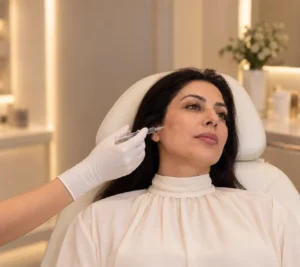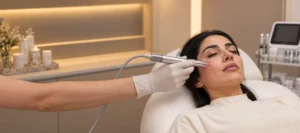

The Fotona SMOOTH laser is a non-ablative Er : YAG treatment mode that uses controlled trains of 2940 nm laser pulses to stimulate skin remodeling without intentionally removing the skin surface. It is designed to activate heat-shock proteins, fibroblasts and collagen production while keeping heat within a controlled range. Fotona SMOOTH® is a non-ablative delivery mode of the Er : YAG laser. Its proposed mechanism combines two effects: It is best understood as a tissue-remodeling technology, not an aggressive resurfacing laser. It is often part of multi-step Fotona protocols for skin tightening, texture improvement and non-surgical rejuvenation. Skin tightening takes more than warming the surface. A useful response has to reach the dermal and subdermal support network, including fibroblasts, collagen and the extracellular matrix. SMOOTH mode works through two linked pathways: The aim is gradual improvement in tissue quality, not the peeling or crusting seen after aggressive ablative resurfacing. i-HBM stands for intense heat-shock biomodulation. It refers to very brief superficial thermal stress that activates heat-shock signaling without sustained exposure at the same peak temperature. Heat-shock proteins help cells manage stress, support protein repair, and take part in signaling pathways linked to tissue recovery and regeneration. SMOOTH mode may be used to improve tissue firmness, support collagen remodeling, refine fine lines and contribute to a more rested appearance without aggressive surface ablation. It can be delivered on the skin or intraorally in selected protocols. One distinctive use is intraoral treatment. The laser is applied to the oral mucosa rather than the external skin, stimulating tissue remodeling from inside the mouth to support the perioral and nasolabial region. This does not replace lost volume the way filler does. The expected change is a gradual improvement in firmness and tissue quality, not instant volumization. Fotona 4D is a multi-step facial rejuvenation concept that combines laser modes working at different tissue depths. SMOOTH is commonly used as the non-ablative, regenerative component, sometimes intraorally. Other steps may target deeper heating, superficial texture, or vascular and pigment concerns. A multi-layer approach makes sense because aging is not a single-layer problem. Skin texture, dermal quality, connective-tissue support, fat distribution and muscle anatomy all shape facial appearance. SMOOTH vs. Fotona 4D : SMOOTH is a specific Er : YAG delivery mode. Fotona 4D is a broader treatment concept that can include SMOOTH together with other laser steps. SMOOTH mode is not a substitute for every aesthetic treatment. It does not provide: Patients with heavy jowling, major structural descent, significant volume loss or advanced skin redundancy may need a combination approach or a different treatment. Laser rejuvenation works best when the technology is matched to the right tissue problem. Good candidates are usually patients who want gradual, non-surgical improvement in skin quality, mild laxity, fine lines or perioral aging, with limited downtime. They also understand that collagen remodeling takes time. A consultation is essential. Suitability depends on skin type, tissue thickness, pigmentation tendency, previous procedures, active skin conditions, medications, scarring history and the area being treated. The superficial heat-shock component is brief. Discomfort is more closely linked to the cumulative deeper heating during repeated pulses, so sensation varies by area, intensity and individual sensitivity. Many SMOOTH protocols are performed without aggressive anesthesia, but comfort measures and parameters should always be individualized. Because SMOOTH is non-ablative, visible recovery is generally lighter than with traditional ablative Er:YAG resurfacing. Depending on the area and protocol, you may notice: Non-ablative does not mean zero biological response, since the treatment deliberately creates thermal stimulation. Follow your clinician’s aftercare, protect your skin from excessive sun and heat, and report symptoms that are unusually painful, persistent or worsening. This depends on the indication, baseline skin quality, age-related changes, intensity, and whether SMOOTH is used alone or within a broader Fotona protocol. Some patients notice progressive improvement after one treatment, while others are treated in a series. Because remodeling continues after each session, intervals should give the tissue time to respond rather than repeating energy too soon. You may notice some early tightening soon after treatment. Early changes can partly reflect transient contraction or swelling, while true collagen remodeling develops gradually over weeks to months. Pro-collagen-positive fibroblast activity may remain detectable at later follow-up points. Judge your result over weeks and months, not just the first few days. Even a well-designed technology needs careful clinical technique. Wavelength, pulse sequence, cumulative energy, treatment density, tissue contact, anatomy and operator experience all influence the outcome. The goal is controlled biomodulation, not overt thermal injury. Treatment should be adjusted or stopped if the tissue response falls outside the intended endpoint. “Fotona” can refer to several wavelengths, handpieces and modes that act at different depths and through different mechanisms. Before booking in Abu Dhabi, ask:What Is Fotona SMOOTH®?
How Does Fotona SMOOTH® Tighten Skin?
What Is i-HBM?
Why Are Heat-Shock Proteins Important?
Fotona SMOOTH® for Facial Rejuvenation
Intraoral SMOOTH® and the Nasolabial Area
How Fotona SMOOTH® Fits Into Fotona 4D
Potential Benefits of Fotona SMOOTH®
What Fotona SMOOTH® Does Not Do
Who Is a Good Candidate?
Who May Need a Different or More Cautious Plan?
Does Fotona SMOOTH® Hurt?
Downtime and Recovery
How Many Sessions Are Needed?
When Do Results Develop?
Safety : Why Technique Still Matters
Fotona SMOOTH® in Abu Dhabi: What to Ask Your Clinic
Frequently Asked Questions