Why Eyebrow Position Matters in Upper-Face Botox
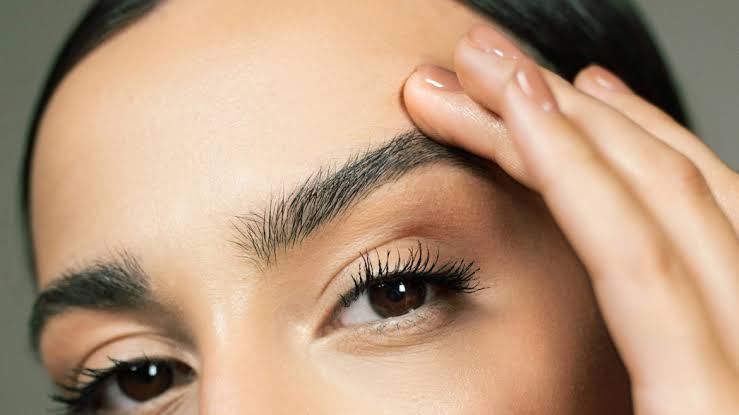
Upper-face botulinum toxin treatment is often discussed mainly in terms of softening forehead lines, frown lines and crow’s-feet. However, the eyebrows are not passive structures. Their position reflects a balance between facial anatomy, skin tone, skeletal support and the resting activity of several muscles. Changing that muscular balance may alter how high or low the eyebrows appear, how far they can elevate, and how much upper-eyelid skin is visible.
This is particularly important for patients asking for a “Botox brow lift” or for people who already have a low-set eyebrow, heavy upper eyelids, or a habit of raising the forehead to keep the eyes looking more open. In these patients, reducing frontalis activity may change the appearance of the brow even when the main treatment goal is simply to soften forehead lines.
The Muscle Balance Behind Eyebrow Position
The clinical paper used as the evidence base for this article describes a simple but important functional model: the frontalis muscle elevates the eyebrow, while the procerus, corrugator supercilii and orbicularis oculi contribute to downward or medial forces around the brow. Because botulinum toxin weakens selected muscles, the cosmetic outcome depends on which part of that balance is reduced.
| Muscle / region | Functional role described in the paper | Why it matters aesthetically |
| Frontalis | Primary eyebrow elevator | Weakening it can reduce upward eyebrow excursion and may make a compensatory brow appear lower. |
| Corrugator supercilii | Contributes to glabellar frown lines and eyebrow medialization/depression | Treating it may alter medial brow forces. |
| Procerus | Contributes to glabellar frown lines and brow depression | Reducing activity changes the central glabellar balance. |
| Orbicularis oculi | Contributes to crow’s-feet and downward forces around the lateral brow | Selective treatment can influence lateral brow balance, but results vary. |
What Did the Clinical Study Actually Test?
The prospective study by Kokoska and colleagues enrolled 29 adults receiving botulinum toxin A for upper-face rhytids. Fourteen patients were treated in the glabellar region only. Fifteen received treatment to the glabella and forehead, with or without crow’s-feet treatment. Eyebrow position was measured at 13 sites before treatment and again two weeks later, both at rest and while the eyebrow was maximally elevated.
The study is especially useful because it did not rely only on subjective impressions. It used paired measurements before and after treatment and analyzed the changes statistically. At the same time, it was a small study and reflects the specific injection patterns and toxin preparation used by the investigators in 2002. It should therefore be interpreted as evidence about muscular behavior and eyebrow position—not as a universal modern dosing template.
Main Result: Resting Eyebrow Position Changed Very Little
At rest, the researchers found no broad, consistent eyebrow lift after routine upper-face botulinum toxin treatment. Across all 29 participants, almost all measured brow positions remained statistically unchanged, with one significant lateral measurement. Among the subgroup receiving forehead plus glabellar treatment, again there was no consistent resting elevation; one medial measurement showed depression.
The More Important Finding: Forehead Botox Reduced Active Brow Elevation
The clearest effect appeared when participants actively raised their eyebrows. Across the full group, the medial two-thirds of the eyebrow showed significant depression during maximal elevation. In the subgroup treated in the forehead and glabella, almost the entire eyebrow showed reduced elevation in the active state.
This finding is physiologically logical. The frontalis is the main elevator of the brow. Once its activity is reduced, the patient may still have a similar resting brow position, but the eyebrow cannot travel upward as effectively during expression or compensation. In patients who constantly recruit the frontalis to keep the eyebrows elevated, that difference may be much more noticeable.
| Condition | What the study found | Clinical meaning | Patient-facing interpretation |
| Eyebrows at rest | Mostly no significant change | Routine treatment did not reliably lift or lower the brow at rest | A visible brow lift should not be promised. |
| Eyebrows during maximal elevation | Significant reduction in upward position in multiple measurements | Frontalis weakening limits active upward movement | Forehead Botox can make the brow feel or look less mobile. |
| Glabella-only subgroup | No significant resting position change | Treating depressor muscles alone did not guarantee a measurable lift | Some patients may notice a change, but it is not universal. |
| Forehead + glabella subgroup | Reduced active elevation; isolated resting depression | Adding frontalis treatment increases the possibility of reduced brow excursion | Patients with low brows or compensatory frontalis activity need careful assessment. |
So, Is a “Chemical Brow Lift” Real?
The literature discussed in the paper suggests that selective botulinum toxin treatment can sometimes elevate parts of the eyebrow. Earlier studies reported medial, mid-brow or lateral elevation in some patients when specific depressor regions were treated. However, the results were not uniform, and some of those earlier reports used different injection sites or lacked statistical analysis.
The most accurate way to explain a Botox brow lift is therefore not that Botox mechanically lifts the skin. Instead, it can rebalance the relative pull of eyebrow elevators and depressors. If the downward forces are selectively reduced while useful frontalis function is preserved, some patients may show a subtle elevation—particularly in selected parts of the brow. But if the frontalis is weakened too much for that patient’s anatomy and habitual muscle use, the opposite can happen.
Why the Same Botox Pattern Can Look Different on Two Patients
The study concludes that eyebrow modification is multifactorial. The authors specifically identify injection site, dose, extent of muscular paralysis, state of muscle activity and individual anatomical variation as important factors.
- Baseline eyebrow height and shape
- Degree of frontalis recruitment at rest
- Presence of a naturally low or ptotic brow
- Upper-eyelid skin redundancy
- Relative strength of brow elevators and depressors
- Injection location and how close treatment is placed to the eyebrow
- Total neuromuscular effect produced in the treated muscles
- Asymmetry between the two sides of the face
The Patient Who Constantly Raises the Eyebrows Deserves Special Attention
One of the most clinically important observations in the paper concerns patients who habitually keep the frontalis active. Some people use the forehead muscle continuously to maintain eyebrow height and reduce the appearance of upper-eyelid heaviness. If that compensatory activity is weakened, the brow may appear lower even though the patient’s anatomy itself has not suddenly changed.
The authors note that hypertonic patients may experience more dramatic eyebrow-position changes after frontalis treatment and recommend careful counseling. For a patient with a low brow or upper-eyelid skin redundancy, this is a major reason to assess the resting face—not only the wrinkles seen during expression.
What Should Be Assessed Before Botox Around the Eyebrows?
A high-quality consultation for upper-face Botox should evaluate more than the number of forehead lines. The paper emphasizes the value of understanding the patient’s baseline eyebrow position and showing how changes in brow height may alter upper-eyelid skin exposure.
- Eyebrow position at true rest
- Eyebrow position during maximal elevation
- Whether the patient subconsciously raises the eyebrows while speaking or looking straight ahead
- Upper-eyelid skin redundancy
- Baseline asymmetry
- Primary aesthetic goal: line reduction, shape modification, or both
- Tolerance for reduced forehead movement
- Previous response to botulinum toxin
Can Botox Make the Eyebrows Lower?
Yes. The study demonstrates that forehead treatment can reduce the eyebrow’s upward excursion because the frontalis is the principal brow elevator. In some patients, especially those who rely on active frontalis contraction, the post-treatment appearance may be perceived as eyebrow ptosis or heaviness.
This does not mean forehead Botox should be avoided. It means the plan should reflect the patient’s anatomy and functional compensation. The key clinical point is that treating forehead wrinkles and preserving desirable eyebrow position are linked goals, not separate issues.
Can Botox Make the Eyebrows Higher?
Potentially, yes—but not reliably in every patient. The paper reviews earlier reports in which selective treatment of eyebrow depressors or supralateral regions produced measurable elevation in some participants. However, its own prospective results showed that routine treatment did not consistently elevate the resting eyebrow.
Can Botox Change the Eyebrow Shape Without Changing the Overall Height?
Yes, this is conceptually possible because different parts of the brow are influenced by different muscular forces. The study measured medial, central and lateral points separately precisely because eyebrow position is not a single number. A patient may perceive a shape change even when the average resting eyebrow height changes very little.
Botox for Eyebrow Position vs Botox for Forehead Lines
These goals overlap, but they are not identical. Treating horizontal forehead lines usually requires reducing frontalis activity, while a cosmetic brow-shaping strategy may require preserving useful elevator function and selectively changing depressor activity. A treatment plan focused only on flattening every forehead line can therefore produce a different aesthetic result from a plan designed to maintain brow dynamics.
Botox Eyebrow Lift in Abu Dhabi: What a Good Consultation Should Include
For patients considering an eyebrow lift with Botox in Abu Dhabi, the most useful consultation is one that begins with facial analysis rather than a promise of a specific millimeter of lift. The physician should assess brow height, symmetry, eyelid skin, muscle recruitment and the patient’s priorities before deciding which muscles should be weakened and which should be preserved.
- Do I naturally have a low eyebrow or upper-eyelid heaviness?
- Am I using my forehead muscle to keep my eyes looking more open?
- Is my priority brow elevation, softer frown lines, smoother forehead lines, or a combination?
- Could forehead treatment make my brow feel heavier?
- How will my natural asymmetry affect the plan?
- What degree of forehead movement do I want to preserve?
Frequently Asked Questions
Does Botox always lift the eyebrows?
No. The prospective study found no consistent resting eyebrow lift after routine upper-face treatment. Eyebrow elevation, depression or no visible change may occur depending on anatomy, muscle activity, injection sites and treatment effect.
Why can the eyebrows feel heavier after forehead Botox?
Because the frontalis is the main elevator of the eyebrow. When its activity is reduced, the eyebrow has less ability to move upward. This may be more noticeable in people who habitually use the frontalis to compensate for a low brow or upper-eyelid skin redundancy.
Can glabella Botox lift the brow?
Selective weakening of brow-depressing muscles may shift the balance in favor of elevation in some patients, and earlier studies cited in the paper reported elevation in selected cases. However, the effect is not universal or fully predictable.
Can Botox change only the outer part of the eyebrow?
Different brow segments can respond differently because muscular forces are not uniform across the eyebrow. The paper discusses prior studies using more selective lateral treatment patterns, but outcomes depend on anatomy and technique.
Can Botox lower only one eyebrow?
Asymmetry can occur because baseline anatomy, muscle strength and treatment response differ between sides. The study itself found isolated statistically significant changes at individual brow points, reinforcing that eyebrow response is not perfectly uniform.
Should someone with low eyebrows avoid forehead Botox?
Not necessarily. The paper recommends modifying treatment in patients with a ptotic eyebrow to reduce the chance of further lowering. The key is individualized assessment and counseling.
How soon did the study assess eyebrow position?
Measurements were repeated two weeks after treatment.
Did the study find a large resting brow lift?
No. The resting eyebrow position was largely unchanged, except for isolated measurement points.
What changed most after forehead treatment?
The clearest finding was reduced active eyebrow elevation when participants tried to raise their brows maximally.
Is a Botox brow lift the same as a surgical brow lift?
No. The paper describes surgical brow lifting as the traditional approach for age-related brow ptosis, while botulinum toxin may produce more limited and variable eyebrow-position changes through muscle balance.
Can the result be predicted exactly before injection?
Not exactly. The paper emphasizes that the result is multifactorial and may be elevation, depression or no change.
What is the most important pre-treatment assessment?
The physician should observe the eyebrow at true rest and during active elevation, assess whether the patient constantly recruits the frontalis, and evaluate upper-eyelid skin redundancy and baseline asymmetry.