
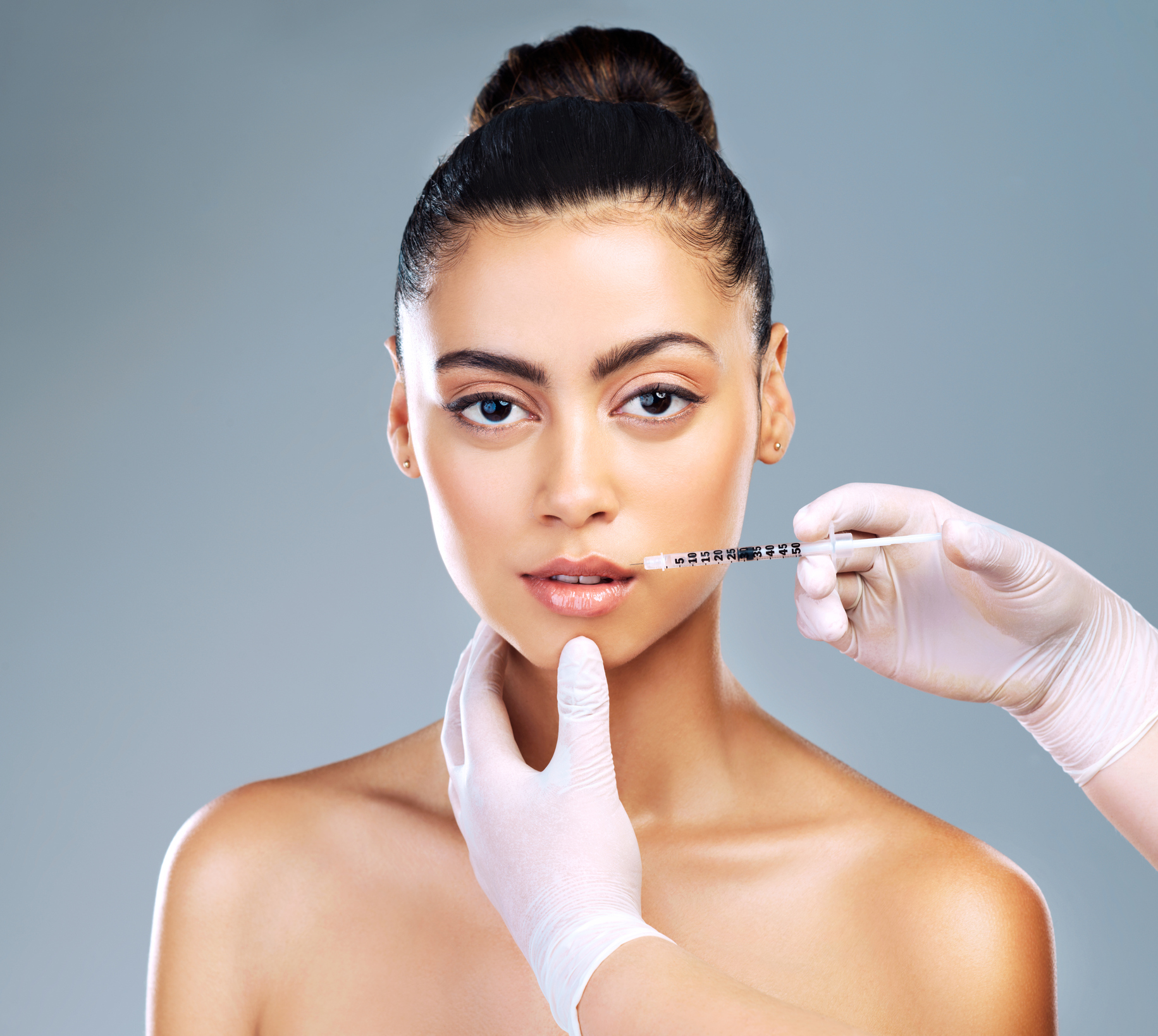
Can Dermal Fillers Change How Others Perceive You ?
More Than Volume : Can Facial Fillers Change the First Impression You Make?
Dermal fillers are usually discussed in terms of physical changes. They can restore facial volume, soften nasolabial folds, reduce the appearance of marionette lines, enhance the lips, improve facial proportions, and address selected asymmetries.
But facial appearance communicates far more than anatomy. Within a fraction of a second, people begin forming impressions about someone they have never met. Does the person look friendly? Confident? Young? Approachable? Trustworthy? Happy? Attractive? Even intelligent?
This raises a fascinating question in aesthetic medicine: when facial fillers subtly change facial shape and proportions, can they also change the personality traits that other people believe they see?
A study published in Aesthetic Plastic Surgery investigated exactly this question. Instead of asking patients whether they felt better after treatment, researchers showed casual observers standardized before-and-after photographs of patients treated with dermal fillers and asked them to evaluate nine separate physical and interpersonal characteristics.
The results suggested that the visual impact of filler may extend beyond the treated anatomical feature. Importantly, however, this does not mean filler changes a person's real personality, intelligence, trustworthiness, confidence, or happiness. The study measured observer perception.
Perception ≠ Personality A more favorable rating after treatment should be interpreted as a change in the impression created by the photograph — not proof that the person became more intelligent, trustworthy, confident, happy, or likeable.
Why First Impressions Matter
Human beings form impressions of faces remarkably quickly. Research cited by the study notes that judgments based partly on facial appearance can begin within approximately 100 milliseconds.
Once an initial impression is formed, facial appearance may become associated with attractiveness, interpersonal characteristics, personality assumptions and even broader expectations about a person's life trajectory. Some first impressions can also be difficult to change after they have formed.
This is one reason facial aesthetics extends beyond asking whether one feature is objectively larger, smaller, smoother, or more symmetrical. When the face changes, the overall visual message produced by the face may change as well.
The investigators therefore wanted to determine whether relatively subtle modifications produced with hyaluronic-acid fillers could affect how an untreated outside observer interprets the entire face.
Why Dermal Fillers Were Particularly Interesting to Study
Minimally invasive aesthetic medicine has shifted the way patients approach facial rejuvenation. Injectable treatments can often be performed in an office setting, with limited recovery and immediately visible change.
The source article describes fillers as versatile treatments that can enhance or conceal selected features, delay or avoid surgery, complement surgical procedures, and provide relatively immediate, durable results.
At the time of the study, fillers were among the most frequently performed minimally invasive aesthetic procedures, second only to neuromodulators in the plastic-surgery statistics cited by the authors.
Earlier research had suggested that facial cosmetic procedures may affect perceptions of attractiveness, intelligence, trustworthiness, approachability, confidence, quality of life and aggressiveness. However, literature focused specifically on dermal fillers and broad trait perception was limited.
What Did the Study Investigate?
The researchers studied three types of photographic sets:
- Three before-and-after sets of patients treated with dermal filler for nasolabial folds, marionette lines and related rhytids.
- Three before-and-after sets of patients who underwent lip augmentation with filler.
- Two identical photograph sets used as internal controls.
Each after-treatment photograph was taken approximately one month after the injection. The researchers attempted to standardize angle, background and facial expression. The image sets were limited to the listed filler treatment without additional modifications such as neuromodulators.
Before-and-after positioning was randomized so that the pretreatment image did not always appear on the same side. This helped reduce the chance that respondents simply assumed that one side must be the treatment result.
Who Rated the Photographs?
A total of 260 adult respondents were recruited through Amazon Mechanical Turk. The key demographics were:
| Demographic Category | Share of Respondents |
|---|---|
| Age 18–34 | 58.1% |
| Male | 63.1% |
| Caucasian | 58.1% |
| College Graduates | 66.2% |
The sample also included participants from other age, race, education and income categories, allowing the investigators to explore whether observer characteristics influenced ratings.
The Nine Traits Evaluated
- Facial symmetry
- Confidence
- Likeability
- Youthfulness
- Trustworthiness
- Attractiveness
- Intelligence
- Approachability
- Happiness
Each question used a seven-point Likert scale. A score of 4 represented no perceived difference between the images. Scores above 4 favored the post-treatment photograph, while scores below 4 favored the pretreatment photograph.
Why the Design Matters The survey did not merely ask which image was more attractive. It asked whether filler-related facial changes altered multiple dimensions of social perception.
The Main Finding: Every Trait Improved After Filler
For both nasolabial/marionette-line filler and lip augmentation, post-treatment photographs received significantly more favorable ratings across all nine measured traits.
The reported statistical significance was p < 0.001 for every trait. The identical control photosets showed no significant differences.
This strengthens the argument that the observed changes were related to the treated images rather than a general tendency for respondents to choose one side of a photo pair.
Nasolabial and Marionette Line Filler: What Changed the Most?
The strongest perceptual improvement after line filler was youthfulness, followed by attractiveness. All nine domains improved significantly.
| Trait | Mean Score | Mean Difference vs. 4 |
|---|---|---|
| Facial symmetry | 4.594 | +0.594 |
| Confidence | 4.376 | +0.376 |
| Likeability | 4.570 | +0.570 |
| Youthfulness | 5.079 | +1.079 |
| Trustworthiness | 4.325 | +0.325 |
| Attractiveness | 4.814 | +0.814 |
| Intelligence | 4.232 | +0.232 |
| Approachability | 4.491 | +0.491 |
| Happiness | 4.590 | +0.590 |
All differences above were reported as statistically significant at p < 0.001.
Why Might Line Filler Affect Perceived Youthfulness?
Nasolabial folds, marionette lines and lower-face rhytids can contribute to an impression of ageing. The study's discussion notes that softening these areas may influence how the face is interpreted as a whole.
Patients treated for these lines were also perceived as more attractive and confident. The authors further noted improvements in approachability, likeability and trustworthiness, illustrating how changes in one anatomical region may influence the overall social impression created by the face.
Facial symmetry also improved significantly. Fillers can allow an injector to adjust volume in selected regions and reduce visible left-right imbalances, which may contribute to a more harmonious overall appearance.
Lip Filler Produced a Different Pattern
Lip augmentation also improved all nine ratings, but the largest numerical gains were seen in facial symmetry, trustworthiness, likeability and confidence.
| Trait | Mean Score | Mean Difference vs. 4 |
|---|---|---|
| Facial symmetry | 4.613 | +0.613 |
| Confidence | 4.572 | +0.572 |
| Likeability | 4.585 | +0.585 |
| Youthfulness | 4.501 | +0.501 |
| Trustworthiness | 4.586 | +0.586 |
| Attractiveness | 4.471 | +0.471 |
| Intelligence | 4.411 | +0.411 |
| Approachability | 4.562 | +0.562 |
| Happiness | 4.510 | +0.510 |
As with line filler, all nine lip-filler differences were statistically significant at p < 0.001.
The authors discussed lip augmentation in the context of changing beauty standards, social-media influence and the importance of lip shape and volume within the lower third of the face.
In the study photographs, fuller or more defined lips that remained in harmony with the rest of the face were associated with more favorable ratings not only of attractiveness and symmetry, but also of confidence, happiness, likeability and approachability.
Again, these are perceptual associations. The filler did not make a patient objectively more trustworthy, intelligent or likeable. It altered how an outside observer interpreted the photographed face.
Did the Observer's Demographics Change the Result?
Most ratings were relatively consistent across demographic groups, but the study identified several notable differences:
| Demographic Factor | Finding |
|---|---|
| Sex | Men and women rated all nine traits similarly; no significant sex-based differences were found. |
| Race | Ratings were also similar across the racial subgroups examined. |
| Age | Respondents aged 35–55 rated treated faces as significantly more likeable and more youthful than respondents aged 18–34. |
| Education | Respondents with a high-school education or less gave lower intelligence ratings than college graduates and postgraduates. |
| Income | Respondents earning $30,000 or less rated treated faces as more youthful than some higher-income groups. |
Important Interpretation Beauty and personality perception are not universal. The same face can be interpreted differently depending on the observer's age, education, culture, prior experiences and expectations.
Why Did Middle-Aged Observers See a Greater Youthfulness Effect?
The authors proposed that observers aged 35–55 may have a different internal standard of what appears youthful than younger adults who are more accustomed to seeing youthful features in their own age group. This was presented as a hypothesis rather than a proven mechanism.
What About the Education–Intelligence Finding?
The study found lower perceived-intelligence scores among respondents with a high-school education or less compared with college graduates and postgraduates. The discussion mentioned the Dunning–Kruger effect as a possible explanation, but the authors explicitly cautioned that this association was very tentative because little was known about the backgrounds of the anonymous respondents.
What Do These Findings Mean Clinically?
The study suggests that facial filler may alter the way an entire face is socially interpreted, not just the way the treated anatomical feature looks.
A subtle improvement in lower-face lines may be read as greater youthfulness. More balanced lip proportions may influence impressions of symmetry, confidence or approachability. This is consistent with the idea that people interpret faces holistically rather than as isolated anatomical units.
For aesthetic practice, the result supports a broader approach to consultation. The goal should not simply be to "fill a fold" or "make the lips bigger," but to understand facial balance, expression, proportions, patient expectations and the likely visual effect of treatment on the face as a whole.
At the same time, clinicians should avoid promising social, professional or psychological benefits based on this study. It measured short-term observer ratings of selected photographs — not real-world relationships, job outcomes, personality change or long-term quality of life.
The Face as a Whole Matters More Than a Single Feature
One of the most useful messages from this research is that small anatomical adjustments may influence global facial perception.
Aesthetic harmony depends on relationships between structures: lips and chin, lower-face volume and skin folds, symmetry between sides, and the balance between rejuvenation and preservation of natural expression.
This supports the concept that filler treatment should be individualized rather than based on a universal volume, ratio or trend. A change that improves harmony in one patient may look excessive or unnatural in another.
Clinical Bottom Line The most defensible interpretation is not "filler changes personality." It is that appropriately selected facial changes can influence the traits an observer believes they perceive in a face.
Important Limitations of the Study
The authors acknowledged several limitations that are essential when interpreting the results:
| Limitation | Description |
|---|---|
| Survey design | The research relied on an anonymous, image-based survey rather than real-life interactions. |
| Small image set | Only eight photo sets were used, including two controls. |
| Female subjects only | All photographed treatment subjects were women, limiting generalizability to male patients. |
| Mostly male respondents | 63.1% of raters were men, even though many filler patients are women. |
| Potential selection bias | Clinical and commercial sources may preferentially publish stronger or more aesthetically successful results. |
| Self-generated questionnaire | Although Likert scales are widely used, the exact survey instrument was not externally validated. |
| Subjective concepts | Confidence, intelligence, happiness and success-related impressions are inherently subjective and can be influenced by factors not captured by a photograph. |
| Single main follow-up time point | Follow-up images were taken at one month, so the study cannot establish whether perceptions persist over longer periods. |
| Limited photographic views | Additional angles and serial follow-up images could provide a more complete picture. |
| Causality is unclear | It is not known whether improved personality-trait ratings occurred independently or were secondary to the increase in perceived attractiveness. |
Why the One-Month Follow-Up Matters
The post-treatment photographs were taken approximately one month after injection. This is useful because immediate swelling is less likely to dominate the result, but it still represents a short-term window. The authors emphasized that the long-term implications of these perception changes remain uncertain.
Does Filler Actually Make Someone More Confident or Happy?
No conclusion like that can be drawn from this study. Observers rated photographs as appearing more confident and happier. The study did not prove that patients' internal confidence or happiness increased as a result of treatment.
The distinction matters clinically because perceived personality and actual psychological well-being are different outcomes. Patient-reported outcomes would be required to evaluate changes in self-confidence, satisfaction or quality of life.
Frequently Asked Questions
Can dermal fillers make a person look more attractive?
In this study, both line-filler and lip-filler post-treatment photographs were rated as significantly more attractive than pretreatment photographs. This was an observer-perception study and should not be interpreted as a universal guarantee.
Can filler make someone look more confident?
Observers rated treated images as appearing more confident. This reflects perceived confidence in a photograph, not proof that the person's real confidence changed.
Which trait improved most after nasolabial and marionette-line filler?
Youthfulness showed the largest numerical change, with a mean improvement of +1.079 from the neutral score of 4. Attractiveness showed the second-largest change at +0.814.
Which traits changed most after lip filler?
The largest numerical improvements were facial symmetry (+0.613), trustworthiness (+0.586), likeability (+0.585), and confidence (+0.572).
Did lip filler improve perceived intelligence?
Yes, intelligence ratings were significantly higher in the post-treatment lip-filler photographs, with a mean difference of +0.411. This does not mean intelligence itself changed.
Did men and women judge the results differently?
No significant sex-based differences were reported across the nine traits.
Do age and education affect how people perceive filler results?
They may. Middle-aged respondents perceived greater youthfulness and likeability than younger respondents, while education level was associated with differences in perceived intelligence.
Are these results proof that fillers improve social or professional success?
No. The study measured short-term impressions from photographs. It did not measure employment, dating outcomes, social success, real-world behavior or long-term life changes.
How long after treatment were the photos assessed?
The after-treatment photographs were taken approximately one month after the filler injection.
What is the most important takeaway for patients?
Facial filler can influence how a face is perceived as a whole, which is why treatment should prioritize proportion, balance and natural-looking results rather than isolated volume alone.