Pico Laser for Melasma in Abu Dhabi : A Complete, Evidence-Based Guide
What one published case report actually shows — and doesn’t show — about combining picosecond laser with cysteamine and isobionicamide for recalcitrant melasma in darker skin.
This guide is based on a single published case report. It documents a 50-year-old woman with Fitzpatrick phototype V and recalcitrant melasma who was treated with a combination regimen — topical therapy plus one picosecond laser session. The goal of this article is to explain what the source actually supports, without overstating the results.
Why Melasma Can Be Difficult to Treat
Melasma is described in the source as a symmetrical hypermelanosis characterized by well-defined light-to-dark brown macules and patches on sun-exposed skin. It is highly recurrent, can significantly affect quality of life, and often requires prolonged management rather than a one-time intervention.
The exact cause of melasma remains unknown. Recognized contributing factors include sun exposure, hormonal changes, genetic predisposition, pregnancy, and cosmetics. This multifactorial background matters because clearing visible pigment does not necessarily remove the underlying tendency for melasma to return.
For this reason, the most realistic treatment goal is control — reducing visible pigmentation, improving uniformity, minimizing triggers, and maintaining results over time. A promise of a permanent cure would go beyond what this case report supports.
Topical Therapy Remains the First-Line Foundation
Topical products are described as first-line treatment for melasma. Kligman’s formula — a triple combination of hydroquinone, retinoic acid, and a corticosteroid — is identified as the most effective first-line topical treatment in the literature cited by the authors.
However, long-term use of this combination raises concerns, including ochronosis, skin atrophy, and irritation. These concerns form part of the rationale for considering alternative depigmenting strategies for patients who need ongoing management.
The case report centers on a topical system combining isobionicamide with cysteamine. Cysteamine is described as an endogenous antioxidant naturally present in mammalian cells, with depigmenting activity demonstrated in randomized, placebo-controlled clinical trials.
What Is Cysteamine?
Cysteamine is produced during coenzyme A metabolism and occurs naturally in mammalian cells. It has a recognized depigmenting effect and has been studied as a topical option for disorders of hyperpigmentation, including melasma. The source does not present it as a cosmetic brightener — it is discussed as an active depigmenting compound backed by prior clinical studies of efficacy and tolerability.
What Is Isobionicamide?
Isobionicamide is described as a vitamin B3 derivative and a novel depigmenting agent that inhibits melanosomal transfer and can potentiate cysteamine’s inhibitory effect on tyrosinase. It belongs to the pyridine family and occurs naturally in common-bean root exudates. The authors also describe anti-inflammatory activity that may reduce some of cysteamine’s irritant effect.
A 16-week clinical trial comparing the isobionicamide-cysteamine complex with Kligman’s formula is cited in the source. According to the case report’s summary of that trial, the combination produced similar efficacy and onset while being well tolerated. Because that trial is separate from the case report itself, this point should be read as a cited evidence claim — not as a new finding from the single patient discussed here.
Why Combine Topical Treatment With a Laser?
The authors state that laser treatment can be used together with topical therapy to enhance depigmentation of lesional skin. The logic of the case is multimodal: the topical regimen addresses pigment biology over time, while the picosecond procedure adds an in-office treatment intended to improve visible pigmentation.
This combined approach is particularly relevant to recalcitrant melasma — disease that has not responded adequately to previous topical strategies. However, combining several therapies also creates an evidence challenge: when improvement occurs, a single case cannot isolate which treatment contributed most.
Why Darker Skin Needs Extra Caution With Melasma Procedures
The discussion repeatedly emphasizes caution in darker skin. Patients with darker skin tones are more prone to developing post-inflammatory hyperpigmentation (PIH) after procedural treatments, which can aggravate melasma rather than improve it.
Possible reactions after laser treatment of melasma include edema, erythema, scaling, and burning. These effects usually resolve rapidly, but post-inflammatory hyperpigmentation and hypopigmentation can also occur, especially in darker skin.
Pigmentary risks may be less common with picosecond lasers than with some other laser approaches, though the authors still acknowledge that they can occur in a minority of patients depending on phototype, skin sensitivity, and the laser parameters used.
The Case Patient: Who Was Treated?
The case involved a 50-year-old woman with Fitzpatrick phototype V who presented to the clinic in December 2021. She had a two-year history of pronounced facial discoloration involving the inferior forehead, left lip, and upper-lip region, with pigmentation darker than the surrounding normally pigmented skin.
She had no history of birth-control-pill use, itching, new medication, pregnancy, prior rashes, sunlight exposure, or trauma related to the presentation. Before entering the reported treatment pathway, she had already tried beauty-care regimens and topical vitamin C capsules without adequate control.
Clinicians diagnosed melasma with defined hyperpigmented patches in a periorbital and malar distribution. Written informed consent was obtained for publication of the case and the clinical images.
The Complete Treatment Timeline
| Time | Treatment / Assessment | What Happened |
|---|---|---|
| December 2021 | Initial consultation and diagnosis | Phototype V patient with two-year recalcitrant facial pigmentation; baseline clinical photographs taken under an artificial light source. |
| Initial plan | Mineral sunscreen + compounded depigmenting lotion + retinoid/AHA cream | The blending lotion contained kojic acid, arbutin, vitamin C, curcuminoids, and hexylresorcinol. |
| March 2022 | Three-month review | Melasma remained inadequately controlled. |
| March 2022 onward | Continue sunscreen and retinoid/AHA; stop previous blending lotion | Isobionicamide-cysteamine system introduced. |
| Same revised treatment phase | One PicoSure picosecond-laser session | Patient counseled about crusting, scabbing, blistering, scarring, pigment change, paradoxical hair regrowth, incomplete hair removal, and infection. |
| July 2022 | Four-month follow-up | Visible improvement reported; more even tone, increased luminosity/radiance, improved texture; no adverse events observed or reported; high satisfaction. |
The First Treatment Phase
At the initial visit, the patient was prescribed a mineral sunscreen, a compounded Complexion Blending Lotion 8%, and a cream combining a retinoid with an alpha-hydroxy acid. The depigmenting lotion contained kojic acid, arbutin, vitamin C, curcuminoids, and hexylresorcinol.
Clinical photographs were taken before treatment using an artificial light source, and the patient was scheduled to return after three months. This documentation matters because melasma assessment can be distorted by lighting differences, tanning, and day-to-day pigment variation.
Why the First Plan Was Changed
At the March 2022 follow-up, the patient’s melasma was inadequately controlled. Clinicians continued the mineral sunscreen and the retinoid/AHA cream but discontinued the previous compounded blending lotion.
The revised plan introduced the Cyspera Intensive System, containing the isobionicamide-cysteamine combination central to the case report. This change happened in the same treatment phase as the addition of the picosecond procedure — which is why the outcome must be interpreted as a combination result, not a laser-only result.
How the Isobionicamide-Cysteamine System Was Used
The source provides a detailed application sequence: Cyspera Intensive was applied daily to the face and washed off after 15 minutes using Cyspera Neutralize. After the skin was tapped dry, Cyspera Boost was applied as a leave-on product.
The Picosecond-Laser Session
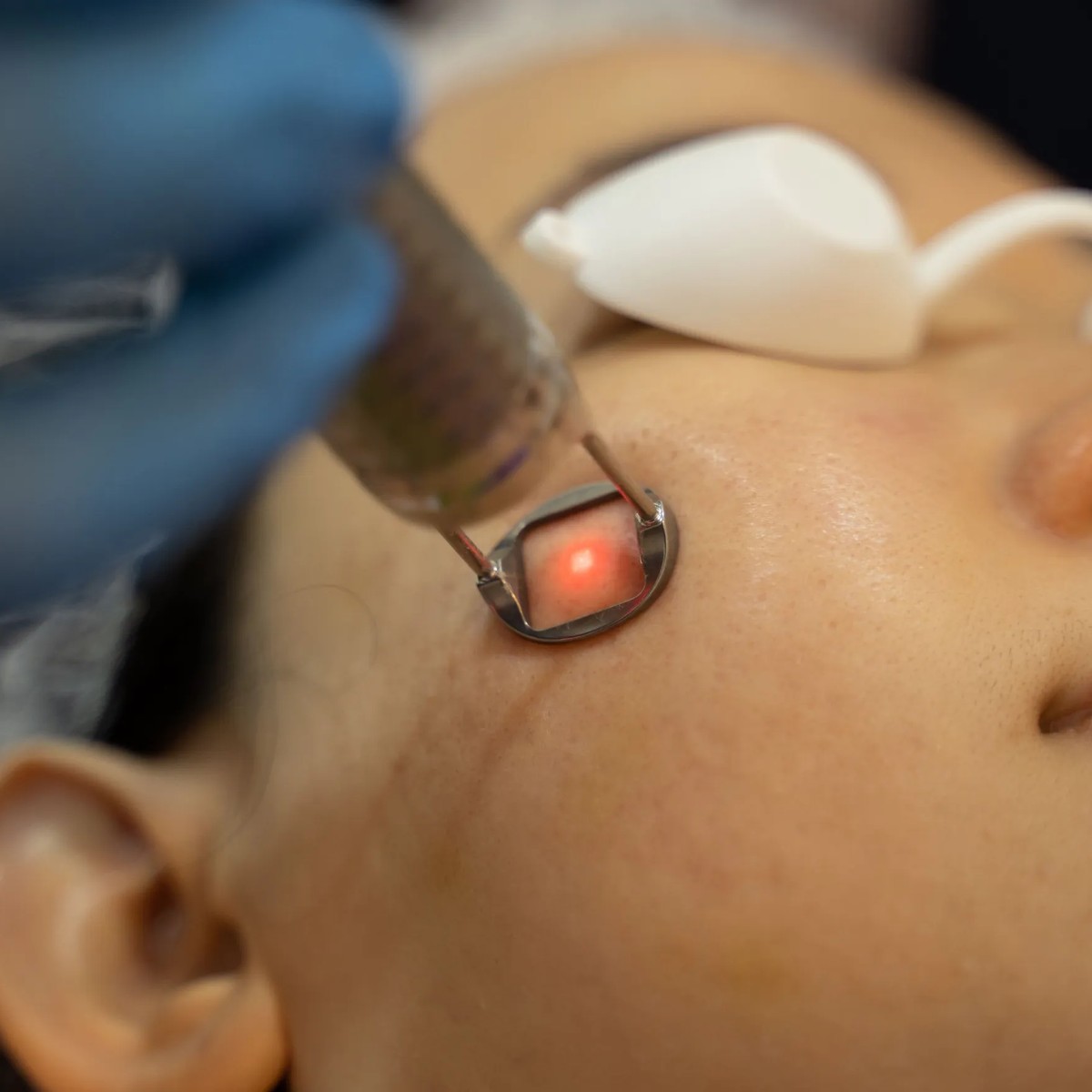
A single session of PicoSure picosecond laser was performed during the revised treatment phase. The source does not provide a detailed laser-parameter table, so fluence, spot size, wavelength, number of passes, and treatment endpoint are not specified here and should not be assumed.
Before the procedure, the patient was counseled about risks including crusting, scabbing, blistering, scarring, darker or lighter pigmentary changes, paradoxical hair regrowth, incomplete removal of hair, and infection.
What Happened Four Months Later?
At the July 2022 follow-up, four months after the revised treatment plan, the patient had followed the regimen as directed and demonstrated visible improvement. The authors compared new clinical images with those taken at the first visit.
The response is described as a more even skin tone, increased luminosity and radiance, and improved texture. No adverse events were reported by the patient or observed by the clinicians during the treatment course, and the patient reported high satisfaction.

What the Before-and-After Images Do — and Do Not — Prove
The figure is valuable because it gives a visual record of the patient’s response. However, a single before-and-after comparison cannot determine the independent contribution of each component of treatment. The patient used sunscreen, a retinoid/AHA product, an isobionicamide-cysteamine system, and one picosecond-laser session during the treatment course.
The image also cannot establish an average response rate, define the optimal number of laser sessions, or indicate how long the improvement will persist. Those questions require larger, controlled, longer-term studies.
Why This Is a Case Report, Not Proof of a Universal Protocol
The authors themselves are careful in their conclusion. They describe the response as promising and state that randomized clinical studies with larger sample sizes are required to support and confirm the initial findings.
A case report is especially useful for documenting feasibility in a clinical scenario that may be underrepresented in trials — here, recalcitrant melasma in a phototype V patient. Its limitation is that there is no control group, no randomization, and no way to separate the effect of one treatment component from the rest of the regimen.
The Central Evidence Limitation: Several Treatments Changed Together
At the March visit, the prior blending lotion was stopped, the isobionicamide-cysteamine system was started, sunscreen and retinoid/AHA were continued, and the patient also received a picosecond-laser procedure. Because these changes overlap, improvement cannot be attributed confidently to the laser alone or to the topical system alone.
The scientifically accurate way to describe the outcome is: the combined regimen was associated with visible improvement in this patient. It is not accurate to state that one Pico session cured the melasma.
Why Photoprotection Remains Central
Sun exposure is listed as one of the etiologic factors associated with melasma, and mineral sunscreen remained part of the regimen throughout the case. Photoprotection is therefore presented as a continuing component of management, not an optional aftercare step.
This matters especially when a procedure is added. Even if visible pigment improves, the biological tendency toward melasma remains. Ongoing photoprotection and maintenance therapy are part of the strategy for trying to preserve the result.
Laser Side Effects in Melasma: What the Source Says
| Short-Term Reactions Mentioned | Pigment / Healing Risks Mentioned |
|---|---|
| Edema, erythema, scaling, burning | Post-inflammatory hyperpigmentation, hypopigmentation; consent also included crusting, scabbing, blistering, scarring, and infection |
The more immediate inflammatory effects usually resolve rapidly, while pigmentary complications are especially relevant in darker phototypes. The case patient did not experience reported adverse events, but one uncomplicated case cannot establish that the procedure carries no risk.
Conflict-of-Interest Disclosure in the Case Report
The paper reports no external funding. It also includes a relevant financial disclosure: Dr. Kasraee was a shareholder and chief scientific officer of Scientis SA, while Ms. Dirlewanger and Dr. Sfriso were employees of Scientis SA. The article states that these authors did not have a role in data collection and analysis; the remaining authors declared no conflicts of interest.
The Broader Evidence Behind the Combination
The article cites several categories of supporting literature: randomized placebo-controlled trials of topical cysteamine, a clinical comparison of isobionicamide-cysteamine with Kligman’s formula, systematic-review and meta-analysis evidence on laser therapy for melasma, a randomized split-face study of 755 nm picosecond treatment in Asian patients, a systematic review and meta-analysis of picosecond laser for melasma, and a scoping review focused on darker skin types.
This article does not reproduce all of those datasets in detail. They are presented here as supportive references, while the primary outcome claims remain anchored to the actual case discussed above.
A Realistic Way to Position Pico Laser for Melasma
- Start with diagnosis — the source is specifically about melasma, not every form of facial pigmentation.
- Treat photoprotection and topical therapy as foundational components rather than assuming laser replaces them.
- Recognize that recalcitrant disease may require combination management.
- In darker skin, weigh the potential for improvement against the risk of post-inflammatory hyperpigmentation.
- Use conservative expectations: the source describes one successful combined-treatment case, not a universal single-session cure.
- Document standardized baseline and follow-up photographs.
- Continue maintenance because melasma is described as highly recurrent.
- Discuss the possibility of pigmentary change, blistering, scarring, infection, and other laser-related adverse effects before treatment.
Who May Require Extra Caution?
- Patients with darker phototypes and a history of post-inflammatory hyperpigmentation.
- Patients whose melasma worsens after heat, inflammation, or previous procedures.
- Patients expecting a permanent cure from a single device session.
- Patients with an uncertain pigment diagnosis rather than clearly identified melasma.
- Patients unable to maintain consistent photoprotection and the prescribed maintenance regimen.
- Patients with previous blistering, scarring, or prolonged pigment change after laser procedures.
What This Source Supports vs. What It Does Not
What This Source Supports
- Melasma is recurrent and difficult to manage.
- Topical therapy is first-line treatment in the framework described by the authors.
- Cysteamine has published depigmenting evidence, and isobionicamide is described as enhancing depigmenting activity and reducing irritation.
- Picosecond laser can be incorporated into combination treatment for melasma.
- Darker skin requires caution because procedural treatment can trigger PIH.
- One phototype V patient with recalcitrant melasma improved after the combined regimen described in the case.
- No adverse events were reported or observed in this patient during the reported course.
- Larger randomized studies are required before the findings can be generalized.
What This Source Does Not Support
- That one Pico session permanently cures melasma.
- That the laser alone produced the patient’s improvement.
- That every phototype V patient will respond similarly.
- That the exact same topical regimen is appropriate for every patient.
- That picosecond treatment carries no risk of PIH or hypopigmentation.
- A universal laser fluence, wavelength, spot size, number of passes, or session number — these parameters were not provided in the case-report text.
- A long-term recurrence rate after the reported improvement.
Frequently Asked Questions
Can Pico laser treat melasma?
The case report supports the feasibility of including picosecond laser in a combination melasma regimen. It does not show that laser alone is sufficient for every patient.
Is Pico laser suitable for darker skin?
The reported patient had Fitzpatrick phototype V and improved without reported adverse events. The same paper emphasizes that darker skin is more prone to post-inflammatory hyperpigmentation after procedures, so careful selection and parameters are important.
Can Pico laser make melasma worse?
Yes. The source states that laser treatment can cause post-inflammatory hyperpigmentation or hypopigmentation, particularly in darker skin. Procedural inflammation can aggravate melasma.
How many Pico sessions were used in this case?
One picosecond-laser session was performed as part of a broader combination treatment plan.
Does one successful session mean one session is enough for everyone?
No. This was a single case, and the authors explicitly call for larger randomized clinical studies.
What topical treatment was used with the laser?
The revised regimen included an isobionicamide-cysteamine system, while mineral sunscreen and a retinoid/AHA cream were continued.
How was the cysteamine system used in the case?
The intensive product was applied daily and washed off after 15 minutes using the neutralizing product; the booster was then applied as a leave-on.
What happened at follow-up?
Four months later, the authors reported visible improvement, more even tone, increased luminosity and radiance, improved texture, no reported or observed adverse events, and high patient satisfaction.
Can the improvement be attributed to Pico laser alone?
No. Multiple components of the regimen changed together, so the case cannot isolate the effect of the laser from the topical treatment and photoprotection.
Is cysteamine the same as hydroquinone?
No. The case report describes cysteamine as an endogenous antioxidant with depigmenting activity and discusses it as a different treatment approach.
Why is sunscreen still important after laser?
The source lists sun exposure among factors associated with melasma and kept mineral sunscreen in the patient’s regimen throughout the treatment course.
What laser side effects were discussed with the patient?
The consent discussion included crusting, scabbing, blistering, scarring, darker or lighter pigmentary changes, paradoxical hair regrowth, incomplete hair removal, and infection.
Was the study funded by the topical-product company?
The article states that no funding was provided. It also discloses that several authors had employment or ownership relationships with Scientis SA.
Is melasma permanently curable?
The source describes melasma as highly recurrent. Its conclusion discusses improved manageability, not permanent cure.