Considering lip filler in Abu Dhabi? Before choosing a product or a clinic, it helps to know what the research actually shows. This evidence-based guide reviews the systematic reviews on lip filler, from the 2015 landmark review to 2026 studies, and explains what they mean for patients in Abu Dhabi.
Executive answer: which lip filler is best according to the evidence?
No single material or injection pattern has been proven universally superior for every patient. The comprehensive 2015 review identified 38 relevant studies but could not make a definitive comparison because materials, populations, outcomes, study design and follow-up differed substantially. A 2026 systematic review of HA injection techniques reached a similarly cautious conclusion about whether any one needle or cannula method is best. That does not mean all materials are equally appropriate. Rather, patient selection, product properties, indication, reversibility, operator expertise, aesthetic objectives and safety must all be considered together. [S1, U2]
For contemporary nonsurgical lip augmentation, an appropriately selected hyaluronic acid (HA) filler is usually the most relevant option to discuss with a qualified clinician. Different HA gels can be selected for conservative contouring, proportional volume restoration and soft tissue integration. Their effects are temporary, and HA is potentially reducible with hyaluronidase when clinically indicated. These advantages do not eliminate the possibility of swelling, bruising, infection, asymmetry, nodules, migration or rare vascular injury. [S1, U3]
The 2015 paper is important not because it crowned a winner, but because it asked a better question: do studies measure natural appearance, movement, patient satisfaction, durability and meaningful complications in a comparable way? Often they did not. That gap matters especially for a highly visible, constantly moving structure such as the lip. Today, a good result should be judged at rest, in profile, while smiling, and after temporary swelling has subsided—not simply by how full the lips look immediately after an injection. [S1]
This guide explains the historical evidence, the modern clinical interpretation, differences among filling materials, warning signs requiring urgent review, and why responsible aesthetic planning in Abu Dhabi should be individualized rather than dictated by a fashionable technique name.
1. Why lip enhancement is more complex than adding volume
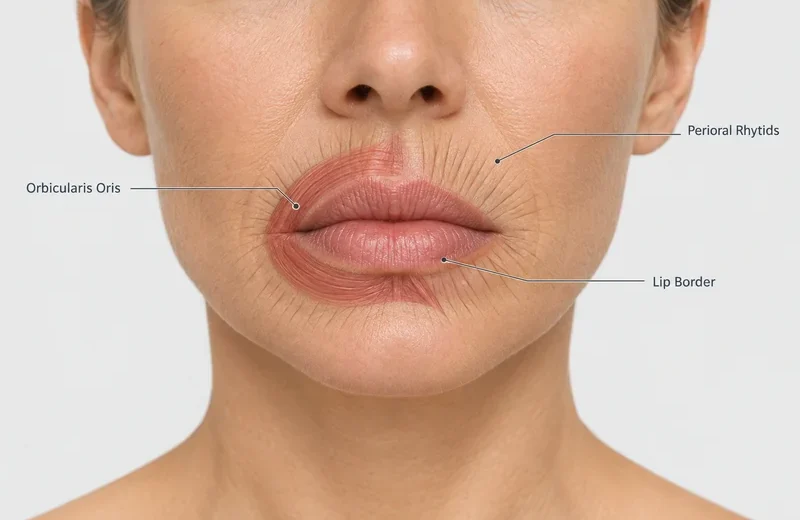
The lips are not static cushions that can be filled without changing the rest of the face. They are involved in speech, swallowing, facial expression, smiling, kissing and dental exposure. The vermilion, cutaneous lip, philtrum, Cupid’s bow, tubercles and oral commissures have distinct anatomical relationships. A change that appears attractive in a front-facing photograph may look heavy in profile, interfere with the transition between nose and lip, or create a visibly artificial border during movement. A truly individualized plan therefore starts with anatomy and function.
The 2015 review highlighted that many investigators assessed volume or questionnaire-based satisfaction without evaluating changing lip shape during speech or a smile. Some reported attractive photographs in repose without standardized dynamic views. This is a meaningful limitation: the patient lives with a moving face, not a single photograph. A treatment that increases fullness but compromises softness, expression or balance may fail the patient’s true goal despite an apparently positive numerical score. [S1]
Natural-looking enhancement can involve small differences: restoring central tubercles, improving definition without an excessively elevated white roll, correcting unequal side-to-side fullness, or balancing the upper and lower lips. Conversely, patients with marked cutaneous upper-lip lengthening, dental or skeletal discrepancies, advanced tissue laxity or unrealistic expectations may need other options, a staged plan, or no injection. Filler cannot recreate every anatomical feature and should not be sold as a substitute for all forms of surgery or orthodontic assessment.
Aesthetic preferences also differ across individuals, cultural groups and time. Ratios such as 1:1.6 can be useful descriptive references in some populations, but they are not universal targets. The more appropriate question is whether the lips look harmonious in relation to the patient’s own facial structure, age, dental support, nose, chin and preferred expression. Neither mathematical symmetry nor maximum volume guarantees beauty.
2. The landmark 2015 systematic review: design and key results
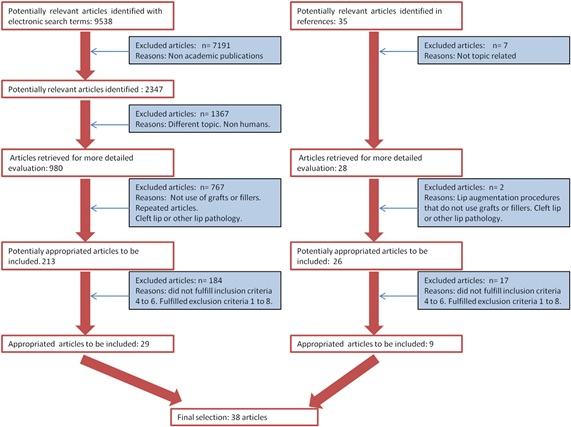
San Miguel Moragas and colleagues searched multiple databases and reference lists for studies of lip augmentation using injectable filling materials and grafts. Their inclusion criteria sought human data with stated patient numbers, at least ten participants, and quantifiable effectiveness or complication outcomes. Studies of isolated lip lift, unrelated perioral procedures and certain non-filling techniques were excluded. Their systematic approach was unusually broad for the period, covering traditional biological grafts, collagen, HA, silicone, PMMA, ePTFE, CaHA and other historical materials. [S1]
The authors screened thousands of search records and eventually included 38 studies: 29 found through the main search and nine added from reference lists. They classified four studies as evidence level Ib, four as IIb, one as IIIb and 29 as level IV. Only ten studies were prospective, 27 contributed quantifiable efficacy information, and 35 contributed specifically reported complication data. These numbers reveal the central challenge: broad clinical experience existed, but high-quality directly comparable evidence was limited. [S1]
In reviewing effectiveness, only five studies used objective anthropometric measurements. Most relied on non-standardized or unvalidated rating scales that measured different things. Follow-up periods varied. Patient satisfaction was sometimes combined with clinician assessment, and only a small number of controlled studies used randomization or blinding. The publication concluded that a firm ranking of filling materials was not justified. A treatment could appear superior simply because of the measurement tool, the time at which photographs were taken, or the individuals selected for a study. [S1]
The review remains valuable as a historical evidence map, but it is not a 2026 product approval list. Several products considered at the time were subsequently discontinued, and research on HA formulations, vascular anatomy, imaging and complications has progressed. The correct editorial approach is to retain what the authors found in their own period while clearly separating later evidence from their original conclusions.
3. Why the quality of the evidence changes the answer
A study can report dramatic improvement while still offering weak comparative evidence. For example, an investigator may define success as any visible increase in fullness, whereas a patient may care more about naturalness, subtlety or how a lip moves when smiling. Another study may regard a filler as successful if the product remains present at six months, irrespective of whether it looks attractive. Meaningful comparison requires aligned endpoints, similar patients, comparable products, consistent follow-up and independent evaluation. [S1]
In the 2015 review, the scales included two-, three-, four-, five-, six-, ten-, eleven- and fifteen-point assessments. Some were validated; many were not. A scale that offers only ‘acceptable’, ‘good’ and ‘excellent’ cannot register a truly poor cosmetic outcome. The authors specifically warned that unvalidated questionnaires and self-reporting can overstate treatment performance. That concern is highly relevant in the age of social-media before-and-after images, where lighting, expression, camera distance, swelling and selective posting can distort perceptions. [S1]
Methodological quality also affects complication rates. ‘Number of injections’, ‘number of implanted segments’, ‘number of lips’ and ‘number of patients’ are not interchangeable denominators. The review described an instance where the same event appeared less frequent when expressed per implanted segment instead of per patient. Likewise, short follow-up underestimates late nodules and granulomatous reactions; conversely, counting all immediate redness as an adverse event may overstate clinically meaningful harm when compared with a study using a different definition.
Conflicts of interest deserve transparent discussion without presuming misconduct. In the source review, 58% of the selected studies acknowledged manufacturer sponsorship or a consulting relationship, and an additional 13% did not clearly report the existence or absence of such a relationship. Industry involvement does not automatically invalidate a study, but independent replication, predefined endpoints and candid adverse-event reporting improve confidence. A professional website should disclose these issues rather than repeating company claims as universal facts. [S1]

4. What the 2026 evidence adds—and does not add
A 2026 systematic review of 16 studies involving 3,692 patients compared HA injection patterns and instruments. The authors found that commonly used protocols involved linear retrograde placement, serial puncture, fanning and microdeposits; they did not establish one superior injection technique, one superior instrument or one superior HA formulation. Needle-only and combined needle-and-cannula approaches had broadly comparable reported safety in the included studies, but study heterogeneity limits firm head-to-head conclusions. The absence of recorded vascular events in these selected reports should not be interpreted as proof that those events cannot occur. [U2]
A separate randomized-trial meta-analysis, published online in late 2025 and appearing in a 2026 issue, included 16 articles. It reported pooled improvements in fullness and appearance and highlighted that common temporary adverse effects remain frequent even when severe complications are uncommon. Its summary estimates included 60% improvement in fullness, 82% improvement in aesthetic appearance and 68% reporting satisfaction; the exact meaning depends on the underlying outcomes, follow-up windows and pooling methods. These pooled percentages are not guarantees for an individual patient. [U1]
These reviews are not replacements for anatomical assessment or the manufacturer’s instructions for a particular product. One examines the effectiveness and safety of HA in randomized evidence, another addresses technique selection, while the 2015 publication compared a much broader historical field that included grafts, permanent fillers and implants. They answer related but distinct questions. Read together, they support a nuanced conclusion: modern HA has meaningful evidence for selected lip goals, yet no injection label or product family can promise an ideal outcome for all faces.
The evidence has also become more sophisticated about rare but serious events. Current FDA patient information explicitly recognizes unintended intravascular injection, tissue necrosis, vision injury and stroke as uncommon but potentially devastating complications. Prevention relies on trained clinicians, relevant anatomy, suitable product and instrument selection, careful technique, and immediate response capability—not confidence derived from a small complication-free case series. [U3, U4]
5. Categories of materials: a practical classification
The source review catalogued lip augmentation materials along several axes: biological versus synthetic, autologous versus donor-derived, injectable gel versus surgical graft, absorbable versus long-lasting, and temporary versus potentially permanent. This provides a better conceptual framework than comparing brand names alone. The same word ‘filler’ can refer to a small-volume HA gel, a large-caliber fat graft, collagen matrices, PMMA microspheres or a physically implanted strip of polymer. They differ fundamentally in behavior and complication management. [S1]
Absorbable HA gels form the clinically familiar modern category for nonsurgical lip enhancement. Biological tissue includes autologous fat, dermis, fascia, muscle or tendon and historical collagen materials. Biostimulatory or semipermanent materials include CaHA and PLLA, but their use in delicate lip tissue raises special concerns. Permanent or nonabsorbable materials include various silicones, polymers and solid implants, for which the consequences of a late problem may be more difficult to reverse. These categories should not be treated as if they shared the same risk profile.

| Material family | Historical purpose | Main limitation for lip treatment | Practical interpretation in 2026 |
|---|---|---|---|
| Cross-linked HA gels | Add contour, shape and volume | Swelling, nodules and rare vascular events | Common temporary option when appropriately selected |
| Autologous fat | Transfer patient’s own adipose tissue | Variable survival and greater procedure burden | Select surgical/reconstructive contexts |
| Collagen injectables/matrices | Fine lines and volume | Short durability, allergies or outdated supply | Mostly historic context; status varies by product |
| CaHA/Radiesse-type materials | Tissue support and stimulation | Lip nodules; not HA-reversible | Generally avoid direct lip-body filling |
| PLLA/Sculptra-type materials | Gradual collagen stimulation | Delayed response and nodule concerns | Not a routine lip-body volume choice |
| PMMA and permanent polymers | Long-lasting correction | Difficult-to-reverse late complications | Not the default for aesthetic lips |
| Silicone and ePTFE implants | Permanent volume or implant support | Migration, granuloma, stiffness, infection or revision | Historical/specialist discussion, not a simple substitute for HA |
6. Hyaluronic acid: why it is central to present-day lip augmentation
Hyaluronic acid is a glycosaminoglycan naturally present in the body’s extracellular matrix. In injectable cosmetic gels it is formulated and cross-linked to influence persistence, water interaction, firmness, elasticity, viscosity, cohesivity and tissue integration. Some HA products feel softer and distribute more diffusely; others are designed to project or maintain shape. Selection should be guided by the treatment goal and anatomical plane, not merely whether a product is described in advertising as premium or long-lasting.
The source review described the early development of both particle-based and monophasic HA technologies. It discussed Restylane, Perlane, Juvéderm, Belotero, Teosyal and other historical formulations, along with the different ways their gels were manufactured. These descriptions are valuable for understanding the evolution of filler rheology but should not be read as proof that a named contemporary product has the same composition, regulatory labeling or clinical performance as its 2015 predecessor. Commercial portfolios and labeling can change. [S1]
For a delicate and highly mobile site, the relationship between filler flexibility, cohesivity, hydration and intended depth is clinically important. A firmer material can be attractive for maintaining structural projection in other facial sites yet feel or appear less natural in a thin lip. Conversely, a very soft filler may integrate smoothly but be unsuitable for a patient seeking major shape change. No single rheologic parameter, such as G-prime, independently identifies the best product. Product characteristics matter collectively with the patient’s baseline tissue and movement.
The option of hyaluronidase-mediated reduction or dissolution is an important reason to favor HA over permanent materials in many cosmetic patients. Nevertheless, reversibility should not be confused with risk-free treatment. Hyaluronidase itself requires proper assessment, protocols, consent and clinical monitoring, and it does not erase every possible complication. If a patient develops sudden severe pain, abnormal blanching, spreading discoloration, visual symptoms or neurological symptoms, emergency assessment is required rather than observation while waiting for swelling to settle.
Older studies summarized by Moragas et al. often measured HA durability at three, six, nine or twelve months, with considerable variations by product and assessment method. These figures are useful ranges, not expiry dates. Even after a visible effect has diminished, small residues may remain; conversely, patients can feel that a result has faded before product fully disappears. Photographs, changes in facial anatomy and personal goals should guide repeat-treatment decisions rather than automatic injections on an arbitrary schedule.
7. Restylane, Juvéderm and other HA families: how to interpret evidence
The 2015 review included individual studies reporting improvements after Restylane, Juvéderm Ultra and Juvéderm Volbella. Some studies used standardized fullness scales, whereas others relied on subjective satisfaction. Results differed by follow-up. This makes simple claims such as ‘Brand A lasts twice as long as Brand B’ unreliable unless they come from suitable head-to-head trials measuring the same endpoints. Differences in gel design, tissue site, injector technique and dose make comparisons still more difficult. [S1]
For example, the source discussed an early Restylane cohort in which complete physician-assessed improvement declined substantially across later visits. It also discussed a Volbella study with high satisfaction ratings at three through twelve months, and a Juvéderm Ultra study with measurable improvement in volume and projection. These were not equivalent study designs, so their numerical results cannot fairly be placed in a winner-takes-all league table. Satisfaction and durability should be explained separately from objective anatomical change. [S1]
A practical consultation can compare what a product is intended to accomplish: a gentle increase in vermilion show, restoration of age-related thinning, support of the upper lip’s definition, subtle correction of asymmetry, or more noticeable fullness. It should also examine whether a small initial intervention is preferable to a full-volume treatment. Some patients already have sufficient volume and benefit more from proportion or contour correction than from additional gel.
For Abu Dhabi readers, US FDA approval data or a published overseas trial does not by itself establish local UAE product registration or permission for a given indication. The clinician should confirm that the chosen product is legitimate, sourced through appropriate channels and being used within applicable local professional requirements. The brand label and batch documentation matter, as do the doctor’s experience and emergency preparedness.
8. Animal collagen, human collagen and tissue matrices: why history matters
Before the widespread adoption of modern HA, collagen was an established tool for facial and lip augmentation. The source review documented bovine, porcine, human-derived and recombinant collagen products, including Zyderm, Zyplast, Cosmoderm, Cosmoplast, Dermicol, Evolence and others. Their performance differed, and many were subsequently discontinued. Some animal-derived products required allergy testing and had relatively short clinical persistence; other preparations were designed to last longer but introduced different tissue reactions. [S1]
The historical collagen story explains why the field moved beyond simple volume replacement. Allergic reactions, uncertain longevity, product availability, injection characteristics and limitations of correction were central concerns. The review reported bovine collagen allergy rates of several percent in older studies, supporting caution about allergic risk rather than the assumption that every ‘natural’ material is inherently safer. Modern product counseling must be based on the specific registered formulation rather than the broad word ‘collagen’.
Human collagen and donor-derived acellular dermal matrices were also explored as grafting options. Autologen, Dermalogen, Cymetra and AlloDerm appear in the older literature alongside porcine small-intestinal submucosal matrix. These are not interchangeable with a syringe of present-day HA. They may require tissue harvesting, processing, implantation or specific surgical techniques. Their historic inclusion in the systematic review serves to show the breadth of attempts to improve lip augmentation—not to make them routine outpatient lip-filler recommendations today.
The review also addressed experiments with cultured fibroblasts and biologic substances such as elastin-derived materials. Although regenerative concepts may sound attractive, a promising mechanism or an impressive facial-skin study is not equivalent to robust evidence for direct lip augmentation. A professional evidence-based page should distinguish mechanistic speculation, non-lip indications, small lip case series and controlled lip-specific trials. This is particularly important when modern marketing repackages old biologic concepts as new anti-aging solutions.
9. Autologous fat grafting: natural material does not mean predictable retention
Fat grafting involves transferring the patient’s own tissue from a donor site. The historical literature included early block grafts, minced fat and refined lipofilling approaches. Potential benefits include the use of autologous tissue and a soft, biological feel if grafts integrate successfully. However, harvesting and transfer add procedural complexity, donor-site effects, postoperative swelling and an uncertain amount of long-term retained volume. Surgical skill and follow-up are important.
The 2015 systematic review found that strong lip-specific comparative evidence for fat grafting was sparse. Published survival estimates varied widely, and results from facial fat transfer cannot simply be imported into the moving lip without further study. A patient interested in a more persistent change should understand the tradeoff: a potentially durable graft may require an invasive harvest, may resorb unevenly, and may not be as straightforward to correct as a small HA treatment. [S1]
Other autologous methods historically used dermal strips, superficial musculoaponeurotic system (SMAS) tissue, postauricular or temporalis fascia, palmaris longus tendon, and muscle grafts. These specialized approaches were often performed with other operations and therefore create a different benefit-and-risk calculation than office-based filler injections. Changes in lip stiffness, restricted movement, infection, donor-site morbidity and need for revision were considered in the historical reports.
Choosing between fat grafting and HA is not simply choosing between ‘natural’ and ‘synthetic’. HA is a naturally occurring molecule but prepared as a manufactured gel; fat is the patient’s own living tissue but requires graft survival and biological integration. The best choice depends on whether the objective is temporary refinement, reconstructive volume, extensive change, or an intervention accompanying surgery. Consultation should address recoverability and the ability to respond to an unfavorable result.
10. CaHA and PLLA: important facial materials, poor default choices for the lip body
Calcium hydroxylapatite (CaHA), associated with Radiesse-type products, is widely recognized in facial aesthetics for indications involving deeper structural support or biostimulation. The 2015 review included historical lip cases but reported nodularity concerns. Thin, mobile vermilion tissue is not the same treatment environment as deeper cheek or jawline tissues. CaHA is not dissolved by hyaluronidase in the way HA gel is, which makes correction of an unwanted deposit more challenging. [S1]
Poly-L-lactic acid (PLLA), commonly associated with Sculptra-type treatments, works primarily through a gradual tissue response rather than straightforward immediate gel volume. The source review found little relevant lip-specific evidence at the time. A substance that stimulates collagen in broader facial areas should not automatically be injected into the vermilion simply because patients want a long-lasting result. Delayed nodules, product persistence and the lack of immediate reversibility require special caution. [S1]
A responsible website should not describe CaHA or PLLA as ordinary alternatives that are interchangeable with HA for direct lip augmentation. Their other facial uses do not establish a routine lip-body indication, and specific licensing and product labeling must be respected. In a patient worried about excessive filler longevity, choosing a less reversible material would be a particularly poor way to address that concern. Separating these indications helps improve both accuracy and trust.
11. Silicone, PMMA and polymers: the hidden price of permanence
Permanent or potentially permanent materials have long appealed to patients who dislike repeated treatments. The review documented liquid silicone formulations, silicone implants, PMMA-based products, polyacrylamide and polyalkylimide gels, and other nonbiological substances. It also documented delayed nodules, foreign-body responses, granulomas, migration, infection, removal and revision issues. A material can remain present for years while the face continues to age around it, changing the aesthetic relationship between implant and living tissues. [S1]
Liquid injectable silicone deserves particular clarity. Historic case reports and series cannot be used to imply that cosmetic silicone injection is an accepted modern lip-filler option. The US FDA advises that injectable silicone is not approved for aesthetic procedures and has been associated with major injury. In addition, the ability to surgically treat a silicone-related problem does not mean a patient can readily reverse the original augmentation. [U3]
PMMA microspheres and certain hydrogel polymers can elicit persistent tissue responses. Even if a study reports a favorable satisfaction score at a chosen time, the period of surveillance, adverse-event definitions and product formulation matter. A late inflammatory lump may appear years after treatment, and the remedies may involve multiple procedures or specialist management. For an elective site as dynamic and visible as the lips, durability must be weighed against the cost of long-term reversibility and patient choice.
The historical publication also described solid ePTFE materials such as Gore-Tex, Softform and Advanta as removable lip implants. Reported issues included stiffness, infection, extrusion and an unsatisfactory position or size. Such techniques belong in a surgical or historical discussion with explicit consent and discussion of revision, not in a generic ‘fillers are all quick lunchtime injections’ narrative. Newer treatment availability cannot be inferred from an old catalogue of brand names.
12. Understanding results: success is multidimensional
The optimal outcome is not simply a larger lip or a higher score. Useful dimensions include natural border definition, frontal balance, profile harmony, proportional lip height, movement during speech, comfort, soft tissue feel, absence of complications, patient satisfaction and durability. A clinical result may score well in one category and poorly in another. That is why photographs at rest and in expression, together with patient-reported goals, are valuable.
The source review cited studies using fullness grades, 3D stereophotogrammetry, lip projection and surface area measures, as well as many questionnaire scales. Objective measurements are generally more reproducible, but they may still overlook shape and naturalness. A patient can have a measurable increase in vermilion display while disliking the contour. Conversely, tiny changes may produce a meaningful improvement in confidence without a dramatic increase in volume. Researchers should not force these dimensions into one simple success percentage.
Immediate ‘after’ photography is particularly vulnerable to distortion because injection-related swelling temporarily changes the result. The final appraisal should occur after appropriate healing. Photo documentation should standardize lighting, distance, focal length, head position, facial expression, angle and absence of exaggerated lip pursing. Before-and-after photos from scientific publications should be labeled as study participants, never as cases performed by a different physician.
A benefit worth discussing with patients is the ability to choose staged treatment. Beginning with a conservative volume and reevaluating can reduce the need to guess the final size while the lip is inflamed. The best response to a request for extreme enlargement may sometimes be to explain tissue limits and propose a safer, more proportionate alternative rather than mechanically meet a target number of milliliters.
13. What do complication statistics actually mean?
The 2015 review found that complications varied widely according to material, definition and when they were measured. For HA, temporary swelling, erythema, bruising, tenderness and palpable irregularities were particularly relevant. The authors reported aggregated percentages from selected older studies, but they explicitly warned that different observation windows and outcome measures could make numerical comparison misleading. It would be scientifically inappropriate to translate those heterogeneous historical percentages into a personal prediction for any modern product, physician or patient. [S1]
For example, swelling measured at 24 hours reflects a very different endpoint from persistent swelling at 30 days. A patient who reports mild tenderness after a needle entry is not clinically equivalent to someone who develops progressive severe pain or skin ischemia. In the older studies, adverse-event categories were sometimes recorded broadly and sometimes incompletely. The more useful contemporary conversation distinguishes expected and self-limiting effects from complications requiring evaluation or urgent treatment.
Common and usually transient effects include swelling, bruising, pinpoint bleeding, tenderness and short-lived firmness. These should be anticipated, explained and monitored; they are not proof that the procedure was unsuccessful. Other events require individualized assessment: asymmetry after swelling settles; a persistent firm or inflamed nodule; recurrent swelling; suspected infection; reactivation of herpes labialis; or delayed migration. The cause may be product placement, local tissue response, infection, inflammation or something unrelated to filler, and management differs accordingly.
| Finding after lip treatment | Possible clinical meaning | Appropriate general response |
|---|---|---|
| Mild bilateral swelling soon after injection | Common postinjection tissue response | Follow written aftercare and arrange routine review |
| Small bruises or injection-site tenderness | Local needle/cannula trauma | Monitor and contact clinician if worsening |
| A visible asymmetry in the first days | Often partly related to edema | Reassess when swelling settles unless urgent features occur |
| Persistent, enlarging or inflamed nodule | Product, inflammatory or infectious process | Prompt clinician evaluation; cause-specific management |
| Severe pain, pallor, dusky/mottled skin, delayed refill | Possible vascular compromise | Emergency immediate medical evaluation |
| Visual symptoms or stroke-like signs | Rare, potentially catastrophic event | Call emergency services without delay |
14. Why the labial arteries matter
The superior and inferior labial arteries arise from the facial arterial system but have variable courses and depths. A location described as relatively superficial or deep in one anatomical series does not guarantee the position of a particular individual’s artery. Scar tissue, previous procedures, congenital variation and natural anatomical differences can complicate injection planning. Modern anatomy-informed assessment and, when clinically useful, ultrasound can add information—but imaging and experience are safeguards, not absolute guarantees of safety.
Injection patterns are not interchangeable simply because their photographs show similar results. The 2015 review largely compared materials, not exact vector-by-vector injection safety. Later research focused more directly on the technique question and still found no proven single superior pattern. Safety depends on many interacting variables: understanding anatomy, selecting appropriate volume and product, injection pressure, depth, instrumentation, tissue condition, training and response when warning signs appear. A named technique is not a substitute for these principles. [U2]
Using a blunt cannula may reduce certain types of puncture injury in appropriate situations, yet cannulas can still injure vessels and are not inherently risk-free. Needles allow different forms of precision but likewise require careful control. Aspiration before injection has limitations and a negative result cannot reliably rule out intravascular placement. Technique should be justified with current evidence and manufacturer instructions instead of offering patients simplistic claims such as ‘cannula means there is no vascular risk’. [U4]
The FDA identifies accidental intravascular injection as the most consequential serious risk of dermal filler treatment and warns of possible necrosis, blindness and stroke. These risks are uncommon, but a professionally delivered consultation should mention them in comprehensible terms. Patients deserve to know how a clinic would recognize complications, what immediate facilities and trained personnel are available, and where emergency referral would occur. [U3]
15. Immediate aftercare and the first two weeks
Patients usually want to know whether they can return to work, attend an event, wear lipstick or resume exercise. The honest answer is that many people continue normal low-intensity activities quickly, but the amount of swelling and bruising is unpredictable. The most visible effects may occur during the first few days, and the contour can change as edema recedes. Patients should receive instructions specific to their injection, product, medical history and any accompanying procedures.
Reasonable general aftercare often includes minimizing pressure and unnecessary manipulation, keeping the area clean, following the treating clinician’s guidance regarding cosmetics and strenuous activity, and watching for symptoms that deviate from expected recovery. Ice may be suggested briefly by the treating professional, with care to avoid cold injury. Aggressive self-massage, attempting to squeeze a lump or using someone else’s medication without an assessment are poor substitutes for contact with the clinic.
Patients with a history of herpes labialis should disclose this before treatment because injections may precipitate reactivation in susceptible individuals. Those taking anticoagulants or other medicines affecting bleeding should disclose all therapy and not discontinue prescribed medications without appropriate medical advice. Active infection in or around the treatment site, a current systemic illness, pregnancy or other significant factors may require deferral or additional assessment depending on the product and clinical context.
Routine follow-up is an opportunity to evaluate symmetry, shape at rest and in motion, residual swelling, satisfaction and whether more treatment would improve or damage facial harmony. Correction during the acute swelling period can make a small imbalance worse. Conversely, red flags for vascular injury or infection should not be placed on the routine two-week review list. Serious symptoms always need same-day emergency assessment or faster escalation.
16. Consultation framework: questions worth asking before deciding
An excellent lip consultation starts with the patient’s own words. Does the patient want a more visible border, additional body volume, correction of one-sided asymmetry, restoration of aging changes or simply improved balance with the nose and chin? Does the patient prefer the existing lip identity to be preserved with a subtle change? Is an image shown as an inspiration rather than a precise promise? Clarifying the endpoint prevents the common error of treating every request as ‘add one milliliter’.
Baseline medical and cosmetic history matters: previous fillers, unknown injected materials, prior dissolving, lip surgery, herpes infections, medication, bleeding tendency, allergies, dental interventions, past reactions and current skin integrity. Existing lumps or irregularities may warrant ultrasound or other investigation before another product is added. An unknown historic filler is especially relevant because a persistent material cannot necessarily be dissolved using the same approach as HA.
Clinical assessment considers the frontal, oblique and lateral views; upper-to-lower lip relationship; labial tubercles; Cupid’s bow; philtral columns; vermilion show; dental display; cutaneous lip length; asymmetry; smile; and tissue elasticity. A patient with sufficient existing fullness may benefit from no injection, or from treatment of a different facial feature if appropriate. Overfilling a lip to compensate for a separate skeletal or perioral problem can produce an unnatural result.
The clinician should explain reasonable expected outcomes, uncertainty, aftercare, estimated persistence and likely follow-up schedule. Product authenticity, approved indications and major risks should be reviewed without high-pressure selling. Before-and-after examples should be appropriately consented and clearly attributed. Patients should not be promised identical results based on another individual’s anatomy or a photograph taken at a different time after treatment.
17. How to evaluate a before-and-after photograph responsibly
Photographs can be useful only when comparisons are fair. The before and after images should use comparable facial expression, angle, head position, camera settings, distance, lighting and makeup. A different smile can alter vermilion display more than a small amount of filler. Lip gloss can create the illusion of volume. A sharply outlined lipstick border can obscure the actual anatomical margin. Images recorded immediately after injection can overstate fullness from edema.
The more scientifically useful photographic series contains standardized frontal and profile views at baseline and at a meaningful follow-up interval. A short video while speaking and smiling can further reveal functional integration and asymmetry. Where practicable, patients may also be asked about tactile comfort and whether the lip feels natural during expression. None of these individual measures replaces a comprehensive patient assessment, but together they are more persuasive than a single cropped photograph.
The 2015 authors noted that formal outcomes research often neglected lip shape and expression. This is exactly why broad claims such as ‘100% natural results’ or ‘zero downtime for everyone’ are not appropriate. Patients can see improvement while still experiencing temporary swelling; conversely, a superficially beautiful image can conceal a poorly functioning or uncomfortable result. The aim is a balanced assessment rather than marketing theatre. [S1]
18. Can long-lasting fillers be better?
Durability is attractive, but it is not the only dimension of quality. A product might remain for years while the lips, facial skin, dentition and adjacent tissues age. The shape that seemed attractive at one time may later be less harmonious. If a long-lasting material causes a nodule, migration, infection or a visible irregularity, correcting it may require specialist treatment or surgery. For many first-time aesthetic patients, choosing an adjustable temporary treatment creates more opportunity to learn individual preferences over time.
The 2015 authors argued that because perfect filling materials were not available, a duration on the order of months could offer practical advantages over permanence. That was their editorial interpretation of the historical evidence, not an instruction to choose a particular fixed interval for every patient. Contemporary HA formulations have diverse performance profiles, and repeat treatment decisions should reflect actual appearance and personal goals rather than a rigid calendar. [S1]
The word ‘long-lasting’ also needs a precise endpoint. It might mean measurable gel persistence, visible projection, patient-perceived fullness, photographic improvement or lack of need for another appointment. These are not identical. Longer product persistence does not automatically mean better aesthetics, lower maintenance costs or lower complication risk, and a brand’s advertised duration should be compared with the actual product indication and study protocol.
19. Lip filler Abu Dhabi: what an evidence-based approach looks like
Patients searching for lip fillers in Abu Dhabi often encounter lists of brands, fixed packages and technique names. A higher-quality medical consultation should begin with an assessment rather than a menu. HA selection is relevant because the lip’s need for movement, softness, surface definition and proportional volume differs among individuals. The amount and distribution should be determined after assessing baseline fullness, age-related change, facial proportions, medical suitability and previous treatments.
Dr. Erfan Rahmani’s website provides a dedicated clinical page at https://drerfanrahmani.com/services/lip-filler/ and a broader dermal-filler resource at https://drerfanrahmani.com/services/dermal-filler-abu-dhabi/. These are the appropriate internal links for readers who want details about individualized lip enhancement and facial contouring. This research-based article intentionally does not promise a particular brand, price, milliliter amount or treatment outcome for an unseen patient.
Abu Dhabi is a diverse population with many different facial features and aesthetic preferences. Claims about one ideal lip ratio for all ethnicities are not supported by the underlying evidence. A responsible clinician discusses the result the patient would be comfortable wearing every day, including during speech and laughter. Subtle changes that preserve individual appearance can be more suitable than matching an online photograph or exaggerated trend.
Local professional responsibilities include verifying clinical privileges and scope, sourcing legitimate products, documenting informed consent, maintaining appropriate hygiene, knowing how to recognize vascular compromise, and ensuring urgent referral pathways. These requirements are more important than advertising a ‘signature’ technique as uniquely safe. Local UAE regulatory status should be checked directly; FDA approval in the United States is informative but not a substitute for UAE labeling or professional requirements.
20. Practical choices: comparing treatment goals rather than chasing brands
| Patient’s concern | Assessment priority | Common treatment discussion | What should not be promised |
|---|---|---|---|
| Naturally thin lips | Tissue capacity, proportion, expression | Conservative HA volume, often staged | Identical lips to a photograph |
| Undefined Cupid’s bow | Baseline border, philtrum and asymmetry | Contour-focused correction if appropriate | A mathematically perfect arch |
| Age-related flattening | Cutaneous length, dental support, skin texture | HA restoration or a broader perioral plan | Filler alone reverses every sign of aging |
| Uneven lips | Existing asymmetry at rest and with smiling | Targeted correction or observation | Permanent perfect symmetry |
| Previous filler lumps | Material history, clinical examination, possibly imaging | Cause-specific evaluation before adding filler | Every lump is simply extra HA |
| Desire for permanent fullness | Long-term changes, reversibility and risk | Discuss limitations of permanent options | Permanent material has no maintenance or risk |
| Perioral fine lines | Dynamic vs static lines, skin quality | Multimodal assessment; filler not always best | One lip syringe erases all wrinkles |
21. Key myths corrected by the evidence
Myth: The most expensive lip filler produces the best lips. Product choice matters, but the price on the box does not measure suitability for an individual’s anatomy. Study design and injector assessment are far more relevant than a prestige label.
Myth: More milliliters always create a better result. Larger volume can lead to overprojection, unnatural contour, tissue distortion and increasing dissatisfaction. Volume should serve an aesthetic goal rather than be a goal in itself.
Myth: Permanent means safer because injections are less frequent. Avoiding touch-ups does not eliminate delayed complications or the challenge of treating persistent foreign material.
Myth: A cannula cannot enter a blood vessel. Cannulas can cause vascular injury, and no instrument alone eliminates risk. Preventive technique and clinical preparedness remain essential.
Myth: If a study recorded no vascular occlusions, the method is proven risk-free. Rare outcomes may not occur in a modest research sample even when real-world risk exists. Evidence needs adequate population size and rigorous surveillance.
Myth: Every lip must follow the golden ratio. Beauty is culturally and individually varied. A numerical proportion can help discussion but should never override patient anatomy or preference.
Myth: A flawless photograph proves the technique is ideal. Photos do not automatically capture natural movement, sensation, time after treatment, or the full complication experience.
Myth: All lumps after filler mean the clinician injected the wrong product. Lumps can be caused by focal product deposition, inflammatory reactions, infection or other conditions. Each requires its own assessment.
Myth: HA filler can never lead to serious complications because it can be dissolved. HA is not free from vascular, infectious, allergic or inflammatory hazards, and early appropriate management matters.
Myth: The original review proved that one brand was superior. The 2015 authors explicitly found that study heterogeneity prevented definitive ranking. The 2026 technique evidence remains cautious about claims of one universally superior method. [S1, U2]
22. When should treatment be deferred?
A careful clinician sometimes recommends postponing rather than proceeding. Examples include active local infection, unresolved inflammation, an undiagnosed lump, significant medical concerns requiring clarification, uncertain past filler material, inadequate capacity for follow-up, or expectations that cannot reasonably be met. Pregnancy and breastfeeding require attention to the specific product labeling and clinical guidance. The decision is individualized; a website cannot determine eligibility without a medical assessment.
A history of severe allergic reactions, active autoimmune disorders, immunosuppression, previous vascular complications, anticoagulant use or recurrent herpes requires further consideration rather than a blanket internet rule. Some patients may still be treated after appropriate assessment, while others should be referred, delayed or counseled against the procedure. Treatment decisions should never require patients to stop prescribed medication on their own.
A patient requesting a dramatic change because of a temporary emotional or social pressure may benefit from additional discussion and time rather than an immediate permanent change. Ethical counseling includes a realistic description of anatomy, expected improvement, cost and uncertainty. A physician should be willing to say that another procedure or no treatment may be a better choice.
23. Research-informed conclusion
The historical evidence demonstrates why the field moved through an unusually diverse group of fillers, grafts and permanent materials before HA became such a central topic in modern nonsurgical lip enhancement. Clinical progress includes not only better products but also more demanding standards of outcome assessment, vascular safety, informed consent and study transparency. [S1]
A modern consultation should focus on the person rather than on a product catalogue. Facial harmony, natural motion, clinical appropriateness, realistic expectations and emergency preparedness are as important as duration and perceived fullness. The most defensible clinical message is that the best lip augmentation is individualized, evidence-informed, and honest about both benefits and limitations.
For information about individualized lip treatment in Abu Dhabi, the relevant medical service page is https://drerfanrahmani.com/services/lip-filler/. This editorial research article supports patient education but does not replace consultation, examination, informed consent or a clinician’s judgment.
24. Frequently asked questions: lip filler evidence, safety and choice
1. What is the best lip filler according to systematic reviews?
No publication establishes one universal winner for all faces. The 2015 review could not rank the broad material categories definitively, and later HA-technique research did not identify one technique or instrument as superior. In practice, appropriately selected HA gels are often considered because treatment can be tailored to anatomy and may be reducible if needed. [S1, U2]
2. Is hyaluronic acid the same as collagen filler?
No. HA is a glycosaminoglycan that interacts with water and is formulated into different cross-linked gels. Collagen fillers are based on structural proteins and historically included bovine, porcine, human and recombinant preparations. They differ in allergy concerns, manufacturing, rheology, duration and availability. The product actually proposed for treatment matters more than the broad label.
3. Why do many physicians prefer HA for the lips?
The lip moves frequently and typically benefits from a gel that can provide suitable softness, contour and controlled volume. HA products offer diverse mechanical properties and can sometimes be reduced with hyaluronidase. This is an advantage, not a guarantee of perfect results or freedom from risk. Appropriate anatomy, product labeling and medical training still determine suitability.
4. How many studies were included in the 2015 systematic review?
There were 38 included studies, with 29 located through the main search and nine through the reference lists. Of these, 27 offered quantifiable effectiveness information and 35 specifically reported complication numbers. Most were lower-level evidence, which is why the authors rejected firm rankings of materials. [S1]
5. Was the 2015 study a clinical trial?
No. It was a systematic review of previously published studies. Those studies had different designs, materials, outcome scales and follow-up. The review collected and critically assessed that literature; it did not itself randomize new lip-augmentation patients or directly compare contemporary brands in a single controlled treatment protocol. [S1]
6. Is there newer evidence after 2015?
Yes. A 2026 meta-analysis examined randomized HA lip-filler studies, and a separate 2026 systematic review studied injection techniques in 3,692 patients. These add useful evidence for modern HA treatment, but still do not establish one technique that is best for every patient. [U1, U2]
7. Are lip fillers permanent?
Many modern HA formulations are temporary. Duration varies by product, site, technique and individual tissue response. Permanent fillers and implants also exist in historical and specialist literature, but permanence introduces difficulties if a complication or unwanted appearance occurs. The question should be discussed as part of the complete risk-benefit assessment rather than as a simple selling point.
8. How long does HA lip filler last?
A broad clinical expectation is often measured in months, but no single precise duration applies to every person or product. The source review described different findings at three, six, nine and twelve months. Apparent fading is not identical to complete disappearance of gel. Follow-up and any repeat intervention should be based on the real result, not a guarantee. [S1]
9. Which filler is best for natural-looking lips?
Naturalness depends on the original anatomy, selected gel, placement, volume and the movement of the mouth. A soft product does not automatically make every result natural, just as a named technique does not guarantee symmetry. Assessment at rest and during smiling, together with a conservative plan, is more informative than choosing a product from social-media marketing.
10. Can lip filler correct asymmetry?
It may improve certain differences in border height, fullness or projection, but lips are naturally asymmetric and some differences are driven by muscle, dental or skeletal structures. Corrective volume should be matched to the underlying problem. Perfect symmetry is neither a realistic promise nor necessarily a desirable aesthetic endpoint.
11. Will filler make my smile look unnatural?
It can if the amount, shape or placement is poorly suited to the moving lip. A sound consultation evaluates smiling, speaking, dental show and muscular dynamics in addition to the static photograph. Temporary swelling may also change movement in the immediate days after injection. A final judgement should be made at appropriate follow-up.
12. What is the difference between volume and definition?
Volume usually means adding fullness within the vermilion body. Definition refers to how clearly the natural lip border, Cupid’s bow and related landmarks appear. Some patients need only gentle restoration of border definition, while others want a modest increase in body volume. Treating every concern by adding more gel can create a heavy result.
13. What is the Cupid’s bow?
It is the characteristic central double-curved contour of the upper vermilion border, related to the philtral columns and central upper-lip tubercle. The degree of definition naturally differs among individuals. Enhancement should respect existing shape rather than impose a standard geometric template on every face.
14. Is a 1:1.6 upper-to-lower lip ratio mandatory?
No. Ratios are reference tools drawn from selected aesthetic and anthropometric literature, not universal prescriptions. Cultural preferences, individual anatomy, sex, age, dental position and surrounding facial features all matter. A proportional result that fits the person is more defensible than forcing everyone toward one number.
15. Does the golden ratio prove what lips are most beautiful?
No. It is a historical aesthetic idea and may be a useful descriptive aid, but it does not demonstrate a single culturally universal ideal. The 2015 review emphasized the lack of agreement about an ideal lip shape. A physician should use aesthetic references to facilitate discussion, not to dictate a supposedly perfect result. [S1]
16. Is Restylane better than Juvéderm for lip enhancement?
There is no reliable universal answer. Both names cover product families rather than one identical gel, and studies cited in the older review used differing products, endpoints and follow-up periods. Proper comparisons require matching the specific products, patient populations, treatment goals and trial design. No brand should be declared superior using unmatched satisfaction percentages. [S1]
17. Are Restylane Silk and Restylane Kysse the same product?
They are distinct formulations with different product characteristics and labeling histories. Information about a product must come from its specific current instructions and registration rather than assumptions based on the shared Restylane name. The treating clinician should explain which actual formulation is proposed and why it suits the patient.
18. Can Radiesse be injected into the lips?
Historical cases appear in the source review, but the authors reported lip nodularity concerns with CaHA materials. This is not an appropriate basis for advertising Radiesse as a routine substitute for HA in the lip body. Current product indications and regulations must be checked, and the inability to dissolve CaHA like HA is an important distinction. [S1]
19. Is Sculptra suitable for ordinary lip augmentation?
PLLA is a collagen-stimulating material rather than a typical immediate HA volume gel. The source review had little lip-specific evidence, and nodularity and delayed response are relevant concerns in delicate mobile tissue. It should not be framed as an interchangeable first-line lip filler simply because it is used elsewhere in facial aesthetics.
20. Is permanent silicone safe for cosmetic lips?
The FDA does not approve injectable silicone for aesthetic procedures and warns about serious complications. Historical publications discuss silicone injection and implants, but those reports are not evidence that modern routine cosmetic lip silicone injection should be offered. Patients with prior silicone need specialist assessment before more treatment. [U3]
21. What is PMMA filler?
Polymethylmethacrylate is a persistent synthetic polymer material, historically studied in filler microspheres. Its long-term presence can complicate the treatment of late nodules, granulomas or unwanted shape. A material studied for facial correction or in an older lip report should not automatically be presented as a contemporary lip-treatment default.
22. Can autologous fat be used for lip augmentation?
Yes, fat grafting is described in surgical literature. It involves harvesting and transferring the patient’s own tissue, with variable survival and a greater procedural burden than a small HA injection. The 2015 review found limited strong lip-specific comparative evidence. It may be considered selectively in surgical or reconstructive discussions. [S1]
23. Is fat grafting automatically safer because it is natural?
No. Autologous tissue avoids some foreign-material considerations but introduces harvesting, swelling, variable integration and possible irregularities or revision. Safety is procedure- and patient-dependent. “Natural” describes origin, not a universal lack of complications.
24. What are ePTFE or Gore-Tex lip implants?
These are solid synthetic materials historically used to add lip volume, often by surgical insertion rather than by HA gel injection. Reported issues include stiffness, extrusion, malposition, infection and removal. They should not be equated with a reversible office HA treatment or recommended from historical results without specialist evaluation. [S1]
25. Can lip filler migrate?
Migration or redistribution is a recognized possible concern. A visible fullness above the vermilion may also reflect anatomical contour, swelling, product placement or another process. The cause should be assessed clinically rather than diagnosed from a photograph alone. The FDA notes migration among reported filler risks. [U3]
26. Are lumps normal after lip filler?
Small irregularities and short-term firmness may occur during recovery, but a persistent, enlarging or painful lump deserves review. Management depends on whether the issue is focal HA deposition, inflammation, infection or another material. Self-massage without clinical direction can be inappropriate, especially when other warning signs are present.
27. Can hyaluronidase dissolve every kind of lip filler?
No. Hyaluronidase acts on HA and does not dissolve permanent silicone, PMMA, CaHA or a surgically inserted graft in the same way. This distinction is one of the most important reasons to identify the injected material before treating an unwanted result. Hyaluronidase also requires medical judgement and appropriate monitoring.
28. What are the most common immediate side effects?
Swelling, bruising, redness, tenderness and short-lived firmness are among the commonly described effects. Their frequency depends on how a study defines and records them. Temporary expected effects should be explained before consent, but the patient should also receive clear instructions for symptoms that are not typical. [U1, U3]
29. What does vascular occlusion mean?
It means blood flow is blocked or significantly compromised, potentially leading to tissue injury. With dermal filler this may occur after unintended injection into a vessel or other vascular compromise. It is rare but urgent. Sudden severe pain, abnormal pallor or dusky skin and delayed capillary refill call for immediate medical assessment rather than waiting for a routine review. [U3, U4]
30. Can filler cause blindness?
Rare vision injuries, including permanent blindness, have been reported after unintended intravascular filler injection. The FDA lists visual disturbance and stroke as serious possibilities. The risk is uncommon but needs informed-consent discussion and a clear emergency referral plan. Any sudden visual change requires immediate emergency care. [U3]
31. Is a cannula safer than a needle?
It may reduce certain forms of tissue trauma in some situations, but neither instrument removes all vascular risk. A 2026 systematic review did not establish one instrument as universally superior across the included lip studies. Product selection, operator skill, anatomical knowledge and method all matter. [U2]
32. Does a negative aspiration test guarantee the needle is outside an artery?
No. Aspiration has technical limitations and a negative result cannot reliably rule out intravascular placement. It should never be promoted as a stand-alone safety guarantee. Clinicians must combine appropriate safeguards, experience and a prepared response to suspected vascular compromise. [U4]
33. What role can ultrasound play?
Ultrasound can help trained clinicians understand anatomy or evaluate selected preexisting fillers and complications. Its usefulness depends on the clinical question, operator skill and device availability. It is not required for every routine treatment and does not make injection risk zero.
34. How much lip filler does a patient need?
There is no universal syringe number. Appropriate volume depends on baseline anatomy, tissue capacity, whether the goal is volume or definition, prior filler and the desired degree of change. Conservative, staged treatment can sometimes produce a more balanced result than attempting maximal enlargement in a single visit.
35. Can one milliliter guarantee a natural result?
No. Even a small amount may look disproportionate in some anatomy, while a different patient may need more than one stage for a subtle age-related restoration. The distribution, gel properties and tissue response matter. Syringe volume is only one part of a clinical plan.
36. Are immediate before-and-after photos reliable?
They can document a treatment but may overstate lasting fullness due to swelling and differences in facial expression or light. Better comparisons use standardized views after suitable recovery. The 2015 review emphasized that aesthetics while smiling and moving were often inadequately evaluated. [S1]
37. When should I have a follow-up appointment?
A routine review is often useful after early swelling settles, with timing individualized by the clinician. It can assess naturalness, symmetry, residual swelling and whether more product would help. Symptoms suggesting vascular injury, serious infection or vision problems require immediate assessment and must not wait for routine follow-up.
38. Can I exercise immediately after lip filler?
Follow the specific instructions provided by your clinician, since treatment technique, bruising and other personal factors differ. Many providers recommend avoiding intense exercise or excessive heat for an initial period, while normal low-intensity activity may be possible. Report unexpectedly severe or worsening symptoms rather than assuming every reaction is routine.
39. Should I stop blood thinners before filler?
Do not stop prescribed anticoagulants or other medications without advice from the clinician who manages them. Tell the aesthetic clinician what you take, including supplements and over-the-counter drugs. The risk of bruising must be considered alongside the potentially serious consequences of interrupting necessary therapy.
40. Can someone with cold sores receive lip filler?
A history of recurrent herpes labialis should be discussed before treatment. Lip procedures can trigger recurrence, and the treating clinician may consider risk reduction or deferral according to individual history and clinical assessment. Active lesions should be evaluated rather than ignored.
41. What happens if my lips become painful and white after filler?
Sudden severe pain and unexpected blanching may indicate a circulation problem. Contact emergency medical services or obtain immediate specialist evaluation, as instructed by local protocols. Do not delay for a routine appointment or try to treat suspected vascular compromise through internet instructions. [U3, U4]
42. Are the results guaranteed to last a year?
No. The duration of visible effect varies among people, products and treatment goals. Clinical studies may report average persistence or the proportion with improvement at a particular time, but neither establishes what a particular person will see at exactly twelve months.
43. Are longer-lasting products always more cost-effective?
Not necessarily. A result that persists but is aesthetically unwanted may require complicated correction, and a change in facial proportions can make a long-lasting implant less desirable. Quality, safety, reversibility, follow-up and satisfaction have to be considered alongside appointment frequency and cost.
44. Can filler fix vertical lines above the lips?
Some fine perioral lines may be treated with appropriately selected HA or other approaches, but the cause can include skin damage, muscle activity and loss of support. More volume inside the lip is not automatically the best solution. A separate skin and perioral assessment may be necessary.
45. Is lip flip the same as lip filler?
No. Lip flip typically refers to changing lip-muscle activity with botulinum toxin, while filler adds material to modify contour or volume. These have different indications and effects. The 2015 filling-procedure review excluded toxin-based enhancement, so it cannot be cited as a trial comparing these two approaches. [S1]
46. Can a patient with previous permanent filler get HA?
Possibly, but it requires careful assessment of what was previously injected, the location and any existing complications. Adding HA blindly over an unknown persistent material may make diagnosis and correction more difficult. Previous operative records or ultrasound assessment may be useful in selected cases.
47. Why did the 2015 review include so many discontinued materials?
Its purpose was to map the historical literature on a broad range of filling techniques, not to make a 2026 purchasing guide. Including past products makes the evolution of safety knowledge understandable, but those materials must be clearly labeled as historical and not portrayed as currently available or approved. [S1]
48. Do better product studies always have higher patient satisfaction?
Not necessarily. Satisfaction depends on the patient’s expectations, the amount and type of change, rating scale, time of assessment and many personal factors. A rigorous study may record temporary side effects and nuanced outcomes more completely than a small uncontrolled series reporting only delighted participants.
49. Why should I ask about emergency preparation?
Because even a rare complication may require rapid recognition and action. A clinic should understand vascular warning signs, have appropriate clinical protocols and medications, document the event and arrange urgent escalation when needed. A named filler brand or large number of before-and-after photos is not a substitute for this preparedness.
50. Who is a good candidate for natural lip enhancement in Abu Dhabi?
A suitable candidate has an achievable aesthetic goal, anatomy appropriate for the proposed treatment and a medical history that allows a reasonable risk-benefit balance. The clinician must examine the lips, explain limitations and discuss alternatives. No website description can certify individual eligibility before an appointment.
51. Where can I read about Dr. Erfan Rahmani’s lip filler approach?
The relevant service page is https://drerfanrahmani.com/services/lip-filler/. The website also has a dermal-filler service page and a lip-filler-versus-lip-flip educational article. These links provide context for a consultation in Abu Dhabi; this research review is not an endorsement of one fixed volume or technique.