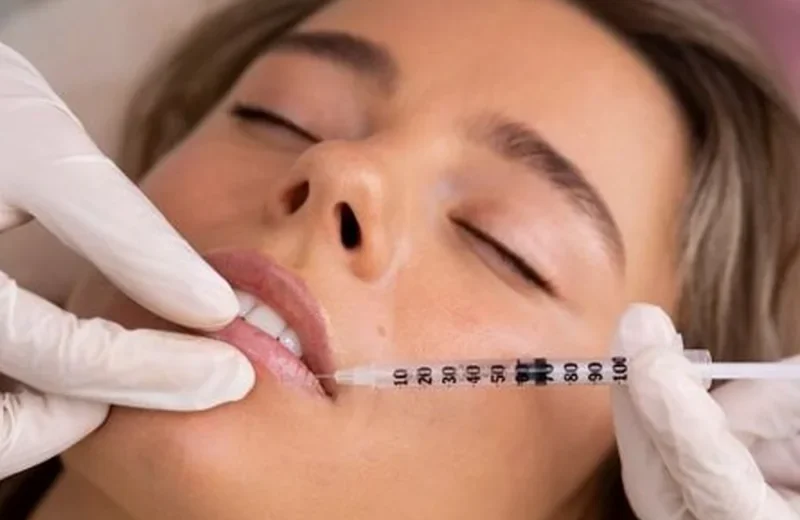
Quick answer: what is the Step-by-Step Phi lip filler technique?
The Step-by-Step Phi (Φ) technique is a published approach to hyaluronic acid (HA) lip enhancement that combines progressive treatment over multiple visits with a caliper-based system of lip measurements inspired by the golden ratio, approximately 1.618. Rather than treating one lip shape or volume as ideal for every person, the clinical concept is to evaluate existing anatomy, plan a balanced contour, limit overcorrection at a single visit, and re-evaluate after the tissue settles. The original authors used their measuring system to identify potential treatment sites; the precise injection method is a professional technique, not an at-home procedure.
In the original single-center retrospective report, 833 first-time lip-augmentation patients were treated in Athens between June 2013 and March 2019. The authors reported high satisfaction ratings and no severe vascular or infectious complications in their reviewed cases. These findings describe one reported patient cohort; they do not prove that the method eliminates arterial injury, that a golden ratio is universally attractive, or that it outperforms other lip-filler techniques. Every injectable procedure has risks and requires individualized medical judgment.
For readers comparing lip augmentation approaches in Abu Dhabi, the central lesson is useful even when a different technique is chosen: assess first, preserve facial identity, avoid automatic overfilling, and make subsequent decisions based on the healed result rather than immediate swelling. For the general lip-filler service overview, visit Dr. Erfan Rahmani’s lip filler page.
At a glance: the scientific facts and the limits of the evidence
| Question | Evidence-based answer |
| What does Φ mean? | Phi, the mathematical golden ratio of roughly 1.618; used here as a measurement aid, not an immutable beauty rule. |
| What filler did the authors study? | Injectable hyaluronic acid (HA); the specific concentration and product properties belonged to their clinical protocol. |
| How many patients? | 833 patients treated in one Athens practice, retrospectively reviewed. |
| What age range? | 18–72 years; mean age 30.2 years. |
| What was the step-by-step idea? | Gradual treatment with reassessment and further sessions where appropriate. |
| What outcomes were reported? | 92.4% selected the top improvement category on the authors’ assessment; reporting and design limitations apply. |
| Did anyone have side effects? | Yes. The report describes bruising, swelling, redness and discomfort even though no severe complications were reported. |
| Is it risk-free? | No. The absence of a rare event in a case series cannot establish zero risk. |
| Does everyone need a 1:1.618 lip ratio? | No. Aesthetic preference varies by face, patient, culture, era, and the measurement used. |
1. Why natural-looking lip filler begins with facial assessment
Lip enhancement is sometimes reduced to a question of how many milliliters should be injected. That is not the most useful starting point. A naturally attractive lip belongs to a three-dimensional face: it must make sense in frontal view, oblique view, profile, during speech, when the mouth closes, and when the patient smiles. Patients can have beautiful lips that are genetically thin, full, asymmetric, sharply defined, or softly contoured. The clinical objective is not to replace every variation with the same fashionable template.
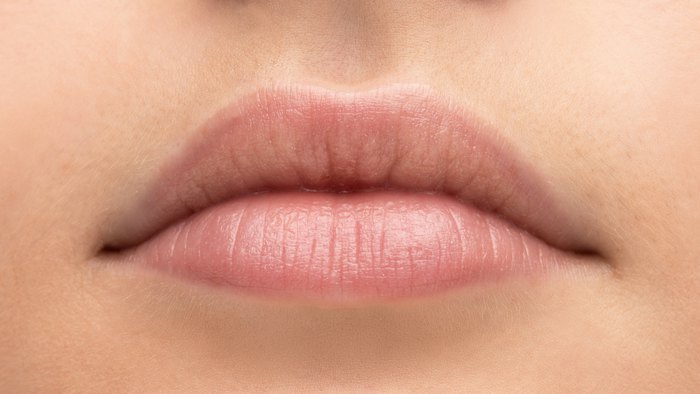
The visible red portion of the lip, called the vermilion, contributes much of the apparent fullness. The vermilion border defines the outline. The Cupid’s bow and philtral columns help establish upper-lip architecture. The oral commissures are the mouth corners, and the surrounding nasolabial, marionette, and chin regions influence how the lips are perceived. Even a well-placed filler can look unnatural if it projects the lips without accounting for chin position, dental support, smile width, or existing upper-lip length.
A thoughtful consultation considers the problem the patient is actually trying to solve. Some seek mild central fullness; some seek hydration and a softer contour; others want to address asymmetry, lipstick bleeding lines, or changes related to aging. Different concerns may require different approaches. More gel is not automatically the answer to wrinkles, a long upper lip, weak dental support, or lower-face skin laxity.
There is also an important difference between visible volume and aesthetic balance. A small amount of carefully selected filler can produce a meaningful change when the anatomy is favorable, while a larger quantity can undermine definition. The threshold at which a particular lip looks overfilled differs across individuals. Gradual reassessment is therefore a form of treatment planning rather than a guarantee of a specific cosmetic result.
2. Understanding Phi: what the golden ratio can — and cannot — tell us
Phi (Φ) is the ratio approximately equal to 1.618033988. It appears in mathematics, geometry, historical discussions of architecture, and many accounts of artistic proportion. When a length is divided into a longer and shorter part so that the whole-to-longer ratio equals the longer-to-shorter ratio, that relationship can be expressed with Phi. Cosmetic authors have used the concept to construct proportional assessment tools and to illustrate relationships among facial measurements.
In the original study, the researchers employed a dedicated Phi caliper as a practical device for marking proportionally spaced reference points. This is a description of their published design. The caliper did not independently verify the position of every artery, dictate an ideal injected dose, or prove that the patient’s preferred result would be the same as a mathematically calculated one. It is an optional visual guide that must be subordinated to actual anatomy, movement, and preferences.

Figure 1. The Phi caliper used by Keramidas and colleagues to illustrate their geometric marking system. Source: Keramidas et al., 2021.
Why there is no universally correct lip ratio
Older classical teaching has often referenced an upper-to-lower vermilion-height relationship near 1:1.6. Yet research on preferred lip proportions reports differing outcomes, including 1:1 and 1:2 in different image-based studies. Such studies employ varying photographs, populations, definitions of upper/lower height, and survey methods. Their results should not be treated as competing absolute rules. In a real consultation, the clinician must also consider the ethnic and individual features the patient wishes to preserve.
The study behind the Phi technique even acknowledged the importance of changing aesthetic ideals. In an accompanying consultation survey of 700 participants, the authors reported that 70% chose an upper-to-lower ratio of 0.85:1, 20% chose 1:1, and 6% chose 0.65:1 among the presented edited images. These numbers came from the authors’ separate survey population and should not be described as validated ideal proportions for Abu Dhabi or all ethnic groups.

Figure 2. Digitally modified example images showing different lip proportions for patient counseling, as published by the original investigators. These are conceptual choices, not standardized outcomes after treatment. Source: Keramidas et al., 2021.
The clinical value of proportions is that they create a shared language. A patient can say, for example, that they prefer lower-lip dominance or near-equal fullness, and the clinician can explain whether that look fits the existing facial structure. The risk comes when numerical ratios are presented as objective proof of beauty. A ruler can help describe a plan; it cannot replace informed patient preference or clinical anatomy.
3. Lip anatomy and vascular safety: what patients should understand
The lips contain a dense and variable blood supply arising from the facial arterial system. The superior and inferior labial arteries generally supply the respective lips, but the pathway, depth, and side-to-side arrangement vary. A vessel may be situated differently across patients and can be affected by previous procedures or scarring. This is why a method based on fixed surface landmarks must never be described as automatically safe for every person.
The original authors discussed vascular position relative to the orbicularis oris muscle, oral mucosa, and superficial skin. They cited anatomic studies illustrating that the majority of labial arteries are found deeper, yet a clinically significant minority travel in other planes. Their specific recommendations regarding depth and landmarks belong to that publication and do not remove the need to assess each patient’s actual anatomy. Modern understanding of vascular injury emphasizes that there is no universally risk-free injection plane, and neither a needle nor a cannula can guarantee avoidance of an artery.
The mechanism of an important complication is different from ordinary bruising. If filler accidentally obstructs a vessel or compresses it sufficiently, the tissues may receive inadequate blood flow. Concerning signs may include severe or unusual pain, sudden pallor or whitening, dusky or netlike discoloration, and delayed capillary refill. A person with abrupt visual symptoms, severe headache, or neurological changes needs emergency assessment. These are not normal symptoms to monitor at home until the next day.
The 2021 Complications in Medical Aesthetics Collaborative (CMAC) guideline describes prevention through knowledge of anatomy, low-pressure and small-increment delivery, recognizing that negative aspiration is unreliable, and immediate response to an identified problem. Its safety framework is relevant to physicians using any lip-filler method, including the Phi approach. Clinics should maintain trained staff, an emergency protocol, appropriate equipment, and a route for urgent referral.
Why the word “safe” needs context
A technique can have favorable outcomes in a published series and still carry serious but rare risks. No severe vascular complication was reported among the 833 people in the study. However, the study was not randomized, did not have a head-to-head comparator group, and was not large enough to exclude very rare adverse events. There is also a distinction between what investigators recorded and what prospective, independent surveillance might detect. It would be incorrect to transform “none observed” into “cannot occur.”
For this reason, this article uses the language “reported outcomes”, “published technique”, and “individualized clinical assessment” rather than marketing claims such as painless, perfectly safe, or guaranteed no migration. Natural improvement and procedural safety are goals that require ongoing judgment rather than promises.
4. What the published Step-by-Step Phi method actually involved
The name summarizes two ideas. “Step-by-step” refers to staging rather than attempting unlimited volume change at one appointment; “Phi” refers to geometric marking aided by a special caliper. The authors assessed anatomy and patient goals, documented standardized photographs, used HA filler, and scheduled subsequent assessment where needed. Their reported protocol used an upper limit of approximately 1–1.5 mL per session, with follow-up intervals commonly described as 15–30 days. Those figures are parameters of the reported study, not personalized prescriptions or universal dose caps.
In their marking method, the lips were divided into portions and reference sites were identified with the caliper. The investigators described 12 or 16 potential entry points, with 12 being common in their account. The quantity in each site was adjusted to the existing lip shape and observed asymmetry. Their paper also describes needle orientation and depth; those technical details are intended for trained injectors and should not be followed by unqualified readers. A discussion of the concept does not constitute procedural training.

Figure 3. Example of the original investigators’ geometric marking approach. The marks depict their published protocol, not a universal safe map or instructions for self-injection. Source: Keramidas et al., 2021.
Why staging may be appealing
Swelling immediately after filler can conceal whether the planned contour is truly balanced. When a patient has inherently narrow vermilion, limited tissue stretch, a history of excessive filler, or substantial asymmetry, a staged strategy may make assessment more disciplined. It gives an opportunity to evaluate the healed outline and identify whether an additional correction is actually desirable.
Nevertheless, more sessions are not automatically medically necessary. A patient seeking a small and anatomically straightforward change may reach the intended endpoint after a single treatment. Another patient may be better served by declining filler, dissolving old HA filler first after proper assessment, or pursuing a different therapy. The clinical value of staging lies in controlled decision-making, not in a predetermined number of syringes or appointments.
What makes a Phi-inspired assessment different from the Four-Point technique?
These are not the same method. The Four-Point Lip Augmentation technique described by Sahan and Tamer in 2018 used four access points and a cannula-based distribution approach. The Step-by-Step Phi technique used caliper-guided proportional markings and progressive HA sessions. Both are descriptions from published clinical literature, but they differ in how the access strategy, marking concept, and sequence are organized. Neither has been established by comparative trials as universally superior.
For patients, the name of an injection method should be less important than the reasons the clinician selected it. If two approaches could produce a similar natural-looking result, choice depends on anatomy, product properties, practitioner training, known risks, and the quality of informed consent. A fashionable technique name should never override these fundamentals.
5. The 833-patient study: results, safety findings, and their interpretation
The reported clinical series is the main reason the Step-by-Step Phi technique deserves discussion. According to the authors, 833 first-time lip filler patients were treated at one private clinic in Athens over approximately six years. Their average age was 30.2 years, with a range of 18 to 72 years. The records were reviewed retrospectively; the reported mean total quantity of HA was approximately 3 mL across the course of treatment, with a broad range of 1–12 mL. Most participants required three visits according to the report, but the treatment course varied substantially and was not a fixed clinical requirement.
At follow-up, the authors recorded improvement using a five-category Global Aesthetic Improvement Scale (GAIS)-style assessment. They reported that 92.4% of participants selected the highest improvement category and another 7.56% selected improved or very improved, with no participants in the unchanged or worsened categories. These are striking results, but several methodological issues matter: the patients were not randomly assigned to treatments; there was no comparison with other approaches; the rating was collected in the context of patients revisiting the practice; and blinding or independent image adjudication was not established by the uploaded article.
The report also documented more specific adverse effects. Eight patients had severe bruising, 15 had mild bruising, 10 had severe swelling and 50 had mild swelling, according to its Results section. Minor pain and redness were described. No infection, vascular occlusion, necrosis, discoloration or granuloma was reported in the reviewed cohort. This does not mean the procedure can be advertised as complication-free. It means that those events were not documented among those patients in this retrospective review.
| Original study measure | What the paper reported | What it does NOT establish |
| Patients | 833 | A universal guarantee of safety for all patients |
| Study design | Retrospective single-practice review | Randomized proof of superiority over other techniques |
| Mean age | 30.2 years | Evidence that every age group responds equally |
| Average cumulative HA | Approximately 3 mL | A recommended volume for an individual appointment or patient |
| Top improvement rating | 92.4% | Independent, blinded comparative effectiveness |
| Reported severe bruising | 8 patients | That bruising is impossible in other cases |
| Reported severe swelling | 10 patients | That recovery is always immediate |
| Severe vascular events | None reported | That injection cannot enter or compromise a vessel |
| Time to maintenance | Authors observed return at about 12–18 months | A guaranteed individual filler lifespan |
Why follow-up and photographs matter more than a headline percentage
A cosmetic study is strongest when its results can be reproduced, judged by independent observers, and tied to validated patient-reported outcomes. In day-to-day practice, standardized photographs provide a better basis for comparing change than memory alone. The original investigators obtained photographs and videos from several angles, a useful feature of their assessment process. Yet even excellent-looking photographs are sensitive to differences in lighting, mouth position, makeup, camera angle, and the interval after injection.
For example, a photo taken immediately after treatment may exaggerate volume because of edema. Another image taken months later may be less directly comparable if posture, hair, smile, or camera distance changed. These considerations apply both to scientific papers and to commercial before-and-after galleries. An ethical website should clearly state when images represent an external research study, when they belong to actual patients of a specific clinician, and whether the photographs show immediate or healed outcomes.

Figure 4. A normal-volume-lip example shown before treatment and two months afterward in the original publication. Photographs belong to the original study, not to Dr. Rahmani’s patient portfolio. Source: Keramidas et al., 2021.
6. Natural lip filler for three different patient profiles
One of the most useful elements of the original paper is its simple distinction among normal-volume, thin, and age-related thin lips. A person can belong to more than one category, and other factors such as asymmetry, scar tissue or past treatment can change the plan. The categories help explain why identical injection patterns and quantities are not suitable for everyone.
6.1 Normal-volume lips: refinement rather than enlargement
Some patients already have adequate vermilion height and soft tissue volume but want improved shape or a subtle change in projection. For these individuals, the objective may be to preserve the existing Cupid’s bow and avoid excessive lateral fullness. Clinicians should discuss whether the requested change is visible enough to justify a medical procedure, whether there is a correctable asymmetry, and whether the baseline profile supports additional projection.
The Phi investigators included a case of this type in which their staged treatment reached a visible result over two months. This should be interpreted as an illustrative case, not proof that all patients with normal-volume lips need the same amount or number of sessions. The better measure of success is whether the result remains proportionate in both motion and rest.
6.2 Genetically thin lips: respecting limited tissue capacity
Genetically thin lips may have a narrow red lip, relatively little natural projection, a long cutaneous upper lip, or a particular dental-support pattern. There may be less room to accommodate augmentation without distorting the vermilion border. Simply chasing the size of an online photograph can create pressure for repeated top-ups and an increasingly unnatural outline.
The authors’ gradual approach is especially relevant as a planning philosophy for naturally narrow lips. Rather than assuming a dramatic single-session change is desirable, they reassessed the lip after tissue settling and adjusted the plan over time. Their paper illustrates a multivisit result extending many months. In real practice, the number of visits remains an individualized decision, and clinicians should avoid encouraging cumulative volume merely because a patient can return for another appointment.
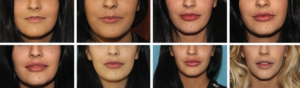
Figure 5. Published sequence showing multiple stages of lip augmentation in a participant with thin lips. The photographs document one individual journey and should not be represented as a standard schedule or guaranteed result.
6.3 Mature and age-related thin lips: more than lost volume
Age-related changes in the lips reflect several overlapping processes: reduced soft tissue fullness, alteration of the vermilion border, upper-lip elongation, dental and skeletal changes, perioral lines, and reduced skin elasticity. A patient with mature lips may be more concerned about lipstick lines, mouth-corner downturn or diminished lip show than about increasing total lip size. Filling the red lip alone does not reliably solve all of those problems.
The original authors advocated a conservative approach and noted that age-related thin lips may need a more nuanced strategy than youthful lips. In contemporary planning, a physician may consider whether fine-line resurfacing, selected toxin treatment, lip support, skincare, or referral for surgery is more appropriate. Fillers can improve volume but cannot shorten an elongated upper lip or reverse significant skin laxity. In a patient seeking a natural result, declining unnecessary volume can be the most important aesthetic decision.
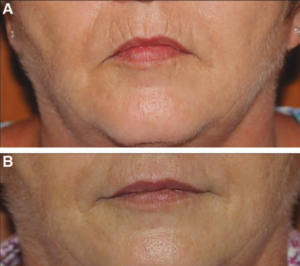
Figure 6. Mature-lip before-and-after example published by Keramidas and colleagues. It illustrates one reported outcome and does not establish that filler reverses all features of perioral aging. Source: Keramidas et al., 2021.
7. Results over time: immediate appearance, settling, and maintenance
Immediately after injection, a visible contour change may coexist with redness, tenderness and swelling. It is generally too early to judge exact symmetry or the final aesthetic balance. The first few days may include fluctuating edema, especially in mobile tissues such as the lips. Bruising can take longer to disappear. A more stable assessment commonly occurs after the acute post-procedure effects have subsided; the optimal review interval depends on the patient, the product, and the treatment performed.
At a follow-up appointment, comparison with consistent pretreatment photographs helps distinguish true asymmetry from transient swelling. In some cases, nothing further is needed. In others, carefully considered refinement may be reasonable. A patient who is already satisfied should not be persuaded to add volume simply to achieve a mathematical ratio. The endpoint is functional, balanced anatomy and the patient’s informed preference, not completion of a fixed syringe package.
Over the following months, the visible degree of correction can gradually change as HA degrades and the face continues to age. Longevity varies with product characteristics, treatment site, tissue movement and individual factors. The original report mentions that returning patients commonly revisited the clinic for maintenance around 12–18 months, but this is an observation in their practice and is not a promise that every product lasts that long in the lip.

Figure 7. Baseline and long-interval images of one published participant. They are not standardized proof of universal filler longevity; appearances can also be affected by photography, grooming, time and other factors. Source: Keramidas et al., 2021.
What “natural” should mean clinically
A natural-looking result should permit speech, kissing, smiling, eating and ordinary facial expression without conspicuous distortion. The lip margin should not be expanded to the point that it looks uniformly cylindrical or disconnected from the surrounding face. The goal is often better harmony rather than maximum projection. Patients and injectors should also distinguish a photographic look from an appearance that remains pleasing in everyday motion and varied lighting.
8. Choosing a hyaluronic acid product: why brand name alone is insufficient
The Phi paper described HA with certain concentration and crosslinking characteristics. That is part of the historical protocol; it should not be interpreted as a current prescription for every person or as proof that one product concentration is superior. Contemporary HA fillers differ in gel elasticity, viscosity, cohesivity, water affinity, degree of crosslinking, and the manufacturer’s indicated uses. These properties influence how a gel may integrate with the tissue and how it behaves during lip movement.
A physician choosing a product for the lips asks several questions. Does the patient want soft enhancement or significant structural support? Is the area thin or scarred? Is there existing filler? How important is flexibility in motion? Is the product legally authorized and suitable for this use in the relevant jurisdiction? Is the product genuine, appropriately stored and traceable to a lot number? A legitimate, well-selected HA formulation matters more than the popularity of its name on social media.
| Filler characteristic | Why it matters in a lip consultation |
| Texture and softness | Helps the clinician consider how naturally the lip may move and feel. |
| Elastic behavior | Influences resistance to deformation and the ability to maintain contour. |
| Cohesivity | May affect integration, spreading, and how a result appears in tissue. |
| Hydrophilicity | Some formulations attract water, influencing early swelling and visible fullness. |
| Approved use | Product labeling and local regulatory permission must be checked. |
| Prior filler | Existing material or previous complications may change suitability. |
| Reversibility | HA may be treated with hyaluronidase when clinically appropriate, unlike permanent substances. |
A common misconception is that a harder product must last longer or produce a more beautiful lip. The most appropriate consistency depends on the anatomical task, and the lip is particularly sensitive to unnatural firmness or lumps. Products such as calcium hydroxylapatite and poly-L-lactic acid are generally not appropriate as routine lip-body fillers because of risks of palpable nodules and their different biological behavior. Permanent filler material also raises important long-term management concerns. For the broader comparison of facial fillers, the dermal filler service overview provides treatment context.
9. Step-by-step treatment planning in Abu Dhabi: the patient journey
Consultation and informed consent
A professional consultation documents medical history, medication and supplement use, allergies, history of herpes labialis, prior aesthetic treatments, unusual bruising, dental or oral concerns, and recent or active infections. It should also establish whether the patient is pregnant or breastfeeding, whether they have active inflammatory lesions in the treatment region, and whether any current health conditions require deferral or additional specialist input. Elective injections may not be advisable under some circumstances. Never discontinue prescribed anticoagulants or other medicines just to qualify for filler without the prescribing clinician’s guidance.
The next step is detailed facial assessment in neutral expression and in movement. The patient should be invited to describe the specific result they want and, equally important, what they want to avoid. Photographs can be useful when consented to and handled according to privacy requirements. The physician explains the expected range of visible change, the possibility that the initial plan may be insufficient or intentionally conservative, the normal recovery process, uncommon serious risks, available options, and what would happen if a complication arises.
Treatment day and immediate review
The clinic confirms product authenticity, sterile procedures and suitability before injection. Topical or local analgesia may be offered depending on the situation. A clinically appropriate injection approach is then selected by the treating professional. It is not safe or meaningful for a patient blog to prescribe fixed injection angles, insertion depths, or vascular avoidance points as universally safe; these decisions depend on trained assessment and anatomy.
Immediately after treatment, the patient receives instructions about expected minor symptoms and, more importantly, signs that need urgent medical attention. An emergency plan, including availability of appropriate reversal treatment for HA-related complications, should already be in place. Documentation of product name, batch or lot number, injection sites and observed response provides traceability and continuity of care.
Healing, reassessment and the option to stop
Patients should be advised to expect some temporary swelling and possibly bruising rather than a promise of zero downtime. Many can continue routine nonstrenuous activities, but individual aftercare recommendations may vary. If the lips appear uneven during the first days, that does not automatically mean more filler is needed. Reassessment after settling allows a more accurate judgment of whether refinement, no additional treatment, or another modality is the appropriate next action.
A key professional principle is the right to stop. A patient can decline additional appointments, and the clinician can recommend no further injection when the lip contour is already balanced. This is especially important in patients who repeatedly seek greater volume despite an overfilled appearance or unrealistic expectations.
10. Common side effects versus urgent warning signs
Common short-term effects can include injection-site redness, tenderness, minor bruising, transient swelling and mild asymmetry while edema settles. These are not identical across patients and sometimes require longer recovery. Nodules can arise from product placement, inflammatory reactions or other causes; persistent or painful lumps need clinical evaluation rather than aggressive home manipulation.
Potentially urgent complications include vascular obstruction, infection, significant allergic reactions and other serious problems. A patient should seek immediate contact with the treating clinician for severe or progressively worsening pain, whitening, dusky or mottled discoloration, rapidly worsening swelling, or other unusual symptoms. Sudden visual changes, eye pain, neurological symptoms, or stroke-like features require immediate emergency care. Time-sensitive assessment is crucial; delaying because a webpage suggests complications are “extremely rare” is unsafe.
The 2026 UK multidisciplinary consensus on filler-related vision loss emphasizes that patients should be informed about the rare risk of blindness or stroke and that suspected eye or neurological involvement demands emergency department referral without delay. Attempts at local management should never postpone emergency assessment.
| Usually expected after uncomplicated injection | Needs rapid professional assessment |
| Mild local tenderness decreasing over time | Sudden, disproportionate or increasing pain |
| Temporary redness at puncture sites | New blanching, pallor, livedo or unusual dark discoloration |
| Mild to moderate swelling that begins to settle | Markedly worsening swelling, fever, spreading erythema, or suspected infection |
| Minor bruising | New visual change, severe eye pain, neurological symptoms: emergency care immediately |
| Early minor asymmetry due to swelling | Persistent asymmetry or nodules after the appropriate healing interval |
Can hyaluronidase dissolve HA lip filler?
Hyaluronidase is an enzyme that can break down hyaluronic acid filler and is an important clinical tool in managing unwanted HA correction and some complications. Its use is not interchangeable across filler categories, and dosing/management is determined by the clinical indication and practitioner protocols. Serious suspected vascular compromise must be managed urgently by trained clinicians using current guidance; it is not suitable for remote self-treatment. Elective correction of aesthetic overfilling also requires assessment because dissolution itself may have side effects and may alter the appearance unexpectedly.
Do needles and cannulas have different safety profiles?
Both are used by qualified practitioners, and each has advantages and limitations. A blunt cannula may reduce some puncture-related injury under particular conditions, but blunt is not synonymous with incapable of entering a vessel. Needles may offer precision but can penetrate vessels. The Phi paper discussed a needle-based method, while other published techniques describe cannulas. There is insufficient comparative evidence to call either device universally risk-free. Device selection is inseparable from understanding anatomy, product, tissue plane, and clinician training.
11. Phi lip enhancement compared with other approaches
| Approach | Defining idea | Practical point for patients |
| Step-by-Step Phi (2021) | Measurement-inspired marking and staged HA refinement | Proportional planning can support discussion but cannot determine everyone’s ideal lips. |
| Four-Point (2018) | Fewer entry locations with cannula-based distribution in the published technique | Four entry points do not mean zero vascular risk or guaranteed fewer complications. |
| Conventional HA lip filler | Individualized volume and shape correction with needle or cannula as appropriate | Frequently sufficient; the aesthetic plan matters more than technique branding. |
| Lip flip with botulinum toxin | Modulates selected lip-related muscle activity rather than adding gel volume | Not a substitute for structural volume, and it has its own functional risks. |
| Surgical lip lift | Changes selected upper-lip anatomy surgically | A different procedure with scars, downtime and surgical risks; requires specialist evaluation. |
| Perioral skin resurfacing | Targets selected skin texture and fine lines | May improve a problem that filler alone cannot address. |
A highly specific named method can make an article valuable to readers researching techniques, but patients should not confuse the publication of a case series with a regulatory certification of superiority. If an injector recommends Phi, four-point, traditional linear approaches, or any other technique, a reasonable question is: What feature of my individual anatomy makes this appropriate, and what are the alternatives?
12. Who may be a reasonable candidate — and who should defer?
Potential candidates include adults seeking carefully considered lip-volume restoration, correction of selected asymmetry, age-related loss of vermilion fullness or modest contour enhancement. Suitability is established only after a face-to-face clinical assessment that reviews anatomy, health status and expectations. A patient who does not want a noticeable result may still be a good candidate for a very conservative plan; a patient who wants a dramatic and anatomically unsuitable transformation may not be.
Treatment is often deferred in the presence of active infection or inflammatory disease at the treatment site, a suspected complication from existing filler, or a contraindication associated with a specific product. Pregnancy and breastfeeding generally prompt avoidance of elective filler because adequate safety data are limited. Individuals with a complex medical history, bleeding concerns, previous lip surgery, immunological conditions, or current medications may need particular assessment rather than a blanket assumption of suitability or unsuitability. Psychological readiness and realistic expectations also matter.
An ethical consultation includes the possibility of doing nothing. Natural anatomical variation is not a disease. The best decision for some people is to retain their existing appearance; for others, a small intervention may be appropriate. Responsible aesthetic medicine starts with patient autonomy and clear risk communication.
13. Common reasons for unnatural lip filler results
An unnatural result is not necessarily caused by a single incorrect technique. It may arise from excess total volume, a poorly selected product, inappropriate placement, an aesthetic target that conflicts with the person’s anatomy, repeated top-ups without reassessment, or the persistence of old filler. It can also be exaggerated in photographs by very strong lighting, facial expression or early post-injection swelling. A good assessment distinguishes these possibilities before any corrective procedure.
Overprojection without supportive facial harmony
The face is viewed in profile as well as from the front. Additional lip projection may look appealing in a close-up photograph and disproportionate beside a retruded chin or a long cutaneous upper lip. In some individuals the concern is not lip size but the relationship among nose, teeth, lips and chin. Facial balancing must be discussed sensitively and should never become pressure to purchase additional procedures.
A blurred border or upper-lip “shelf”
Some patients worry about a horizontal shelf above the red lip, border blurring, or an outwardly displaced upper lip. Several factors can produce this appearance, including excessive filler, product characteristics, migration or the patient’s baseline anatomy. A blurred border should not automatically be labeled migration without careful examination; anatomical structure and swelling can mimic it. Imaging may sometimes help clinicians evaluate retained filler when the diagnosis is uncertain.
Pursuing mathematical symmetry
Perfectly equal left and right lips are not normal for every face. Asymmetry may originate in teeth, bone, muscle, soft tissue, or a habitual smile pattern. Injecting more gel into one side will not always solve a dynamic asymmetry and can make resting symmetry worse. The Phi technique’s use of measured references is most helpful when paired with the recognition that asymmetry must be assessed, not automatically erased.
Repeated maintenance without reassessment
HA filler does not disappear according to a single universal timetable. Some material or its aesthetic effects can persist longer than the patient expects. Scheduling another syringe every fixed number of months without looking at the existing appearance can cause cumulative overcorrection. Follow-up should be based on clinical findings and preferences rather than automatic sales cycles.
14. Lip filler, hydration, lip flip and perioral rejuvenation: choosing the right target
Patients sometimes describe a wish for “hydrated lips,” “more lip show,” “less gummy smile,” or “fewer lipstick lines” as though these were interchangeable problems. They are not. HA lip augmentation increases or redistributes visible tissue volume; a botulinum toxin lip flip changes selected muscle behavior; skincare can improve the outer surface but cannot add substantial structural fullness; and energy-based treatments may target the surrounding skin rather than the lip body.
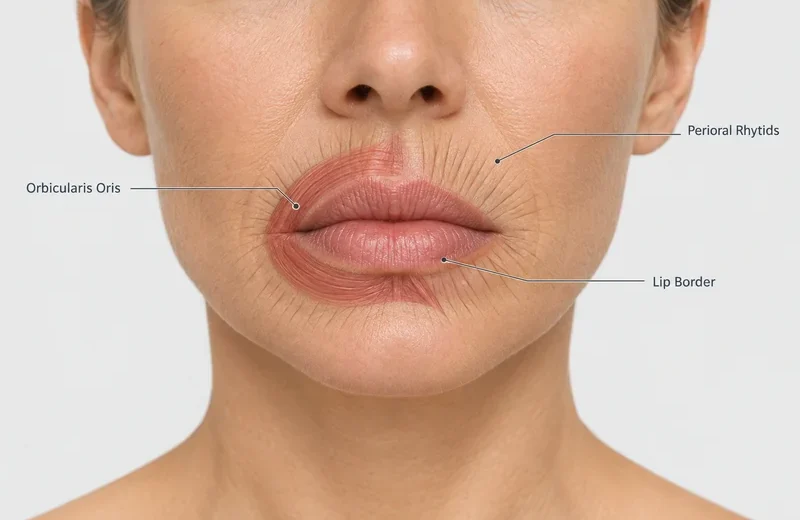
When the concern is perioral rhytids, the reason for the lines must be assessed. Repetitive orbicularis oris activity, sun damage, collagen changes, smoking history and volume loss may all contribute. Adding filler indiscriminately to every fine line can create irregular texture. A combined plan may be more rational, but combining procedures raises additional downtime, sequencing and safety considerations. It is also reasonable to offer no treatment when expected benefit is small.
For patients comparing overall treatment categories in Abu Dhabi, the Botox service page explains the distinct role of neuromodulators, while the lip filler page addresses volume-based enhancement. This Phi article is intentionally a technique-specific educational guide, not a duplicate of those primary service pages.
15. Men, different facial types and culturally sensitive lip aesthetics
There is no single masculine or feminine lip that must be recreated with filler. Some male patients seek restoration of volume lost with aging, a correction of a scar, or a subtle improvement in asymmetry, while others prefer a pronounced contour. Likewise, women differ widely in their preferred definition, fullness and projection. The choice should be based on the individual’s own identity and goals rather than imposed assumptions.
Abu Dhabi serves residents and visitors with diverse facial anatomies and aesthetic backgrounds. This makes proportional discussion useful but also makes rigid ratios potentially misleading. Preferences can differ with culture, age, fashion, and individual taste, and cross-cultural studies show that respondents do not unanimously choose the same upper-to-lower lip relationship. Respectful practice asks what looks right to the patient, avoids treating ethnic facial features as flaws, and preserves the elements that make the individual recognizable.
A good pre-treatment conversation might compare a soft central enhancement, a defined but not exaggerated Cupid’s bow, or the option of no additional upper-lip height. It should also establish whether the desired change is subtle enough to remain unobtrusive in professional life or deliberately more visible. These preferences are legitimate only within a medically appropriate and anatomically plausible plan.
16. Lip filler aftercare: a realistic recovery framework
Aftercare is intended to reduce discomfort, avoid unnecessary trauma and identify rare complications early. Some recommendations are clinician-specific because the treatment product, level of swelling and medical history differ. The treating practice should provide written instructions and a way to contact the clinician promptly if symptoms are unusual.
During the first day, many clinicians recommend avoiding intense heat exposure, strenuous exercise, unnecessary manipulation and pressure on the treated lips. Gentle cleansing and normal hydration are usually reasonable. A clean cool compress may improve discomfort when advised by the clinician; extreme cold applied directly to the skin should be avoided. There is no evidence that aggressive self-massage is a safe universal remedy for a lump or asymmetry, and unapproved home attempts to dissolve filler are hazardous.
During the first several days, swelling and tenderness may fluctuate. Small bruises sometimes become more visible before resolving. The patient should not judge the permanent result based solely on a same-day photograph. If there is severe or worsening pain, abnormal color change, loss of normal tissue perfusion, a rapidly progressive lesion or visual symptoms, normal-aftercare advice no longer applies: the situation requires immediate medical evaluation.
Longer-term maintenance should focus on whether the existing result still suits the individual. A patient may choose to keep the lips as they are, request a minor correction, or discontinue filler. Continuing a treatment is optional, not an obligation established at the first consultation.
17. Costs and value: what determines lip filler pricing in Abu Dhabi?
The total cost of a lip filler treatment can vary by the licensed clinical setting, product selected, volume actually appropriate for the individual, the complexity of correction, practitioner experience, and whether reassessment is needed. An inexpensive offer does not necessarily represent good value if product authenticity, assessment quality, sterile handling, follow-up and emergency preparedness are unclear. Conversely, a premium price does not independently prove that a technique is superior.
Because this article is a scientific guide rather than a live price list, it does not publish a fixed current AED quotation. Patients should receive a transparent individualized estimate and ask whether the quoted price covers consultation, the specific filler brand, expected number of syringes, and any follow-up or touch-up policy. It should also be clear that the clinician will not inject unnecessary product simply because a package includes it.
The practical question is not “How many syringes am I buying?” but “What amount, if any, is appropriate to my anatomy, and what can be achieved without compromising facial balance?” That question supports both aesthetic quality and long-term value.
18. Frequently asked questions: Step-by-Step Phi lip augmentation
1. What is Phi lip augmentation?
It is a published HA lip-enhancement method that combines golden-ratio-inspired measuring references with gradual, staged assessment. The Phi concept is an optional planning aid, not a universal beauty rule.
2. What does the Phi symbol mean?
Phi (Φ) represents a mathematical ratio of approximately 1.618. The researchers used it to design a lip-marking approach with a dedicated caliper.
3. Is the Phi technique the same as standard lip filler?
Both involve HA filler, but the Phi publication describes a specific geometric marking philosophy and gradual sessions. Standard lip filler can be individualized without this device.
4. Is this technique guaranteed to be safer than other methods?
No. The original study did not directly compare methods in a randomized design. Serious complications were not reported, but rare risks remain possible.
5. How many patients were included in the original study?
The published retrospective series included 833 patients treated at one Athens clinic between June 2013 and March 2019.
6. What did the published study find about satisfaction?
The authors reported 92.4% in the highest improvement category on their assessment scale. That is a study finding, not a guaranteed result for other patients or clinics.
7. Does every patient need the 1:1.618 lip ratio?
No. The ideal proportion depends on facial anatomy, individual preference, survey methodology and cultural context. A mathematical ratio cannot define beauty for everyone.
8. Can a Phi caliper detect blood vessels?
No. A proportional measuring instrument marks distances; it does not image or reliably identify individual arterial locations.
9. How many sessions are needed?
There is no universal answer. The original paper frequently describes staged sessions, but actual treatment needs range from none to one or more visits based on clinical review.
10. How much lip filler is needed?
The appropriate quantity is individualized. A study average or technique-specific limit must not be treated as an automatic recommendation for one patient.
11. Is 1 mL always enough for lip filler?
Not necessarily; equally, some people do not need a full syringe. The result depends on existing lip dimensions and the intended degree of change.
12. Can very thin lips look natural with filler?
Sometimes. A conservative approach may help respect limited tissue capacity, but not every target size is anatomically appropriate or achievable without looking unnatural.
13. Does lip filler work for asymmetrical lips?
HA filler may improve selected structural asymmetries. Differences caused by muscle action, dentition, bone or previous surgery can require a different plan.
14. Does the Phi technique use needles or cannulas?
The original Phi study describes a needle-based protocol. Other published techniques use cannulas. Instrument choice is a clinical decision rather than a measure of guaranteed safety.
15. Are cannulas safer than needles in all cases?
No. Cannulas may reduce certain puncture-related effects in some circumstances, but vascular injury is still possible with either instrument.
16. Can the technique prevent migration?
No method guarantees that filler will never migrate or produce an unwanted contour. Product choice, anatomy, cumulative volume and technique all matter.
17. Is Phi lip filler suitable for older patients?
Some mature patients may benefit from cautious volume restoration. Upper-lip length, wrinkles and skin laxity may need separate assessment or different treatment.
18. Does the procedure reduce vertical lipstick lines?
Volume restoration may soften some lines, but deeply etched perioral wrinkles often involve skin changes and muscle action that require other approaches.
19. Can I combine lip filler with Botox?
Selected patients may be candidates for both, but the procedures address different structures and their combined effect should be planned carefully by a qualified clinician.
20. Will the lips move naturally afterwards?
Natural motion is an important treatment goal, but results vary. Excessive volume or inappropriate placement can compromise appearance or comfort.
21. How long does swelling last after lip filler?
Temporary swelling is common, often most prominent early after injection. The course varies by individual and product, and persistent or worsening symptoms need review.
22. Can I return to work after lip filler?
Many patients can resume ordinary nonstrenuous activities promptly, but visible bruising or swelling can occur. Schedule around important events accordingly.
23. When can I judge the final result?
The first days can be misleading because of swelling. The clinician determines a suitable reassessment interval after initial healing.
24. How long will the results last?
Longevity varies. The original authors observed maintenance visits around 12–18 months, which should not be presented as a universal guarantee.
25. What is the difference between Phi and Four-Point lip filler?
Phi centers on caliper-guided proportional planning and gradual sessions. Four-Point refers to a published access and cannula-distribution approach with four entry sites.
26. Can Phi lip filler replace a surgical lip lift?
No. Filler adds tissue volume or changes contour, while a surgical lip lift changes selected anatomic dimensions and involves different risks and recovery.
27. What happens if I do not like my HA filler?
Assessment is needed to identify the cause. Depending on the situation, observation, selective HA dissolution, or another medical intervention may be appropriate.
28. Can HA lip filler be dissolved?
Hyaluronidase can degrade HA filler when clinically indicated. It is a prescription clinical intervention and should not be attempted at home.
29. What is the most serious complication of lip filler?
Unintentional vascular obstruction is an important rare but potentially serious complication. Tissue damage and, with facial filler more broadly, visual or neurological injury can occur.
30. What symptoms should make me seek immediate care?
Sudden severe pain, blanching, netlike dusky discoloration, new visual symptoms or neurological changes are urgent warnings. Visual or neurological symptoms warrant emergency care without delay.
31. Does a low complication rate mean the technique is risk-free?
No. A case series without a recorded severe event cannot exclude rare complications, especially without independent randomized comparative evidence.
32. Is the Phi lip ratio equally suitable for men and women?
No single ratio defines every individual’s ideal. Personal preferences, overall facial proportions and the appearance the person wants to retain matter more.
33. What if I previously had a different lip filler?
The type, amount, location and condition of existing filler should be reviewed before adding more. Old material may alter the recommended plan.
34. Can I book Phi lip filler by asking for an exact technique name?
You can ask a clinician about the published approach, but the practitioner should determine whether it is appropriate after assessment rather than promising it automatically.
35. How do I choose a lip filler practitioner in Abu Dhabi?
Check relevant licensing, injection training, clinical assessment, product authenticity, consent, emergency readiness, complication management and the quality of individualized advice.
36. Do the before-and-after photographs in this article show Dr. Rahmani’s patients?
No. The figures are original published study illustrations attributed to Keramidas and colleagues and are included here for educational reference, not represented as Dr. Rahmani’s work.
19. Clinical interpretation: what the Phi study contributes, and what remains unanswered
The Phi publication contributes a clearly described framework for discussing proportion and pacing lip augmentation. Its large descriptive series, patient categories, photographs and treatment-course observations make it informative for readers interested in the history and evolution of HA lip techniques. At the same time, its retrospective design prevents strong causal conclusions about reduced vascular risk or superiority over other established approaches.
Several unanswered questions remain relevant. Would a similar patient group achieve comparable satisfaction with a non-Phi conservative technique? How much of the observed improvement came from careful communication and repeated visits rather than the geometric markings? Were adverse events captured uniformly at every visit and during long-term follow-up? Would independent raters score the outcomes similarly? Would patient populations with different facial proportions report the same preferences? These questions support cautious interpretation rather than diminishing the practical value of the original description.
Most importantly, the evidence supports individualized planning and conservative clinical judgment, not a one-size-fits-all dose or a numerical beauty ideal. A valuable medical editorial should help patients make informed decisions without translating study conclusions into absolute advertising claims.
20. Conclusion: proportional planning without losing individual identity
The Step-by-Step Phi lip augmentation method illustrates how a geometric reference tool and staged HA treatment can be combined within a patient-focused aesthetic strategy. The original 2021 report documented outcomes from 833 patients and high reported improvement ratings, while also recording expected swelling, redness and some more pronounced bruising or swelling. The study is clinically interesting but does not establish a risk-free technique or a universal ideal lip ratio.
For patients researching lip filler in Abu Dhabi, the most reliable principles are broader than a technique label: select a qualified injector; discuss your own preferred look; assess the face in motion and profile; confirm genuine approved products; understand that swelling can hide the early result; and ensure that a clear emergency pathway exists. A harmonious result is one that fits the person rather than merely satisfying a calculation.
Medical editorial: Dr. Erfan Rahmani, Abu Dhabi, UAE. Explore lip-related aesthetic information at www.drerfanrahmani.com and the dedicated lip filler service page. A consultation is necessary to determine whether any specific injection technique is suitable.