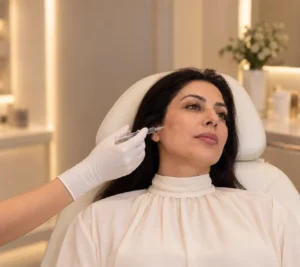

PRP + hyaluronic acid (HA) facial rejuvenation is an injectable biostimulation treatment that combines platelet-rich plasma(PRP) from your own blood with hydrating hyaluronic acid. The aim is to improve skin texture, hydration, fine lines and early firmness, so the skin can improve its own structure rather than being reshaped by a heavy filler. If you are considering PRP + hyaluronic acid facial rejuvenation in Abu Dhabi, this guide explains how it works, what it can realistically achieve, and where its limits are.
PRP + HA supports hydration, texture, fine lines and early firmness. It is not a “liquid facelift” and cannot correct advanced jowls, deep folds or major volume loss. Best results come from matching the treatment to the problem it is designed to address.
What Is PRP + Hyaluronic Acid Facial Rejuvenation?
This treatment places regenerative signals and a hydrated matrix into aging skin so the tissue can improve its own structural and viscoelastic environment.
It differs from using a highly structural filler to reshape the cheek, chin or jawline. With PRP + HA, the main objective is usually better skin texture, hydration, fine lines and firmness, rather than dramatic projection or contour creation.
Why Combine PRP and HA?
Aging skin loses elasticity, hydration and extracellular-matrix quality. Collagen and elastin become less efficient, the dermal matrix becomes less organized, and the skin’s ability to retain water declines.
PRP and HA address different parts of this problem. PRP provides platelet-derived biologic signals that interact with fibroblasts and tissue-repair pathways, while HA helps create a hydrated, viscoelastic environment. Together they support both regeneration and hydration.
The Regenerative Role of PRP
Platelet-rich plasma is prepared from your own blood and contains platelets suspended in plasma. Platelets release growth factors and other signaling molecules involved in wound healing and tissue repair. In aesthetic skin treatment, the goal is to stimulate fibroblast activity, collagen production, extracellular-matrix renewal and overall tissue quality without changing your natural facial expression.
The Hydrating Role of Hyaluronic Acid
Hyaluronic acid is naturally present in skin and binds water strongly. This helps create a hydrated matrix and contributes to the skin’s viscoelastic behavior. In a biostimulatory treatment, HA’s purpose is not necessarily the same as a contouring filler. The formulation and treatment plan determine whether its role is primarily hydration, tissue support or volume.
PRP + HA vs Structural Dermal Filler
| Feature | PRP + HA biostimulation | Structural filler |
|---|---|---|
| Primary goal | Skin quality, hydration, biostimulation and firmness | Projection, shape, contour and structural volume |
| Main target | Dermal / superficial soft-tissue quality | Specific anatomical volume deficits or contour points |
| Typical result | Progressive improvement in quality and texture | More immediate shape or projection change |
| Best use | Fine lines, dry/dull skin, early laxity, selected under-eye quality concerns | Cheek, chin, jawline, lips or other precise structural correction |
| Main limitation | Cannot replace major structural volume or surgical repositioning | Does not automatically improve global skin quality |
PRP + HA Is a Skin-Quality Treatment, Not a “Liquid Facelift”
PRP + HA can support hydration, texture, fine lines and early firmness, but it should not be presented as a substitute for a facelift or as a way to correct every jowl, deep fold or structural volume deficit.
What Happens to Aging Skin?
Aging skin undergoes both epidermal and dermal change. The extracellular matrix becomes less organized, collagen and elastin fibers deteriorate, proteoglycan quality changes and water retention falls. Visible signs include fine wrinkles, dry or parchment-like texture, less bounce, larger-looking pores, dullness and loss of firmness.
Collagen and Elastin Remodeling
Collagen provides much of the skin’s tensile strength, while elastin contributes to recoil. A regenerative treatment supports the cells and matrix involved in rebuilding these structures rather than simply masking the surface.
Why Hydration Changes the Look of Skin
Well-hydrated skin reflects light differently, looks smoother and makes fine surface irregularities less obvious. Hydration also contributes to the mechanical behavior of the extracellular matrix.
How PRP + HA Is Delivered
The treatment begins with a small sample of your own blood, followed by separation of plasma and platelets. The prepared plasma is then combined with HA according to the clinician’s protocol and injected into the planned facial or neck zones.
The preparation system, platelet concentration, HA formulation, injection depth and number of sessions all vary between protocols. This is why treatment should not be reduced to a generic “PRP facial” label.

Why Multiple Small Injection Points May Be Used
Small aliquots spread treatment through a wider skin area instead of concentrating it in a single structural bolus. The micro-injury from needling can itself take part in the wound-healing response and may complement the biologic effect of the injected material.
Treatment Depth Matters
Biostimulation is generally planned within the dermal and superficial soft-tissue layers rather than purely on bone. The correct depth depends on the region, tissue thickness, treatment objective and formulation used.
Which Areas Can Be Treated?
| Area | Main concern | Treatment concept |
|---|---|---|
| Full face | Global texture, hydration, fine lines and early laxity | Broad skin-quality biostimulation |
| Periorbital region | Fine wrinkles, dry crepey texture, selected under-eye quality concerns | Conservative skin-quality treatment in a thin anatomical zone |
| Cheeks | Dryness, texture and early loss of firmness | Support dermal quality without creating heavy volume |
| Lower face / jowl region | Early laxity and quality loss | May improve tissue quality but cannot reposition advanced jowls |
| Neck | Dry, thin or lax skin | Skin-quality support in suitable candidates |
| Localized concern | Selected small area | Targeted PRP-rich treatment rather than full-face distribution |
What Results Can PRP + HA Target?
- Improved skin hydration and a healthier surface appearance
- Smoother texture
- Improvement in fine wrinkles
- Better skin firmness and elasticity
- Improved appearance of dry or thin skin
- More even reflection of light and a fresher look
- Selected improvement in periorbital skin quality
- Modest improvement in early facial or neck laxity
Skin Texture and “Glow”
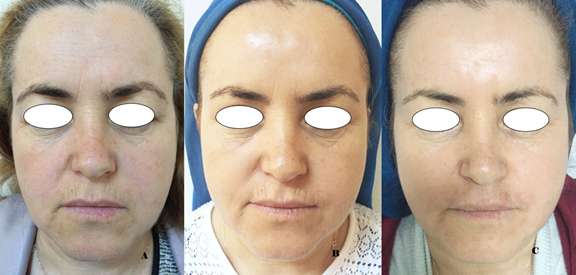
One of the most practical uses of PRP + HA is improving skin texture and hydration. As the dermal environment becomes better hydrated and the regenerative response progresses, skin may look smoother, brighter and less dull.

Fine Lines
Fine wrinkles respond better to a skin-quality approach than deeply etched structural folds. The goal is gradual softening through hydration and matrix remodeling, not immediate mechanical filling of every line.
Under-Eye and Lower-Eyelid Skin Quality
The under-eye area is thin and sensitive to changes in hydration, collagen quality and tissue support. PRP + HA may be considered when the concern is crepey skin, fine lines or general quality rather than a large structural tear-trough deficit. If the main problem is true volume loss, a prominent fat pad or significant lower-eyelid laxity, a different or combined plan may be needed.

Cheek and Neck Firmness
Early cheek or neck laxity may improve when the dermis is better hydrated and the collagen-elastin environment is supported. The effect is progressive tissue-quality improvement, not a surgical lift.

Pigmentation: A Secondary and Less Predictable Target
Some patients notice a more even-looking complexion, but pigmentation is less predictable than hydration, texture or firmness. PRP + HA should not be positioned as a primary treatment for melasma, post-inflammatory pigmentation or other pigment disorders.
Acne and PRP + HA
Improvement in active acne has occasionally been observed alongside treatment, but PRP + HA is not a primary acne therapy. Active acne needs its own diagnosis and treatment plan.

Dry, Parchment-Like Skin
Very dry or thin skin can look prematurely aged because fine wrinkling becomes more visible when hydration and dermal support are poor. Improving hydration and dermal quality can make this skin look less fragile.

How Many PRP + HA Sessions Are Needed?
There is no universal session number. Treatment is often planned as a staged series and then reassessed. The number and interval depend on age, skin quality, degree of laxity, treatment area and your response.
Why a Series May Work Better Than a Single Session
Biostimulation is a process, not an instant event. Fibroblast activity, collagen organization and extracellular-matrix remodeling develop over time. Treatment is therefore often structured as an initial series followed by longer-interval maintenance, rather than expecting one session to complete the rejuvenation.
Why More Sessions Are Not Automatically Better
Repeated treatment may build on earlier improvement, but the endpoint should be clinical, not numerical. Once the skin-quality goal is reached, additional procedures should not be done simply to hit a predetermined session count.

What PRP + HA Does Not Do Well
A trustworthy treatment plan explains the limits. A regenerative skin treatment is not the ideal tool for every sign of facial aging.
| Concern | Why PRP + HA may be insufficient | What may also be considered |
|---|---|---|
| Deep nasolabial fold | Often has a structural volume or descent component | Structural filler, volume restoration or lifting strategy |
| Advanced jowls | Biostimulation cannot widely reposition descended tissue | Energy-based tightening or surgical consultation depending on severity |
| Deep upper-lip lines | Very etched lines may not respond enough to skin-quality treatment alone | Resurfacing or other targeted treatment |
| Major neck laxity | Tissue repositioning may be required | Energy-based or surgical neck treatment |
| True facial volume deficiency | Biostimulation is not the same as structural volumization | Filler or fat restoration |
| Pigmentation disorder | Pigment response is variable | Pigment-specific medical or device treatment |
Combination Treatment: When One Modality Is Not Enough
PRP + HA can be one part of a broader rejuvenation plan. If you also have structural volume loss, deep folds, advanced laxity or surface photodamage, additional treatment may be more appropriate than repeating the same injection. Options include structural filler, resurfacing, focused ultrasound or surgical lifting when anatomy and goals justify them.
PRP + HA and Filler
PRP + HA improves tissue quality, while structural filler provides contour and support. Combining them can make sense when you have both poor skin quality and true volume deficiency.
PRP + HA and Resurfacing
Resurfacing addresses surface texture, photoaging and etched lines through controlled skin renewal. PRP + HA addresses hydration and biostimulation. They solve different parts of the aging process.
PRP + HA and Tightening Devices
When laxity is more than a skin-quality problem, an energy-based tightening procedure may be added. The sequence should be individualized rather than automatically stacking procedures in the same visit.
Safety and Expected Downtime
Temporary swelling, tenderness and bruising are expected possibilities. The skin may look bumpy or puffy right after treatment because multiple small deposits are placed through the area. Bruising can last longer in some patients, especially with many injection points or factors that increase bleeding tendency.
Autologous Does Not Mean Risk-Free
PRP comes from your own blood, which reduces concerns about a foreign donor product. However, the procedure still involves blood handling, needles, HA and other materials, so sterile preparation and correct technique remain essential.
Medication Review Matters
Medications and supplements that affect bleeding should be reviewed before treatment. Never stop prescribed anticoagulant or antiplatelet medication on your own; any change must be discussed with the clinician who prescribed it.
When to Contact the Clinic
- Increasing redness, heat or pain rather than gradual improvement
- Persistent or worsening swelling
- Pus, drainage or signs of infection
- A firm or painful nodule that does not settle
- Skin discoloration or other unexpected change after injection
- Any symptom that feels disproportionate to the expected post-treatment reaction
PRP + HA Aftercare
- Avoid rubbing, pressing or repeatedly touching the treated skin in the early post-treatment period.
- Use gentle skin care until sensitivity settles.
- Use consistent broad-spectrum sun protection.
- Avoid intense heat, vigorous exercise or other activities if your clinician advises this for early recovery.
- Do not add strong exfoliating acids, retinoids or irritating products immediately unless your plan specifically allows it.
- Follow the clinic’s individualized advice on makeup, exercise, massage and timing of other procedures.
Who May Be a Good Candidate?
- Dull, dry or uneven skin texture
- Early fine lines
- Mild loss of firmness
- Crepey or thin-appearing periorbital skin
- Seeking gradual skin-quality improvement without changing facial identity
- Understanding that regenerative treatment is progressive, not an instant structural lift
Who May Need a Different or Additional Treatment?
- Major structural volume loss
- Significant jowls or advanced neck laxity
- Deeply etched folds requiring targeted correction
- Seeking a major change in cheek, chin, jawline or lip shape
- Primary concern is active pigment disease
- Active skin infection in the treatment area
- Expecting one regenerative session to produce a surgical-level result
PRP + HA Facial Rejuvenation in Abu Dhabi: What a Good Consultation Should Clarify
- Is my main concern skin quality, hydration, fine lines, laxity, pigmentation or structural volume loss?
- Would PRP + HA actually address the layer causing my concern?
- Is the HA being used primarily as a hydrating matrix or as a structural filler?
- Which areas will be treated: full face, under-eye, cheek, lower face, neck or a focused zone?
- What preparation system and injection approach will be used?
- How many sessions should be planned before reassessment?
- What result is realistic for my degree of laxity?
- Which concerns are unlikely to improve enough with PRP + HA alone?
- Should structural filler, resurfacing or a tightening treatment be considered separately?
- What swelling or bruising should I expect?
- How should my skin-care routine be adjusted around treatment?
- When should the result be judged and when should maintenance be considered?
Frequently Asked Questions About PRP + HA
What is PRP + hyaluronic acid facial rejuvenation?
It is an injectable biostimulation approach that combines platelet-rich plasma from your own blood with hyaluronic acid to support hydration, fibroblast activity, collagen remodeling and skin quality.
Is PRP + HA the same as filler?
No. It can include HA, but the primary concept is skin biostimulation and hydration rather than precise structural contouring.
What does PRP do to the skin?
PRP provides platelet-derived signaling molecules that participate in tissue repair and can support fibroblast and extracellular-matrix activity.
What does hyaluronic acid do?
HA attracts and binds water and helps create a hydrated viscoelastic environment within the skin.
Why combine PRP with HA?
The combination pairs regenerative signaling from PRP with the hydrating matrix effect of HA.
Can PRP + HA improve fine lines?
It can be considered for fine wrinkles and textural aging, particularly when dryness and dermal quality are part of the problem.
Can it improve deep wrinkles?
Deeply etched wrinkles often need a more targeted approach such as resurfacing or structural correction.
Can PRP + HA improve skin texture?
Yes. Texture is one of the main reasons to consider the treatment, especially when skin looks dry, rough or dull.
Can it improve hydration?
Yes. HA is strongly hydrophilic and the treatment is designed to improve the skin’s hydrated environment.
Can PRP + HA tighten the face?
It may improve mild firmness and early laxity, but it is not a substitute for major tissue repositioning.
Can it treat jowls?
Early tissue-quality changes may improve modestly, but significant jowls usually need a structural tightening or lifting strategy.
Can it treat the neck?
The neck can be considered when the main concern is skin quality and mild laxity. Advanced neck laxity usually needs another approach.
Can PRP + HA be used under the eyes?
Yes, selected under-eye skin-quality concerns may be treated, but true tear-trough volume loss or prominent eye bags need separate assessment.
Does PRP + HA remove eye bags?
No. It may improve the appearance of the surrounding skin, but it does not remove structural lower-eyelid fat pads.
Can it improve pigmentation?
Pigmentation response is variable, so the treatment should not be positioned as a primary pigment therapy.
Can PRP + HA treat melasma?
Melasma requires a dedicated pigment-management plan. PRP + HA should not replace established melasma treatment.
Can it treat acne?
It is not a primary acne treatment. Active acne should be managed according to its type and severity.
How many sessions are needed?
There is no universal number. A staged series may be used and then adjusted according to skin quality, response and goals.
How far apart are sessions?
Protocols vary. Sessions may be spaced several weeks apart initially, with longer intervals for maintenance.
When will I see results?
Hydration and surface appearance may change earlier, while collagen-related remodeling and firmness are more gradual.
Does the treatment add facial volume?
It can improve tissue hydration and fullness, but it is not designed to create the structural projection of a dedicated filler.
Will my face look overfilled?
That is not the goal. A biostimulatory approach should preserve facial identity and focus on skin quality rather than excessive local volume.
Does it hurt?
Multiple small injections can cause discomfort. Topical anesthesia, cooling and other comfort measures may be used according to the plan.
What is the downtime?
Temporary redness, swelling, tenderness and bruising can occur. Recovery varies with the number of injection points and the individual.
Is PRP safe because it comes from my own blood?
Using your own plasma reduces donor-related concerns, but blood handling, injection, sterility and the other materials used still require medical safety standards.
Can PRP + HA be combined with filler?
Yes. When skin quality and structural volume loss are both present, the two can be used as separate parts of a treatment plan.
Can it be combined with focused ultrasound or other tightening treatments?
It may be part of a broader plan when laxity also needs treatment, but timing should be individualized.
Can it replace a facelift?
No. It can improve skin quality and mild firmness but cannot surgically reposition significant tissue descent.
Is one session enough?
A single session may give some change, but biostimulation is usually better judged over a planned series and follow-up period.
What is the biggest mistake with PRP + HA?
Using it for a problem it cannot solve, such as advanced jowling, major structural volume deficiency or a pigment disorder, instead of matching treatment to the correct anatomical issue.
Book a PRP + HA Consultation in Abu Dhabi
If you want to improve skin quality, hydration and early firmness without changing your natural look, a personal assessment is the best first step. A good consultation will confirm whether PRP + HA suits your concern or whether filler, resurfacing or tightening should be considered instead.