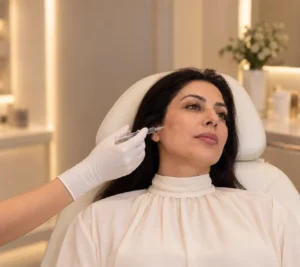

Peptides are everywhere in skincare, but not all peptide products are equal. This guide explains what peptides actually do, how the main types differ, and what to ask before choosing peptide skincare in Abu Dhabi. Peptides are short chains of amino acids that act as biological signals, carriers or functional ingredients. In cosmetic skincare, researchers study them for: Results depend on the peptide sequence, its stability, its concentration, the formulation and, above all, whether it can reach the relevant layer of skin. Peptides are molecules made of amino acids linked by peptide bonds. A 2025 Journal of Peptide Science review separates oligopeptides, polypeptides and proteins mainly by size and structure. Peptides also play central roles in biology, as hormones, enzymes and signaling molecules. That versatility is why they matter in both medicine and skincare. Skin is a highly organized barrier. A skincare ingredient has to stay stable in the formula, survive enzymes and the skin surface, penetrate far enough to reach its target, and work without causing irritation. Peptides are attractive because their sequence can be designed or modified to change solubility, stability, permeability and target interaction. Many natural peptides break down easily and cross the skin poorly, so cosmetic chemists often modify them through palmitoylation, acetylation, cyclization or conjugation. The review groups cosmeceutical peptides into three functional categories. Some peptides overlap, so treat the categories as a guide rather than a strict rule. Carrier peptides stabilize and deliver other components. The classic example is copper tripeptide-1, which binds copper and delivers it in a less reactive form. Signal peptides mimic or influence biological signals involved in extracellular-matrix production and cell turnover. Examples include palmitoyl tripeptides, palmitoyl pentapeptide-4, palmitoyl hexapeptide-12, acetyl tetrapeptides and hexapeptide-14. They are meant to influence skin-cell behavior, not just moisturize the surface. Pentapeptide-3, pentapeptide-18 and acetyl hexapeptide-3 are designed around muscle-relaxation concepts and the appearance of fine lines. Topical versions are not equivalent to injectable neuromodulators, because the mechanism, delivery, magnitude of effect and evidence all differ. Copper tripeptide-1 is one of the best-established peptides in cosmetic research. GHK-Cu is the common name for the copper complex of the tripeptide GHK. Research has explored four broad areas: Copper isn’t added simply because “copper is good for skin.” The tripeptide carries copper in a biologically usable form while limiting the uncontrolled redox activity of free copper. Modified relatives such as biotinoyl tripeptide-1 and palmitoyl tripeptide-1 are being explored for better stability and delivery. Formulation difficulty and gaps in understanding its mechanisms remain real limitations. Getting peptides through the stratum corneum is one of the field’s biggest challenges. Palmitoylation attaches a fatty-acid chain to the peptide, making it more lipophilic. In experimental comparisons cited in the review, palmitoylated pentapeptide-4 was detected in multiple skin layers while the non-palmitoylated form was not. Palmitoylation can also reduce enzymatic breakdown. Palmitoyl pentapeptide-4 is among the earliest and best-known cosmetic peptides, and published work links it to improvements in the appearance of wrinkles and fine lines. Palmitoylation does not make every peptide automatically more effective, though. Acetylation is another common modification. The review discusses acetyl dipeptide-1 cetyl ester, a synthetic lipopeptide investigated for neurotransmitter-related signaling, skin conditioning and epidermal-barrier gene expression. Chemical modification can significantly change how a peptide dissolves, penetrates and resists degradation. “Collagen peptide” is used loosely in marketing. Some cosmetic peptides are designed to signal extracellular-matrix production or fibroblast activity, while others act as carriers or have entirely different functions. Seeing “peptide” on an ingredient list does not mean a product will meaningfully stimulate collagen. Sequence, modification, dose, formulation and delivery all matter, which is why two “peptide” products can perform very differently. Some peptides are studied for tyrosinase-related mechanisms, and modified peptides can be designed to reach the epidermal layers where melanocytes sit. Examples include peptide-based tyrosinase inhibitors and manganese tripeptide observations in hyperpigmentation research. That doesn’t make every peptide serum a pigmentation treatment. Pigmentation has many causes, and peptides are best seen as one possible part of a broader, evidence-based plan. Learn about our pigmentation treatments. Bioactive peptides can show antioxidant activity, depending on amino-acid composition, sequence, molecular weight and residue position. Certain cosmetic peptides also have anti-inflammatory roles or take part in skin-repair pathways. These are not universal peptide properties, so judge a peptide by its exact identity and evidence. The outer skin layer is built to keep things out. Many peptides are large, water-loving molecules, so applying them doesn’t guarantee they reach the viable epidermis or dermis at an effective concentration. The review states that microneedling and fractional lasers can create pathways through the stratum corneum, helping larger biomolecules get in. That doesn’t mean every peptide should be applied after every device treatment. Peptide choice, formulation, sterility, depth, device settings and safety all matter. The review points toward peptide-drug conjugates and target-specific peptides that could act on particular skin layers or cell populations, such as aging-associated signals from dermal fibroblasts or melanocytes in the basal layer. These ideas are scientifically exciting but are not yet part of routine consumer skincare. More peptides or a longer ingredient name doesn’t mean a stronger product. Look for: Peptides are a distinct category, not a universal replacement for established actives. These ingredient classes work through different pathways and suit different goals. The source review does not rank peptides against retinoids, vitamin C or growth factors, so any comparison should rest on your specific concern, the formulation and the clinical evidence. The research behind this article covers peptide biology, peptide drugs in general and cosmetic or topical peptides. It does not establish the efficacy or safety of elective injectable peptides for anti-aging, bodybuilding, weight loss or wellness. Those are separate medical and regulatory questions, and topical skincare evidence shouldn’t be used to support them. The best question isn’t “Which peptide is best?” A good consultation starts with your concern, whether that’s fine lines, barrier impairment, pigmentation, inflammation, post-procedure recovery or general skin quality, and then matches ingredients and delivery methods to it. Ask these questions: A reputable plan will answer all of these clearly.What Do Peptides Do for the Skin?
What Are Peptides?
Why Are Peptides So Interesting in Skincare?
The 3 Main Types of Cosmetic Peptides
1. Carrier Peptides
2. Signal Peptides
3. Neurotransmitter-Inhibiting Peptides
Copper Tripeptide-1 (GHK-Cu) : Why It Gets So Much Attention
Palmitoyl Peptides : Why a Fatty Chain Matters
Acetyl Peptides and Skin Comfort
Do Peptides Boost Collagen?
Peptides for Pigmentation and Skin Tone
Antioxidant and Anti-Inflammatory Peptides
Why Delivery Is the Biggest Challenge
How Cosmetic Science Improves Peptide Penetration
Can Microneedling or Lasers Improve Peptide Delivery?
The Future: Targeted Peptide Skincare
How to Judge a Peptide Skincare Product
Peptides vs. Retinoids, Vitamin C and Growth-Factor Skincare
Topical Peptides Are Not Injectable Peptide Therapy
Peptide Skincare in Abu Dhabi: What to Ask Your Clinic
Frequently Asked Questions
What are peptides in skincare?
Do peptides stimulate collagen?
What is copper tripeptide-1?
What is GHK-Cu?
Are palmitoyl peptides better absorbed?
What are signal peptides?
What are neurotransmitter-inhibiting peptides?
Can peptides help wrinkles?
Can peptides help pigmentation?
Why are peptides difficult to formulate?
Can microneedling or fractional laser improve peptide penetration?
Are peptide serums safe?
How long does peptide skincare take to work?
Are topical peptides the same as injectable peptides?
Important: a cosmetic serum made for intact skin should not automatically be used on skin that has just been microneedled or lasered. Post-procedure products should be formulated for compromised skin and chosen by a clinician.
Short chains of amino acids used for signaling, carrying metal ions, conditioning the skin and influencing pathways tied to the extracellular matrix, barrier function or pigmentation.
Some signal peptides are studied for collagen- and extracellular-matrix-related signaling, but not all peptides do this. The effect depends on the exact peptide, formulation, concentration, delivery and evidence.
A carrier peptide that binds copper and has been studied in skin renewal, anti-aging, inflammation and hair-related contexts. It is one of the most established cosmetic peptides in the review.
The common name for the copper complex of the tripeptide GHK, generally discussed in cosmetic science as copper tripeptide-1.
Palmitoylation can improve permeability and stability for some peptides, but it doesn’t make every palmitoylated peptide more effective.
Cosmetic peptides designed to mimic or influence biological signals involved in extracellular-matrix production and skin-cell turnover.
Cosmetic peptides designed to influence nerve signaling linked to muscle contraction. Their topical effects are not equivalent to injectable neuromodulators.
Some, including palmitoyl pentapeptide-4, have clinical research related to the appearance of wrinkles and fine lines. Results depend on the finished formulation and the individual peptide.
Certain peptides are investigated for tyrosinase-related or melanocyte-targeting pathways, but peptide skincare is not a universal treatment for hyperpigmentation.
Many are unstable, prone to enzymatic degradation or poorly permeable through the stratum corneum, so formulation chemistry and delivery systems are critical.
Both can create pathways that may enhance delivery. Suitability depends on the peptide, formulation, sterility and clinical protocol, and only products made for compromised skin should be used after a procedure.
Safety depends on the exact peptide and formulation. Some lipopeptide properties can influence cytotoxicity, so safety testing and appropriate concentrations matter.
There’s no universal timeline. It depends on the peptide, product, goal, usage pattern and the evidence behind the specific formulation.
No. They differ in delivery, regulation, dose, intended use and evidence, and one should not be used to claim efficacy for the other.