
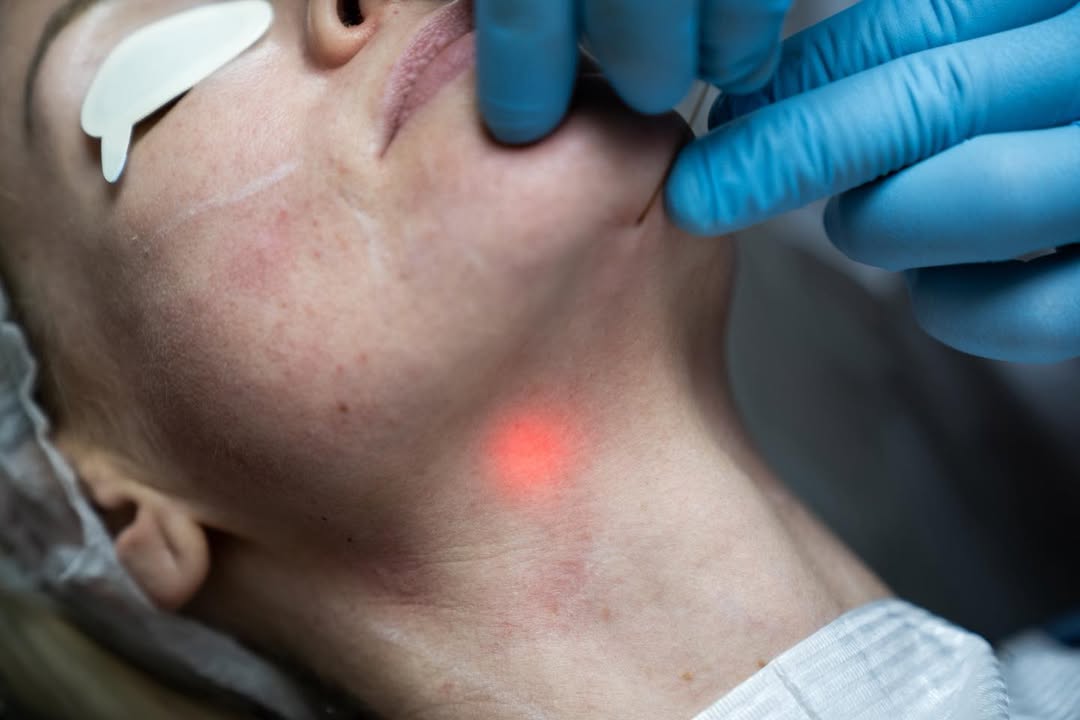
Most Endolift side effects are temporary and may include swelling, redness, tenderness, bruising, or short-lived altered sensation. More significant complications can occur when laser energy, tissue depth, fiber movement, anatomy, sterility, or temperature are not adequately controlled. Persistent weakness, increasing pain, blistering or skin breakdown, pus, fever, expanding swelling, or a new painful lump should be assessed promptly by a qualified clinician.
Endolift is a minimally invasive subdermal laser treatment in which a very fine optical fiber is introduced beneath the skin. The treatment is commonly performed with a 1470 nm diode wavelength and is designed to create controlled photothermal effects in the subcutaneous and dermal-supporting tissues. Depending on the treatment plan, the objective may be skin tightening, tissue remodeling, improvement of selected facial contours, or treatment of localized superficial fat. Because the laser works beneath the skin, the quality of the result and the safety profile depend heavily on anatomy, technique, energy distribution, treatment depth, and patient selection.
What Are the Most Common Endolift Side Effects ?
The most frequently expected post-treatment effects are mild to moderate swelling, redness, tenderness, bruising, and temporary changes in sensation. These reactions are usually related to mechanical passage of the fiber, local tissue heating, small-vessel trauma, and the inflammatory response that follows controlled thermal stimulation.
For many patients, the early recovery period is more noticeable during the first 24 to 72 hours. Swelling may be asymmetric at first, especially when the treatment has been performed along the jawline, under the chin, or across areas with different amounts of fat and skin laxity. Bruising may appear immediately or become more visible over the next several days. Mild firmness can also develop while the treated tissue settles.
Expected Effects vs. Complications : The Key Difference
A useful way to understand Endolift recovery is to separate expected treatment reactions from true complications. Expected effects tend to be mild, gradually improving, and consistent with the area treated. Complications are more likely to be persistent, progressive, unusually painful, associated with loss of function, or accompanied by signs of tissue injury or infection.
| Finding | Often Expected | Needs Medical Review |
|---|---|---|
| Swelling | Mild/moderate, improves over days | Rapidly increasing, very painful, tense, or persistent |
| Bruising | Localized and gradually fading | Large expanding hematoma or marked asymmetry |
| Redness | Mild and transient | Blistering, ulceration, darkening with pain, or skin breakdown |
| Sensation | Temporary numbness or tingling | Persistent numbness, weakness, facial asymmetry, or motor deficit |
| Firmness | Mild temporary tissue firmness | New painful lump, enlarging nodule, fluid collection, or drainage |
| Pain | Mild to moderate soreness | Severe, escalating, burning, or disproportionate pain |
How Endolift Works and Why Side Effects Can Happen
Endolift relies on a controlled photothermal response. The optical fiber delivers laser energy beneath the skin, where heat can influence fat, connective tissue, collagen-rich structures, and small blood vessels. The desired effect is controlled and distributed heating. The safety challenge is avoiding excessive concentration of heat in one point or at the wrong tissue depth.
The 1470 nm wavelength has a strong interaction with water-containing tissue and is widely used in subdermal laser applications. When energy is delivered evenly and the fiber remains in the appropriate plane, the thermal effect can be distributed across the treatment zone. When energy is concentrated, delivered too superficially, delivered too deeply near vulnerable structures, or repeatedly deposited in the same path, the risk of burns, nerve irritation, nodules, or fat injury can increase.
Thermal Control Matters
The tissue response to Endolift is temperature dependent. Too little heat may produce limited tissue response, while excessive heat can cause thermal injury. This is why technique is not simply a matter of choosing a power setting. Safety depends on the combination of power, pulse pattern, duration, total delivered energy, tissue composition, treatment depth, speed of fiber movement, and local anatomy.
Energy Distribution Matters as Much as Total Energy
Two treatments can use a similar total amount of energy but create very different tissue effects. A broad, controlled distribution is different from repeatedly concentrating energy in a small zone. Entry points, converging fiber paths, thin facial tissue, and areas close to nerves require especially careful planning.
Common Endolift Side Effects in Detail
1. Swelling (Edema)
Swelling is one of the most common early reactions after a subdermal laser procedure. It can result from local inflammation, manipulation of tissue, fluid movement, and temporary changes in microcirculation. Mild facial swelling often looks more noticeable in the lower face and submental area because these regions naturally hold fluid and may have been treated through multiple fiber vectors.
Swelling that gradually improves is generally more reassuring than swelling that continues to enlarge. Marked pain, warmth, redness, fever, significant one-sided enlargement, or swelling associated with difficulty swallowing or breathing requires urgent medical assessment.
2. Redness and Heat Sensation
Temporary redness may occur after treatment, particularly around entry points or areas that have received more manipulation. A mild warm sensation can also be expected during the early post-treatment period. Persistent intense redness, blistering, sharply demarcated discoloration, crusting, or progressive skin breakdown is not a routine recovery pattern and may indicate thermal injury or another complication.
3. Bruising and Hematoma
Bruising can occur when small blood vessels are disrupted by the fiber, cannula, local anesthetic infiltration, or tissue manipulation. Most bruises fade naturally. A hematoma is different: it represents a larger collection of blood and may cause swelling, tension, pain, or a firm mass. Large or expanding hematomas require examination because they can distort tissue planes and may occasionally need intervention.
4. Tenderness and Pain
Mild to moderate soreness can occur for several days. The character of the pain matters. Generalized tenderness that steadily improves is different from severe focal burning pain, escalating pain, pain associated with skin color change, or pain that appears with a growing lump.
5. Temporary Numbness, Tingling, or Altered Sensation
Temporary sensory changes may occur after treatment because the fiber and local heat are delivered close to superficial sensory structures. Short-lived numbness or tingling can resolve as inflammation settles. Persistent sensory loss or new motor weakness should be assessed promptly.
Peripheral Nerve Injury : Why Facial Anatomy Is Critical
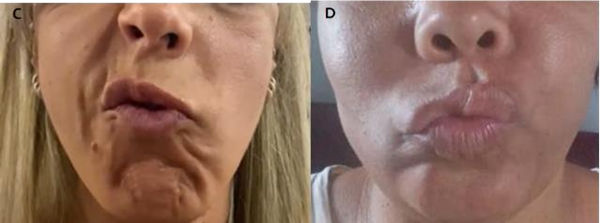
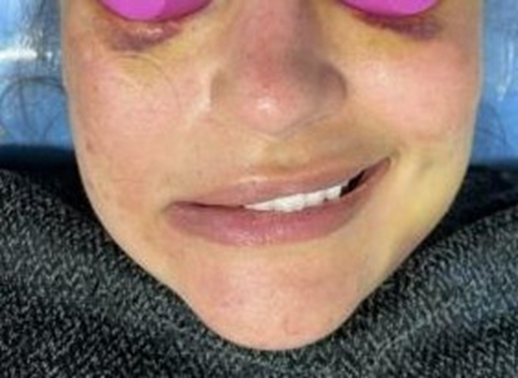
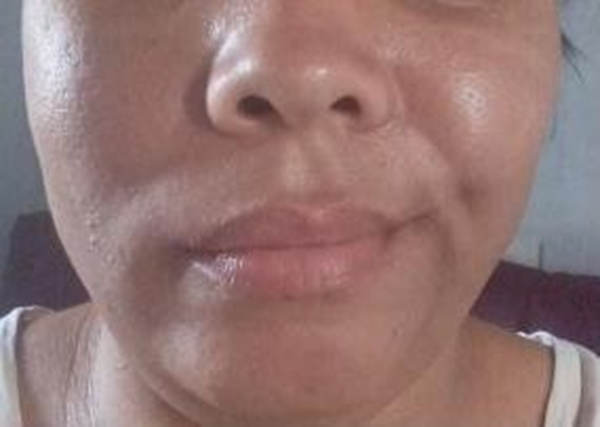
One of the most clinically important potential complications of facial subdermal laser treatment is peripheral nerve injury. The lower face contains branches of the facial nerve that can vary anatomically from patient to patient. The marginal mandibular branch is especially relevant when treating around the jawline because it may course close to the lower border of the mandible and can become more superficial in specific regions.
Nerve irritation or injury may present as numbness, altered sensation, weakness, asymmetry during smiling, difficulty controlling the lower lip, or changes in movement around the mouth. Thermal injury becomes more plausible when energy is delivered too deeply, repeatedly near a nerve pathway, or with excessive heat concentration.
Burns and Thermal Injury
A thermal burn is not an expected Endolift side effect. It is a complication. Burns may develop when too much heat accumulates in one location, when the fiber is positioned too superficially, when the laser remains active near an entry point, or when the fiber path repeatedly converges through the same small tissue zone.
Early signs may include severe burning pain, persistent redness, blistering, dark discoloration, sharply localized swelling, crusting, or delayed skin breakdown. Thermal injury can be superficial or extend deeper into subcutaneous tissue. Any suspected burn should be evaluated early rather than managed as ordinary post-procedure redness.
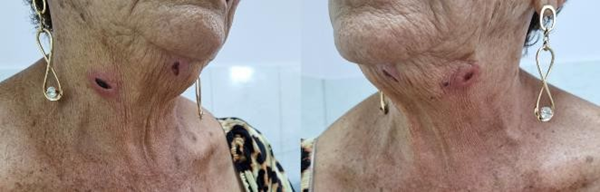
Infection After Endolift
Endolift involves passing an optical fiber through a skin entry point, so sterile technique is essential. Infection risk can increase when skin preparation is inadequate, instruments are contaminated, a fiber is reused without validated sterilization, entry sites are poorly managed, or post-treatment wounds are manipulated.
Possible signs of infection include increasing redness, warmth, worsening pain, pus, foul drainage, fever, expanding swelling, or a tender fluctuant collection. A collection may require clinical examination and, in selected cases, imaging, drainage, microbiological assessment, or prescription treatment. Patients should not self-treat a suspected infection.
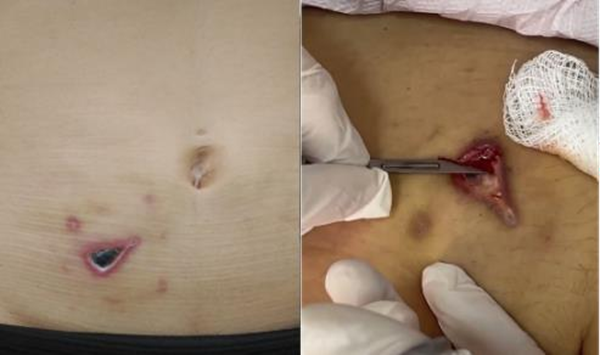
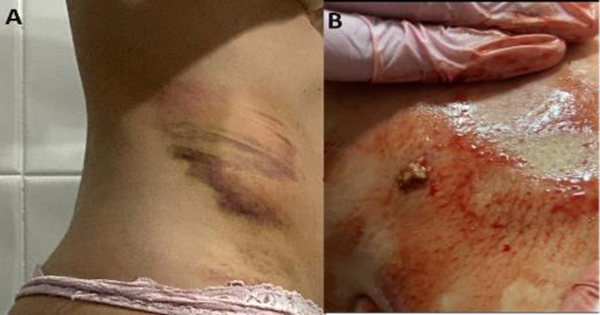
Fat Necrosis and Post-Endolift Nodules
Fat necrosis refers to injury and breakdown of adipose tissue followed by inflammation and, in some cases, fibrosis or encapsulation. After subdermal laser treatment, a patient may notice one or more firm nodules, a tender lump, a mobile subcutaneous mass, or a region that feels harder than the surrounding tissue.
Not every post-treatment lump is fat necrosis. Swelling, hematoma, scar tissue, seroma, localized inflammation, and infection can all create a palpable mass. A persistent or painful nodule should therefore be examined rather than diagnosed from appearance alone. Ultrasound can be useful when a clinician needs to determine whether a lesion is solid, cystic, vascular, or associated with a fluid collection.
The risk of fat injury may increase when energy is delivered at excessive power, when heat is concentrated unevenly, or when a relatively small treatment zone receives disproportionately high thermal exposure. Body areas with more fat behave differently from thin facial areas, so protocols should not be copied indiscriminately from one region to another.
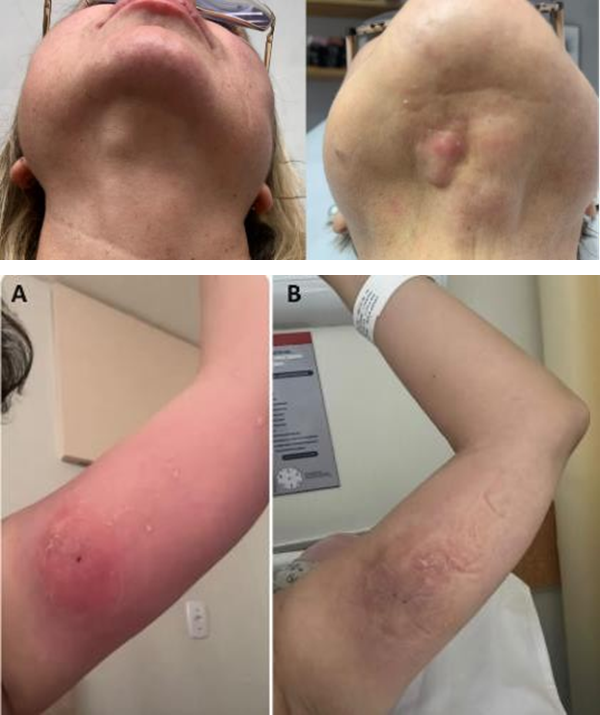
Other Possible Complications
Post-inflammatory Hyperpigmentation
Skin darkening may follow inflammation, bruising, or thermal injury. Patients with a higher tendency toward post-inflammatory hyperpigmentation may be more susceptible. The pattern and timing of pigmentation help distinguish routine bruise color evolution from true inflammatory hyperpigmentation.
Seroma or Fluid Collection
A seroma is a localized collection of serous fluid. It may present as a soft or fluctuant swelling and can coexist with tissue inflammation or fat injury. Persistent collections should be assessed clinically because a sterile seroma and an infected collection require different management.
Persistent Asymmetry
Temporary asymmetry may occur because one side swells more than the other. Persistent asymmetry, especially when associated with weakness or altered facial movement, deserves evaluation for nerve involvement, uneven tissue response, hematoma, or localized thermal injury.
Optical Fiber Breakage
Optical-fiber breakage is uncommon but possible. Risk can be influenced by fiber quality, repeated bending, excessive force, or improper handling. A suspected retained fragment requires medical assessment and should not be ignored.
Why the Face Requires Extra Caution
The face contains thin layers of fat, superficial vessels, sensory nerves, motor nerve branches, glands, and muscles packed into a relatively small area. This means there is less room for error than in many body zones. A small change in treatment depth can place the fiber closer to a nerve, vessel, mucosal surface, or skin layer.
Areas around the jawline, perioral region, lower eyelid, submental zone, and nasolabial area require detailed anatomical understanding. Treatment planning should consider not only the visible concern but also the expected depth of tissue, fat thickness, prior procedures, scarring, asymmetry, and individual anatomy.
Endolift Face vs. Bodyv: Are the Risks Different ?
Yes. The underlying principle is similar, but tissue thickness and surrounding anatomy are different. Body areas may contain larger fat compartments, while facial areas can place nerves and other delicate structures much closer to the fiber. A body protocol should not be automatically transferred to the face, and a facial protocol should not be assumed to provide adequate treatment for a larger body zone.
Body treatment also introduces its own concerns: larger surface area, higher total energy, longer procedure time, a potentially larger inflammatory response, and a greater chance of uneven energy distribution if technique is not systematic.
What Is a Normal Endolift Recovery Timeline ?
- First 24 hours : Swelling, tenderness, mild redness, small entry-point marks, and early bruising may be visible.
- Days 2–3 : Swelling can remain noticeable; bruising may become darker before it begins to fade.
- Days 4–7 : Most mild inflammatory effects should trend downward. Residual tenderness, firmness, or bruising may remain.
- Weeks 2–4 : Tissue generally feels more settled. Persistent painful lumps, weakness, drainage, or skin injury are not routine and should be reviewed.
- Following months : Collagen remodeling evolves gradually. Final contour and tightening should not be judged only from the first few days because swelling can temporarily alter the appearance.
Red Flags After Endolift
Seek prompt medical evaluation if you develop severe or worsening pain, new facial weakness, progressive asymmetry, blistering, skin ulceration, black or dusky discoloration, pus, fever, rapidly enlarging swelling, a painful expanding lump, persistent drainage, or any breathing or swallowing difficulty.
These symptoms do not automatically mean that permanent damage has occurred, but they are not typical ‘wait and see’ recovery findings. Early assessment can clarify whether the issue is swelling, hematoma, infection, thermal injury, nerve irritation, fat necrosis, or another process.
How Can the Risk of Endolift Side Effects Be Reduced ?
1. Proper Patient Selection
The first safety step is deciding whether Endolift is the right procedure. A patient with very heavy tissue, severe laxity, unrealistic expectations, active infection, significant untreated medical issues, or anatomy better suited to another treatment may not benefit from simply increasing laser energy.
2. Use of an Appropriate Device and Fiber
Device quality, wavelength, optical-fiber integrity, and reliable energy delivery matter. A treatment marketed under the same general name may not necessarily use the same platform, wavelength, fiber characteristics, or protocols.
3. Detailed Knowledge of Anatomy
The clinician should understand the tissue plane being treated and the location of vulnerable structures. This is especially important around the mandibular border, perioral region, eyelids, and neck.
4. Controlled Energy and Continuous Fiber Movement
Energy should be distributed rather than concentrated. Repeated deposition in one point or careless movement near an entry site can raise the risk of local overheating.
5. Attention to Thermal Endpoints
The goal is controlled tissue heating, not maximum heat. Temperature, tissue response, device feedback, treatment time, fiber speed, and cumulative energy should all be interpreted together.
6. Strict Sterility
A skin entry procedure requires rigorous antisepsis and appropriate single-use or properly sterilized instruments according to the device and local clinical standards.
7. Appropriate Follow-up
Patients should receive clear aftercare instructions and know which symptoms are expected versus concerning. Access to follow-up is an important part of procedural safety.
Who May Need Extra Caution ?
Extra caution may be appropriate in patients with very thin facial tissue, marked anatomical asymmetry, previous facial surgery, prior energy-based treatments, significant scarring, active skin infection, impaired wound healing, a history of abnormal pigmentation, or medications and medical conditions that can influence bleeding, immunity, or healing.
This does not mean that every patient with one of these factors is automatically unsuitable. It means the treatment plan should be individualized rather than based on a fixed template.
Endolift Safety in Abu Dhabi : What Patients Should Ask Before Treatment
Patients searching for Endolift in Abu Dhabi often focus on price, downtime, or before-and-after photographs. Safety questions are equally important. Ask which laser platform is being used, which wavelength and fiber size are planned for your area, who will perform the procedure, what anatomical assessment is done before treatment, how sterility is maintained, and what follow-up is available if swelling or another concern develops.
It is also reasonable to ask whether the treatment is intended primarily for skin tightening, localized fat reduction, contour refinement, or a combination. A good treatment plan should explain the expected degree of improvement and the limitations of the procedure rather than treating every form of laxity or facial heaviness with the same settings.
