
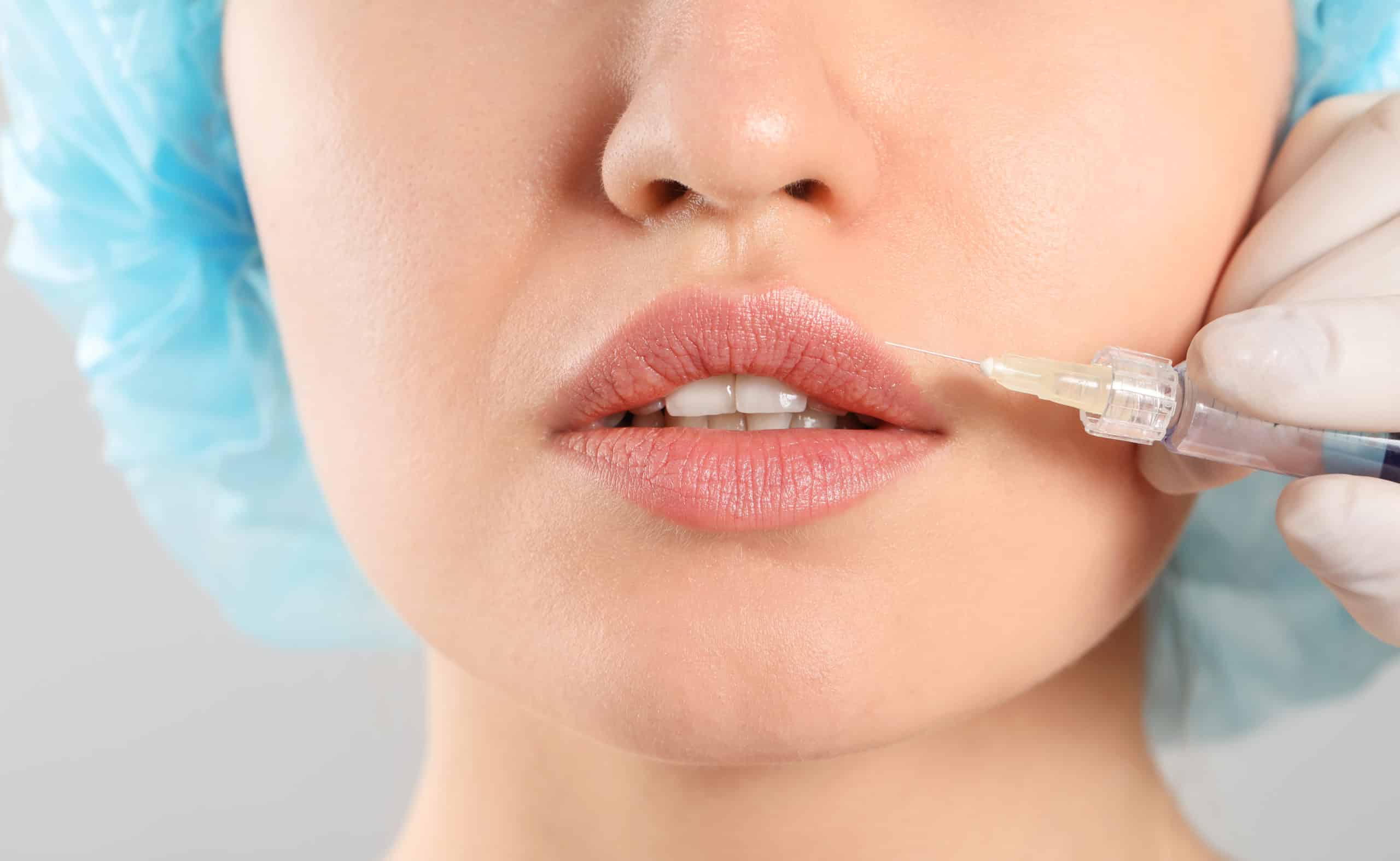
The Juvéderm family is not one single filler. It is a group of hyaluronic acid (HA) gels with different cross-linking technologies, stiffness, cohesivity, water uptake and clinical roles. In the source chapter, Ultra and Ultra Plus belong to the Hylacross platform, while Voluma, Vollure, Volbella, Volite and Volux belong to the Vycross platform. Voluma and Volux are positioned toward structural lift and volume, Vollure toward deeper folds and softer support, Volbella toward delicate lip/perioral correction, and Volite toward skin quality. The best choice depends on anatomy, treatment plane and aesthetic goal rather than the brand name alone.
Important Regulatory Note for Abu Dhabi Readers
This article is based on a textbook chapter that reports FDA, European and Canadian approvals available at the time of publication. Those statements are retained as source context. They do not establish the current UAE registration, indication or availability of any specific Juvéderm product. Product selection in Abu Dhabi should follow current UAE requirements, local labeling and the treating clinician’s professional scope.
What Is the Juvéderm Family ?
Juvéderm is a portfolio of cross-linked hyaluronic acid dermal fillers designed to behave differently in tissue. The source chapter describes HA fillers as widely used because they are effective, generally safe and reversible. The clinical objective is not simply to “add filler” but to match a gel’s physical behavior to the anatomical layer and the aesthetic problem being treated.
The chapter separates the family into two proprietary cross-linking platforms: Hylacross and Vycross. Hylacross uses predominantly high-molecular-weight HA and a relatively high HA concentration. Vycross blends high- and low-molecular-weight HA to permit efficient cross-linking at lower concentrations in several products, with the goal of balancing lift, integration, spread and durability.
Cohesivity :Describes how strongly the gel tends to remain together as a mass. Cohesivity interacts with stiffness, injection plane and tissue movement; it should not be interpreted as a simple “higher is always better” score.
Water uptake / Hydrophilicity :HA attracts water. A more hydrophilic product may generate more edema after injection. The chapter specifically contrasts greater hydrophilicity of Hylacross products with the lower water uptake of the Vycross platform.
Juvéderm Ultra vs Ultra Plus
Ultra and Ultra Plus are the two Hylacross products discussed in the chapter. Both are smooth homogeneous gels with the same reported HA concentration, but Ultra Plus has a higher degree of cross-linking and slightly higher G-prime and cohesivity.
In the authors’ experience, Ultra has a softer consistency and is useful in multiple facial areas, especially the lips, perioral region and nasolabial folds. Ultra Plus is positioned where there is somewhat greater volume loss or where additional lift is desired.
Juvéderm Voluma : Structural Midface and Chin Support
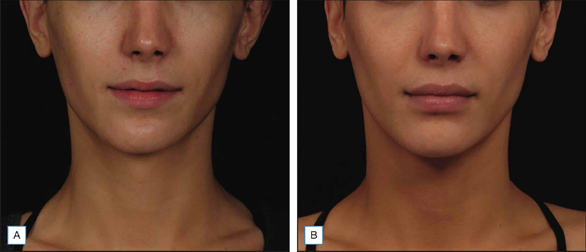
The chapter identifies Voluma as the first Vycross product and describes its strongest role as structural volumization. It is positioned especially for medial, malar and cheek-apex volume loss and for chin support. The authors also note off-label use in the jaw angle and jawline in their practice context.
A key point in the chapter is not simply that Voluma can lift, but that its lower cohesivity relative to Hylacross, combined with high cross-linking and lower water uptake, gives it malleability, tissue integration and reduced post-injection swelling while maintaining structural support.
The chapter repeatedly stresses three-dimensional assessment. The patient should be viewed from oblique, profile and head-down positions during treatment to avoid an artificial or “done” appearance.
Juvéderm Vollure : Softer Structural Support for Folds and the Perioral Region
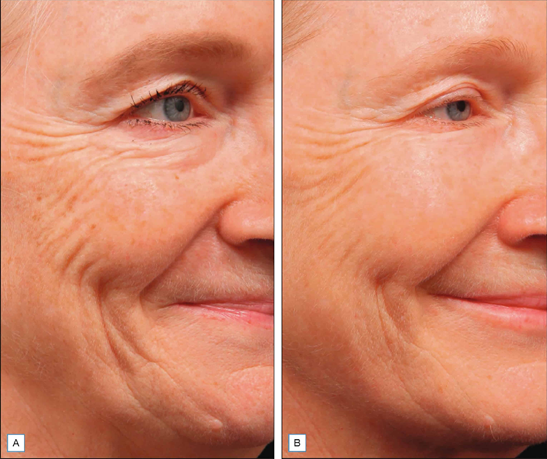
Vollure sits between very soft superficial products and the more structural Vycross products. In the source chapter, it is particularly suited to moderate-to-severe facial folds and the perioral region, including nasolabial folds and marionette areas, where support is needed without the same degree of projection expected from Voluma or Volux.
The chapter also describes broader author-experience uses such as gentle correction of deeper cheek and forehead lines, lip definition and enhancement, nasal contouring, forehead/brow volumization and restoration of earlobe structure. These broader uses should be understood as author experience and may not reflect local labeling.
Juvéderm Volbella : Subtle Lip Enhancement, Hydration and Fine Lines
Volbella is presented as a softer Vycross product designed for subtle lower-face work. The chapter describes it as useful for lip hydration and gentle plumping without adding major structural lift, and for superficial perioral lines because of its ability to spread and integrate.
This positioning makes Volbella conceptually different from a high-structure jaw or chin filler. A patient asking for more definition and projection may need a different rheologic profile than a patient asking only for softness, hydration or delicate contour refinement.

Juvéderm Volite : Skin Quality Rather Than Facial Volume
Volite is the outlier in the family because the source positions it primarily as a skin-quality injectable rather than a classic volumizer. It has the lowest G-prime and cohesivity among the Vycross products listed in the chapter and is discussed for fine superficial lines, hydration, smoothness and elasticity.
The chapter summarizes studies reporting improvements in digital skin texture, skin deformation, hydration, smoothness and fine lines, as well as biological markers such as collagen density, fibrillin-1, AQP3 expression and acidic glycosaminoglycan content. Consensus recommendations cited in the chapter identify the malar, perioral, neck and décolletage regions as treatment areas based on skin characteristics.
Is Volite a filler or a skin booster ?Volite is technically a cross-linked HA filler, but in the source chapter it is positioned primarily for skin quality, hydration, texture and fine lines rather than for major structural volumization. In patient-facing terms, its clinical role is closer to an injectable skin-quality treatment than to a chin or cheek volumizer.
Juvéderm Volux : High-Structure Chin and Jawline Filler
Volux is the highest-structure Vycross product described in the chapter. With the highest reported G-prime and cohesivity among the Vycross agents listed, it is positioned for restoring and creating lower-face volume, particularly the chin and jaw area.
The chapter cites pivotal studies showing improvement in chin projection and patient satisfaction and reports median treatment volumes of 2.28 mL and 3.43 mL in the two studies it discusses. These study-level numbers should not be treated as a universal syringe recommendation: lower-face planning depends on facial size, baseline projection, sex-related anatomy and the desired result.
Which Juvéderm Is Best ? Match the Product to the Problem
| Primary goal | Products emphasized in the chapter | Why |
|---|---|---|
| Lip definition / enhancement | Ultra, Ultra Plus, Volbella; Vollure in selected cases | Different products allow different degrees of softness, definition, hydration and lift. |
| Cheek / midface volume | Voluma | High lift capacity and structural volumization with lower water uptake than Hylacross. |
| Nasolabial folds / marionette support | Vollure; Ultra/Ultra Plus in source experience | Deeper fold support without requiring the highest structural stiffness. |
| Fine superficial lines | Volbella or Volite depending on goal | Volbella for delicate filling; Volite for broader skin-quality improvement. |
| Skin hydration / texture | Volite | Lowest structural role among listed Vycross products; positioned for skin quality. |
| Chin / jawline structure | Volux; Voluma also described for chin support | High structural properties and lower-face projection/definition. |
Why “Natural” Results Depend on Product Behavior, Not Just Injection Volume
A natural result requires the gel to behave appropriately in the tissue during both rest and movement. The chapter emphasizes tissue integration, malleability and three-dimensional assessment, particularly with structural products such as Voluma. A filler that is excellent for jaw projection is not automatically ideal for fine perioral lines, and a soft skin-quality product cannot be expected to create the same skeletal-looking support as a high-G-prime gel.
- Choose the treatment goal before choosing the product.
- Match filler rheology to the tissue plane and mobility of the area.
- Assess the face from multiple angles, not only in a frontal photograph.
- Avoid using structural filler simply because a longer duration sounds attractive.
- Consider staged correction when major volume restoration is needed.
- Keep swelling behavior in mind, particularly in lips and perioral areas.
Which Juvéderm Swells More ?
The chapter describes Hylacross products as more hydrophilic than Vycross products. In practical terms, greater hydrophilicity can mean more water uptake and potentially more post-injection edema. However, swelling is influenced by more than product chemistry: anatomical area, injected volume, device, injection technique and individual tissue response all matter.
How Long Do Juvéderm Fillers Last ?
Duration varies by product, anatomical region and patient. The chapter reports approximate durations ranging from under a year for some softer products to around two years for the most structural Vycross products. It also notes a practical difference between label duration and real-world retreatment: patients may return before the maximum reported duration because they prefer maintenance before the entire correction has disappeared.
| Product | Duration reported in the source chapter |
|---|---|
| Ultra XC | Up to ~9 months |
| Ultra Plus XC | Up to ~12 months |
| Voluma | Approximately 2 years in the chapter; authors note retreatment often occurs earlier |
| Vollure | Up to ~18 months |
| Volbella | Approximately 9-12 months |
| Volux | Approximately 18-24 months |
| Volite | The chapter discusses skin-quality outcomes but does not give a single simple universal duration statement comparable with the structural products. |
Are Juvéderm Fillers Reversible ?
Because Juvéderm products are based on hyaluronic acid, they can be enzymatically degraded with hyaluronidase. That is a major practical advantage of HA filler treatment. The source also notes that more strongly cross-linked Vycross products may require higher doses of hyaluronidase than less cross-linked gels when dissolution is clinically necessary.
Common Side Effects vs Delayed Inflammatory Reactions
The source describes erythema, edema, bruising and nodules among common injection-related events. Immediate swelling and redness are expected after many filler procedures, and their degree depends on the product, injection instrument and technique.
The chapter gives particular attention to delayed adverse events with Vycross products. It reports chart-review incidence rates of about 1% per patient for delayed events in separate Voluma and Volbella reviews. A delayed nodule may be painless or may present as a tender nodule, cyst or plaque more than 30 days after injection, sometimes months to years later.
Evidence NuanceThe chapter discusses several possible contributors to delayed inflammatory reactions – immune stimulation, intercurrent illness, dental procedures, pregnancy, stress, HA-fragment biology, manufacturing contaminants, bacterial infection and biofilm. These are proposed or associated mechanisms, not a single proven universal cause.
Immediate Nodules vs Delayed Nodules
| Pattern | How the chapter describes it | Typical management discussed in source |
|---|---|---|
| Immediate / early nodule | Usually accumulated filler or, less commonly, migration; often painless and nonvisible | Massage for redistribution and/or hyaluronidase depending on clinical assessment. |
| Delayed-onset nodule | More than 30 days after placement; may be small and painless | The chapter discusses repeated hyaluronidase plus intralesional corticosteroid in selected cases. |
| Delayed inflammatory nodule | Tender nodule, cyst or plaque, months to years after injection | The chapter discusses systemic or intralesional corticosteroid, possible antibiotics, hyaluronidase, and drainage/culture if fluctuant. Management depends on clinical diagnosis. |
Prevention and Treatment Planning
The chapter strongly emphasizes an antiseptic injection environment. It also notes that some practitioners consider postponing injection around dental work, upper-respiratory infection or vaccination. This is presented as a precautionary practice described by the authors, not as a universal UAE rule, and should be individualized clinically.
- Use a product selected for the correct anatomical purpose and tissue plane.
- Use meticulous skin antisepsis and sterile handling.
- Document previous filler products and any history of delayed inflammatory reactions.
- Avoid treating active infection or inflamed skin.
- Counsel patients that immediate swelling is different from a delayed inflammatory nodule.
- Have a clear complication-management pathway, including access to hyaluronidase for HA fillers.
Juvéderm Consultation in Abu Dhabi : Questions Worth Asking
- What is the actual goal : Hydration, line filling, lip definition, projection, lifting or structural contouring?
- Which exact Juvéderm product is being proposed, and why is its rheology suitable for this area?
- Is the use within the current UAE label or an off-label clinical use?
- What degree of swelling is expected for this product and anatomical region?
- How long does the source evidence suggest the result may persist, and when is retreatment typically considered?
- What is the clinic protocol for vascular or inflammatory complications?
- Is hyaluronidase immediately available if an HA-related complication needs reversal?
- How will delayed nodules be assessed if swelling or inflammation appears weeks or months later?
- Will the plan be staged to avoid overcorrection or an artificial appearance?
Source Data Note : Volbella Concentration Discrepancy
The source chapter is internally inconsistent regarding Volbella’s HA concentration: Table 6.1 lists 15 mg/mL, while the dedicated Volbella paragraph later states 12 mg/mL. This blog preserves that discrepancy transparently rather than selecting one value without external verification. For clinical product information, the current local product insert should take precedence.
