

Temporary dermal fillers are biodegradable injectable materials used to restore volume, soften folds, enhance facial proportions and support selected skin-quality goals. The source chapter focuses on three major temporary filler classes: hyaluronic acid (HA), calcium hydroxyapatite (CaHA) and poly-L-lactic acid (PLLA). They differ substantially in physical behavior, ideal treatment areas, reversibility and duration. HA is especially versatile and can be dissolved with hyaluronidase; CaHA and PLLA have biostimulatory effects that can support longer-term collagen production. All fillers still carry risks, including vascular occlusion, so product selection and injector experience matter.
What Are Temporary Dermal Fillers ?
Temporary fillers are injectable, biodegradable materials designed to create aesthetic improvement without permanently remaining in the tissues. The chapter describes modern temporary fillers as overwhelmingly safe and effective when appropriately selected and administered, while emphasizing that every treatment still requires a realistic assessment of benefits, limitations and risks.
The modern era of filler injection accelerated after the introduction of biocompatible hyaluronic acid fillers in 2003. Earlier cosmetic filling materials included paraffin, autologous fat and bovine collagen, but adverse events, limited efficacy or practical barriers restricted broad adoption.
The Three Main Temporary Filler Families in This Chapter
| Filler family | Core characteristic | Typical role described | Reversibility | Duration / tissue effect |
|---|---|---|---|---|
| Hyaluronic acid (HA) | Naturally occurring molecule; highly biocompatible; properties altered by cross-linking | Lips, folds, contouring, tear trough, chin, jawline and many other applications | Can be dissolved with hyaluronidase | Varies by product and site; temporary; chapter cites overall filler duration commonly 6–18 months or longer |
| Calcium hydroxyapatite (CaHA) | Biocompatible particulate filler with biostimulatory effect | Structural correction, selected facial and body contouring, skin laxity applications | Not reversed with hyaluronidase | Temporary with collagen-stimulating effect that may extend tissue improvement |
| Poly-L-lactic acid (PLLA) | Biodegradable biostimulatory material | Progressive volume restoration and collagen stimulation | Not reversed with hyaluronidase | Longer-term collagen-mediated effect; requires repeat/maintenance treatment |
Why Physical Properties Matter
Not all fillers behave alike. The chapter explains that HA products differ because cross-linking affects parameters such as deformability (G-prime), viscosity and duration. Those differences allow experienced injectors to choose different products for different anatomical areas rather than treating the lips, temples and perioral region as if they required the same material behavior.
Is every hyaluronic acid filler the same ?No. Cross-linking and rheologic properties vary among HA products, which changes how a filler deforms, flows, integrates and persists. Product selection should match the anatomy and treatment goal.
What Can Temporary Fillers Treat ?
Temporary fillers were first used primarily to reduce rhytids and restore age-related volume loss. The chapter describes a much broader modern role: correcting defects, augmenting tissues, enhancing attractive features and subtly modifying facial shape.
- Moderate to severe wrinkles and folds, including nasolabial and perioral lines.
- Lip augmentation and lip shape enhancement.
- Chin projection and lower-face balance.
- Jawline definition and restoration of a more youthful lower-face contour.
- Tear trough shadowing and selected under-eye volume loss.
- Temple and facial-shape contouring in selected patients.
- Dorsal hand rejuvenation.
- Selected reconstructive or contour defects such as hemifacial atrophy.
- Selected off-face applications including neck, chest, arms, shoulders and buttocks, depending on product and indication.

Lip Filler : One of the Best-Studied Applications
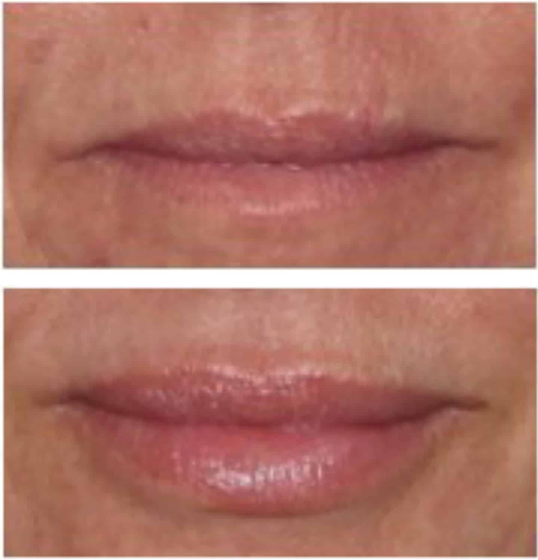
Lip augmentation is described as one of the best-studied and most popular applications of temporary filler. HA can integrate smoothly into lip tissues and is well suited to carefully selected submucosal placement. The chapter cites a 2018 comparison of two HA products in which approximately 86% of patients reported feeling more attractive after treatment, with improvement judged by blinded evaluators in more than 70% of patients.
Chin and Jawline Filler
Temporary fillers can be used to improve lower-face proportions, including recessed chin appearance and loss of youthful jawline definition. The chapter emphasizes facial-shape analysis: the goal is not simply to add volume, but to understand whether an oval, angular, heart-shaped or round face would benefit from selective contour modification.

Tear Trough & Under-Eye Filler
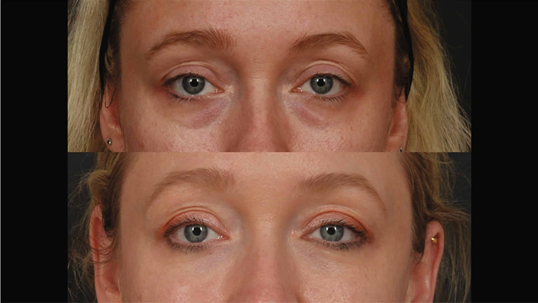
The chapter identifies tear trough correction as a commonly performed off-label filler application that can improve shadowing and facial shape in selected patients. Because duration can vary by anatomy, the source notes that filler placed in the tear trough may remain noticeable longer than a similar product placed in a highly mobile area such as the lips.
Filler for Complex Asymmetry and Tissue Loss
Temporary fillers can also be used in more complex reconstructive aesthetic settings. The chapter illustrates treatment of hemifacial atrophy with a combination of calcium hydroxyapatite and hyaluronic acid over 12 months, demonstrating how different filler classes may be selected for different tissue requirements within the same face.

Off-Face Uses and Skin-Quality Applications
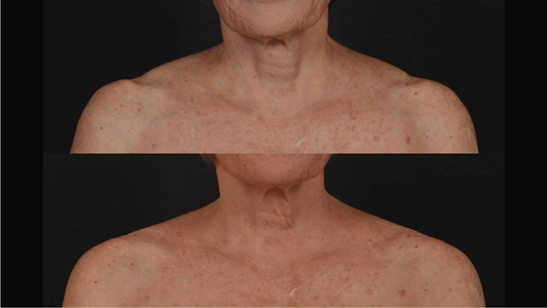
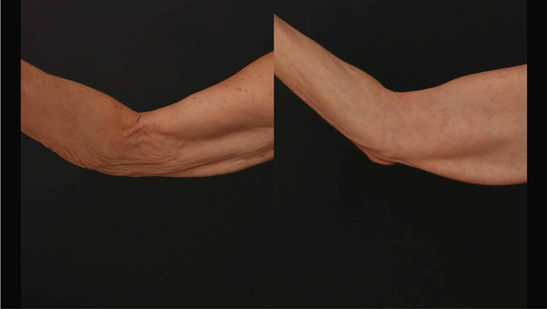
Although facial use dominates aesthetic filler treatment, the chapter also presents off-face examples. These include correction of localized contour depressions and the use of diluted or hyperdiluted CaHA for selected laxity concerns. Such treatment goals differ from simply creating focal volume.
How Long Do Temporary Fillers Last ?
Duration is not one fixed number. The chapter states that temporary fillers may last roughly 6 to 18 months or longer, depending on the product and treatment site. Highly mobile areas may behave differently from less mobile or deeper anatomical regions. CaHA and PLLA can also support collagen production, creating tissue effects that are not limited to the persistence of an injected gel alone.
How long does filler last ?The source chapter gives a broad range of about 6-18 months or longer for temporary fillers, but duration depends on filler type, product properties and anatomical site. The lips and tear troughs, for example, may not behave the same way.
Why Temporary Can Be an Advantage
Needing repeat treatment is often viewed as a disadvantage, but the chapter argues that temporariness can also be a major advantage. Faces continue to age, body weight changes, aesthetic preferences evolve and social trends change. A temporary treatment plan can be adjusted over time instead of permanently locking the patient into one facial shape.
- Treatment can evolve with natural aging.
- The amount and location of filler can be modified at later visits.
- A stepwise approach can reduce the pressure to create a dramatic change in one session.
- HA can be reversed with hyaluronidase if clinically appropriate.
- Temporary materials may be easier to manage than delayed problems from permanent filler.
- Patients can aim for age-appropriate results rather than a static appearance that may become mismatched over time.
Hyaluronic Acid Reversibility : A Major Safety Advantage
The chapter specifically highlights the ability to dissolve HA with hyaluronidase. This has therapeutic value in selected complications, including arterial embolization, and can also be useful for nodules, overfilling or dissatisfaction. CaHA and PLLA do not have the same direct hyaluronidase reversibility.
Benefits of Temporary Fillers Compared With Surgery
- Minimally invasive treatment rather than an operation.
- Usually immediate or early visible aesthetic change.
- No surgical scar.
- Less recovery than surgery for many patients.
- Lower exposure to surgical risks such as wound dehiscence or anesthesia-related complications.
- Can be performed gradually and reassessed between sessions.
- Suitable across skin colors without the same post-inflammatory pigmentary risk profile associated with some resurfacing procedures.
The Most Important Filler Safety Discussion
Temporary fillers have a strong safety record, but “temporary” does not mean risk-free. The chapter lists a spectrum ranging from common short-term effects such as pain, swelling and ecchymosis to serious complications including hypersensitivity reactions, infection and vascular occlusion with possible skin necrosis or blindness.
Medical Safety PointAny filler consultation should include informed consent for both common and rare complications. Risk also varies by anatomical area and treatment objective; lip augmentation and nonsurgical rhinoplasty, for example, should not be discussed as if they carry identical risk profiles.
What Does the Source Say About Vascular Occlusion Risk ?
The chapter cites a study of 370 dermatologists in which intravascular occlusion occurred at a rate of approximately 1 per 6,410 one-mL syringes. In that dataset, the reported rate was lower with cannula use – approximately 1 in 40,882 – and injectors with more than five years of experience had 70.7% lower odds of occlusion than less experienced injectors.
The authors also caution that the true frequency of complications is not precisely known and may be underestimated because universal reporting requirements do not exist. These figures therefore should not be used as a guarantee of safety for any individual procedure.
Experience Matters
One of the strongest practical themes of the chapter is that filler treatment has become increasingly commoditized, even though safe and aesthetically successful injection remains highly skill dependent. Less experienced providers may be able to offer lower prices, but the literature cited by the authors supports better safety outcomes among more experienced injectors.
- Knowledge of facial anatomy and vascular danger zones.
- Appropriate product selection for the tissue and treatment goal.
- Ability to recognize early complications.
- Access to and familiarity with emergency management when needed.
- Aesthetic judgment that avoids overfilling and distortion.
- Willingness to say no when filler cannot safely achieve the requested endpoint.
Overfilling, Dissolution and the Problem of “More Is Better”
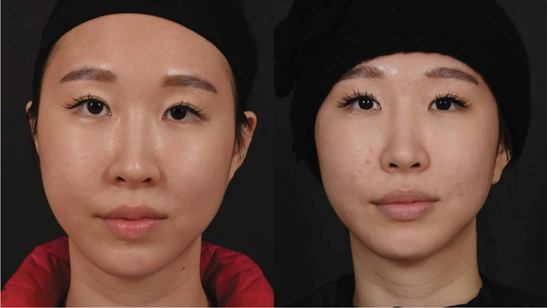
The chapter includes an example of a patient who appeared overfilled after dermal filler treatment and was subsequently treated with hyaluronidase. This visual example reinforces a central principle: the existence of a technically injectable space does not mean additional filler will improve facial aesthetics.
Perception Drift and Repeated Cosmetic Treatment
The chapter discusses “perception drift,” a phenomenon in which correction of one feature establishes a new visual baseline and previously ignored concerns become more noticeable. This can encourage a sequence of additional treatments unless both patient and injector continue to reassess the overall face rather than chasing individual perceived imperfections.
The authors also recommend vigilance for body dysmorphia or problematic patterns of cosmetic-procedure use. The source notes that evidence is still evolving and does not support assuming that every filler patient has body dysmorphia.
What Fillers Cannot Reliably Do
- Create the equivalent of a dramatic surgical facelift.
- Produce unlimited skeletal or cartilaginous change.
- Correct every cause of facial aging using volume alone.
- Guarantee perfect symmetry.
- Eliminate all risk simply because the product is temporary.
- Replace appropriate surgical referral when the requested endpoint exceeds what injectable material can reasonably accomplish.
Temporary Fillers vs Permanent Fillers
| Issue | Temporary fillers | Permanent fillers / permanent approaches |
|---|---|---|
| Adaptability | Can be modified as the face ages and preferences change | Less adaptable once implanted |
| Reversibility | HA can be dissolved with hyaluronidase; time also reduces temporary-product effect | Removal or correction may be much more difficult |
| Delayed problems | Still possible, but many product effects are time-limited | Late nodules or complications may be harder to diagnose and treat |
| Maintenance | Requires repeat assessment and often repeat treatment | May reduce repeat filler need but can create long-term management challenges |
| Aesthetic planning | Supports stepwise treatment | Requires greater confidence that the long-term shape will remain desirable |
Who May Be a Good Candidate ?
The chapter does not provide a formal universal candidate checklist. Its overall framework supports treatment when the aesthetic goal is realistically achievable with temporary filler, the patient understands the limitations and risks, and the injector can match product behavior to anatomy and desired outcome.
- Age-related volume loss or selected folds.
- Lip, chin or jawline enhancement where proportional change is the goal.
- Selected tear trough or facial-shadow concerns.
- Patients seeking gradual or reversible change rather than a permanent implant.
- Patients willing to accept maintenance treatments over time.
- Patients with realistic expectations and no demand for a surgical-scale result from injectable treatment.
When Filler May Not Be the Best Answer
- The patient expects a dramatic facelift or major structural skeletal change.
- The requested result would require excessive product volume.
- The patient is focused on eliminating every normal facial asymmetry.
- There is poor understanding of maintenance cost and repeat treatment.
- Expectations remain unrealistic despite counseling.
- The anatomy or risk profile makes another treatment strategy more appropriate.
Temporary Dermal Fillers in Abu Dhabi : What a Strong Consultation Should Cover
For a patient considering filler treatment in Abu Dhabi, a high-quality consultation should begin with diagnosis of the aesthetic concern rather than immediately choosing a syringe. The same visual problem can arise from skin laxity, skeletal shape, fat loss, muscle activity or shadowing, and filler only addresses some of those mechanisms.
- What exactly is the treatment goal – volume restoration, contouring, lip enhancement, fold correction or skin-quality support ?
- Which filler family is being recommended and why ?
- Is the chosen material reversible with hyaluronidase ?
- How does the expected duration change in this anatomical site ?
- What are the common and rare risks in this exact treatment area ?
- What is the plan if the result is asymmetric, overfilled or otherwise unsatisfactory ?
- How experienced is the injector with this area and with complication recognition ?
- Would a staged approach produce a safer and more natural result than trying to achieve the full correction in one session ?
