
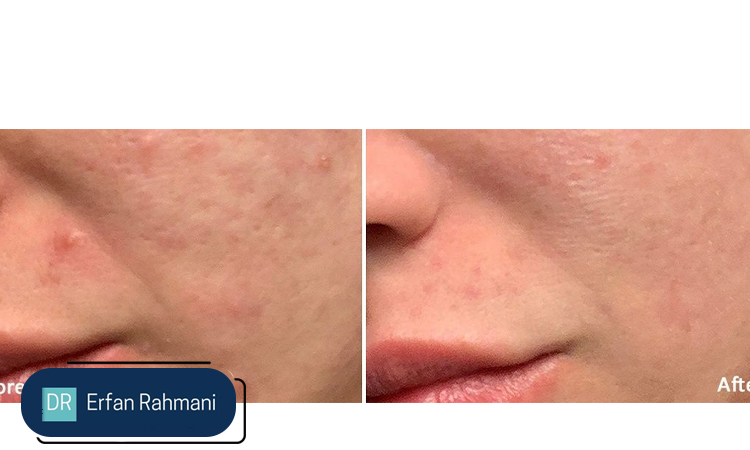
A more advanced option, Morpheus 8, takes this technology further by delivering radiofrequency energy at deeper layers of the skin and even targeting subdermal tissue. This allows for more dramatic tightening and contouring results, especially in areas with moderate to severe concerns.
With both treatments offering promising outcomes, many patients find themselves asking: in the comparison of Morpheus 8 vs. RF Microneedling, which is more effective for their specific needs?
What is RF Microneedling?
RF Microneedling is a minimally invasive skin rejuvenation treatment that combines traditional microneedling with radiofrequency (RF) energy. During the procedure, ultra-fine needles create controlled micro-injuries in the skin while simultaneously delivering RF heat into the deeper layers. This dual action stimulates collagen and elastin production, helping the skin repair and renew itself more effectively. RF Microneedling is commonly used for improving overall skin texture, reducing fine lines and wrinkles, and treating acne scars. It can also help minimize enlarged pores and mild skin laxity. This treatment is ideal for individuals looking for gradual, natural-looking results without significant downtime, especially those with early signs of aging or mild to moderate skin concerns.What is Morpheus 8?
Morpheus 8 is an advanced skin rejuvenation treatment that builds on traditional RF microneedling by delivering radiofrequency energy deeper into the skin and underlying tissues. Using fractional RF technology, it targets both the dermis and subdermal layers, allowing for more intensive remodeling of collagen and fat. This deeper penetration is the key difference between Morpheus 8 and standard RF microneedling, making it more effective for addressing moderate to more advanced skin concerns.
Morpheus 8 is widely used for skin tightening and lifting, helping improve facial contours and reduce sagging. It can also target and reduce small pockets of subdermal fat, such as under the chin (double chin), while simultaneously firming the skin. This combination makes it a powerful option for patients seeking noticeable, long-lasting rejuvenation results without surgery.
Morpheus 8 vs. RF Microneedling: Key Differences
When comparing Morpheus 8 vs. RF Microneedling, the main differences lie in treatment depth, intensity, and overall results. One of the most important distinctions is the depth of penetration. While standard RF microneedling typically targets the superficial to mid-dermis, Morpheus 8 can reach deeper layers, including subdermal tissue, allowing for more advanced skin remodeling.
In terms of treatment power, Morpheus 8 is generally more intensive and effective for moderate to severe skin concerns, such as deeper wrinkles, significant skin laxity, and contouring needs. RF microneedling, on the other hand, is better suited for mild to moderate issues and overall skin maintenance.
The areas that can be treated also differ slightly. Both methods are suitable for the face and neck, but Morpheus 8 is more effective for areas requiring contouring, such as the jawline and under the chin.
Finally, the type of results varies. RF microneedling provides gradual improvement, while Morpheus 8 typically delivers more noticeable tightening and lifting results in fewer sessions.
| Feature | Morpheus 8 | RF Microneedling |
| Penetration Depth | Very deep (reaches subdermal layers) | Superficial to mid-dermis |
| Treatment Intensity | Stronger and more aggressive | Milder |
| Technology | Advanced Fractional RF | Standard RF + microneedling |
| Main Purpose | Lifting, contouring, fat reduction | Skin rejuvenation, texture improvement |
| Effect on Fat | Yes (reduces localized fat like double chin) | No |
| Treatment Areas | Face, neck, under chin, body | Mainly face and neck |
| Type of Results | Faster and more noticeable | Gradual and natural |
| Ideal For | Moderate to severe concerns | Mild to moderate concerns |
| Number of Sessions | Fewer (typically 1–3 sessions) | More (3–6 sessions) |
| Downtime | Slightly longer | Shorter |
| Cost | Higher | More affordable |
Which Treatment is More Effective for Skin Tightening?
Both treatments are effective for improving skin firmness, but their results differ in intensity and depth. RF microneedling works by stimulating collagen production in the superficial to mid-layers of the skin, making it a good option for mild skin laxity and early signs of aging. It gradually enhances skin texture and provides a subtle tightening effect over multiple sessions.
Morpheus 8, however, delivers radiofrequency energy much deeper into the skin and even into subdermal layers. This deeper penetration allows for more significant collagen remodeling and tissue contraction, resulting in stronger and more noticeable tightening. It is particularly effective for areas with moderate sagging, such as the jawline and lower face.
Overall, while both treatments improve skin tightness, Morpheus 8 is generally the more powerful option for achieving firmer, lifted results.
Morpheus 8 vs. RF Microneedling for Acne Scars
When it comes to treating acne scars, both methods offer noticeable improvement, but their effectiveness depends on the severity of the scars. RF microneedling is typically effective for mild to moderate acne scars, as it stimulates collagen production in the upper layers of the skin and helps smooth out uneven texture over time. It is a good option for patients looking for gradual improvement with minimal downtime.
In the comparison of Morpheus 8 vs. RF Microneedling, Morpheus 8 stands out for more severe or deeper acne scars. Its ability to penetrate deeper layers of the skin allows for more intensive remodeling of damaged tissue, leading to more dramatic results.
Overall, RF microneedling is suitable for lighter cases, while Morpheus 8 is generally the better choice for deeper, more stubborn acne scars.
Pain, Downtime, and Recovery
Both treatments are generally well-tolerated, but there are some differences in comfort and recovery. RF microneedling typically causes mild to moderate discomfort, and a topical numbing cream is usually sufficient. Downtime is minimal, with redness and slight swelling lasting one to three days. Multiple sessions, often between three to six, are usually required for optimal results.
Morpheus 8, due to its deeper penetration, may cause slightly more discomfort during the procedure. Recovery time is also a bit longer, with redness and swelling lasting a few days, and in some cases up to a week. However, fewer sessions—usually one to three—are needed to achieve more noticeable results.
Cost Comparison
RF microneedling is generally more affordable than Morpheus 8, with lower per-session pricing due to its less advanced technology and more superficial skin penetration. In contrast, Morpheus 8 is more expensive because it uses fractional radiofrequency energy that reaches deeper skin layers and even subdermal tissue, resulting in stronger collagen remodeling and more visible tightening effects. It also often requires specialized devices and trained medical professionals, which increases the overall cost.
However, when evaluating value versus cost, Morpheus 8 may be more cost-effective in the long term since fewer sessions are typically needed and results tend to last longer compared to standard RF microneedling.
Who is the Ideal Candidate for Each Treatment?
RF microneedling is best suited for individuals with mild to moderate skin concerns such as early signs of aging, fine lines, enlarged pores, and superficial acne scars. It is also a good option for younger patients who want to maintain skin quality and achieve gradual, natural-looking improvement with minimal downtime.
In contrast, Morpheus 8 is more appropriate for patients with moderate to more advanced skin laxity, deeper wrinkles, or loss of facial definition. It is especially effective for areas like the jawline, cheeks, and under the chin where both tightening and contouring are needed. Age, skin thickness, and the severity of the condition play an important role in choosing between the two treatments. Ultimately, Morpheus 8 is ideal for more structural changes, while RF microneedling is better for overall skin refinement.
Pros and Cons of Each Treatment
Morpheus 8
Pros: Morpheus 8 offers deep tissue remodeling, making it highly effective for skin tightening, lifting, and contouring. It can also reduce localized fat, such as under the chin, and delivers more noticeable results in fewer sessions. The improvements are often long-lasting and suitable for moderate to severe skin concerns.
Cons: It is more expensive, may cause greater discomfort during treatment, and typically requires a slightly longer recovery period compared to standard RF microneedling.
RF Microneedling
Pros: RF microneedling is less invasive, more affordable, and involves minimal downtime. It is effective for improving skin texture, fine lines, and mild acne scars, with gradual and natural-looking results.
Cons: It is less effective for deep wrinkles, significant skin laxity, or contouring needs, and usually requires multiple sessions to achieve optimal results.
Conclusion
Both treatments are effective skin rejuvenation options, but they serve different purposes. Morpheus 8 is generally more powerful and suitable for deeper skin concerns, offering stronger lifting, tightening, and even mild fat reduction. It is often the preferred choice for patients with moderate to severe skin laxity or those seeking more dramatic facial contouring results.
On the other hand, RF Microneedling is ideal for milder concerns, such as early signs of aging, uneven skin texture, and superficial acne scars. It is also a more budget-friendly option with minimal downtime, making it suitable for regular skin maintenance.
In the comparison of Morpheus 8 vs. RF Microneedling, there is no universal winner. The best choice depends on individual skin needs, treatment goals, and professional medical evaluation.