
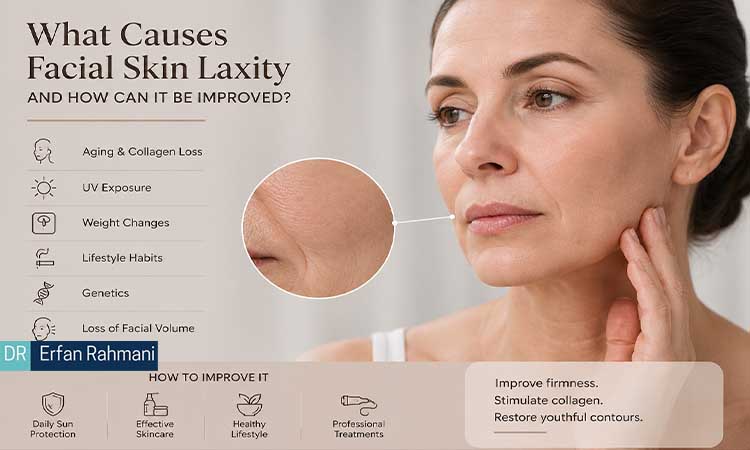
Facial aging rarely appears overnight. For many people, the first sign is not a deep wrinkle or a dramatic change, but a subtle loss of firmness. The jawline may look softer, the cheeks may seem less supported, or the skin under the chin may start to feel looser than before. This is often when people begin asking what causes facial skin laxity and whether it can be improved without surgery.
Facial skin laxity refers to the gradual loss of tightness, elasticity, and structural support in the skin. It can affect the cheeks, jawline, lower face, neck, and under-eye area. While aging is the most common reason, it is not the only one. Collagen loss, UV exposure, weight changes, lifestyle habits, genetics, and loss of facial volume can all contribute to visible sagging.
For patients researching advanced skin tightening options, treatments such as non surgical facelift fotona abu dhabi may also come up as part of their search for non-invasive facial rejuvenation. The good news is that facial skin laxity can often be managed, especially when it is mild to moderate. A combination of prevention, consistent skincare, healthy habits, and professional collagen-stimulating treatments may help improve firmness and slow further visible aging.
What Is Facial Skin Laxity?
Facial skin laxity is the visible looseness or reduced firmness of the skin on the face. Healthy, youthful skin has strong structural support from collagen, elasticity from elastin, hydration from hyaluronic acid, and underlying support from fat pads, muscles, and bone structure. When these support systems weaken, the skin may no longer sit as tightly over the face. This does not always mean severe sagging. In many cases, early laxity looks like a softened jawline, slight drooping around the cheeks, mild looseness under the chin, or a tired appearance even when the person feels well-rested. It is also important to understand that skin laxity is different from wrinkles. Wrinkles are lines or folds on the skin surface. Laxity is more about looseness, reduced bounce-back, and sagging. A person can have fine lines without much laxity, or loose skin without many deep wrinkles.What Causes Facial Skin Laxity? The Main Factors
The main answer to what causes facial skin laxity is structural change. The skin and deeper facial tissues gradually lose the support that keeps them firm and lifted. This happens through several biological and lifestyle-related processes.Collagen and Elastin Loss
Collagen is one of the most important proteins for firm, resilient skin. It acts like a support framework inside the dermis, helping the skin maintain strength and structure. Elastin allows the skin to stretch and return to its original shape. As people age, collagen production slows, existing collagen becomes weaker, and elastin fibers lose some of their flexibility. This means the skin becomes thinner, less firm, and less able to resist gravity. Recent reviews describe collagen as a key component of skin integrity and elasticity, with aging and extrinsic factors such as sun exposure contributing to reduced collagen synthesis and weaker skin structure. When collagen and elastin decline, the skin may start to look crepey, loose, or less defined. This is especially noticeable around the lower face, jawline, and neck because these areas are strongly affected by gravity and facial movement.Natural Aging and Slower Skin Renewal
Aging affects every layer of the face. Skin cell turnover slows, the dermis becomes thinner, hydration decreases, and the skin’s repair processes become less efficient. At the same time, deeper facial structures change. Fat pads may shift or shrink, and bone support can gradually reduce with age. This combination creates a layered aging effect. The skin becomes less elastic, the face loses some internal support, and gravity becomes more visible. This is why facial skin laxity often appears together with volume loss, hollowing, or deeper folds.Sun Damage and UV Exposure
Sun exposure is one of the biggest external contributors to premature skin aging. The American Academy of Dermatology explains that the sun plays a major role in premature skin aging and recommends daily sun protection to help reduce this damage. UV radiation damages collagen and elastin fibers, increases oxidative stress, and contributes to inflammation in the skin. Over time, chronic sun exposure can lead to photoaging, which includes wrinkles, uneven pigmentation, rough texture, loss of elasticity, and structural skin changes. Research on photoaging describes chronic solar exposure as a cause of cumulative skin damage and degradation of the skin’s supportive structure. This is why two people of the same age can have very different levels of laxity. Someone with years of intense sun exposure may develop loose, thinner, less elastic skin earlier than someone who consistently protects their skin.Weight Loss and Weight Fluctuation
Major weight loss can also contribute to loose facial skin. When weight increases, facial skin stretches to accommodate additional volume. If weight is lost quickly or significantly, the skin may not fully contract back, especially if collagen and elastin levels are already reduced. This can lead to looseness around the cheeks, jawline, neck, and under the chin. Weight fluctuation can also change facial fat distribution, making skin laxity appear more obvious. For this reason, stable weight maintenance is one of the most practical long-term strategies for preserving facial firmness.Genetics and Skin Type
Genetics influence how early someone develops facial sagging. Some people naturally have thicker, more resilient skin, while others have thinner skin that shows laxity earlier. Facial bone structure, fat distribution, skin tone, and inherited collagen quality all affect how aging appears. Skin type also matters. Thinner or more sun-sensitive skin may show laxity, fine lines, and texture changes earlier. However, every skin type can develop laxity over time, especially when exposed to UV radiation, smoking, poor sleep, stress, or inconsistent skincare.Smoking, Stress, and Poor Lifestyle Habits
Lifestyle habits can speed up the visible signs of skin aging. Smoking reduces oxygen delivery to the skin, increases oxidative stress, and contributes to collagen breakdown. Chronic stress can increase inflammation and affect sleep quality. Poor sleep reduces the body’s ability to repair and regenerate tissues. A diet low in protein, antioxidants, and essential nutrients may also affect skin quality. Since collagen is a protein-based structure, the body needs adequate nutritional support to maintain and repair skin tissue. These factors may not cause facial laxity overnight, but over years, they can accelerate visible aging and make the skin less resilient.Loss of Facial Volume
Facial skin does not age alone. It sits over deeper support structures, including fat pads, muscles, ligaments, and bone. With age, facial fat may shift downward or reduce in certain areas. Bone structure can also change gradually. When this support decreases, the skin may look looser even if the skin itself has not dramatically changed. This is why some people notice hollowing under the eyes, flattening of the cheeks, deeper nasolabial folds, or jowling around the jawline. In many cases, facial laxity is caused by both skin quality changes and deeper structural changes. rad more:Laser Aftercare Treatments in Abu DhabiEarly Signs of Facial Skin Laxity
Early recognition is important because mild laxity is usually easier to manage than advanced sagging. The first signs may be subtle. One common sign is softening around the jawline. A once-sharp jawline may begin to look less defined, especially in photos or from a side angle. Some people notice early jowling, where the skin near the corners of the mouth and lower cheeks starts to descend slightly. Another sign is drooping in the midface. The cheeks may appear flatter, and the area around the nasolabial folds may look heavier. Loose skin under the chin or mild neck laxity can also appear, especially when the head is tilted downward. The skin may also feel less firm to the touch. Some patients describe it as thinner, softer, or less “snappy” when gently lifted or pressed.Can Facial Skin Laxity Be Improved?
Facial skin laxity can often be improved, but the level of improvement depends on the severity, skin quality, age, lifestyle, and treatment method. Mild to moderate laxity usually responds better to non-surgical approaches than advanced sagging. The goal is not always to “lift” the face dramatically. In many cases, the realistic goal is to improve firmness, support collagen remodeling, enhance skin texture, and slow further visible aging. For advanced laxity, surgery may be the most effective option. But for people with early or moderate looseness, non-invasive or minimally invasive treatments may offer visible improvement with less downtime.How to Improve Facial Skin Laxity
Improving facial skin laxity usually requires a layered approach. No single cream, supplement, or treatment can solve every cause of sagging. The best results usually come from combining prevention, skin support, and professional treatment when appropriate.Use Daily Sun Protection
Sun protection is one of the most important steps for preventing facial laxity from worsening. Daily sunscreen helps reduce UV-related collagen breakdown and photoaging. Sun protection should not be limited to beach days; it matters during driving, walking, errands, and regular daily exposure. A complete sun-protection routine may include broad-spectrum sunscreen, hats, sunglasses, shade, and avoiding peak UV hours when possible.Choose Skincare That Supports Firmness
Skincare cannot replace clinical skin tightening, but it can support skin quality. Ingredients such as retinoids, vitamin C, peptides, moisturizers, and hyaluronic acid may help improve texture, hydration, and overall skin resilience. Retinoids are commonly used to support skin renewal and improve the appearance of photoaging. Vitamin C supports antioxidant protection and is involved in collagen synthesis. Peptides may help support the skin barrier and firmness, while hyaluronic acid improves hydration and plumpness. The key is consistency. Skincare works gradually and is best viewed as a long-term support system, not a quick lifting solution.Maintain Healthy Lifestyle Habits
Lifestyle habits influence how the skin ages. Adequate sleep, hydration, protein intake, regular exercise, and stress control can all support healthier-looking skin. Protein is especially important because collagen is made from amino acids. A balanced diet with sufficient protein, vitamin C, zinc, and antioxidants may help support the body’s natural repair processes. Avoiding smoking is also essential. Smoking is strongly associated with premature skin aging, dullness, and reduced skin quality.Consider Professional Skin Tightening Treatments
When facial laxity becomes visible, professional treatments may be helpful. These treatments are designed to stimulate collagen, improve firmness, and support skin remodeling. Options may include laser treatments, radiofrequency, ultrasound-based devices, microneedling-based procedures, or combination approaches. The best choice depends on the patient’s skin type, laxity level, goals, medical history, and tolerance for downtime. For patients interested in advanced facial rejuvenation, Dr. Erfan Rahmani offers laser-based skin tightening and Fotona treatment planning through his service pages for Abu Dhabi and JBR. These pages can be internally linked using natural anchors such as advanced facial rejuvenation options, laser skin tightening treatment for facial firmness, or Fotona laser treatment planning with Dr. Erfan Rahmani.Laser Skin Tightening and Collagen Stimulation
Laser skin tightening is often used for patients who want to improve skin firmness without surgery. Different laser systems work in different ways, but the general principle is controlled energy delivery. The laser heats targeted layers of the skin, which may stimulate collagen remodeling and improve firmness over time. The American Society of Plastic Surgeons notes that laser resurfacing can heat the dermis and stimulate the growth of new collagen fibers, helping treated skin appear smoother and firmer as it heals. This collagen response is gradual. Some patients may feel a mild tightening effect soon after treatment, but the main improvement usually develops over weeks or months as collagen remodeling continues. Laser treatment should always be planned carefully. Skin tone, sensitivity, medical history, sun exposure, and treatment goals all affect safety and results. This is especially important in regions with strong sun exposure, where aftercare and UV protection matter.At-Home Care vs Professional Treatments
At-home care and professional treatments have different roles. Skincare can improve hydration, texture, barrier function, and early signs of aging. It can also help protect results after a clinical treatment. However, skincare alone usually cannot significantly lift sagging tissue. Professional treatments work deeper than topical skincare. They may target the dermis and stimulate collagen remodeling in ways creams cannot. That said, professional treatments are not magic. Results vary, and multiple sessions or maintenance treatments may be needed. The most effective strategy is often a combination: protect the skin daily, use supportive skincare, maintain healthy habits, and consider professional evaluation when laxity becomes visible.How to Prevent Facial Skin Laxity from Getting Worse
Preventing facial skin laxity is not about stopping aging completely. It is about protecting the skin’s existing collagen, reducing avoidable damage, and supporting the skin’s natural repair process for as long as possible. Once collagen and elastin have been significantly damaged, they are harder to rebuild, so prevention should be part of every long-term skin health plan. The most effective prevention strategy usually includes daily sun protection, stable lifestyle habits, consistent skincare, and careful treatment planning. These steps help slow the progression of loose facial skin and may also improve the results of professional skin tightening treatments.Use Daily Sun Protection
Daily sunscreen is one of the most important steps for preventing facial skin laxity from getting worse. UV exposure breaks down collagen and elastin, which are the main support proteins responsible for skin firmness and elasticity. People who live in sunny climates should be especially disciplined with UV protection. Sunscreen should be used every day, not only at the beach or during outdoor activities. Wearing a hat, using sunglasses, seeking shade, and avoiding peak sun hours can also help reduce long-term skin damage.Maintain a Stable Weight
Weight fluctuation can make facial laxity more noticeable. When weight increases, the skin stretches to accommodate extra volume. When weight is lost quickly or repeatedly, the skin may not fully tighten back, especially if collagen levels are already reduced. Maintaining a stable, healthy weight helps protect facial structure and reduces unnecessary stretching of the skin. This is especially important for the lower face, jawline, cheeks, and neck, where looseness can become more visible after major weight changes.Avoid Smoking and Poor Lifestyle Habits
Smoking is strongly linked to premature skin aging because it reduces oxygen supply, increases oxidative stress, and contributes to collagen breakdown. Over time, this can make the skin look thinner, duller, and less firm. Other lifestyle factors such as poor sleep, chronic stress, dehydration, and a nutrient-poor diet can also affect skin quality. Supporting the skin with enough sleep, hydration, protein, antioxidants, and regular physical activity can help maintain better skin resilience.Follow a Consistent Skincare Routine
A consistent skincare routine cannot replace professional skin tightening, but it can support skin quality and help prevent further visible aging. Ingredients such as retinoids, vitamin C, peptides, moisturizers, and hyaluronic acid may help improve hydration, texture, and overall skin firmness. The key is consistency. Using too many products or frequently changing routines can irritate the skin. A simple, well-planned routine that supports the skin barrier is usually more effective than an aggressive routine that causes dryness or sensitivity.Avoid Aggressive or Unplanned Treatments
More energy does not always mean better results. Aggressive or poorly planned treatments can irritate the skin, increase sensitivity, or create unnecessary risk. This is especially important for patients with sensitive skin, darker skin tones, recent sun exposure, or active skin inflammation. A personalized treatment plan is safer and more effective than chasing every trending treatment. Professional assessment helps determine which option is suitable, how often treatments should be performed, and how to protect the skin before and after each session.Conclusion
Understanding what causes facial skin laxity makes it easier to choose the right prevention and treatment strategy. Facial skin laxity is usually caused by a combination of collagen and elastin loss, natural aging, sun damage, weight changes, genetics, lifestyle habits, and loss of deeper facial support. For mild to moderate laxity, daily sun protection, supportive skincare, healthy habits, and collagen-stimulating treatments may help improve firmness and slow further sagging. More advanced laxity may require more intensive treatment options, which is why professional assessment is important. If you are noticing loose facial skin, reduced jawline definition, mild sagging, or changes in facial firmness, consider booking a consultation with Dr. Erfan Rahmani. A personalized evaluation can help determine whether laser-based skin tightening or another facial rejuvenation approach is suitable for your skin, goals, and lifestyle.Frequently Asked Questions
What causes facial skin laxity at a young age? Facial skin laxity at a younger age may be caused by genetics, sun exposure, weight fluctuation, smoking, stress, poor sleep, and early collagen loss. In some cases, naturally thin skin or low facial volume can make laxity appear earlier. Can loose facial skin become firm again naturally? Mild looseness may improve with better skincare, sun protection, hydration, nutrition, and healthy lifestyle habits. However, visible laxity usually requires professional treatments if the goal is noticeable tightening. What is the best treatment for mild facial skin laxity? The best treatment depends on the cause and severity. Mild facial laxity may respond to collagen-stimulating treatments such as laser skin tightening, radiofrequency, ultrasound-based devices, or other professional options after proper assessment. Does collagen loss cause facial sagging? Yes. Collagen loss weakens the skin’s support structure. When collagen and elastin decline, the skin becomes less firm and less elastic, which can contribute to sagging and reduced facial definition. Can laser skin tightening help facial laxity? Laser skin tightening may help suitable patients by stimulating collagen remodeling and improving skin firmness over time. Results vary depending on skin quality, treatment type, age, and the degree of laxity.
Rate this post